A uniform cannot excuse concealment
Major Kendrick Barling's sentence leaves the Canadian Forces with a separate task: make its own firearms-accountability standard clear, public and consistent.

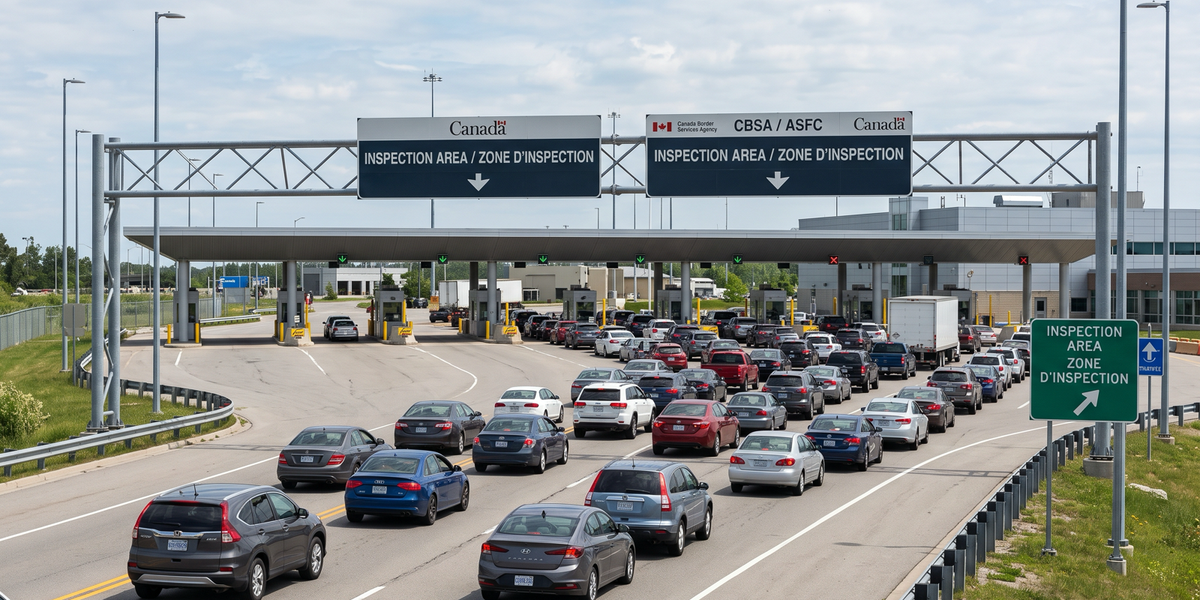
A declaration is a small moment with a large job. It tells a border officer whether the person in front of them can be trusted to say what they brought.
That is why the sentencing of Major Kendrick Barling deserves more than the usual smuggling headline. CBC reports that Barling pleaded guilty in May to illegally importing eight firearms and received a two-years-less-a-day sentence to be served in the community. The report also says his condition bars weapons except for military work, and that the Canadian Forces has begun an administrative review.
The criminal sentence is one part of this story. The military's review is the part that now asks an institution to explain its own standard.
The declaration carries the trust
In its 2023 release, the Canada Border Services Agency said Barling returned to Canada after five years posted in the United States. His household goods came through CFB Trenton. CBSA said investigators found undeclared firearms hidden throughout the shipment and later laid 29 charges. Those were charges, not a final conviction list. CBC's current court report supplies the later outcome.
The useful distinction is simple. Lawful firearms ownership operates through rules that ask people to declare, store, transport and account for regulated property. The work is often tedious. It can feel like paperwork layered on paperwork. The obligation stays clear because the point is clear: the system needs an honest answer before it can apply the next rule.
That is also why this case should never become a pretext for treating every licensed owner as a suspect. The conduct reported in this case belongs to the person who admitted it. Responsible owners have a stake in keeping the line bright. Their licence, their records and their ordinary compliance carry meaning only when deliberate concealment carries consequences of its own.
Service should raise the standard
Military service can be relevant sentencing context. So can a long record of competence, awards and public work. Judges weigh a complete record when they sentence an individual. CBC reports that the joint submission in Barling's case reflected his service and the potential consequences for his career.
The Canadian Forces has a separate question. It holds public authority, provides access to weapons for legitimate work and asks Canadians to trust its professional judgement. When a serving member receives an exception that permits weapons for military work, the organization needs to show how that exception will be controlled while its review proceeds.
That call may have information the public cannot see. It may include duties, supervision, access rules and administrative procedures that would not belong in a news report. None of that removes the need for an intelligible public result. A short explanation of the standard, the review process and the resulting decision would do more for confidence than silence or a vague assurance that the matter is being handled.
The point is accountability, not spectacle. Canadians do not need photographs of seized property or a parade of items from an old charge sheet. They need to know whether a professional institution applies the same basic expectation of candour that it asks of everyone else.
A lawful-owner argument starts here
The firearms debate often collapses too many categories into a single argument. Licensed target shooters, hunters, collectors, criminals, border officers and military personnel each sit under different rules and responsibilities. A serious public-safety system keeps those categories legible.
I spend a few hours at the range most weekends. The opening routine has no drama: talk to the range officer, clear the bench, follow the club rule and respect the paperwork. Those small procedures work because the people sharing the range accept that a direct answer matters. A border declaration asks for the same kind of civic discipline on a larger stage.
The Barling case tests that clarity. It offers no licence to paint the shooting community with one brush. It also offers no room for professional status to soften the border's basic question. A declaration gives the state the information it needs before applying the next rule.
That is a standard worth defending precisely because it protects the people who follow it. A lawful owner should be able to say that their compliance has value. The public should be able to see that concealment receives a real response. The Canadian Forces should be able to show that service does not create a private version of the rule.
The review needs a visible answer
CBC reports that the Canadian Forces initiated an administrative review. The organization should finish it with a clear statement of what it considered and how the military-work weapons condition fits its professional obligations. It does not need to narrate private personnel material. It does need to explain the standard it has applied.
That transparency would serve the force, lawful firearms owners and the public at once. It would show that a uniform brings additional responsibility to an already serious declaration. It would also keep the broader policy conversation in its proper place: enforcement should follow conduct, facts and lawful authority, rather than familiar political categories.
Public confidence comes from a line that holds when it is inconvenient. A uniform should make a declaration mean more. It must never make the answer negotiable.
Sources
- CBC News, Major Kendrick Barling, Canadian Air Force sharpshooter sentenced for smuggled guns, August 26, 2026. User-supplied court report. Source of the reported guilty plea, sentence, weapons condition and Canadian Forces administrative review. Retrieved August 27, 2026.
- Canada Border Services Agency, CBSA firearms investigation in Kingston and Petawawa leads to multiple criminal charges, November 15, 2023. Source of the original investigation, returned household shipment, 2023 seizures and charge list. Retrieved August 27, 2026. The release records charges rather than the later court outcome.
Keep the range notes worth reading later.
If this piece has you thinking about range time, keep the notes useful enough to read later.
Use the Holdover Range Bench Log Card to record rifle, optic, ammunition, distance, weather, zero, group notes, correction, and next test without turning a range trip into a memory test.
Safety note: the card is a note-taking worksheet, not shooting instruction, load data, legal advice, or a substitute for range rules, official guidance, manufacturer manuals, or qualified instruction.