Who can keep a *borrowed handgun* when its owner dies?
I rent a CZ handgun. A reader's question about an owner's death exposes a practical gap between Canada's borrowing rules and its restrictions on handgun inheritance.

I rent a CZ handgun from its original owner. That made a question on r/canadaguns worth more than a passing read on Sunday: if someone has borrowed a handgun under a long-term Authorization to Transport, what happens when the owner dies?
The poster described a hypothetical. I have a rental arrangement that makes the question personal. I would like a clear account of what a borrower and an executor are supposed to do, with enough detail to plan around it.
The RCMP's estate guidance answers the acquisition question: an individual needs an exemption to inherit a handgun. The public borrowing and estate pages I checked leave the continuation of an existing loan after death unanswered. That deserves attention from a government which expects licensed people to follow the rules through both situations.
Borrowing comes with its own requirements
Section 33 of the Firearms Act permits lending under defined conditions. For a borrower taking a restricted firearm away for unsupervised use, the lender needs reasonable grounds to believe the borrower holds the appropriate licence and must lend the registration certificate with it.
The Canadian Firearms Program's FAQ makes the administrative requirements plain: a restricted-firearm borrower must contact the Chief Firearms Office for an Authorization to Transport, or ATT, and the registered owner must provide the original registration certificate.
Those permissions serve different purposes. The licence authorizes the relevant class of possession. The registration identifies the firearm and registered owner. The ATT authorizes transportation under its terms. Section 59 allows the ATT holder and registered owner to be different people.
A borrower can therefore have a legitimate role in the system while someone else remains the owner. The difficult question concerns what happens to that arrangement when the owner can no longer act.
An executor has a job to finish
The RCMP says an executor manages firearms in an estate, ensures safe storage and arranges lawful transfer or disposal within a reasonable time. It requires an estate-authority declaration, form RCMP 6016, and documentation confirming the death. Its guidance even accommodates an executor without a firearms licence, provided that person is not prohibited from possessing firearms.
The estate has several possible destinations for a handgun: an exempt individual, an appropriately authorized business or museum, lawful export, approved permanent deactivation, or disposal through police or a firearms officer. The published options matter. Readers who assume that every estate handgun must go straight to destruction have missed alternatives the RCMP itself lists.
Acquisition by an individual remains tightly limited. Section 97.1 covers an Authorization to Carry, or qualifying participation in an Olympic or Paralympic handgun discipline with the prescribed criteria and annual governing-body letter. The letter must establish that the particular handgun is necessary for that discipline.
An ATT supplies transportation permission. The carry-based exemption requires the separate Authorization to Carry. An ordinary RPAL and range membership, on their own, leave the estate's transfer restriction in place.
For a renter, the practical consequence is that possession before a death supplies no automatic entitlement to acquire the handgun afterwards. The executor's willingness would still have to operate within the transfer rules.
The existing loan needs a specific answer
Whether a borrower can continue holding that handgun during estate administration requires closer attention. The RCMP pages I checked explain borrowing and estate administration separately. They do not explain how an existing private rental carries through the owner's death.
Section 66 says a registration certificate expires when its holder ceases to own the firearm. Section 65 governs authorization expiry, including licence-linked limits for an ATT used for target shooting. Applying those provisions to a deceased owner's estate, a surviving borrower's documents and a particular rental agreement calls for a case-specific answer.
I would want the Chief Firearms Officer (CFO) and Canadian Firearms Program to confirm the registration position, continued custody and permitted transportation in writing. A lawyer would need to address any question about the rental contract and the estate's obligations. Reading a future date on an ATT would be an inadequate basis for assuming that the entire arrangement continues unchanged.
Equally, the public sources reviewed here establish no universal rule that the borrower's ATT expires at the instant of the owner's death. Claiming certainty in either direction would make this article less useful than the question that prompted it.
Succession belongs in the policy argument
The federal government described the handgun freeze as a way to halt growth in Canada's lawful domestic handgun stock. Supporters can argue that limiting acquisition also limits future opportunities for diversion and misuse. A rule aimed at the civilian handgun market will reach estates as well as retail counters.
I still think licensed succession deserves a route through that policy. In the borrowing scenario, a vetted person may already have lawful access to the same registered handgun. Allowing a regulated change of ownership would require the state to assess that person and that firearm. The policy question is what additional public-safety benefit justifies refusing the transfer solely because the recipient falls outside the narrow exemptions.
The sources above describe the rules. They provide no measured answer to that specific comparison. Government should have to make that case, particularly when the consequence falls on people trying to arrange a lawful future for an existing firearm.
My immediate interest is smaller and more practical. For the CZ I rent, I want the owner and me to understand who would deal with an executor, where custody could lawfully continue and what authorization would cover any necessary movement. Those questions can be asked while everyone involved can still discuss the arrangement.
The person settling an estate should have written instructions for an existing loan. The licensed borrower should know the lawful next step before anyone has to make that call.
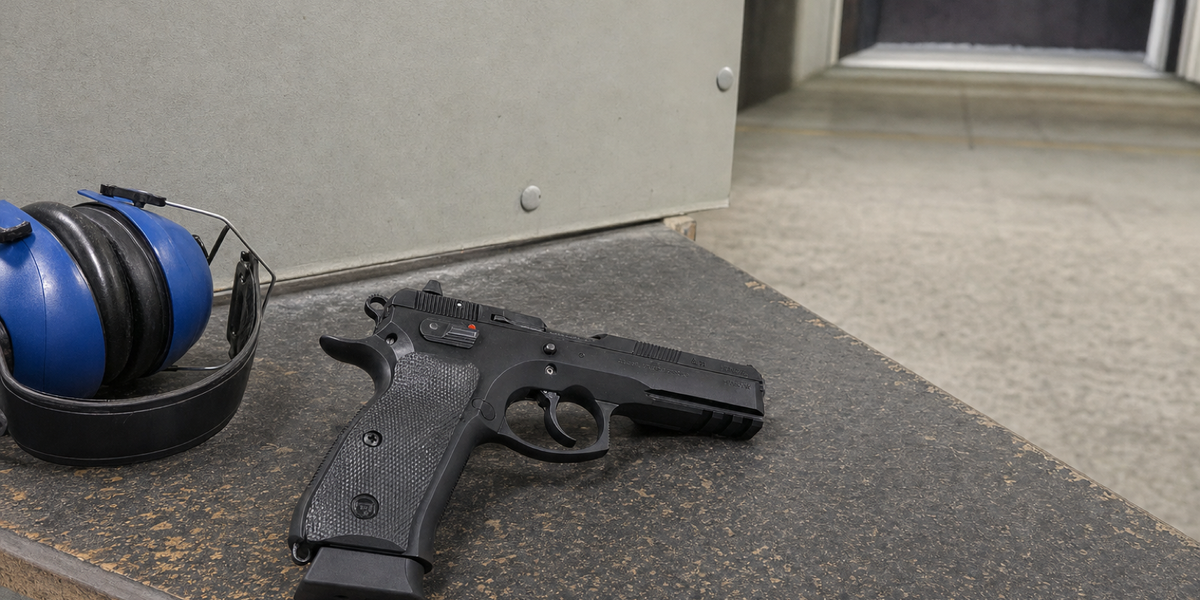
Feature image: AI-generated illustration informed by manufacturer references. It shows a representative handgun and club setting, rather than my rented CZ or an actual event.
Follow the source behind the next policy change.
The Dispatch follows Canadian firearms policy through the records behind it. Get the next update with its source and a clear account of what it means for licensed owners.