2,473,661 firearms licence holders belong in Canada's gun story
Canada ended 2025 with 2,473,661 firearms licence holders. The number describes a trained, screened culture of hunting and sport that belongs in Canada's own story.

Opinion. The RCMP counted 2,473,661 firearms licence holders at the end of 2025. That total included 2,458,677 Possession and Acquisition Licence holders and 14,984 minors.
It counts people with valid licences, not firearms. Some hold several firearms; some may own none. Even with that limit, the figure describes a community large enough for a place in Canada's account of itself.
CityNews used the figure this week to ask why more Canadians want guns. The question arrived inside Canada's reflex to compare itself with the United States and ask whether our gun culture is drifting south.
I recognize a different Canada in the number. A range weekend contains weather talk, group measurements, ceasefires, spotting scopes and expensive opinions about optics. People come to hunt, compete, learn a technical sport and become better at something difficult.
That culture is Canadian already.
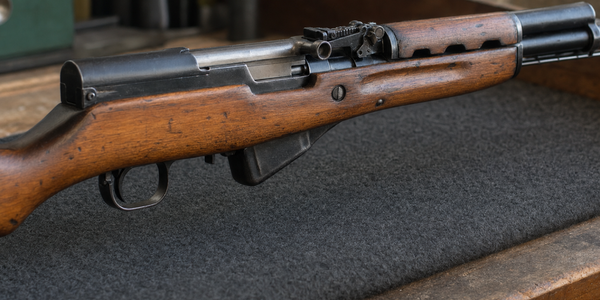
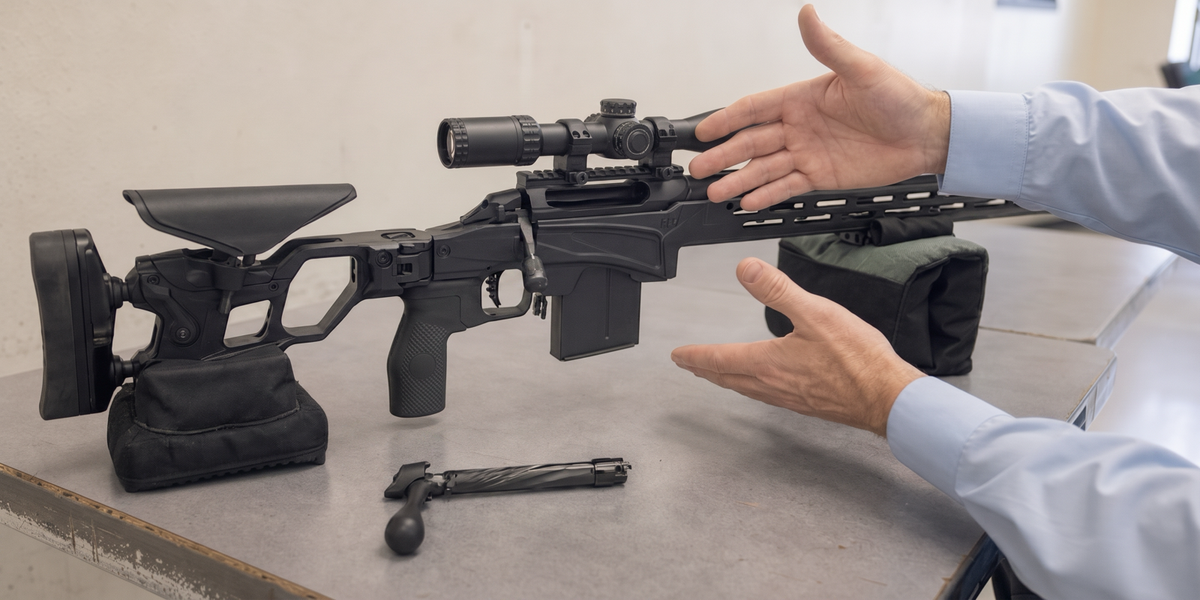
Holdover produced the feature as a fictional participant-view safety-course demonstration using current official firearm-family references. Every pictured element is illustrative.
A Canadian count with Canadian conditions
The national total rose from 2,245,842 in 2021 to 2,473,661 in 2025, an increase of about 10.1 per cent across the RCMP's five-year table.
Those licences sit behind a serious entry gate. Section 7 of the Firearms Act ties eligibility to safety competency, normally demonstrated through the Canadian Firearms Safety Course and its tests, while preserving older equivalent and limited statutory routes.
Section 5 directs Chief Firearms Officers to assess risks that include violent conduct, specified convictions, protection orders and other threats of harm. Screening continues after the card arrives. In 2025, the programme flagged an average of 185 eligibility notifications a day. Chief Firearms Officers refused 1,353 applications and revoked 5,263 licences.
This is one of Canada's most scrutinized civilian populations. A valid licence signals entry through safety and public-safety gates, followed by continuing exposure to review.
The culture grew beyond its old picture
On The Big Story, political scientist Noah Schwartz pointed to population growth and pandemic restrictions that pushed people outdoors, where hunting and shooting sports offered something demanding and social to do at a distance.
The national table cannot tell us each person's motive. Current local evidence gives the trend a human outline. Peel Region's PAL applications rose 110 per cent over a decade, while instructors and clubs described more women, younger adults and newcomers entering the sport. Quebec now has 502,111 adult PAL holders, more than one-fifth of the national adult total.
The inherited rural hunting rifle still describes part of the community. It leaves out urban target shooters, clay fields, precision matches, dynamic disciplines, collectors, Indigenous hunting traditions, new Canadians and retirees discovering the range after work stopped owning the calendar.
Canada's laws shaped that culture differently from the American one. Training, licensing, storage rules, transport rules and restrictions around defensive use have kept the centre of gravity on hunting and sport. The result deserves to be understood on its own terms.
Public safety needs the right denominator
The strongest case for tighter regulation begins with a real risk. A firearm can be stolen, diverted or misused. Access inside an abusive relationship can turn lethal. Statistics Canada found that, from 2019 through 2024, 27 of 107 firearm-related intimate-partner homicides involved an accused who was licensed and a firearm that was legally possessed. The comparable share in non-partner firearm homicides was much lower.
That evidence gives continuous eligibility, domestic-violence screening, urgent intervention and licence revocation a specific public-safety job. It also shows why precision matters.
In the broader 2024 firearm-homicide data, four in five accused with known licence information lacked a valid licence for the firearm class involved. Among people accused of firearm-related violent crime, 58 per cent had been identified as accused in another violent incident between 2018 and 2024.
The national rate of firearm-related violent crime fell from 37.6 to 36.0 incidents per 100,000 people in 2024. Toronto moved the other way, rising 12 per cent to its highest rate in 15 years. Canadian firearm violence is a serious and uneven problem, which makes a single catch-all explanation especially weak.
Criminal supply also has its own evidence. From January through October 2025, CBSA reported seizing more than 740 firearms, including 650 originating in the United States. Those figures describe one enforcement channel and one denominator: CBSA seizures. Schwartz also described privately manufactured firearms as a growing law-enforcement concern in the podcast.
The jobs become clearer once the nouns stay clear. Licensing screens applicants and current holders. Domestic-violence systems identify urgent risk. Police pursue violent offenders and traffickers. Border officers interdict smuggling. Tracing follows recovered guns through domestic diversion and cross-border routes. Each channel needs a measure that shows whether its response worked.
Give Canada's gun culture its proper name
Supporters of broad prohibitions argue that fewer firearms in civilian circulation create fewer opportunities for theft, diversion and impulsive harm. That is the strongest version of the case. It carries an obligation to show that a restriction aimed at the licensed population produces the promised result.
Canada's administrative reach makes that test possible. PAL holders identify themselves, meet competency requirements, renew licences, face continuing screening and create transaction records where required. Recent Canadian research on the licensed market found a much weaker overall relationship with deaths and crime than political certainty suggests, while preserving important caveats.
The policy conversation should be equally disciplined. When evidence identifies a licensing failure, repair the licensing failure. When it identifies intimate-partner risk, intervene early and decisively. When it identifies repeat violent offending, trafficking, smuggling or illicit manufacture, put enforcement effort there and report the outcome.
The licence count supplies a different kind of fact. Millions of Canadians chose a regulated route into hunting and shooting sports, and kept choosing it through freezes, prohibitions, classification uncertainty, long waits and a federal debate that notices them as a problem before it notices them as people.
Canada already has a gun culture of its own. It is trained, screened, regional, urban, rural, Indigenous, old, new, recreational, competitive and far quieter than its political image.
The number records who chose the Canadian door. Public policy should finally meet them on the other side.
Sources
- CityNews / The Big Story, Why do more Canadians want to own guns?, August 27, 2026. Source of the current podcast trigger and Noah Schwartz interview. Steve supplied the episode transcript. Retrieved August 28, 2026.
- Royal Canadian Mounted Police, 2025 Commissioner of Firearms Report, published 2026. Source of the 2021-2025 licence series, 2025 PAL and Minor's Licence totals, refusals, continuous-eligibility notifications and revocations. Retrieved August 28, 2026.
- Justice Laws Website, Firearms Act, section 5, current to June 21, 2026. Source of public-safety eligibility criteria. Retrieved August 28, 2026.
- Justice Laws Website, Firearms Act, section 7, current to June 21, 2026. Source of safety-course, testing and equivalent competency routes. Retrieved August 28, 2026.
- Statistics Canada, Firearms and violent crime in Canada, 2024, April 21, 2026. Source of firearm-related violent-crime rates, Toronto's change, class-specific licence status in firearm homicides and prior violent-incident history. Retrieved August 28, 2026.
- Statistics Canada, Firearms and intimate partner violence in Canada, 2009 to 2024, July 8, 2026. Source of licensed-and-legal firearm status in intimate-partner and non-partner firearm homicides. Retrieved August 28, 2026.
- Canada Border Services Agency, CBSA is strengthening the border: 2025 results and accomplishments, December 9, 2025. Source of January through October 2025 firearm seizures and U.S.-origin count. Retrieved August 28, 2026.
Keep the first PAL steps in order.
If this piece has you mapping the licence process, keep the official steps and follow-up notes together.
Use the Holdover PAL/RPAL First-Steps Checklist to keep the official forms, course booking, references, photo, fees, and follow-up notes in one place while you work through the process.
Safety note: the checklist is an orientation aid, not legal advice or a substitute for current RCMP/CFP/CFO guidance or instructor direction.