Built in *Chilliwack*
MDT holds 41 per cent of the PRS top 200. The number explains what elite shooters buy from a chassis, and what a newer shooter can leave on the shelf.

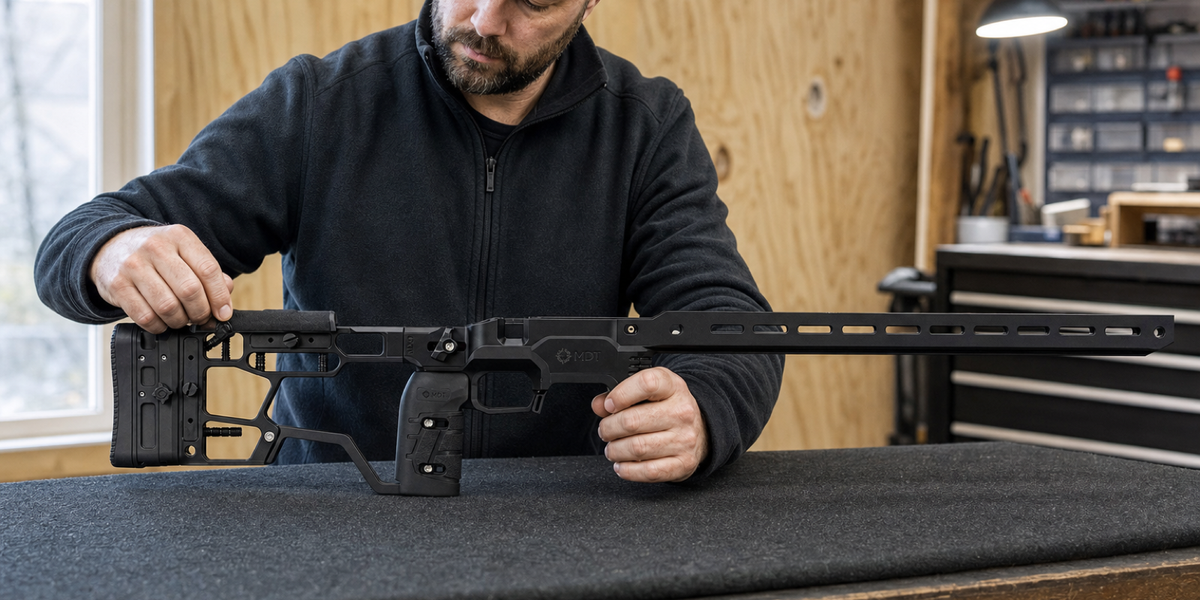
Gear. One of my 7mm PRC barreled actions sits in an MDT ACC Elite. The chassis weighs 6.10 pounds before the action, barrel, optic, bipod, magazine, or accessories join it. That is a lot of Canadian aluminum around one practical question: which jobs need that much adjustment?
Precision Rifle Blog's March survey offers a sharp answer from the top end of the game. MDT appeared under 41 per cent of the top 200 Precision Rifle Series competitors. Four of the top ten used the brand. Among MDT shooters, 94 per cent chose the ACC Elite, including every MDT user in the top 25.
Those numbers describe equipment choices made before the 2025 PRS Finale. They measure a particular group of elite competitors whose rifles live on barricades, bags, tripods, props, and a clock. Their preferences deserve attention because those shooters have specific problems to solve.
The 41 per cent points to a format
The wider survey result matters first. Chassis systems appeared on 80 per cent of the top 200 rifles, up from 66 per cent two years earlier. Traditional stocks still had a place, though the field moved decisively toward an aluminum platform with an adjustable buttstock, vertical grip, detachable magazine, long forend, and many places to attach weights or accessories.
That shift says something about modern PRS stages. A rifle may need to settle on a narrow barricade, move between positions, clear a magazine against a bag, and present the same cheek position after every rushed transition. Balance becomes a setting. Length of pull becomes a setting. Grip angle and thumb position become settings. The chassis turns each one into hardware the shooter can revisit.
MDT's 41 per cent share says the company built a persuasive version of that format. The ACC Elite's 94 per cent share inside the MDT group says its flagship absorbed most of the demand.
Six pounds buys adjustment
MDT's current specifications list the ACC Elite at 6.10 pounds. Its length of pull runs from 12.25 to 14.75 inches. The full-length ARCA forend accepts a tunable weight system, while the buttstock lets the shooter alter cheek position, recoil-pad position, and length. The grip interface accepts AR-15-pattern grips.
Each feature can answer a real match problem. Forend weights can move the centre of gravity toward the front of the magazine well so the rifle sits more calmly on a bag. Buttstock adjustment can bring the scope to the eye without a search for the sight picture. A long, flat forend gives the shooter more usable surface when a stage offers an awkward prop.
The same hardware carries costs. Weight follows the rifle through every position. Adjustment adds knobs, fasteners, and decisions. The flagship price also competes with ammunition, match fees, travel, instruction, and time behind the rifle.
My own ACC Elite cannot fill a data book for me. It gives a 7mm PRC barreled action a rigid, adjustable home. The useful work begins when I choose a balance point, record the setting, shoot it, and decide whether the change helped.
Chilliwack built the platform
MDT's current company page lists its home in Chilliwack, British Columbia. The company says its first chassis was the TAC21 and describes shooter feedback as a continuing part of product development. Its current manufacturing site also places its CNC operation in Chilliwack.
That Canadian address deserves a moment. The survey reaches across the top 200 of a large American competition series, yet the leading chassis name points back to the Fraser Valley. Canadian firearms manufacturing often appears in public coverage through military contracts, export questions, or government procurement. The ACC Elite result shows a quieter route to international relevance: solve a demanding civilian sport problem well enough that competitors choose the product repeatedly.
The survey still stops short of a performance ranking. It records what the shooters used. It never isolates the chassis from the barrel, action, optic, ammunition, wind call, stage plan, or person holding the rifle. Four MDT users in the top ten is an impressive adoption signal. A podium remains a human result.
Give every adjustment a job
A newer shooter can use this survey without copying the equipment list. Start with the rifle already on the bench. Name the problem in one sentence.
Maybe the length of pull prevents a relaxed head position. Maybe the front of the rifle lifts from a bag after recoil. Maybe the forend offers too little space for the positions a local match uses. Maybe the current stock fits well and the next useful purchase is a case of ammunition.
That sentence is the purchase filter. An adjustable chassis earns its cost when the owner can identify the adjustment, make it, and test the result. The ACC Elite offers an unusually broad set of those controls, and the PRS top 200 has shown how valuable that range can become at the sharp end of competition.
Chilliwack supplied the platform. The next useful measurement belongs in your own data book.
Sources
- Precision Rifle Blog: Best Rifle Stock, What the Pros Use
- MDT: ACC Elite Chassis System
- MDT: About MDT
- MDT: Precision Rifle Blog, What the Pros Use
- MDT Manufacturing
The feature image for this article is an AI-generated editorial photograph created from current official MDT ACC Elite product references. It depicts a fictional person and workshop.
Keep the range notes worth reading later.
If this piece has you thinking about range time, keep the notes useful enough to read later.
Use the Holdover Range Bench Log Card to record rifle, optic, ammunition, distance, weather, zero, group notes, correction, and next test without turning a range trip into a memory test.
Safety note: the card is a note-taking worksheet, not shooting instruction, load data, legal advice, or a substitute for range rules, official guidance, manufacturer manuals, or qualified instruction.