Leica puts a *configurable display* inside the Geovid Max
Leica lets Geovid Max owners choose what appears in the binocular display. Its Canadian introduction raises a useful design question, before any field-test verdict.

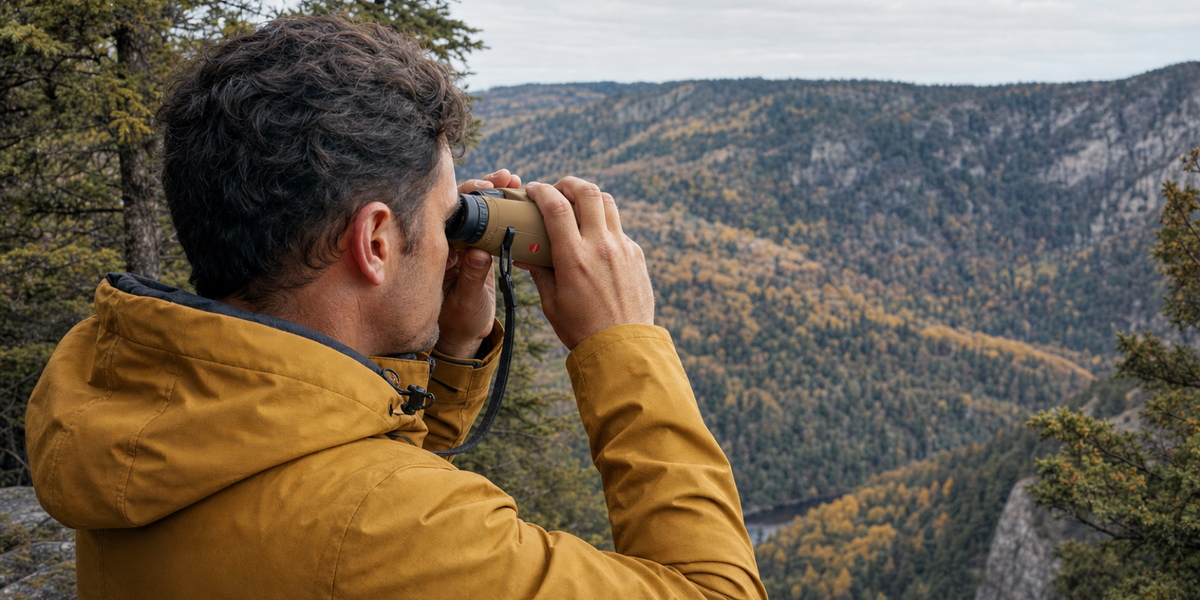
Precision Optics brought Leica's Geovid Max 10x42 to its CanadianGunNutz readers on October 4 with a long list of capabilities. The one that interests me most sits inside the eyepiece: a graphical display whose contents the owner can choose.
Leica announced the model globally on September 17. This weekend's Canadian dealer post is a reason to look at the documents, with the distinction between a product introduction and a field review kept intact. I have not used these binoculars. Leica's claims about their performance remain Leica's claims.
The company specifies a 640-by-480-pixel Active Matrix microLED display and says the accompanying app lets owners choose which information appears and how it is arranged. Unwanted elements can be hidden. For an instrument whose first job is looking at the world, that last provision deserves attention.
Choosing what stays in the view
A rangefinding binocular combines an optical scene with an electronic readout. Leica's Max can put measured distance, status symbols, compass information and other calculated data into that same view. Its product page presents the display as both bright and customisable.
Those are two different design questions. Brightness concerns whether the information can be read. Information density concerns whether the reader can find the relevant item without sorting through the rest. A sharp little screen can still contain more than someone wants to look at.
My day job is interface design. I am interested in Leica giving the owner control over that density, because a specification sheet rewards adding functions and a person looking through an eyepiece has to live with the resulting arrangement. The ability to remove a field has practical value even when the field itself is useful sometimes.
Leica says the display can include measurement and target modes, battery state, units and connection status. Those details help describe the instrument's current state. The company also includes calculation software. This article assesses the published display concept; it offers no verdict on the software's predictions or instructions for using them.
The unanswered question is how calmly the whole arrangement reads against an actual landscape. The documents establish the available functions. Time behind the binocular would establish whether the design makes those functions easy to absorb. A product illustration cannot settle that for me.
A kilogram at the eyepieces
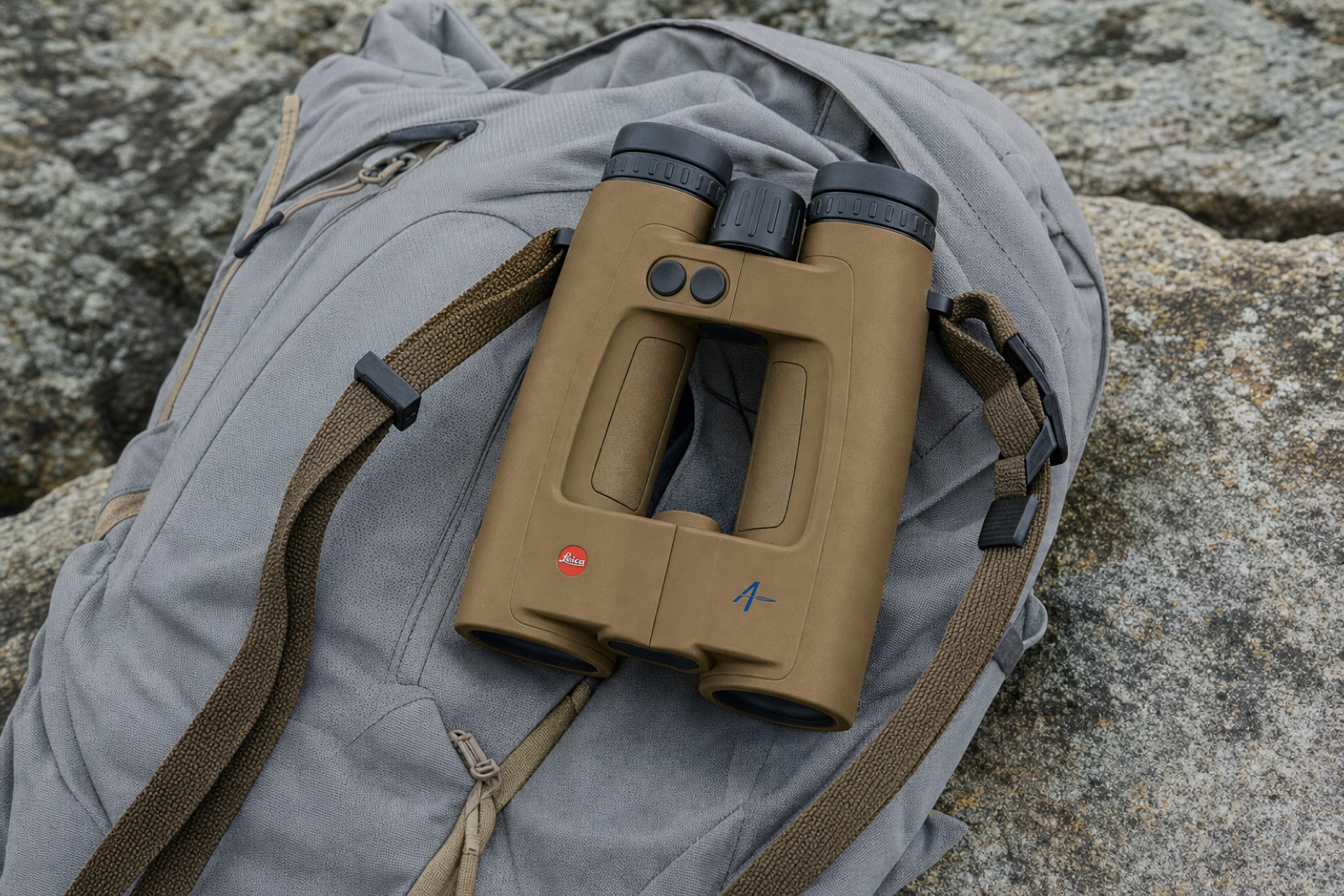
Leica lists the Max at approximately 1,040 grams without its battery. It is a 10x42 binocular with 16 millimetres of eye relief and a stated field of view of 113 metres at 1,000 metres. Those physical specifications belong beside the electronic features when considering the instrument as a whole.
Weight stays with the owner while the display is off. Eyecup fit and the view through the glass also remain part of every observation. I would want any eventual assessment to give those ordinary qualities as much space as the new electronics.
I have already spent money learning that lesson with scopes. Extra magnification helped sell me on the Discovery optics I bought; returning to clearer glass mattered more to me than keeping the larger number. That experience says something about my priorities. It tells us nothing about how the Leica performs.
The Max's open bridge, focus control and eyecups are visible in Leica's product photographs. Their shape can be inspected from a desk. Comfort, balance and the ease of reading the display while observing deserve firsthand attention. I would keep those findings open until someone has actually spent time with the instrument, including the conditions they used it in.
The measurements still have conditions
The Max's headline maximum of 7,500 metres applies to retroreflective targets. Leica's technical table separately gives approximately 4,200 metres for trees and 2,650 metres for deer. Holdover has already examined why rangefinder target categories matter; the Max should be read with the same care.
The documents also contain a discrepancy. The current technical table gives the distances above and an extended-mode measuring time of 1.4 seconds, while the manual's ranging section gives lower distance figures and 1.2 seconds. The manual's own technical-data section returns to a 7,500-metre maximum. I cannot reconcile those figures from the published material, so they remain attributed specifications awaiting clarification.
The manual is clearer about environmental limits. Target characteristics, visibility and light affect ranging, and cold reduces battery performance. For a Canadian reader, those qualifications are part of understanding an electronic optic. They do not establish how this particular example will behave on a cold morning in Ontario or British Columbia. That remains a reporting question.
None of those limits makes the configurable display uninteresting. They define what the display is presenting: a measurement made under conditions, alongside the instrument's other information. Clear presentation ought to help the observer retain those distinctions.
What would earn a verdict
The October 4 dealer introduction puts a specific new Leica model into the Canadian optics conversation. The September manufacturer release and current manual give us enough to describe its design. A recommendation would require more evidence than I have here.
I would be looking for a clear account of the optical view, comfortable observation and whether the chosen display information stays easy to read. The published ability to hide fields is encouraging from a design perspective. Its value will depend on how the finished interface behaves in use.
A binocular can accumulate an impressive list of functions. I want the experience of looking through it to remain the reason to carry it. Leica has given the Max an interesting way to balance those demands; the next useful report will come from someone who has put their eyes behind it.
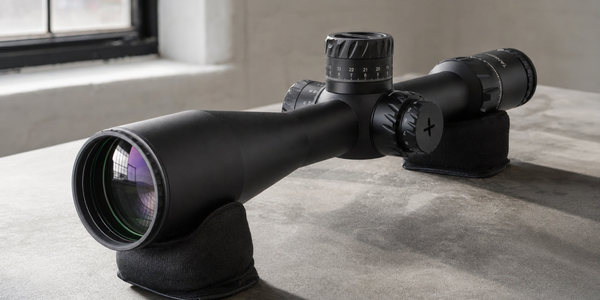
Both photographs are AI-generated illustrations based on Leica's product references. Holdover has not field-tested the Geovid Max.
Sources
- Precision Optics, CanadianGunNutz introduction, October 4, 2026.
- Leica, Geovid Max announcement, September 17, 2026.
- Leica, Geovid Max product description, checked October 5, 2026.
- Leica, technical specifications, checked October 5, 2026.
- Leica, English instruction manual, checked October 5, 2026.
Keep the range notes worth reading later.
If this piece has you thinking about range time, keep the notes useful enough to read later.
Use the Holdover Range Bench Log Card to record rifle, optic, ammunition, distance, weather, zero, group notes, correction, and next test without turning a range trip into a memory test.
Safety note: the card is a note-taking worksheet, not shooting instruction, load data, legal advice, or a substitute for range rules, official guidance, manufacturer manuals, or qualified instruction.