A place for *trainees* in Canada's handgun exemption
A new Dawson-family letter asks for consistent handgun-exemption rules. Parliament included training and coaching; any reform should preserve that route into the sport.

Advocacy commentary.
The Dawson families' September 9 letter asks Ottawa to tighten oversight of the sporting exemption to the handgun freeze. Its description of the people who should qualify deserves a closer read: a "narrow group of high-performance athletes". Canada's Firearms Act expressly includes people training or coaching in the qualifying disciplines.
That distinction matters for the person learning the sport at a club. Ottawa can require credible records and consistent decisions while leaving that person room to progress. A future rule built around elite status would require a separate justification, including an honest account of the participants it would exclude.
The letter comes ahead of the twentieth anniversary of the Dawson College shooting. Survivors and family members have lived with consequences that extend far beyond an anniversary. Their request for clear eligibility rules and meaningful verification warrants a serious answer. They also point to provincial differences and possible abuse. The document supplies no underlying provincial table or methodology with which to assess those concerns.
It does not expressly call for a ban on trainees. The question is what officials would do with its high-performance description when setting the rules.
Parliament included training
Under section 97.1, the sporting exception requires prescribed criteria and an annual letter from a provincial or national sport-shooting governing body to a chief firearms officer. That letter must identify the person's participation, the relevant Olympic or Paralympic handgun discipline, and why the handgun is necessary for it.
Parliament's wording includes "training, competing or coaching". The section itself supplies no national-team selection requirement or minimum competitive score. It ties the activity to a qualifying discipline and the equipment to a demonstrated need. Anyone arguing for a performance threshold should explain how it would fit those provisions.
For a reader outside the sport, the Olympic reference can suggest someone preparing to represent Canada. A discipline can also have participants working towards their first competition. They need to learn, practise, and receive coaching before anyone can judge how far they will progress.
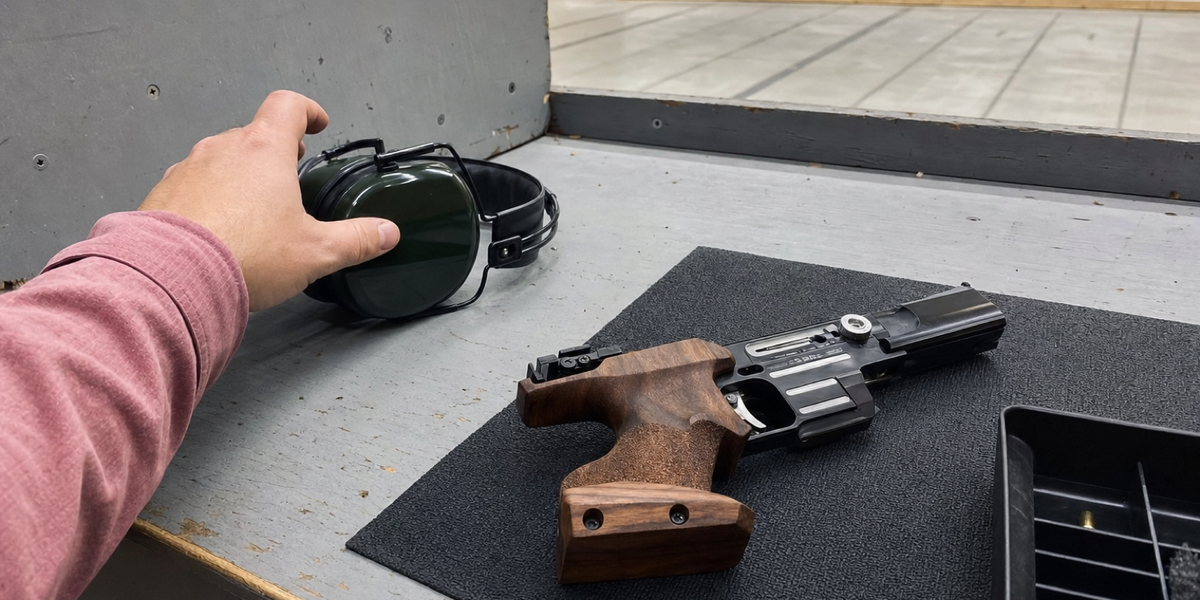
I have a personal reason to pay attention to the distance between participating and acquiring. After receiving my RPAL in May 2025, I obtained the use of a CZ SP-01 Shadow through a private rental/lease arrangement with its legal owner. That experience gives me an appreciation for how a restriction on acquisition affects the ordinary business of getting into a sport. I make no claim that my handgun or my own activities qualify for this exemption.
Clubs have a role before elite competition
The Shooting Federation of Canada's current process asks for SFC membership, an RPAL, club membership, and documentation of training, competition, or coaching in a qualifying discipline. The federation retains discretion over issuing a letter. Those published requirements give an applicant concrete things to establish.
British Columbia's association goes further in spelling out its treatment of learners. BCTSA says applicants are "not expected to be proficient or competitive", provided they are actively training. It accepts entry-level equipment and generally limits a training-only applicant to one handgun exemption, with some latitude possible through a certified coach's support. These are the association's rules for its letters; the chief firearms officer still has a separate transfer decision to make.
There is room to examine those requirements, their consistency, and the evidence officials accept. Genuine participation should be verifiable. A club record, a coach's account, or a competition entry can tell an assessor something useful about what an applicant does. Clear expectations also help volunteers avoid repeated exchanges over incomplete requests.
The SFC's development guidance places community participation and elite sport within a framework covering different life stages. It encourages prospective participants to find a club that teaches beginners and to enter regional matches. That is a sporting progression worth protecting. Those first club sessions have a purpose even when the participant never makes a national team.
Give applicants a standard they can understand
My preference is for national guidance that tells a qualifying trainee what evidence to provide, makes expectations for continued activity clear, and explains the reasons for a refusal. Officials should also identify where governing bodies have discretion, so an applicant can understand which decision they are asking someone to review.
If authorities find improper approvals, they should describe the problem with enough detail to support a remedy. Different provincial totals could justify further examination. To understand them, readers would need the number and type of applications, their outcomes, and the criteria applied. Treating variation as a question for investigation leaves room for evidence to change the answer.
The government should involve the people who teach and administer these disciplines when considering changes. A coach can explain how a beginner demonstrates commitment. A club can describe the records it keeps and the demands a new requirement would place on its volunteers. Those contributions would make a proposed national standard easier to assess.
The families deserve an answer about oversight. Qualifying participants deserve an answer about their place in the sport, too. Ottawa should publish rules that let a learner bring evidence of real participation and receive a decision they can understand. Preserving that opportunity is a modest, practical commitment to the sport Canada has chosen to retain.
Sources
- Dawson Families for Gun Control, September 9, 2026 letter to Prime Minister Carney, section 3.
- Firearms Act, section 97.1.
- Shooting Federation of Canada, exemption letters.
- BC Target Sports Association, handgun exemption.
- Shooting Federation of Canada, introduction to target shooting and long-term development.
The amnesty file is still moving.
If this piece sent you back to government pages, do not wait for the next portal, Gazette, or court move to find you by accident.
The Dispatch follows Public Safety, RCMP, Canada Gazette, court, compensation, collection, and amnesty updates so the next change comes with the source that moved.
Safety note: the tracker is a worksheet for source hygiene, not legal advice or a substitute for current official guidance.