DiscoveryOpt DGCM3: the *20 MOA* mounting decision
A low-priced 20 MOA cantilever deserves a look at existing rail cant, usable scope travel, height and forward reach. The Canadian order total needs its own check.

Product research and opinion
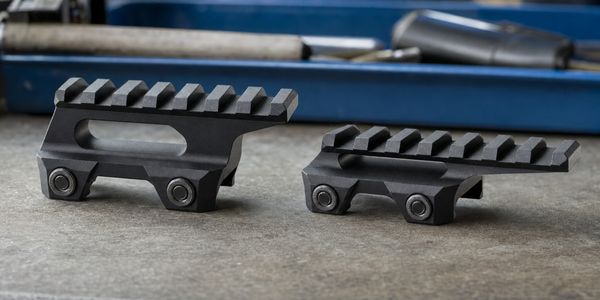
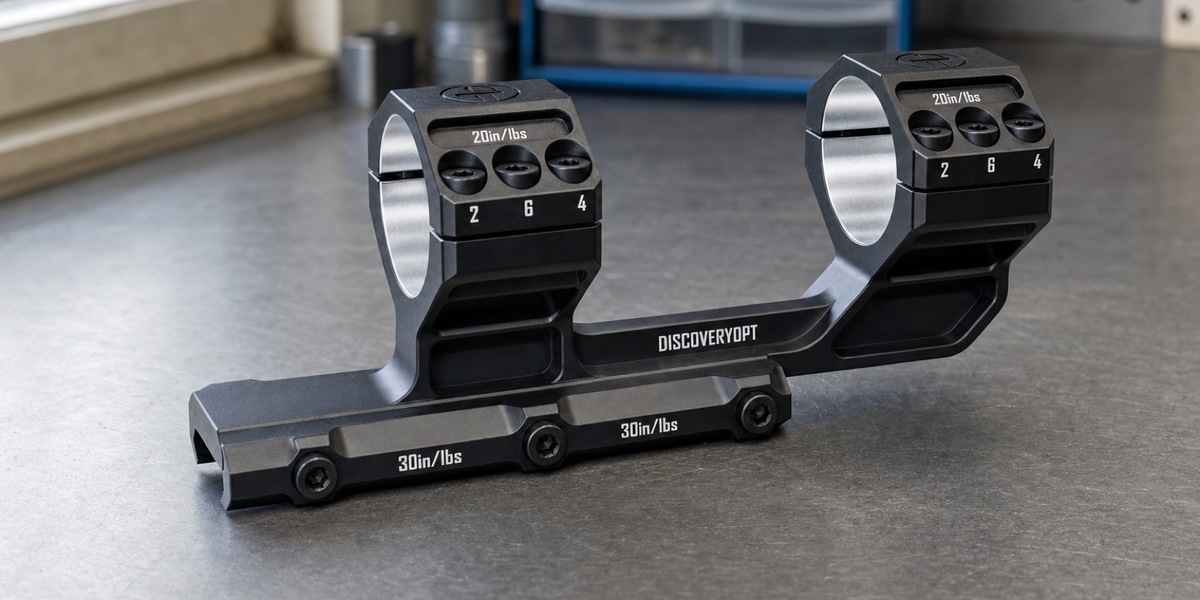
DiscoveryOpt's canted scope mount combines 20 MOA, a listed 1.5-inch height, and a two-inch forward offset. Each dimension affects how the optic fits the rifle. A low price gets my attention; the combination decides whether I would order one.
Moondog Industries' November 7 look at the DGCM3 supplies the current reason to examine it. The reviewer quotes a $45 price and describes six screws per ring. I have not tested this mount. My interest is in the buying decision those specifications create for a Canadian owner with a scope and rifle already chosen.
The rings supplied with my Discovery ED-ELR scopes gave me no complaints. I give the brand credit for that experience. This separate cantilever still has to suit the arrangement I want on the rifle, and its low review price leaves several questions open.
The name on the review and the listing
Moondog identifies the mount as DGCM3. Discoveryopt's current store uses the descriptive name Heavy Duty Cantilever Scope Mount, with 30 mm and 34 mm versions. Its listing describes the same key dimensions: 20 MOA of cant, a nominal 1.5-inch height, and two inches of forward extension.
The maker lists a one-piece 6061 aluminium body, twelve T-20 ring screws, and three base screws. Those details help identify the pictured configuration. Anyone ordering by the DGCM3 code should confirm the exact version with the seller; that code is absent from the manufacturer's current product title.
The specifications describe the proposed arrangement. Durability and return to zero would need their own test evidence. A buyer paying more for documented performance is making a different comparison from a buyer shopping on dimensions alone. I would keep those questions separate while looking at the price.
Twenty MOA goes into the whole arrangement
A canted mount tilts the scope relative to the rifle. The scope retains its internal mechanical limits; the angle changes where the chosen zero sits within that travel.
Vortex's current FAQ explains the distinction between the total adjustment listed in a scope's specifications and the adjustment available after zeroing. A canted base can leave more travel available for dialling to longer distances. The useful amount depends on the complete setup.
Canadian manufacturer Apex Optics makes that dependence explicit: the base angle and the rings or mount contribute together. Its guidance also explains how the physical zero-stop mechanism can limit a scope's accessible elevation. The adjustment you can actually reach is the useful figure for the purchase.
For the DGCM3 buyer, the first useful number may already be engraved on the rifle's rail. A 20 MOA rail with a 20 MOA mount, both inclined in the same direction, gives a nominal 40 MOA arrangement. Whether the scope can reach the intended zero, and how much useful adjustment remains afterwards, depends on that particular combination.
I would want that answer for my scope and usual distances before ordering another twenty minutes of angle. More available elevation can be useful. I also need the ordinary zero that makes the rifle useful every week.
The fit still has to work
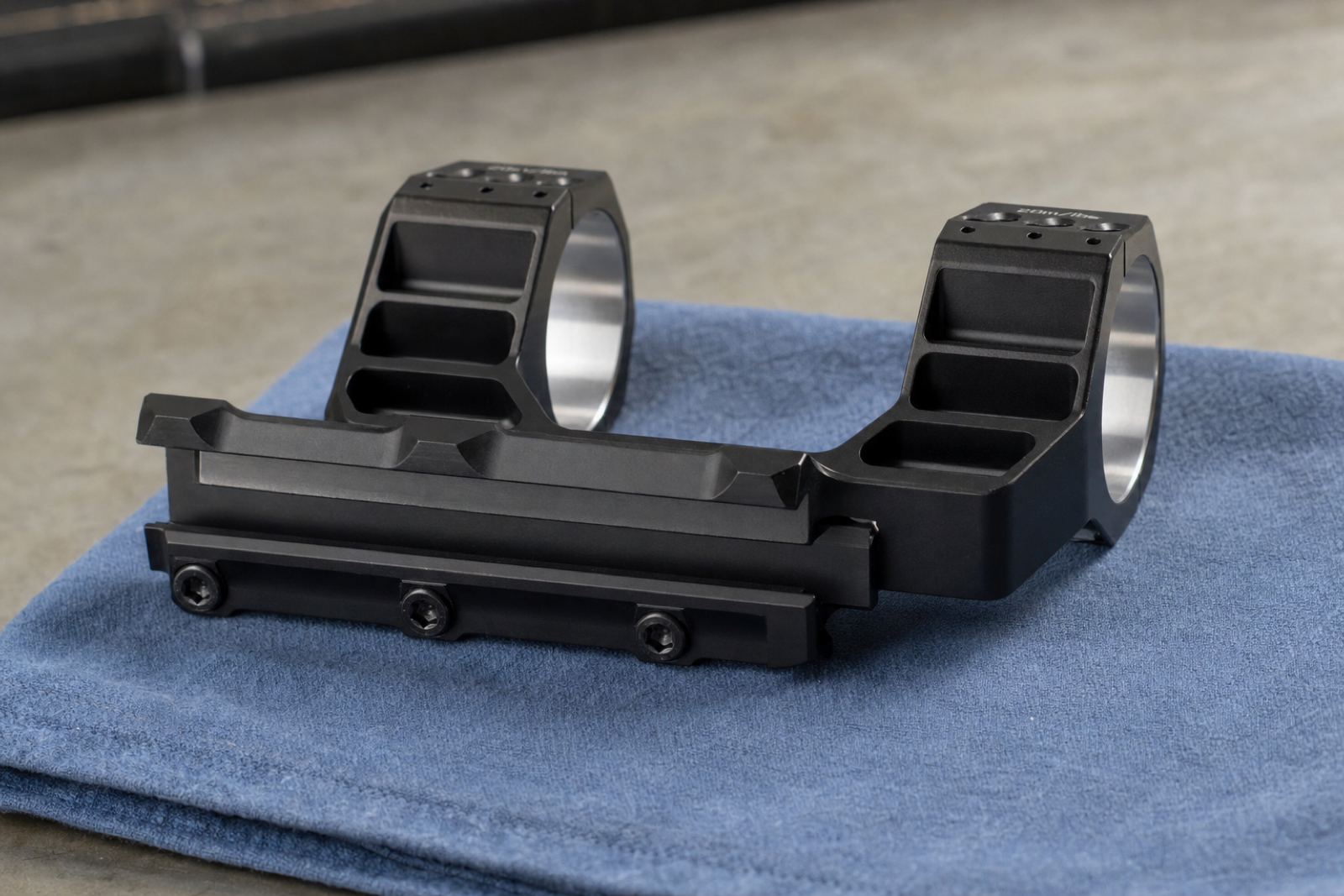
The forward offset deserves equal attention. Discoveryopt describes two inches of extension to place the optic farther forward. That can help when the scope needs to sit ahead of the available clamping position. A rifle that already allows the right position may gain little from the extra reach.
Tube diameter is the straightforward part: choose the version matching the scope's main tube. Then compare the mount's height and ring placement with the optic's actual body. Turret housings, available straight tube, and the desired fore-and-aft position all belong in that comparison.
The maker's nominal 1.5-inch height also needs a fair comparison with existing rings. Use matching measurement points when comparing specifications. A number measured to the scope's centre and a number measured to the bottom of its tube describe different heights.
I care about where my head ends up behind the scope. An arrangement that clears the objective can still leave the optic higher than I want. On a rifle with an adjustable cheekpiece, the available adjustment becomes part of the decision. On a fixed stock, I would be even more particular about the height I am buying.
The drawing and dimensions deserve a look while the mount is still on the screen. They are easier to compare there than after another parcel of small black components arrives.
A Canadian price still needs an order total
Moondog's $45 reference is useful context for the review. A Canadian buyer still needs a delivered total in Canadian dollars, with shipping and applicable charges accounted for. I have no verified Canadian DGCM3 listing to attach a local price or stock promise to this piece.
I would also establish who handles a problem with the mount and where a return would go. A retailer carrying Discovery scopes or other rings supplies no answer about this exact item. The particular seller and version matter.
That leaves a reasonable shortlist decision. I would consider this mount for a rifle that benefits from its cant, height, and forward reach, once the exact version, delivered cost, and support route are clear. My satisfactory experience with the supplied Discovery rings earns this hardware a look. The fit still has to earn the order.
The free weekly Dispatch covers Canadian gear, precision shooting, and handloading. Read The Dispatch
Sources
- Moondog Industries: DiscoveryOpt DGCM3 20MOA Mount, November 7, 2026.
- Discoveryopt: Heavy Duty Cantilever Scope Mount, current manufacturer description and dimensions, checked November 9.
- Vortex Optics: FAQ, riflescope adjustment, checked November 9.
- Apex Optics: Elevation and Windage Internal Adjustment, checked November 9.