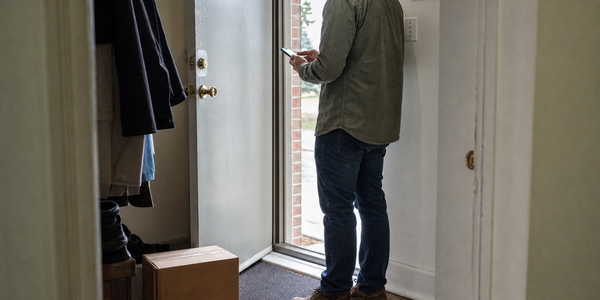
Nothing in section 10 says case
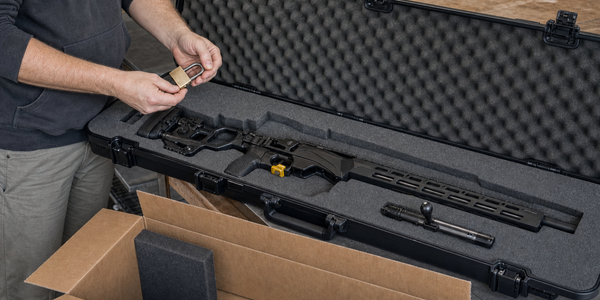
Subsection 10(1) of SOR/98-209 requires one thing to transport a non-restricted rifle: that it be unloaded. No case, no trigger lock, no separate ammunition. The case rule Canadians recite at each other is real, but in Ontario it comes from the Fish and Wildlife Conservation Act.

Storage and transport Open the source map
Ontario's bow-only deer season opens September 1 across much of the northwest and northeast, with deer and moose gun seasons following September 19 in listed northern units. Between now and then, rifles will go into vehicles for sight-in days and hunting trips. Some owners will be carrying rules that do not exist.
Here is subsection 10(1) of the Storage, Display, Transportation and Handling of Firearms by Individuals Regulations, in full:
An individual may transport a non-restricted firearm only if (a) except in the case of a muzzle-loading firearm that is being transported between hunting sites, it is unloaded; and (b) in the case of a muzzle-loading firearm that is being transported between hunting sites, its firing cap or flint is removed.
That is the baseline federal rule for the firearm class most Canadians own. It says nothing about a case, trigger lock or ammunition location. Two further subsections cover an unattended vehicle.
What "unloaded" means
Section 1 defines it: no propellant, projectile or cartridge that can be discharged from it may be "contained in the breech or firing chamber of the firearm nor in the cartridge magazine attached to or inserted into the firearm."
The last clause matters. A loaded detached magazine in a range bag is a loaded magazine in a bag; the rifle beside it remains unloaded.
Where the case rule actually lives
The folklore joins three separate rules.
Section 5 governs storage, where the locking-device rule comes from. The ordinary storage rule requires a non-restricted firearm to be unloaded and rendered inoperable by a secure locking device or removal of its bolt or bolt-carrier, or kept in a securely locked container or room that cannot readily be broken into. Ammunition must not be readily accessible unless it is in a securely locked container that cannot readily be broken into, "together with or separately from the firearm." Section 5 also sets out limited predator-control and remote-wilderness exceptions. Those ammunition provisions sit in storage or display sections, not the transport section.
Section 11 governs restricted-firearm transport, where the habit of carrying a case comes from. A restricted firearm must be unloaded, rendered inoperable by a secure locking device, and inside a locked opaque container that resists forced or accidental opening. In an unattended vehicle, that container belongs in a securely locked trunk or similar compartment when one exists. Without one, the container must be out of outside view and the vehicle or part holding it securely locked.
A Benelli Lupo in .30-06 and a CZ 75 SP-01 share my safe. Putting both in one vehicle invokes different sections: the rifle needs an empty chamber and no cartridges in any attached magazine; the pistol also needs its lock, opaque container and authorization to transport.
The federal rule that actually bites
Subsection 10(2) is the one worth memorizing.
Once the vehicle is unattended, the requirements grow. Use and lock a trunk or similar compartment when one is available; without one, keep the firearm out of outside view and lock the vehicle or part holding it. In qualifying remote wilderness, where neither a suitable compartment nor the vehicle can be locked, subsection 10(3) requires the firearm to remain out of view and secured with a locking device, with an exception to the device requirement when the firearm is reasonably needed for predator control.
"Unattended" means a vehicle outside the direct, immediate supervision of an adult or licence holder. Walking inside to pay for fuel or using a service-centre washroom can trigger the rule.
The consequence is federal. Criminal Code subsection 86(2) makes it an offence to contravene these regulations, and subsection 86(3) carries up to two years on a first indictable conviction.
Two statutes, two sets of officers
Ontario adds a stricter wildlife-law layer. Its 2026 Hunting Regulations Summary makes a loaded firearm in or on a vehicle illegal in wildlife country, including travel to and from it. It also requires firearms there to be unloaded and encased from half an hour after sunset to half an hour before sunrise. Encased means enclosed on all six sides.
That encasement duty comes from Ontario's Fish and Wildlife Conservation Act, 1997 and applies after dark in wildlife country. Ontario also restricts a loaded firearm on or within eight metres of many public roadways during an open deer or elk gun season.
Readers outside Ontario should read their own province's wildlife statute rather than assume this transfers.
The case for doing more than the minimum
The strongest argument for the case and the lock never mentions section 10.
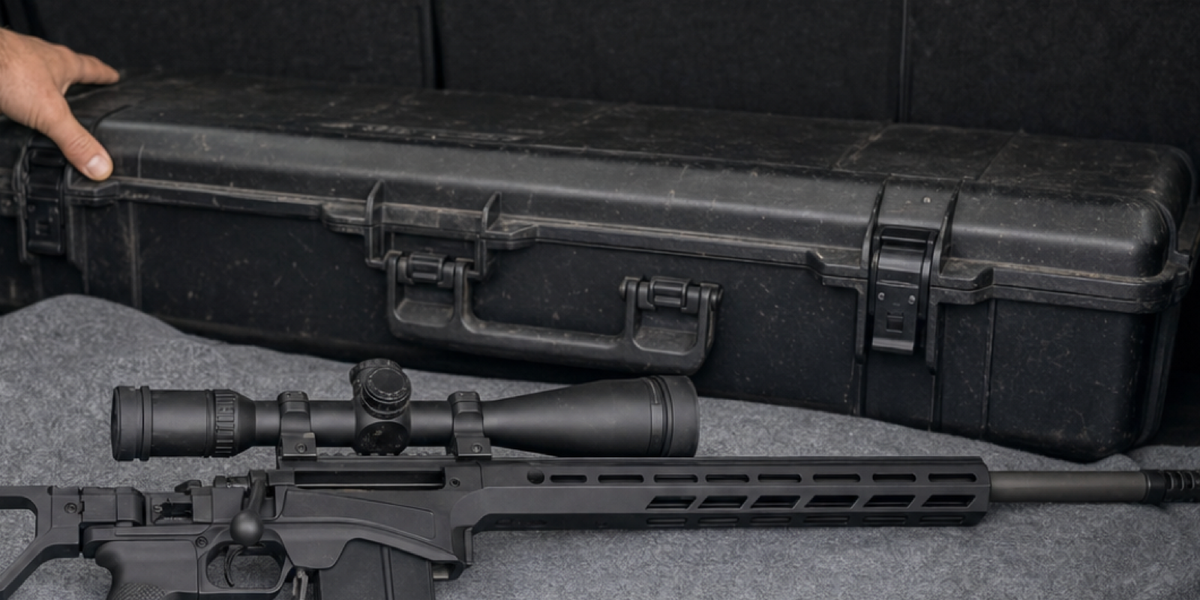
A rifle visible on a back seat invites trouble. A locked case in a locked trunk adds an obstacle and protects a zero that cost a morning and a box of ammunition.
Those are good reasons to carry more gear than the law demands. While attended, section 10 asks only that a non-restricted rifle be unloaded. The distinction matters: a habit chosen for prudence belongs to the owner, not to a rule invented at a counter.
Why the fog costs us
SOR/98-209 was registered in 1998, and section 10 carries no amendment note. The regulation is free to read, ten minutes end to end.
The folklore sells equipment as mandatory, rattles new licence holders about a routine federal drive, and can hide the provincial rule that matters. Read the actual section before you repeat the rule.
You are allowed to know exactly what the rule says. Go read section 10.
Sources
- Storage, Display, Transportation and Handling of Firearms by Individuals Regulations, SOR/98-209, sections 1, 5, 10 and 11 - Justice Laws Website, current to 2026-06-21, last amended 2012-11-30
- Criminal Code, section 86 - Justice Laws Website
- Storing, transporting and displaying firearms - RCMP Canadian Firearms Program, modified 2024-11-12
- Ontario Hunting Regulations Summary: General regulations - Ministry of Natural Resources, updated 2026-03-09
- Tentative dates for the deer and moose hunting seasons - Ministry of Natural Resources, updated 2025-12-15
- Fish and Wildlife Conservation Act, 1997, S.O. 1997, c. 41 - Government of Ontario
- Canadian Firearms Storage And Transport Source Map - Holdover, the companion reference for the storage, transport, display and ATT sources cited above
The amnesty file is still moving.
If this piece sent you back to government pages, do not wait for the next portal, Gazette, or court move to find you by accident.
The Dispatch follows Public Safety, RCMP, Canada Gazette, court, compensation, collection, and amnesty updates so the next change comes with the source that moved.
Safety note: the tracker is a worksheet for source hygiene, not legal advice or a substitute for current official guidance.