One Ontario buyback contact, six unpublished totals
One Ontario owner says the buyback program contacted him. Ottawa's current workflow now needs public counts for agreements, kits, appointments, validation, destruction, and payment.

Buyback reference Open the tracker
Opinion. An Ontario firearms owner says a buyback-program email reached him after he filed a declaration. Public Safety Canada's current pages show the operational steps that contact can begin.
One report measures one participant. It supplies no Ontario-wide total and no official launch date. The useful part is the handoff. A declaration has moved far enough for one owner to say the program contacted him, while Ottawa's public owner scorecard still ends at declarations.
That leaves six totals worth publishing.
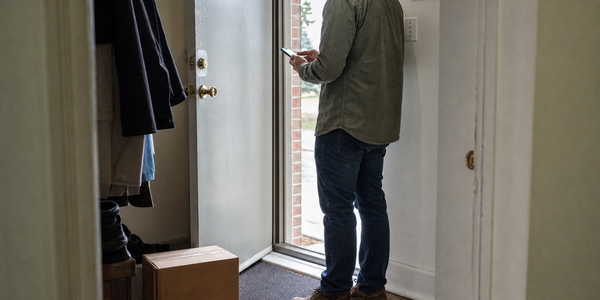
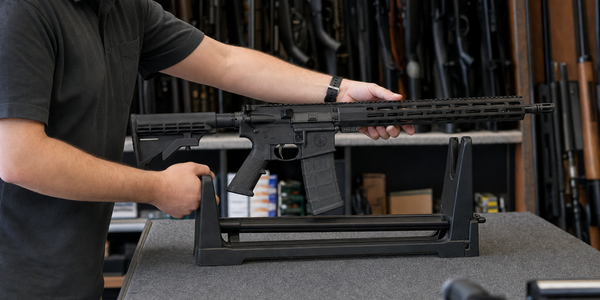
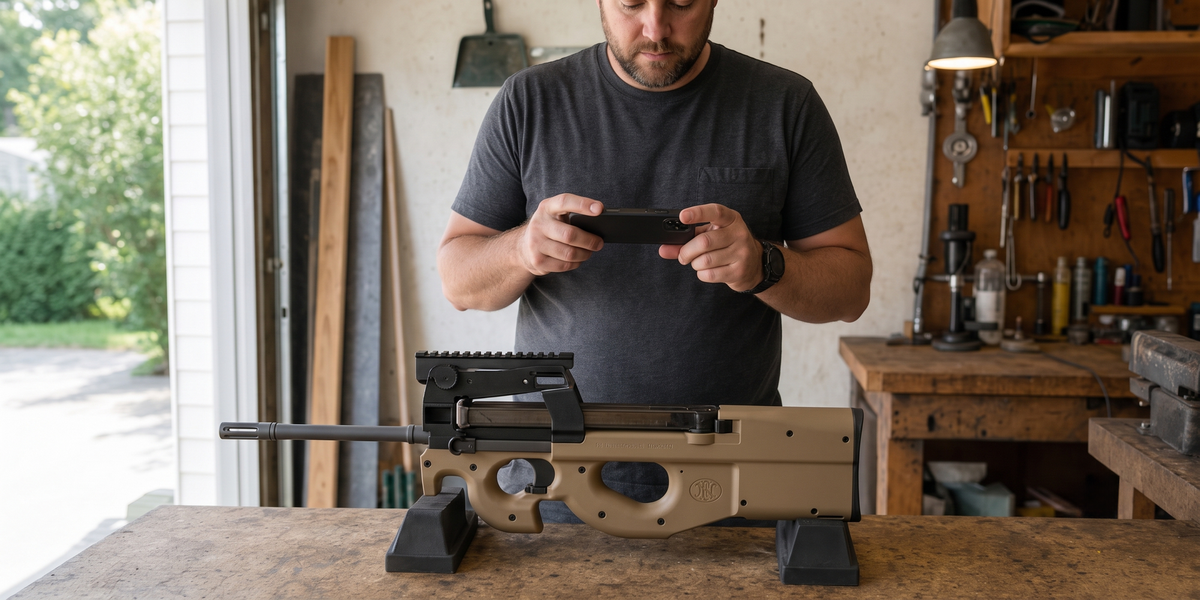
Holdover produced the feature as a fictional Ontario owner-record scene from official FN PS90 model references. The person, firearm, workshop, and moment are representative. They do not depict the Reddit poster, his property, or an actual program interaction.
The handoff now has a sequence
Public Safety's July 28 instructions begin after assessment. An owner may receive a message through the portal, by mail, or by phone. An accepted participant reviews a Funding Agreement, enters payment information, and books an appointment at the collection location assigned by postal code.
The physical process is equally specific. Public Safety says each firearm gets one transportation kit after the Funding Agreement is accepted. The firearm must arrive complete and fully assembled, with the correct declaration number. The owner brings a PAL and a second piece of government photo identification. A collection officer issues an official receipt.
The firearm then goes through validation and destruction. A separate route exists for permanent deactivation by a participating business. Public Safety says compensation should arrive within 45 business days after validation.
That is an operational chain, with a person and a record at every handoff.
Six counts belong beside the declaration total
Ottawa currently publishes 68,717 firearms declared by individuals as of June
- Ontario accounts for 27,912 of them. Those numbers tell Canadians what
entered the program.
They cannot tell us what the program has completed.
A useful owner-side progress report would add six aggregate totals:
- declarations approved;
- Funding Agreements accepted;
- transportation kits issued;
- appointments completed and firearms collected;
- firearms validated and destroyed or permanently deactivated; and
- individual payments issued, with the total dollars paid.
Province-level counts would make the collection timetable testable. A weekly or monthly update would show whether an announced window has become an operating service. None of that requires a name, address, firearm serial number, payment account, or individual compensation figure.
Ottawa already shows the business side
The federal progress page demonstrates that aggregate reporting is possible. Its business section reports 74,073 firearms claimed and $96.1 million in compensation paid as of June 8.
The individual section uses a different level of detail. It says collection, deactivation, and compensation will run from spring through early fall. It says collection is underway. It links readers to the declaration totals and estimated provincial timelines.
The strongest case for waiting is practical. A national collection program has to coordinate appointments, police services, transportation, validation, destruction, deactivation, and payments across thirteen provinces and territories. Early counts may move quickly. Small local totals may need suppression for privacy. A final reconciliation will be cleaner than a live operational snapshot.
Those are reasons to define a reporting method. They do not justify an empty owner-results table. Ottawa can round, suppress small cells, label preliminary figures, and publish a revision date. Statistics agencies and public programs use those tools every day.
Owners are already doing the detailed work
The precision expected from the owner is striking.
Use the right declaration number. Accept the agreement. Enter the payment details. Wait for the assigned location. Book the appointment. Use one kit per firearm. Bring two forms of identification. Keep the receipt. Wait for validation. Watch the payment clock.
That level of record-keeping will feel familiar to anyone who keeps a serious range or loading notebook. The number of cases placed on a bench tells me how much work entered the process. Charged rounds, fired rounds, measured groups, and recorded adjustments tell me what happened after.
I would never merge those columns and call the record complete.
Licensed owners have lived inside a detailed administrative system for years. The federal program can meet them at the same standard. If the government needs each participant to preserve a clean chain of custody, the public deserves a clean chain of totals.
One report should lead to better reporting
The Ontario post remains useful at its true size. It shows one owner saying contact reached him. It also shows why community reports rush into a vacuum: people will compare messages, compensation figures, appointment timing, and kit delivery when the official page supplies no operating totals.
Ottawa can reduce that speculation without publishing anyone's private file. Name the stages. Count the handoffs. Date the update. Separate Ontario from the national total. Explain revisions.
The federal government has already given owners the checklist.
Now publish the score.
Sources
- Public Safety Canada, Next steps for individuals, modified July 28, 2026.
- Public Safety Canada, Collection and other disposal options, modified July 28, 2026.
- Public Safety Canada, Compensation, modified June 9, 2026.
- Public Safety Canada, Progress update of the Assault-Style Firearms Compensation Program, modified June 9, 2026.
- Public Safety Canada, Number of assault-style firearms declared by province and territory, figures as of June 8, 2026.
- Public Safety Canada, Firearm collection timeline in Canada, modified June 3, 2026.
- Reddit r/canadaguns, Looks like the gun buybacks have started in Ontario, accessed July 30, 2026. Community trigger only.
The amnesty file is still moving.
If this piece sent you back to government pages, do not wait for the next portal, Gazette, or court move to find you by accident.
The Dispatch follows Public Safety, RCMP, Canada Gazette, court, compensation, collection, and amnesty updates so the next change comes with the source that moved.
Safety note: the tracker is a worksheet for source hygiene, not legal advice or a substitute for current official guidance.