MDT's Oryx costs *less* with the M-LOK head
MDT lists the Oryx at C$134.99 with M-LOK and C$149.99 with sling stud. The selected head changes the Canadian price before the premium-bipod comparison begins.

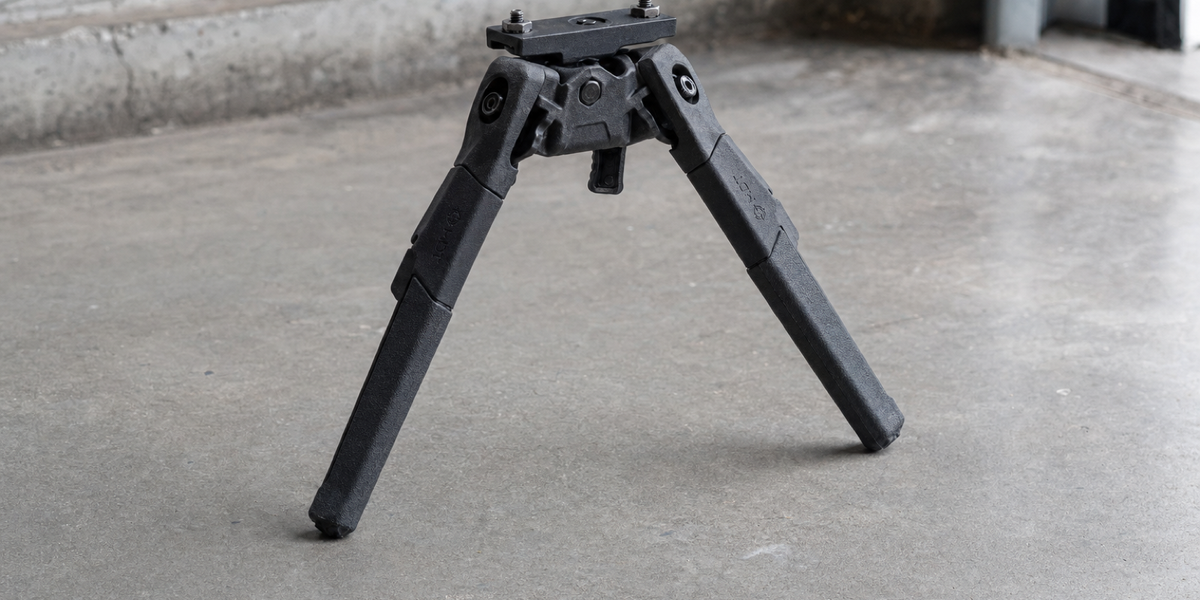
MDT's Canadian Oryx bipod page gives you two prices. Select the sling-stud head and it shows C$149.99. Select M-LOK and it shows C$134.99. On September 22, both selected versions show in stock. Fifteen dollars separates two ways of attaching the same bipod, before tax and shipping enter the conversation.
That is a better starting point for a first-bipod purchase than the top of MDT's range. The head has to suit the rifle. After that, the useful comparison is how much height and adjustment your shooting requires. A price list can tell you what the company charges; the position you intend to shoot from gives those extra features a purpose.
Two prices behind one product name
The default listing and selected M-LOK page establish that difference. Both use Canadian dollars. I checked the named attachment beside each price, rather than carrying one figure across the product family.
MDT publishes a weight of 11 ounces for M-LOK and 12.5 ounces for the sling-stud version. The company describes high-strength polymer construction, a pivot height of 7.2 to 10 inches, and 50 degrees of cant. Cant is the rifle's sideways tilt at the bipod head.
I would keep the first decision quite literal: which attachment belongs on this rifle? An attractive price on the wrong head creates another shopping job. The product name alone leaves that question open, and a colour selection will not answer it.
Ckye-Pod money buys a different adjustment range
MDT lists the Ckye-Pod GEN3 Single Pull at C$719.99. The selected Canadian listing also showed in stock when checked. Compared with the Oryx, the difference is C$585 for M-LOK or C$570 for the sling-stud version.
The manufacturer specifies 22 ounces, a 6-to-15-inch height range, three leg-splay positions, and an ARCA/Picatinny attachment interface. Splay describes how widely the legs spread. MDT also lists up to 360 degrees of cant. These are published specifications, with different mechanisms behind the numbers; I have no comparative test here that turns them into a performance ranking.
There is a sensible case for buying that reach and adjustment. A shooter who expects varied ground and position demands can put a purpose against the extra range. Someone planning ordinary sessions on a level club bench has a different problem to solve. Calling both people first-season shooters tells us very little about the support either needs.
The expensive model also weighs more. That tradeoff deserves the same attention as the taller reach. A comparison that gives the expensive option every benefit and treats its weight as fine print has already made the decision for you.
The attachment deserves its own line
Buying within one manufacturer's range still requires an interface match. That is worth settling before comparing the longest reach or the cleverest lever.
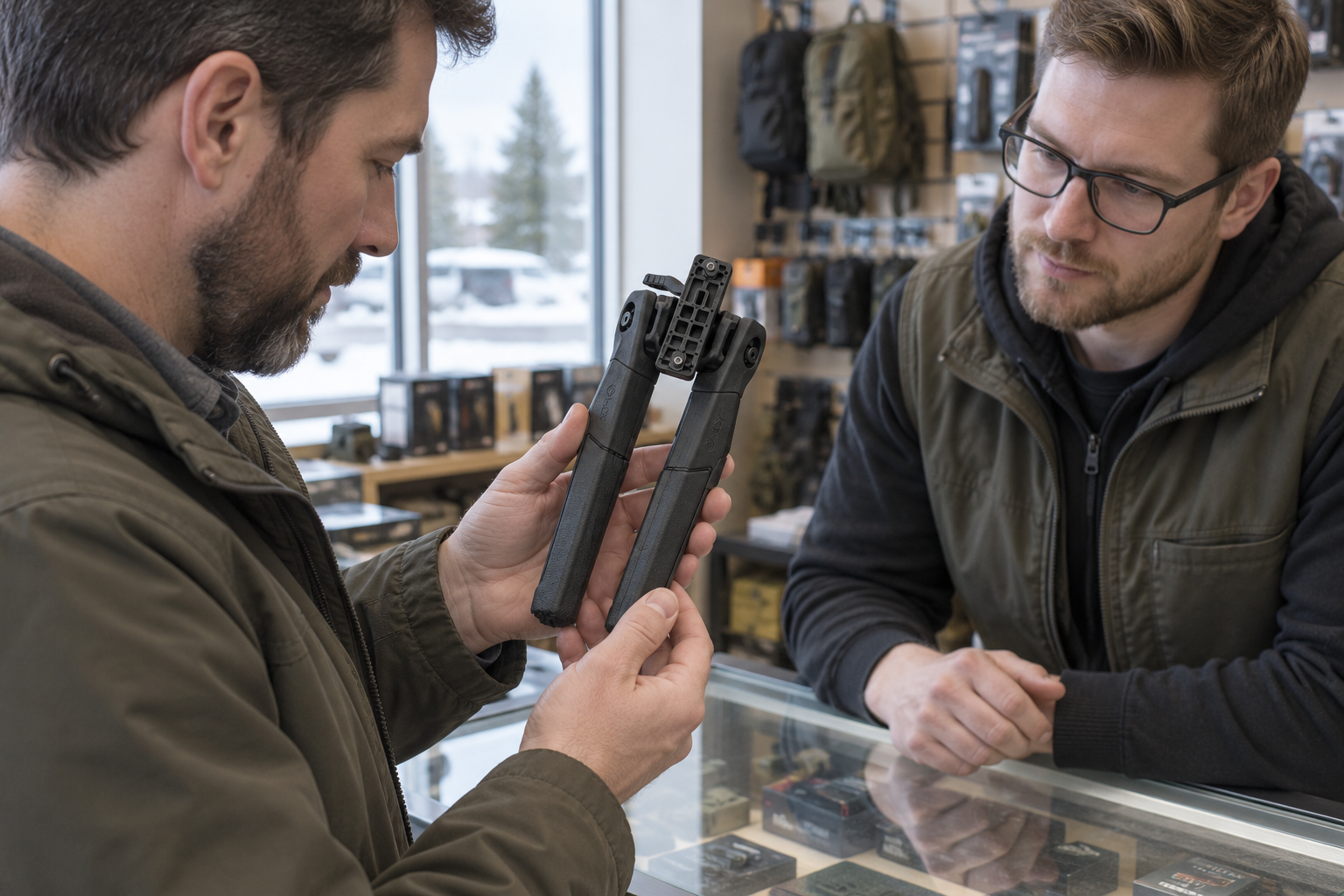
I would write the required head beside the product name while comparing prices. That keeps a cheap listing from becoming a false match. It also helps when comparing a retailer's description with the maker's page, especially if one listing leaves the attachment out of its title.
Any adapter has its own compatibility question. MDT's M-LOK Picatinny Rail requires an M-LOK attachment surface and provides a Picatinny interface. That direction matters. A reader with a Picatinny attachment point needs a compatible bipod head or a specifically verified adapter. Buying a conveniently priced rail without checking that relationship can leave two incompatible purchases on the bench.
A dealer should be able to identify that match from the actual parts. If the answer rests on a generic recommendation tile instead, I would leave the cart alone until the connection is clear.
GRND-POD offers a middle comparison
The GRND-POD page opens on a black ARCA/RRS Dovetail version at C$279.99. Its listed choices include Picatinny, A.R.M.S. #17, M-LOK, and sling stud as well. Once again, the selected head matters to the comparison.
MDT gives it a 4.5-to-9-inch pivot height, carbon-fibre legs, and an aluminium core. The specifications separate cant by attachment: 40 degrees for ARCA/RRS and 32 for Picatinny. Reading the headline maximum alone would miss that distinction. The page also separates weights by head, including an A.R.M.S. #17 figure explicitly stated without a mount.
Those details make the middle model worth reading on its own terms. Its lower minimum height may be more relevant to a particular setup than another model's greater maximum reach. I would want to compare the position and the complete attachment before calling either number an upgrade. A catalogue's ascending price order is convenient for shopping, but it cannot tell me how I want to sit or lie behind my rifle.
My own setups have more than one answer
My own setups include an MDT GRND-POD and Magpul bipods. That gives me a fairly practical reason to resist the idea that one manufacturer's top model settles the category. Different equipment can belong in the same collection without requiring an argument about which owner has understood precision shooting correctly.
I would still want actual use and durability evidence before calling a new bipod an improvement over equipment I already have. The maker's numbers help shortlist a product; a comparative test would need to answer different questions.
For a first purchase, I would compare the fitting head, the position I actually expect to use, and the cost of the selected version. If a more demanding plan makes the Ckye-Pod's range useful, its price has something concrete to answer for. If the Oryx's dimensions fit the job, the smaller bill leaves room in the shooting budget for the next thing that proves necessary.
For my next comparison, I would take the rifle's attachment details to the counter and ask to see the matching version. Then I could spend the conversation on the position I need, instead of the adapter I forgot.
Sources
- MDT Canada, Oryx bipod, default sling-stud selection and specifications; checked September 22, 2026.
- MDT Canada, Oryx M-LOK, Gray, selected attachment and Canadian-dollar price; checked September 22, 2026.
- MDT Canada, GRND-POD, selected ARCA/RRS price and head-specific specifications; checked September 22, 2026.
- MDT Canada, M-LOK Picatinny Rail, attachment direction; checked September 22, 2026.
- MDT Canada, Ckye-Pod GEN3 Single Pull, selected price, availability, and published specifications; checked September 22, 2026.
Prices and availability are September 22 storefront observations. This is published-specification commentary; no comparative product test was performed.
Shortlist the rifle before the checkout page.
If this piece helped you narrow the rifle question, keep the tradeoffs visible before the next tab becomes a shopping cart.
Use the Holdover Rifle Cartridge Shortlist Card to compare use case, distance, recoil, ammunition availability, rifle fit, optics plan, budget, and what you will actually practice.
Safety note: the card is a planning worksheet, not buying advice, legal advice, hunting guidance, load data, or a substitute for current manufacturer, range, provincial, federal, or qualified-instructor guidance.