Pop cans became policy *targets*
A banned-plinking-rifle joke landed because it says what owners keep seeing: Ottawa turned ordinary lawful gear into a compliance problem and called the target public safety.

Update, June 9, 2026. Public Safety Canada has extended the relevant amnesty period. The old the former fixed deadline date referenced below is no longer the operative expiry; the amended expiry is 90 days after the Supreme Court of Canada renders its decision.
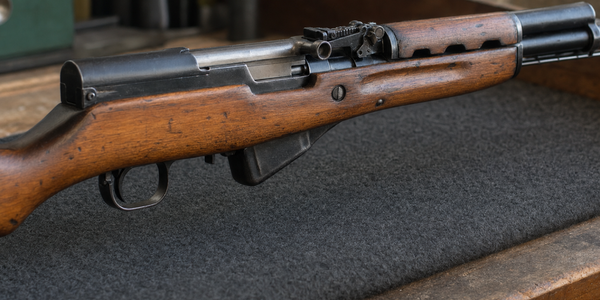
Opinion. The best Canadian firearms commentary I found this morning was a joke about a rifle that, according to the owner, "never hurt gopher or pop can."
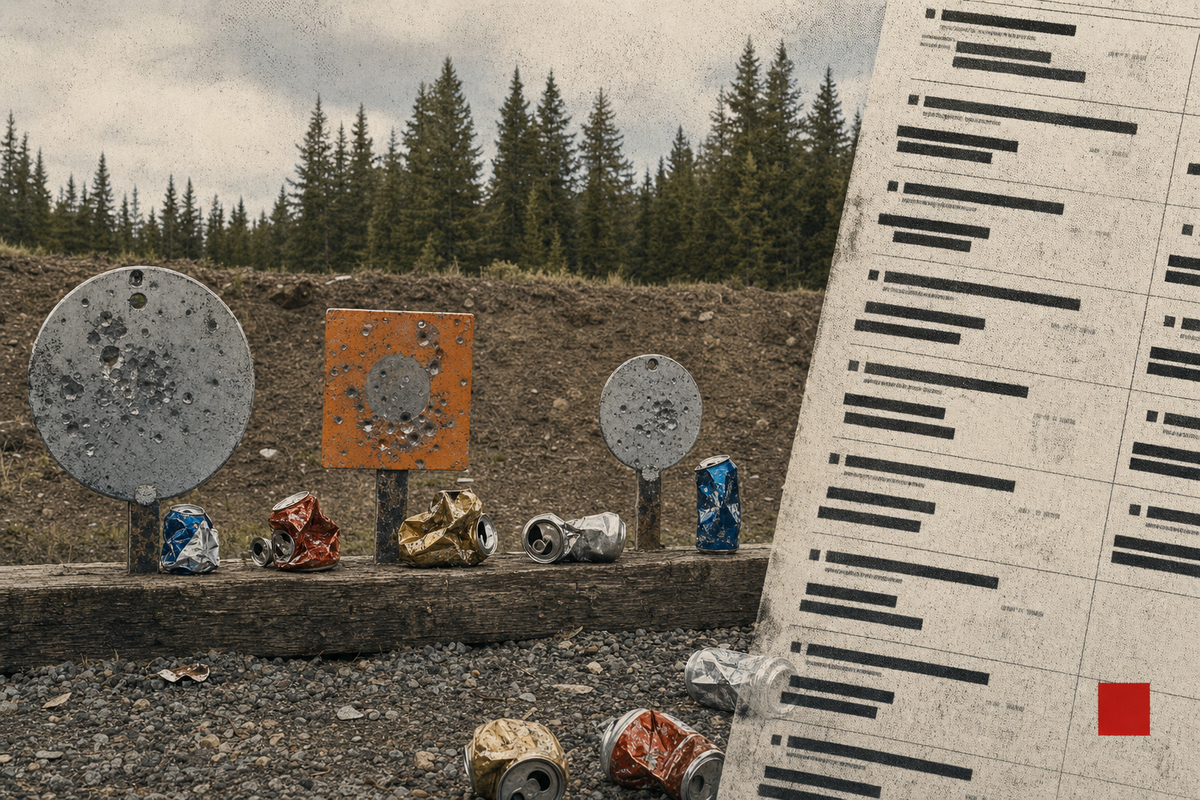
That is funnier than it should be, mostly because it is too close to the truth. A rifle can spend its useful life bothering paper, steel, and the occasional unlucky pop can, then one day become a public-safety object because a federal list says so.
The r/canadaguns post was the highest-engagement Canadian community item in my last-24-hour scan. It was a photo, a laugh, and a useful question: why is this thing on the list?
The joke worked because the rule feels absurd
The post's owner said the photo was taken before the prohibition date. Commenters identified the rifle as a Kel-Tec RDB, and the thread immediately became what Canadian gun forums now do best: half humour, half classification autopsy, half grief, and yes, that is too many halves. This hobby has a measurement problem.
Public Safety Canada's December 5, 2024 backgrounder lists Kel Tec RDB, RDB-C, and RFB among the 324 makes and models added in that prohibition wave. The same backgrounder says the amendments prohibited 104 families of firearms and repeats the government's view that these are not suitable for hunting or sport shooting.
That is the official framing. The community framing is simpler: this thing was a range toy.
The point is not that one bullpup-style rifle was essential to Canadian civilization. The point is that Ottawa keeps selling public-safety claims through categories that land on licensed owners, retail shelves, clubs, and range gear already inside the regulated system.
I spend most of my shooting energy on the quieter side of the sport: bolt guns, optics, groups, load development, notes, and the private comedy of trying to make a target care that I bought better brass. Even there, the policy file is close. My own collection notes have had to carry the word "prohibited" beside lawful property. The object did not suddenly become more dangerous when the word changed. The owner's legal reality did.
That is the part the public debate keeps flattening.
What the list actually says
Public Safety Canada's firearms page says the federal government has banned more than 2,500 makes and models of "assault-style" firearms since May 2020. The RCMP says the amnesty now runs until the SCC appeals + 90-day endpoint, and that newly prohibited firearms cannot be used for sport shooting. The federal individual-list page says participation in the compensation program is voluntary, but compliance with the law is not.
That is the machinery behind the joke.
The joke lands because the machinery is enormous and the object in the picture is ordinary to the people who actually shoot. Not unregulated. Not consequence-free. Ordinary as in bought by a licensed person, stored by a licensed person, and used in lawful contexts.
The government side will answer that some firearms are too dangerous for civilian circulation and that removing them reduces risk. That is the strongest federal position. It deserves to be stated cleanly because strawmen are lazy and usually shoot worse than the people making them.
The problem is aim. Licensed owners are visible. Retailers, ranges, importers, business inventories, transfer checks, and registered restricted firearms are visible. A rifle sitting in a safe under an amnesty is visible enough to be managed, counted, listed, compensated, deactivated, exported, or destroyed.
The illicit market is harder, so the compliant side gets the spreadsheet.
New shooters notice the chill first
This is not just an old-owner grievance.
Newer PAL holders are entering a sport where the first gear lesson is often not sight picture, trigger control, wind, or why .22 LR is still the best humility machine ever invented. The first lesson is classification anxiety.
Before a new shooter understands what they actually like to shoot, they are already being taught to ask whether a model is still available, whether it was hit by an OIC, whether an old post is stale, and whether buying something interesting is a clever decision or a future inventory problem.
That is a miserable onboarding experience.
It also changes the market. Retailers become cautious. Buyers become cautious. Used sellers become vague. The ordinary fun of the hobby gets narrowed into whatever appears politically durable this quarter.
This is where the "pop can" joke matters. It gives newer shooters a plain way to see the issue. The policy lands on the object at the bench, the shop wall, the classified ad, the optic plan, and the question every Canadian buyer now has to ask before getting too attached.
What happens if the list moves again?
The useful lesson is not cynicism
The wrong lesson for new shooters is bitterness before competence.
Do not let Ottawa make the sport smaller in your head before you have learned what you enjoy. Shoot rimfire. Shoot bolt guns. Shoot shotguns. Learn wind. Learn bags. Learn why your first impressive group was partly luck and why the next one looked like it was fired during a small earthquake. Go to the range enough that the sport becomes real before the politics gets to define it.
But learn the paperwork too.
Know exact model names. Read dates. Save records. Understand the difference between law, regulation, RCMP administrative tools, retailer shorthand, and forum folklore with a torque wrench. If a claim matters, trace it back to a current source.
The serious owners I meet ask boring questions before spending money. They want to know what a firearm is, what class it sits in, what paperwork follows it, and whether the political environment has turned a lawful purchase into a bet.
Aim at harm, not visibility
Public Safety announced on April 1 that the individual declaration period had closed with more than 67,000 firearms declared by 37,869 owners. Those numbers deserve scrutiny, but the more basic question is still aim. What harm is being reduced, and where?
If a policy captures people who passed the course, got the licence, followed the transfer rules, stored the firearm, read the list, declared the item, or asked the question publicly, it may be administratively active without being strategically serious.
That is Holdover's objection to the OIC era in one sentence: Ottawa keeps mistaking visibility for risk.
The banned rifle in the forum post did not explain all of Canadian gun policy. No single object can do that. But it gave the community a clear image of the contradiction: a rifle remembered for paper, steel, gophers, pop cans, and range humour became one more item in a national compliance problem.
A serious public-safety policy should know the difference.
If the target was crime, Ottawa keeps shooting the nearest pop can.
Sources
- r/canadaguns, selected post, May 18, 2026, accessed May 19, 2026. https://www.reddit.com/r/canadaguns/comments/1th4dqa/she_never_hurt_gopher_or_pop_can_why_is_she_on/
- Public Safety Canada, December 5, 2024 prohibition backgrounder, accessed May 19, 2026. https://www.canada.ca/en/public-safety-canada/news/2024/12/government-of-canada-extends-list-of-prohibited-assault-style-firearms-and-moves-forward-on-regulatory-changes-to-strengthen-gun-control.html
- Public Safety Canada, firearms page, accessed May 19, 2026. https://www.publicsafety.gc.ca/cnt/cntrng-crm/frrms/index-en.aspx
- Public Safety Canada, individual lists page, accessed May 19, 2026. https://www.canada.ca/en/public-safety-canada/campaigns/firearms-buyback/individual-lists-firearms-lower-upper-receivers.html
- RCMP, May 2020 prohibition explainer, accessed May 19, 2026. https://rcmp.ca/en/firearms/what-you-need-know-about-government-canadas-may-1-2020-prohibition-certain-firearms-and
- Public Safety Canada, April 1, 2026 ASFCP declaration update, accessed May 19, 2026. https://www.canada.ca/en/public-safety-canada/news/2026/04/declaration-period-for-the-assault-style-firearms-compensation-program-closing-with-more-than-67000-firearms-declared-for-compensation.html
The amnesty file is still moving.
If this piece sent you back to government pages, do not wait for the next portal, Gazette, or court move to find you by accident.
The Dispatch follows Public Safety, RCMP, Canada Gazette, court, compensation, collection, and amnesty updates so the next change comes with the source that moved.
Safety note: the tracker is a worksheet for source hygiene, not legal advice or a substitute for current official guidance.