Run the numbers before you buy the press
A Canadian reloading cost calculator for the real question: cartridge, volume, equipment, components, and the round count where the press starts paying you back.

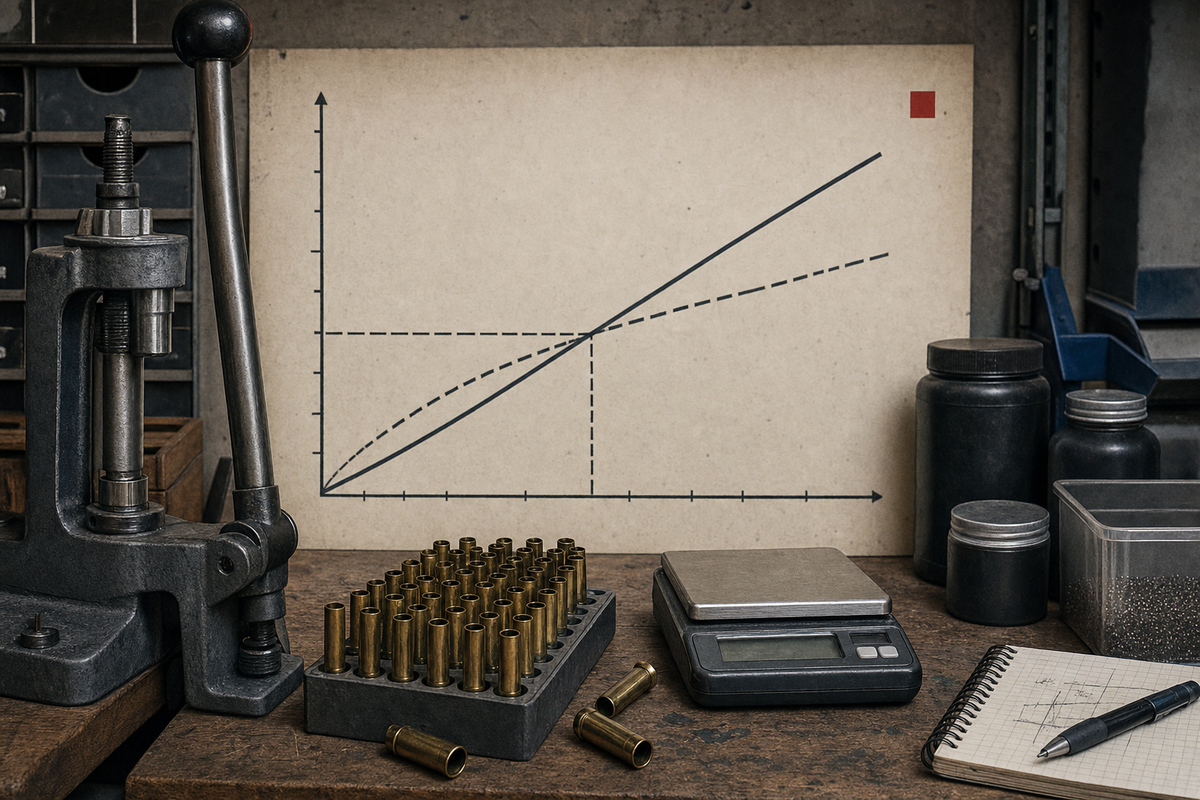
The question I keep getting is not really "Should I reload?" It is "Will reloading save me money?"
It can. It can also sit on the bench like a small invoice with a handle.
That is why this calculator exists. Reloading is not one answer. It depends on what cartridge you shoot, how much you shoot, what your factory ammunition actually costs, how hard you go on equipment, and whether your component prices are realistic or borrowed from a memory of 2018.
The useful answer is a number: how many rounds until the setup pays for itself.
Cents per round calculator
Use this as a cents-per-round calculator for handloading: enter factory ammunition price, bullet, primer, powder, brass cost, expected brass life, and equipment spend. The useful output is cost per round, savings per round, and the break-even round count.
The numbers are budgeting inputs, not load data. Canadian prices move, so every field stays editable instead of pretending last month's component shelf was carved into stone.
Keep up with the bench.
Get The Dispatch for Holdover’s handloading, gear, tool, and Canadian firearms updates.
What the calculator measures
Pick a cartridge, set your shooting volume, choose an equipment tier, then adjust the component costs to match what you can actually buy. The calculator compares factory match ammunition against a handload built from bullet, brass, primer, and powder cost. Brass is divided by expected case life. Powder is converted from dollars per pound into cost per charge. Equipment is treated as the upfront hole you need to climb out of.
The output is the part people actually need: cost per round, savings per round, break-even rounds, break-even years, and a ten-year savings estimate at your stated volume.
The break-even trap
This is where the calculator is more honest than the usual advice.
If you shoot expensive match ammunition in volume, the press may start making financial sense quickly. If you shoot a box here and there, the same setup can take years to pay back. If you buy a progressive rig because it feels like the serious choice, but your round count says entry-level gear would do, the math will not flatter you.
That is not an argument against good tools. It is an argument against pretending the tool is free because it lives on the bench instead of inside a factory box.
What the number cannot tell you
The calculator answers the money question, not the whole reloading question.
Your time still matters. So does the satisfaction of making ammunition that suits your rifle, the annoyance of component shortages, and the quiet educational value of learning exactly where consistency comes from.
It also is not load data. Charge weights here are representative cost inputs only. Use manuals and published data for actual loading.
For me, that is the cleanest way to think about it. Run the money first. If the break-even point makes sense, then decide whether the process is something you actually want in your life. If the number does not work, the calculator has already saved you money before the press showed up.
Quick FAQ
Is the Reloading Cost Calculator load data?
No. It is a cost calculator. Charge weights are representative budgeting inputs only, not instructions for assembling ammunition.
Why does my break-even point move so much?
Break-even changes with factory ammunition price, component cost, brass life, equipment tier, and how many rounds you actually shoot.
Which fields should I edit first?
Start with factory cost, bullet cost, primer cost, powder price, brass price, and expected brass life. Those usually move the answer fastest.
Are the defaults Canadian?
Yes. The defaults are representative Canadian starting points, but prices move quickly and every field is editable.
Cite This Tool
Related Holdover Tools
Useful calculators and references from the same corner of the Holdover bench.
- Holdover tools
- Reloading Starter Kit Builder
- Load Development Plotter
- Brass Life Estimator
- Cartridge Family Tree
Sources
- Higginson Powders, 2026 powder price list, accessed May 17, 2026.
- Higginson Powders, 2026 primer price list, accessed May 17, 2026.
- Prairie Gun Traders, ammunition list dated November 15, 2025, accessed May 17, 2026.
- Rangeview Sports and Barton's Big Country, current reloading-kit and press spot checks, accessed May 17, 2026.
- Hornady, 2026 product catalog, accessed May 17, 2026.