The Supreme Court Gave Them Five Minutes
Eight organizations have been granted leave to intervene in the Supreme Court appeals over Canada’s firearms prohibition. Each gets ten pages and five minutes—and considerably less freedom than “intervener” might suggest.

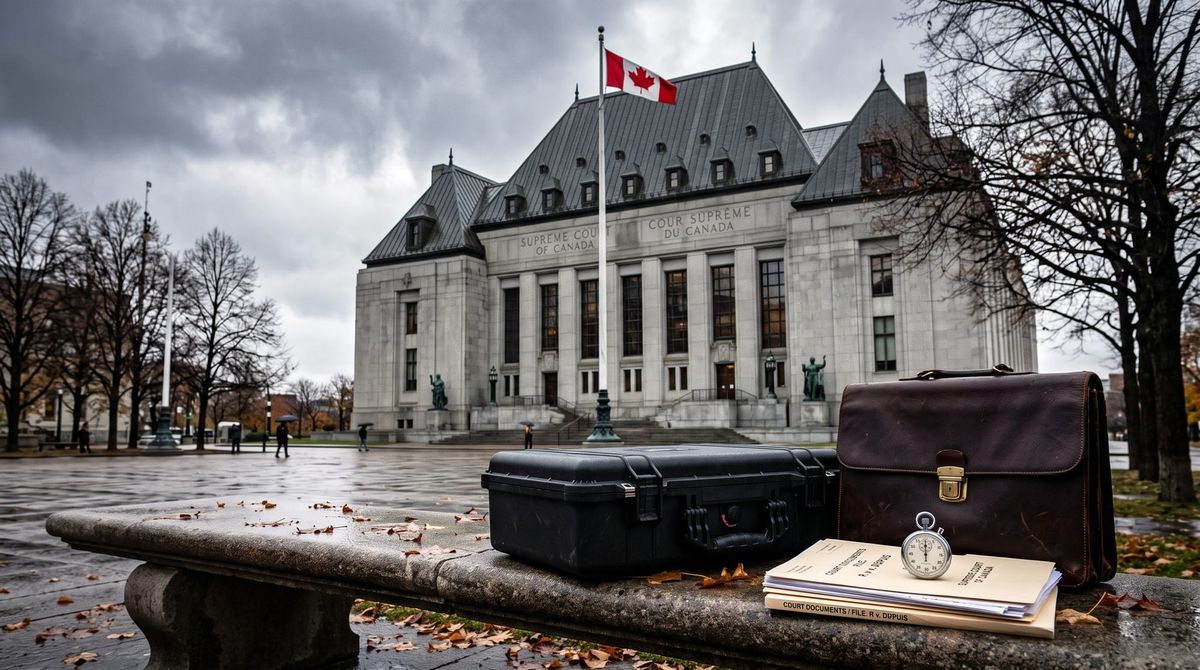
The Chief Justice of Canada signed an order on August 13 deciding who may speak at the hearing of the four appeals against the 2020 firearms prohibition. Nine organizations had motions pending. Eight were granted. One was dismissed. Every organization that got in receives a factum of no more than ten pages and five minutes of oral argument.
Eight speakers at five minutes is forty minutes of argument, which is my arithmetic on the Court's limits rather than a figure the Court publishes. Forty minutes, split eight ways, covering every organization in Canada that asked to address the country's highest court about the rifles in your safe.
What the order does
Holdover walked through these motions at the end of July, when all nine were sitting on the docket undecided. This is how they came out.
Granted, with a single factum common to all four appeals: the Canadian Constitution Foundation, the Canadian Shooting Sports Association, International Practical Shooting Confederation Canada, Safari Club International, the Canadian Coalition for Gun Control, the British Columbia Civil Liberties Association, and the Ontario Rifle Association.
Granted, in the CCFR appeal only: Canada's National Firearms Association.
Dismissed: the Canadian Taxpayers Federation. The order gives no reason, which is ordinary for a decision on an intervention motion.
Read that list again and notice what it is. The Canadian Coalition for Gun Control is on it. So is the BCCLA. This is not a room full of allies who happen to disagree about tactics. It is a mixed room, and the Court assembled it deliberately, and the docket that records who is in it records nothing at all about whose side anyone is on.
The arithmetic of the room
Three provincial Attorneys General are also in this case: Saskatchewan, Alberta and Ontario. Under the Chief Justice's earlier order of July 9, Saskatchewan and Alberta each get thirty pages and appear by videoconference. All three get ten minutes of oral argument.
So the floor time works out this way, again by my arithmetic on the Court's own limits. Eight organizations, forty minutes. Three provinces, thirty minutes. Every gun group, sport-shooting body, hunting organization, civil-liberties association and gun-control lobby in the country, collectively, gets ten minutes more than three provincial governments.
The page counts run the same direction. Eight intervener factums at ten pages each is eighty pages. The Attorney General of Canada filed one factum on August 10, covering all four appeals, and the Court allowed it seventy.
None of this is irregular. It is the ordinary shape of a Supreme Court appeal, where the parties own the record and interveners are guests. Worth knowing anyway, because between now and November the word "intervener" is going to appear in a lot of fundraising emails, and it is a smaller thing than it sounds.
The paragraph most people will skip
Four sentences near the end of the August 13 order do more work than the rest of it combined:
The interveners are not entitled to express a position on the disposition of the appeal, to raise new issues, to adduce further evidence or otherwise to supplement the record of the parties.
The interveners are not permitted to advance submissions that duplicate those of the other parties.
No intervener may say who should win. No intervener may put new evidence in front of the Court. No intervener may repeat what someone else already said. And under Rule 59(1)(a), each of them pays the parties any additional disbursements their intervention causes.
Eight organizations paid counsel to draft and file motions, argued for the right to be heard, won it, and what they won is ten pages in which they may not take a side.
What one of them will use it for
The Canadian Constitution Foundation published its intended argument the same day. It concerns the Firearms Reference Table, and if you have ever tried to work out whether something in your safe is a variant of a prohibited firearm, it will be familiar.
The 2020 regulation prohibited a list of firearms and their variants. The RCMP maintains the Table that says which models it considers variants. The government's position, as the CCF describes it, is that the Table is a non-binding interpretive aid carrying no independent legal force. The CCF says it will ask the Court for a test centred on whether a reasonable person would understand that a legal position is being assigned to them and that legal consequences follow.
That is ten pages well spent. It is also the precise problem an owner faces at a gun counter, which is why the Court's own summary of the case reaches for the phrase "a clear zone of risk."
The dates
Saskatchewan and Alberta file by September 8. All eight interveners file by September 22. The parties get an extra five pages to answer everyone, due October 6. The hearing is November 9.
One more date is worth correcting while it is in front of you. The Amnesty Orders no longer expire on October 30, 2026, although that date still appears in news coverage and inside the Gazette's own analysis of the order that changed it. SOR/2026-114 replaced the fixed date with a rule: the amnesty ends ninety days after the last of the four appeals is terminated by judgment, dismissal or discontinuance. Whatever happens on November 9 sets the clock that governs roughly 2,500 makes and models.
The case that this is exactly how it should work
The strongest argument against everything above is that this is a feature of the system working properly.
Interveners exist to give the Court legal perspective it would otherwise lack, and a ten-page limit is what forces an organization to bring its single best point instead of a brochure. The bar on taking a position on the disposition keeps an appeal from being decided by whoever mobilised the most groups. Forty minutes of intervener argument is a substantial addition to a hearing day. The Court granted eight motions out of nine, which is not a Court closing its doors. And the challengers are not short of voice: the CCFR filed its own factum and record in June and will be at counsel table on November 9 with its own lawyers, arguing its own case.
I think that argument is largely right, and it is why this piece is not a complaint.
What to take from it
I started shooting in the spring of 2025 and read the Orders in Council myself because nobody was going to read them to me. This week's order is the same kind of document: eleven paragraphs, free, public, and more accurate than anything written about it.
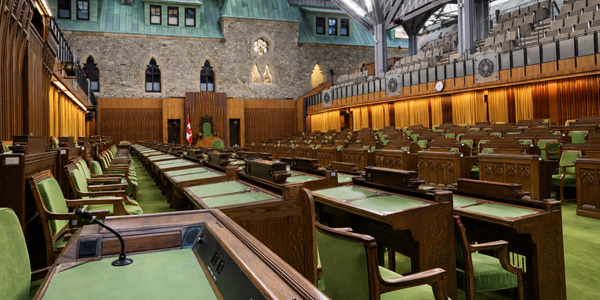
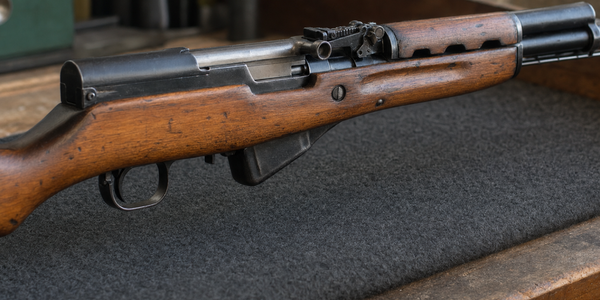
I own a Sterling Arms R9 MK1 that became prohibited in July 2025. Whether the country's most senior court finds Cabinet had the authority to do that will be argued on November 9 by people I have never met, in a room where the entire organized shooting community holds forty minutes.
Ten pages. Five minutes. Read the order.
Sources
- Supreme Court of Canada, docket 41859, Canadian Coalition for Firearm Rights, et al. v. Attorney General of Canada, including the full text of the August 13, 2026 decision on the motions for leave to intervene and the July 9, 2026 decision on the miscellaneous motion. Page date-modified 2026-08-15. https://www.scc-csc.ca/cases-dossiers/search-recherche/41859/
- Supreme Court of Canada, docket 41860, Michael John Doherty, et al. v. Attorney General of Canada. https://scc-csc.ca/cases-dossiers/search-recherche/41860/
- Canada Gazette, Part II, Volume 160, Number 12, Order Amending Certain Orders Declaring an Amnesty Period, SOR/2026-114, registered June 5, 2026, published June 17, 2026. https://gazette.gc.ca/rp-pr/p2/2026/2026-06-17/html/sor-dors114-eng.html
- Canadian Constitution Foundation, "CCF granted leave to intervene in Supreme Court firearms case," August 13, 2026. https://theccf.ca/ccf-granted-leave-to-intervene-in-supreme-court-firearms-case/
- Lower court rulings, as cited by the Supreme Court on the docket above: Federal Court of Appeal, 2025 FCA 82, appeals dismissed April 15, 2025, and Federal Court, 2023 FC 1419, applications for judicial review dismissed October 30, 2023. The CanLII copies the Court links to returned an empty response when retrieved on the drafting date, so both citations here are carried from the Supreme Court's own record rather than read at CanLII. https://www.canlii.org/en/ca/fca/doc/2025/2025fca82/2025fca82.html and https://www.canlii.org/en/ca/fct/doc/2023/2023fc1419/2023fc1419.html