Two days in November will test Ottawa's *gun-ban power*
CCFR says November 9-10 are set for its Supreme Court appeal. The dates matter because Cabinet must defend how it used delegated power to prohibit lawfully owned firearms.

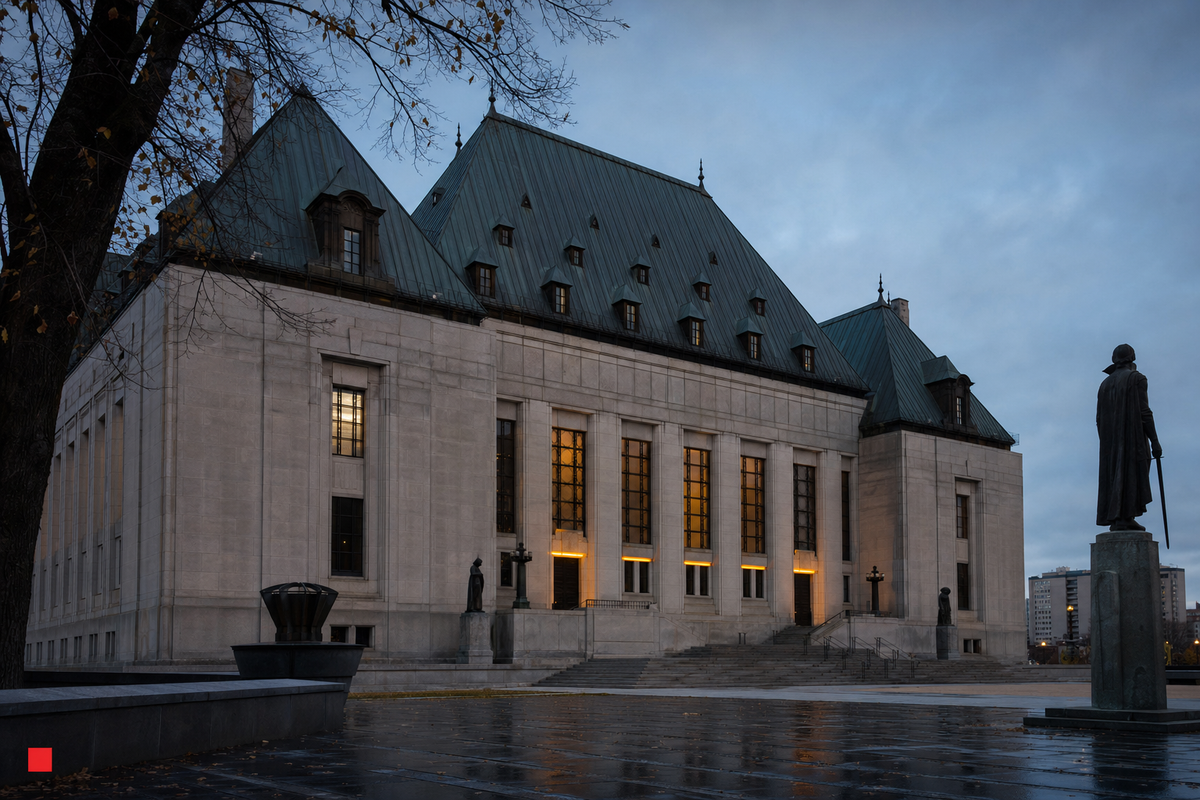
Opinion. November 9 and 10 are the first useful certainty Canadian owners have had from this court file in a while.
The Canadian Coalition for Firearm Rights announced Monday that the Supreme Court of Canada provided those two 2026 dates to its legal counsel for the appeal in docket 41859. The CCFR also added the important caveat: the Court had not yet published its official fall hearing schedule.
The CCFR's message is narrower: counsel received hearing dates, with the Court's public calendar still pending. Judgment comes later, and scheduling alone tells us nothing about which way nine judges will go.
They do tell us when Cabinet's use of delegated firearms power will finally have to answer in the country's highest court.
A hearing date is not a decision
The Supreme Court granted leave on March 19 and ordered the CCFR appeal to be heard with three companion cases, dockets 41858, 41860, and 41861. The Court's current record shows the CCFR appellant factum and an eight-volume second part of the appeal record filed in June, along with provincial intervention activity and pending intervention motions.
That is a mature appeal file, not a press-release promise.
The CCFR announcement now gives it a room on the calendar. The Court's scheduled-hearings page says appeals are webcast live and archived. Once the public schedule confirms the dates, Canadians will know when to watch the arguments. The decision will come later. Public Safety Canada said in June that it expects judgment next year.
That distinction matters because firearms politics is very good at turning procedural movement into victory graphics. The Court has agreed to decide important legal questions. It has not agreed with the appellants.

The Court is testing Cabinet's reach
This appeal is not a Canadian version of an American constitutional right-to-own case. Its force comes from Canadian administrative and criminal law.
Criminal Code section 117.15 gives the Governor in Council, meaning federal Cabinet, broad power to make firearms regulations. The next subsection places an express restriction on that power where Cabinet considers a firearm reasonable for hunting or sporting use.
The filed CCFR factum puts two questions before the Court.
First, can Cabinet use the Criminal Code's general public-safety purpose to overwhelm that specific hunting-and-sporting restriction? The Federal Court of Appeal upheld the regulations and accepted that Cabinet could consider public safety when deciding whether listed firearms were reasonable for those uses, even where a sensible hunter or sport shooter might see the firearm as well suited to the job.
Second, are the undefined phrases "variants" and "modified versions" too vague when criminal exposure can depend on an external, changing classification system? The lower court found enough guidance in the listed models, industry usage, the Firearms Reference Table, the Canadian Firearms Program, retailers, and manufacturers. The appellants argue that a dynamic administrative reference cannot supply the clear legal boundary a criminal prohibition requires.
The remedy is equally serious. The CCFR asks the Court to allow the judicial review and, in the alternative to quashing the 2020 regulations, to narrow them so unnamed variants and modified versions no longer carry force.

Ottawa already conceded that the calendar matters
The federal government says the 2020 prohibition is legally sound and necessary for public safety. The Federal Court and Federal Court of Appeal agreed. Public Safety says the broader 2020, 2024, and 2025 prohibitions now capture more than 2,500 makes and models, and it continues to move owners and businesses through compensation, collection, destruction, deactivation, or export.
That is the strongest federal position. It deserves to be stated cleanly.
Ottawa's own June amendment also proves the court calendar has consequences. Canada Gazette SOR/2026-114 replaced the October 30 fixed amnesty expiry with a new endpoint: 90 days after the latest of the four joined appeals ends by discontinuance, judgment, or dismissal.
The government did that because criminal liability could otherwise attach while the legality of the 2020 prohibition was still before the Supreme Court. That was the responsible correction.
Then comes the harder split. Public Safety says the compensation program is still expected to finish by October 2026, before the November hearing and long before the expected judgment. Amnesty protects continued possession within its terms. It does not keep the compensation window open.
Ottawa built the compliance machinery before the Supreme Court booked the room.
Why these dates change the pressure
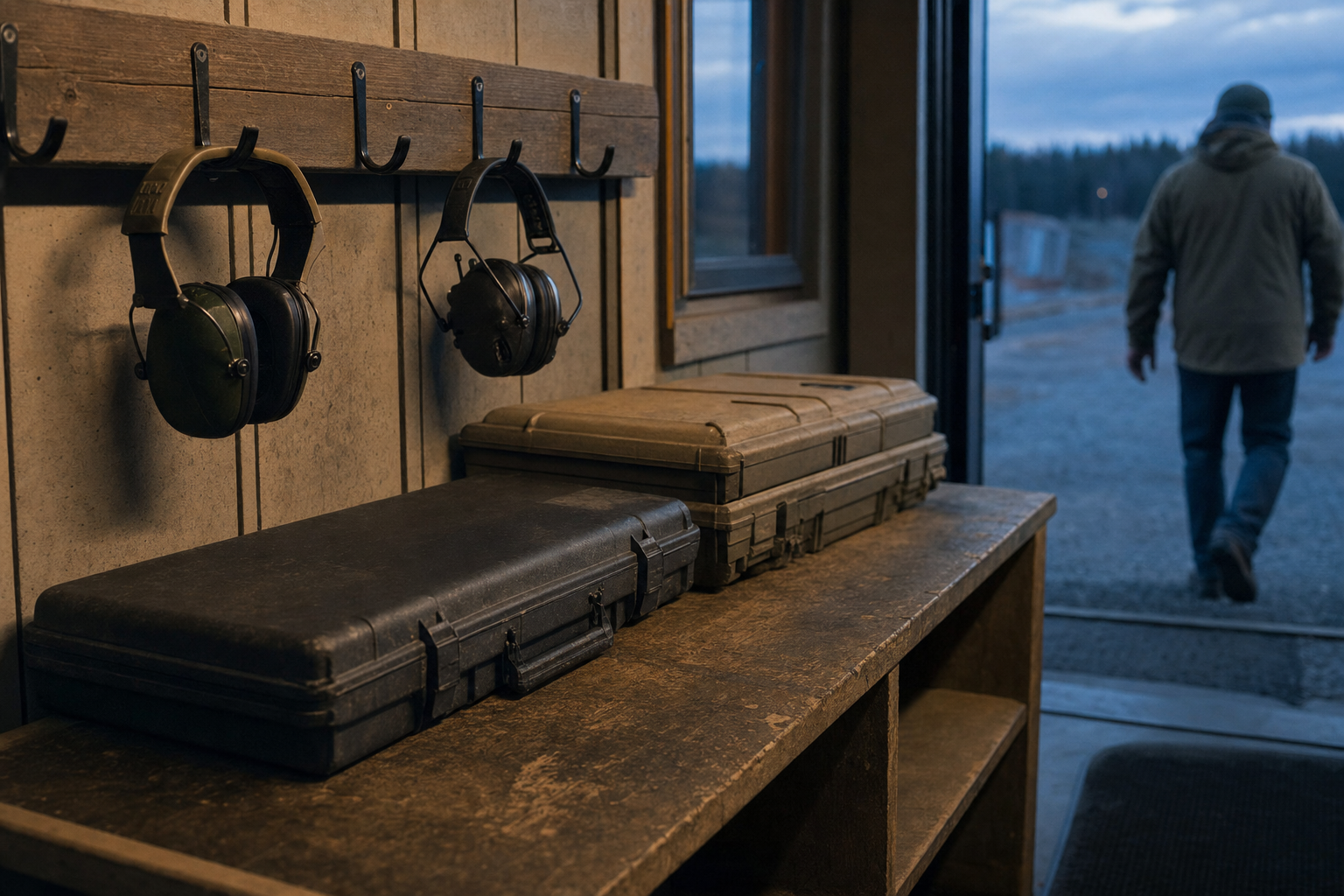
I spend enough time on Canadian range lines to recognize the absurdity of who carries this uncertainty. Licensed owners sign in, transport in cases, follow storage rules, keep renewals current, answer transfer questions, and remain visible to the state in ways that would bore a genuinely dangerous person senseless.
Many bought affected firearms lawfully before Cabinet changed the list. Six years later, their property remains wrapped in an amnesty while courts decide whether the regulation that created the prohibition stayed inside Parliament's grant of power.
That is why November 9 and 10 matter beyond the CCFR, beyond the named models, and beyond the familiar buyback argument. Delegated regulation is necessary in a modern state. It is also easier for Cabinet than introducing a bill, defending every clause in Parliament, and accepting amendments in public.
Convenience does not erase the boundary.
Where regulation changes the legal status of property and makes possession capable of attracting criminal consequences, the enabling law has to mean something. Express restrictions have to do work. Terms that define the risk of prosecution have to be intelligible without asking an owner to triangulate between an unpublished classification logic, a call centre, a retailer, and a database that the regulation itself did not enact.
What November must put on the record
The hearing will not be a referendum on whether anyone likes AR-15s, Mini-14s, Swiss Arms rifles, or the political phrase "assault-style firearm." It should be more disciplined than that.
The Court will hear whether Cabinet stayed within the authority Parliament delegated, whether a general public-safety objective can do the work of a specific statutory limit, and whether "variants" and "modified versions" draw a clear enough line when liberty can sit on the other side.
Owners should watch the public docket, read the factums, and resist the urge to turn a hearing date into a prediction. Holdover will update the date if the Court's public schedule changes and will follow the respondent and intervener filings as they land.
Two hearing days cannot repair six years of uncertainty. They can force the power that created it into the open.
The list is already real. In November, the legal limit behind it finally gets the room.
Sources
- Canadian Coalition for Firearm Rights, "Supreme Court Provides Hearing Dates to CCFR Legal Counsel," announcement supplied July 13, 2026; the CCFR's Supreme Court factum page provides the current organization-side case record.
- Supreme Court of Canada, docket 41859, Canadian Coalition for Firearm Rights, et al. v. Attorney General of Canada, accessed July 13, 2026.
- Supreme Court of Canada, scheduled hearings, accessed July 13, 2026.
- Supreme Court of Canada, CCFR appellant factum filed June 15, 2026.
- Supreme Court of Canada, March 19, 2026 judgment granting leave in docket 41859.
- Department of Justice Canada, Criminal Code, section 117.15, current to May 26, 2026.
- Canada Gazette, Part II, SOR/2026-114, Order Amending Certain Orders Declaring an Amnesty Period, registered June 5, 2026.
- Public Safety Canada, Firearms compensation program for businesses closes - Amnesty period extended due to the Supreme Court of Canada process, June 9, 2026.
The amnesty file is still moving.
If this piece sent you back to government pages, do not wait for the next portal, Gazette, or court move to find you by accident.
The Dispatch follows Public Safety, RCMP, Canada Gazette, court, compensation, collection, and amnesty updates so the next change comes with the source that moved.
Safety note: the tracker is a worksheet for source hygiene, not legal advice or a substitute for current official guidance.