Who belongs in Saskatchewan's gun-ban *class*?
CCFR says it filed a Saskatchewan compensation class action. The fair-value theory is public; the pleading that defines the proposed class remains out of view.

Opinion. A class action should eventually tell the public who the class is.
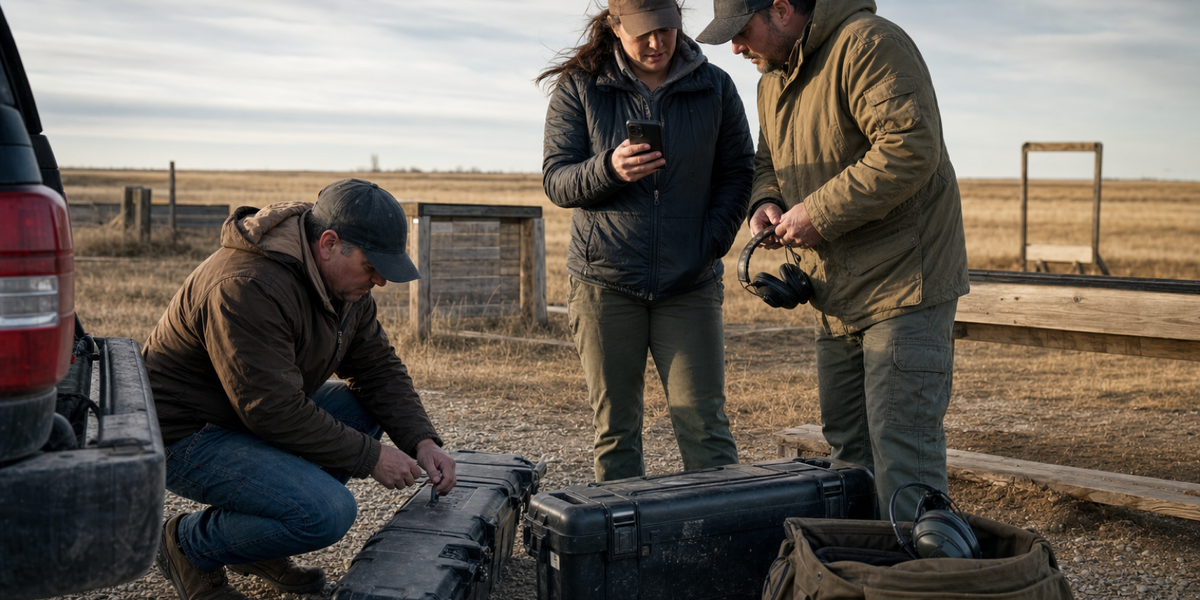
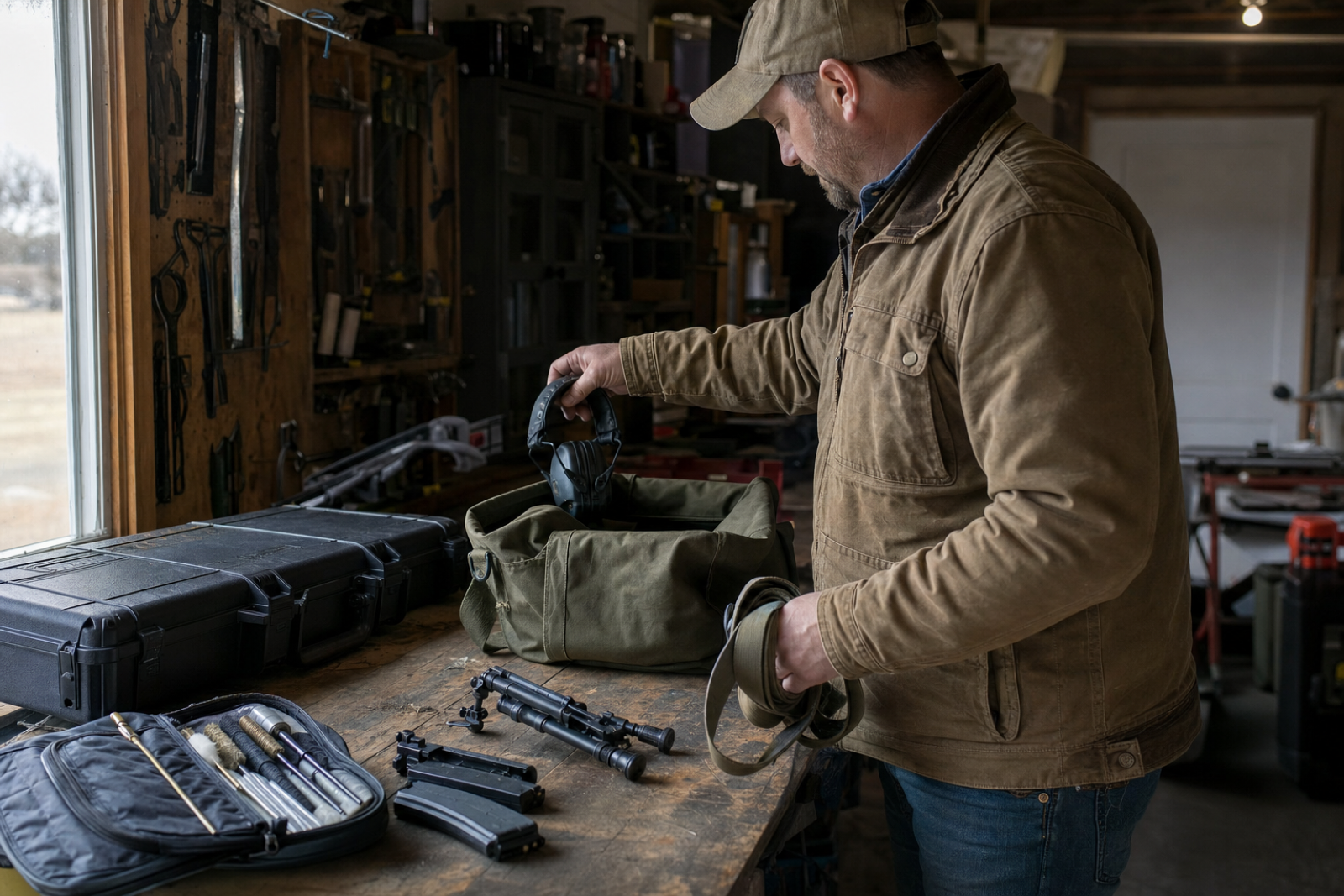
Original generated editorial photograph. The people pictured are fictional and are not parties to the Saskatchewan proceeding.
On Tuesday, the Canadian Coalition for Firearm Rights said it filed a proposed class proceeding in Saskatchewan Court of King's Bench seeking full and fair compensation for residents affected by federal firearms prohibitions. CCFR says the case leaves the buyback and the orders in council in place. Its announced target is the value it says owners have lost.
That makes this a fresh legal development after Monday's Supreme Court hearing-date news. It also makes the source discipline straightforward.
My first move with an advocacy email is to open the underlying record. Here, the click ends at CCFR's own release. The originating pleading, court file number, judicial centre, named plaintiff, defendant, proposed class definition, causes of action, counsel, requested orders, and valuation method all remain unpublished.
The fair-value theory is public. The case that will test it still needs a public face.
The filing still needs a public face
CCFR's release supports one careful sentence: CCFR says a proposed Saskatchewan class proceeding was filed July 14.
The rest has to wait for the pleading. Under Saskatchewan's Act, a resident class member commences the action and seeks appointment as representative plaintiff for people said to share common issues. The proposed representative's identity matters. The words defining the proposed class matter. So do the exact legal route and the orders sought from Canada.
Those details will tell owners who qualifies: whether an appraisal or federal declaration matters, how estates and businesses are treated, which prohibition dates count, and whether Ottawa has already paid.
CCFR may have answers in the filed material. Readers deserve the document that carries them.
Certification is the first hard gate
Saskatchewan's Class Actions Act gives the next stage a useful shape. The court must be satisfied that the pleadings disclose a cause of action, the class is identifiable, class members raise common issues, a class action is the preferable procedure, and a suitable representative plaintiff has a workable plan without a conflict on the common issues.
That is certification. Section 7 of the Act says the certification order leaves the merits undecided.
In plain language, filing starts a case. Certification decides whether one case may carry a group. A later judgment or settlement decides liability and relief.
The distinction matters because the word “class” does a great deal of work in an announcement. Today there is a proposed class. The court will decide whether that class can proceed together, and the federal government will have the opportunity to contest every part of that request.
Fair value reaches beyond one model line
The legal engine sits in section 5-14 of The Saskatchewan Firearms Act. It addresses a defined “specified law” that removes an owner's previously lawful right to own, possess, use, or transfer a firearm to similarly licensed people. Where full compensation has not arrived within 12 months, the section deems the firearm seized and says Canada must pay full fair-market value.
The wording reaches backward to specified laws already in force. For an action under section 5-14, the limitation period cannot begin before the section's May 1, 2026 commencement.
Part 5 tells the Saskatchewan firearms commissioner to consider make, model, calibre, age, condition, ammunition, accompanying accessories, rarity, special features, and comparable valuations. The federal individual program uses average retail values by make and model. It excludes upper receivers, parts, and components from individual compensation and calls its listed amounts final.
That difference is the pressure point. When I price a setup, I count the whole working system: optic, rings, magazines, bipod, tools, spare parts, and ammunition. Saskatchewan's framework tries to see more of that system than Ottawa's model table does.
Whether a court can make Canada pay on that wider basis is the live question.
The words “must pay” will be tested
A provincial legislature can print a direct instruction. Enforcing it against the federal Crown raises a harder constitutional problem.
Canadian Transport Commission v. Alberta treats compulsory provincial regulation of the federal Crown as beyond a province's valid legislative reach. Section 21 of the federal Crown Liability and Proceedings Act gives provincial superior courts concurrent jurisdiction over claims against Canada, except matters reserved exclusively to Federal Court. The proposed plaintiff still has to establish a valid source of liability.
The missing pleading should show how the proposed plaintiff plans to bridge that gap. Canada may challenge Saskatchewan's power to impose the obligation, contest the statutory trigger owner by owner, dispute Saskatchewan valuations, or seek to narrow the property included.
Owners should treat those as live issues awaiting a ruling. Saskatchewan has supplied an ambitious statutory claim. Its force against Canada remains for a court to decide.
Reddit found the leverage theory
Recurring comments in the live r/canadaguns thread fell into two broad readings. One welcomed a route to market value while wanting the prohibitions gone. The other saw a larger compensation bill as leverage that could pressure Ottawa to narrow or abandon the policy.
The first view tracks the remedy CCFR announced. The second is a political strategy theory. It may explain why a compensation case has national attention, yet it remains outside any verified pleading or requested order available today.
The direct benefit CCFR describes belongs to affected Saskatchewan residents. Broader effects would require federal policy change or litigation elsewhere.
That is how Reddit helps here. It surfaces the questions owners are already asking. The legal answers still have to come from the court record.
Two cases have two jobs
Monday's Holdover special covered Supreme Court docket 41859. That appeal asks whether Cabinet stayed within the authority Parliament delegated when it made the 2020 prohibition and whether phrases such as “variants” and “modified versions” create a sufficiently clear criminal-law boundary.
The Saskatchewan proceeding announced Tuesday appears to pursue compensation under provincial law. One case tests the legal boundary behind the prohibition. The other asks who can pursue owner loss together and what Canada may owe.
Each has its own court, remedy, evidence, and timetable. Success in one would leave questions for the other. Keeping those files straight gives owners the clearest view of what each case can change.
CCFR's announcement describes a serious new lane. The next useful step is simple: publish the pleading, identify the proposed class, and let the actual case carry the weight.
Saskatchewan supplied the valuation machinery. Certification will decide whether the proposed class can proceed together.
Sources
- Canadian Coalition for Firearm Rights, The CCFR Launches Unprecedented Class Action Lawsuit, July 14, 2026.
- Legislative Assembly of Saskatchewan, Bill 42, The Saskatchewan Firearms Amendment Act, 2025, assented to March 12, 2026.
- Saskatchewan Gazette, Acts in force by order, including The Saskatchewan Firearms Amendment Act, 2026, April 24, 2026.
- Government of Saskatchewan, The Saskatchewan Firearms Act, Part 5.
- Government of Saskatchewan, The Class Actions Act, sections 4-7.
- Government of Saskatchewan, Firearms Verification and Appraisal Service, accessed July 14, 2026.
- Public Safety Canada, Compensation model for the Assault-Style Firearms Compensation Program, modified May 26, 2026.
- Public Safety Canada, Number of assault-style firearms declared by province and territory, modified June 9, 2026.
- Supreme Court of Canada, Canadian Transport Commission v. Alberta, [1978] 1 SCR 61.
- Department of Justice Canada, Crown Liability and Proceedings Act, sections 21-30.
- Supreme Court of Canada, docket 41859, Canadian Coalition for Firearm Rights, et al. v. Attorney General of Canada, accessed July 14, 2026.
- r/canadaguns, CCFR launches class action in SK that could benefit us all, community discussion checked July 14, 2026.
The amnesty file is still moving.
If this piece sent you back to government pages, do not wait for the next portal, Gazette, or court move to find you by accident.
The Dispatch follows Public Safety, RCMP, Canada Gazette, court, compensation, collection, and amnesty updates so the next change comes with the source that moved.
Safety note: the tracker is a worksheet for source hygiene, not legal advice or a substitute for current official guidance.