64x needs a *job*
A current Canadian KAHLES K864 listing is a useful reminder for precision shooters: high magnification only makes sense when the discipline gives it work.

Opinion. A $7,209.99 Canadian scope listing is a useful way to sober up a magnification conversation.
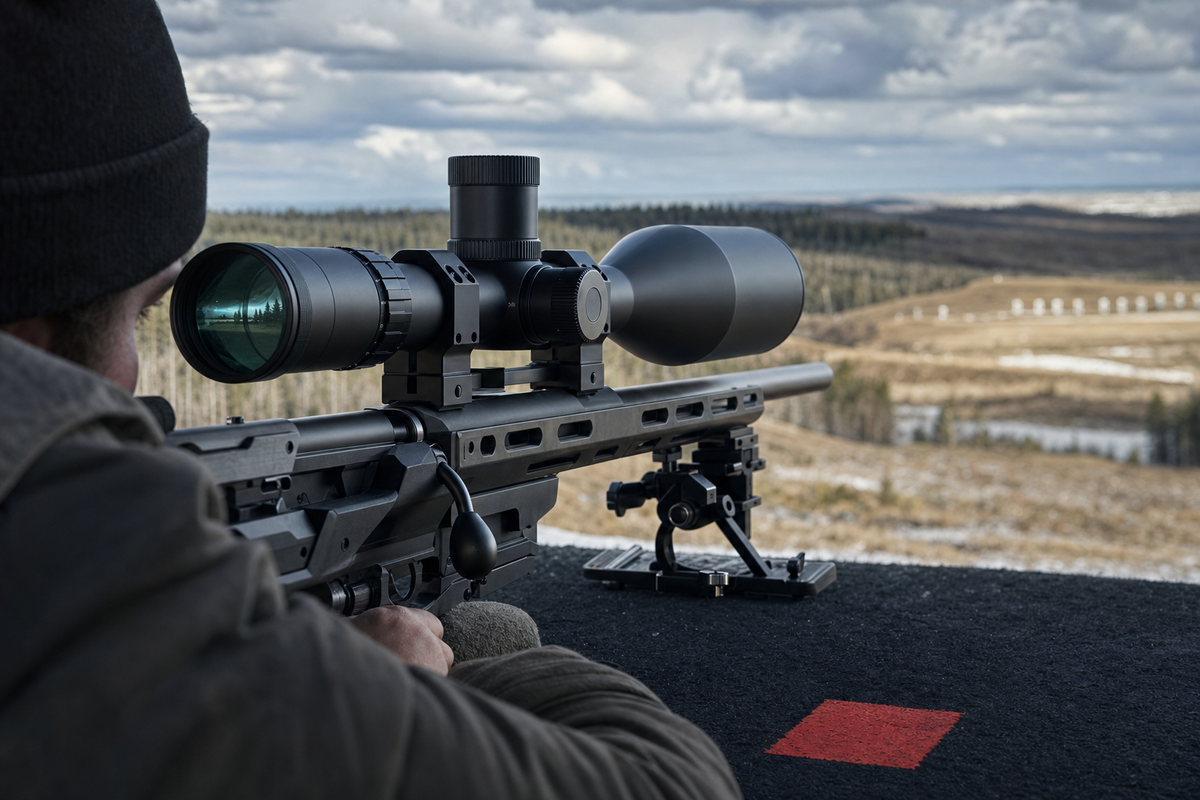
The object in question is the KAHLES K864 8-64x56, which surfaced in a current Canadian Gun Nutz/Tesro thread this week and appeared in a Canadian retailer listing when I checked on June 25. KAHLES positions it as an F-Class scope. That matters, because the top number on the magnification ring is not the lesson.
The job is the lesson.
Sixty-four power sounds like more precision. In the wrong hands, or on the wrong rifle, or in the wrong discipline, it can become a beautifully machined way to watch your own wobble in 4K.
The number is not the lesson
Precision shooters are vulnerable to numbers that look like progress.
More magnification. More objective lens. Bigger tube. Finer click value. More adjustment. More money, because apparently the credit card also wants a reticle.
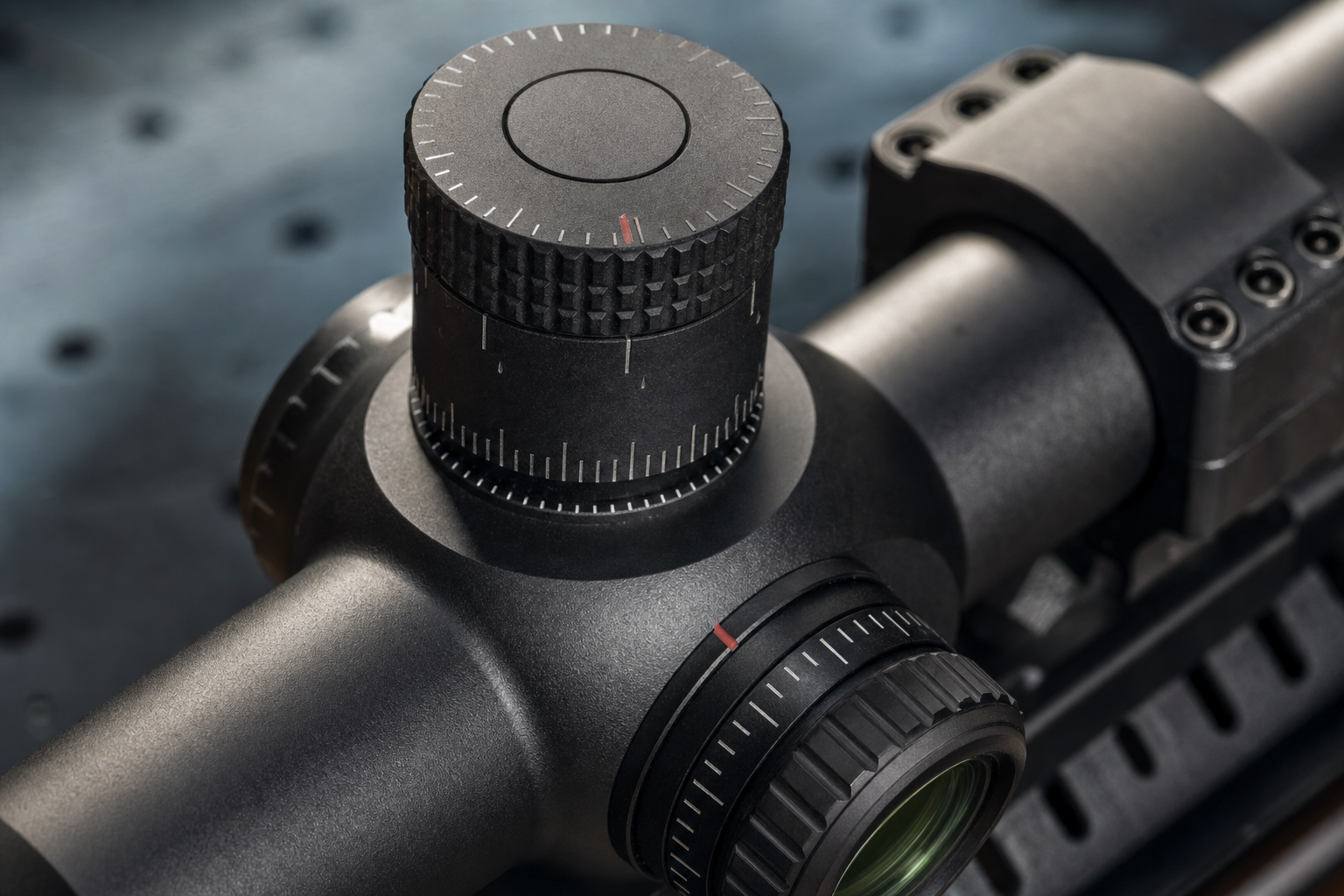
The K864 is full of serious numbers. KAHLES lists an 8-64x magnification range, a 56 mm objective, a 36 mm main tube, second focal plane construction, 1/8 MOA clicks, and top-side parallax adjustment from 8 metres to infinity. Elevation and windage are listed at 55 and 40 MOA. Those are not casual hunting-scope choices. They are the geometry of a scope built for a narrow kind of accuracy problem.
That is the part newer shooters should notice.
A 64x top end is not automatically better than 25x, 32x, or 40x. It is better only if the target, distance, position, light, mirage, discipline, and shooter can use it. Otherwise it is just a larger number attached to a smaller field of view, a stricter eye position, more visible shimmer, and fewer excuses.
I own and use enough glass to have learned that lesson without needing to mortgage a turret. There are Vortex Strike Eagle 5-25x56 FFP scopes on Cadex rifles here, a Vortex Razor HD Gen II on the 6.5 Creedmoor Cadex, a Diamondback Tactical 4-16x44 on the .30-06 Lupo, and a Cabela's Covenant 7 5-32x56 on the Lupo HPR. None of those optics becomes smarter because the ring turns farther.
The useful question is always the same: what job does this glass do that a simpler scope cannot?
F-Class explains the shape
F-Class is a good answer to that question.
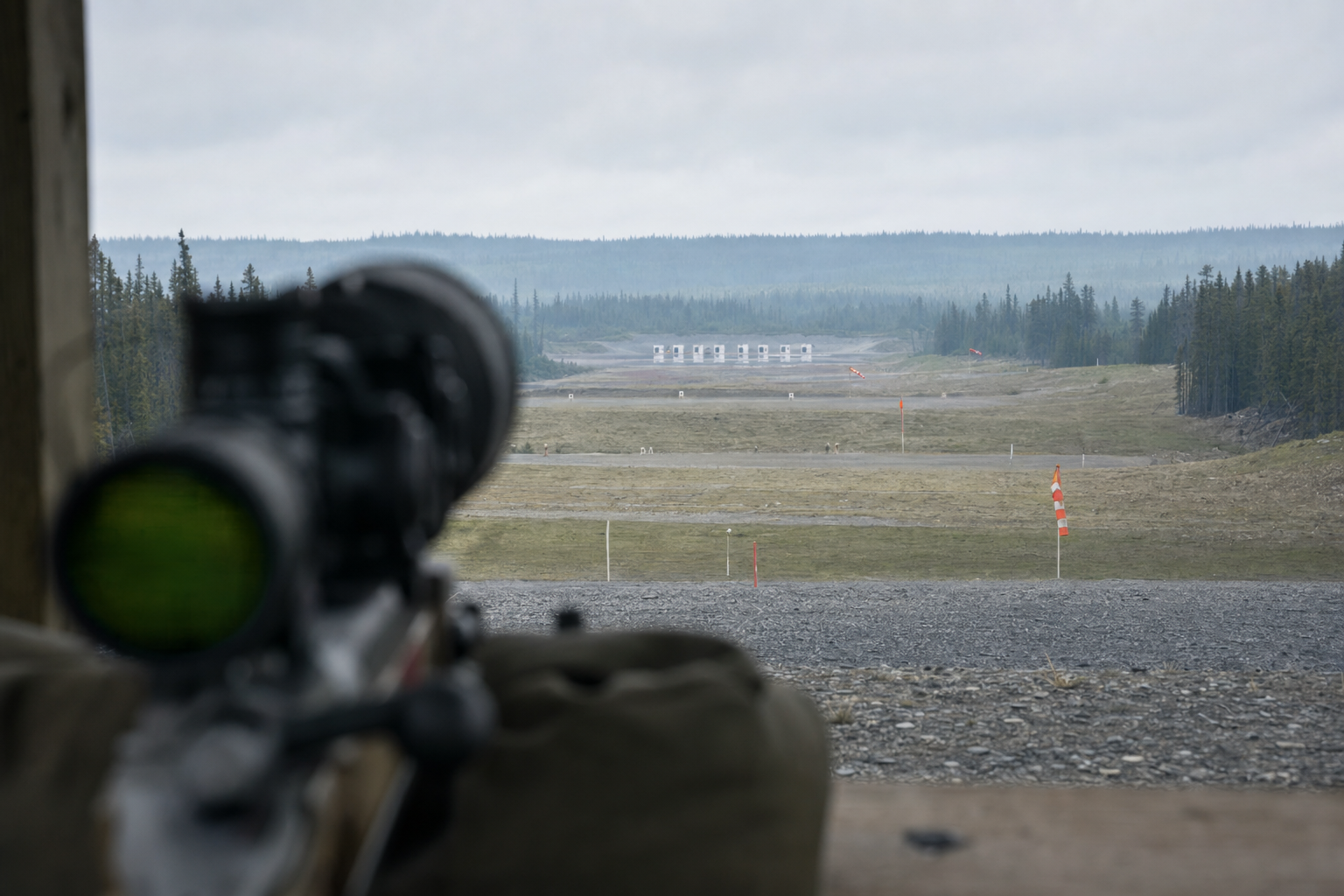
It is a precision discipline built around known-distance shooting, stable positions, tiny vertical differences, wind calls, and target detail that rewards optical resolution. It is exactly the sort of environment where a scope can be designed around fine adjustment and high magnification without apologizing for being too specialized.
That does not mean every F-Class shooter needs 64x. It means KAHLES is not guessing when it builds one.
The second focal plane choice also makes sense in that world. In SFP, the reticle appears the same size as magnification changes, while subtensions are true only at a specific magnification. That is not the fashionable choice in PRS-style field shooting, where first focal plane reticles dominate because holds remain proportional across the zoom range. In a more controlled known-distance environment, an SFP reticle can stay fine and readable at very high power.
That is a job-specific compromise.
Top-side parallax is another clue. Parallax is the alignment problem between reticle, target image, and eye position. At high magnification, small parallax errors get loud quickly. Putting that control where it can be reached and read easily is not a luxury flourish. It is the scope admitting what kind of discipline it serves.
This is why the K864 is interesting even if most Holdover readers should not buy one. It is a clean example of glass designed from a match problem backward.
The Canadian receipt matters
The Canadian angle is not just that a forum thread exists.
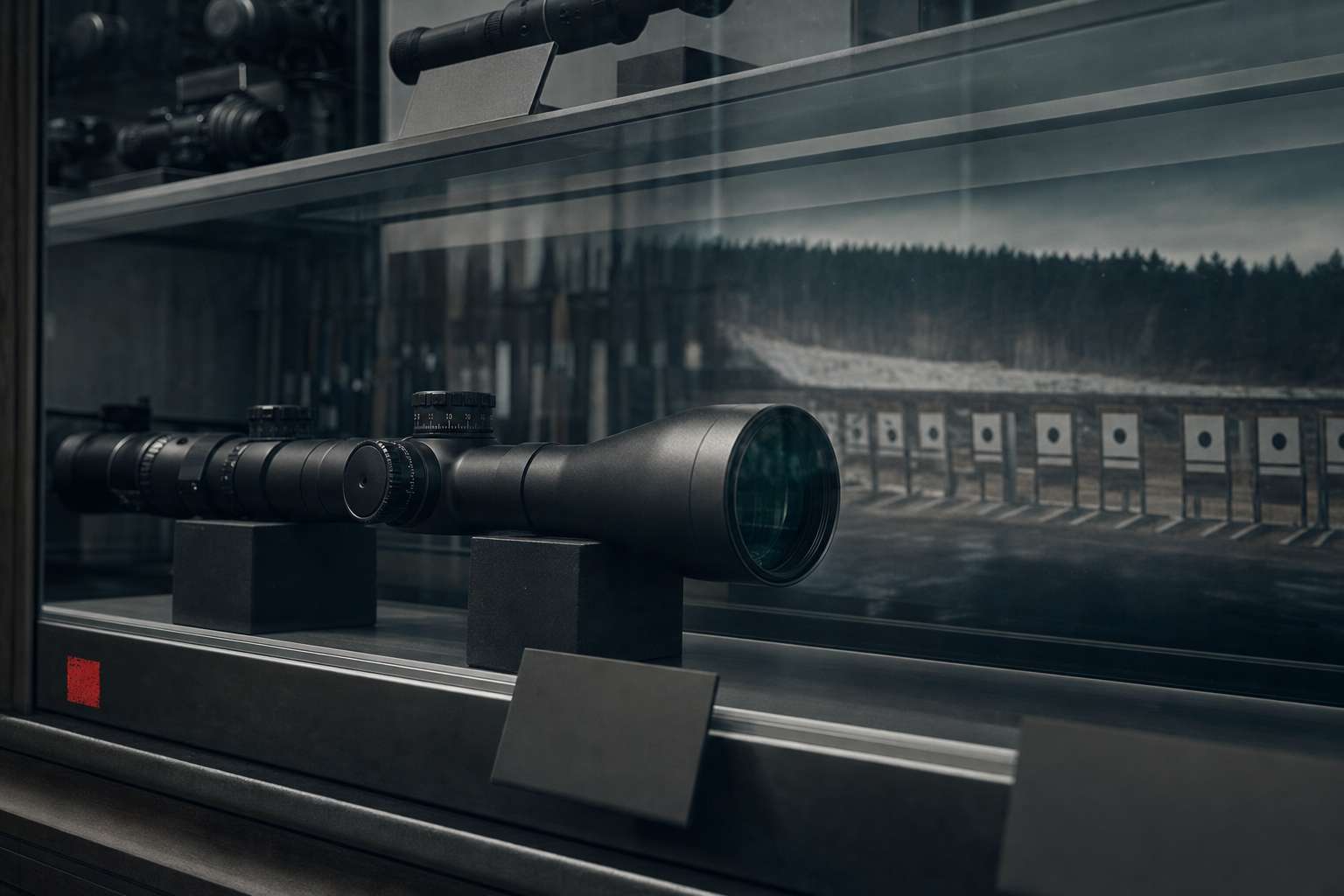
It is that this is what serious glass costs by the time it appears on our side of the border. The Shooting Centre listing I checked showed $7,209.99 and out of stock. Prices and stock will move, but the order of magnitude is the point. Extreme optics are not a casual add-on. They are a second rifle in a tube.
That makes discipline more important, not less.
A Canadian shooter can spend a lot of money trying to make a rifle feel complete. The last few years have not helped. Bans, backorders, classification anxiety, import weirdness, and the general retail weather have trained people to treat availability as permission. If it is here, maybe this is the moment. If it is rare, maybe waiting is foolish.
That is how expensive mistakes get dressed up as decisiveness.
There is nothing wrong with premium glass. There is something wrong with buying premium glass before the rifle, range, discipline, and shooter have asked for what it does.
What ordinary precision shooters should take from it
For most Canadian precision shooters, the K864 should not trigger a shopping impulse. It should trigger a better worksheet.
What distance do I actually shoot?
Do I dial or hold?
Am I shooting known-distance paper, PRS-style stages, rimfire positional work, hunting, load development, or a little of everything?
Does my optic need a generous eye box, a wide field of view, fast transitions, reticle holds, low-end usability, or maximum target detail from a stable position?
Those answers lead to different glass. A 5-25x FFP scope is a different tool from a 5-32x SFP scope. An LPVO is a different tool again. A rimfire match scope is not an F-Class optic with less ambition. It is a different job with a different penalty for making the wrong choice.
Newer shooters should find that encouraging. You do not have to win the scope catalogue. You have to match the optic to the work.
The K864 is useful because it is so obviously specialized that it makes the ordinary choices clearer. If you need 64x, you probably already know the range, target, discipline, and reason. If you cannot explain the job without using the word "because," you probably do not need it yet.
Buy the job
There is a good kind of gear envy.
It makes you ask what a serious shooter is doing differently. It points at a discipline you might want to learn. It exposes the next skill you have not built yet. It makes you want to become the person who can use the tool properly.
The bad kind skips that step and goes straight to the checkout page.
Sixty-four power belongs to a job description. When that job is yours, the K864 makes sense as a serious F-Class instrument. When it is not, it becomes an expensive way to magnify the gap between wanting precision and building it.
The number is impressive. The job has to be real.
Sources
- Canadian Gun Nutz / Tesro.ca,
KAHLES K864 ULTIMATE COMPETITIVE PERFORMANCE 8-64x56: https://www.canadiangunnutz.com/forum/threads/kahles-k864-ultimate-competitive-performance-8-64x56.2585185/ - KAHLES,
K864i 8-64x56: https://www.kahles.at/us/sport/riflescopes/k864-us - The Shooting Centre,
KAHLES K864 RSW 8-64x56 SFP Riflescope 36mm Tube CCW MOAK Reticle Model 10724: https://store.theshootingcentre.com/kahles-k864-rsw-8-64x56-sfp-riflescope-36mm-tube-ccw-moak-reticle-model-10724/ - KAHLES,
K-Series Riflescopes: https://www.kahles.at/us/sport/riflescopes/k-series
Keep the range notes worth reading later.
If this piece has you thinking about range time, keep the notes useful enough to read later.
Use the Holdover Range Bench Log Card to record rifle, optic, ammunition, distance, weather, zero, group notes, correction, and next test without turning a range trip into a memory test.
Safety note: the card is a note-taking worksheet, not shooting instruction, load data, legal advice, or a substitute for range rules, official guidance, manufacturer manuals, or qualified instruction.