A Canadian shooter gave 1:12 an *honest job*
A 17-pound .223 trainer, cheap 55-grain ammunition, and a 1:12 barrel make sense together when position work is the declared job.

Precision. A Canadian shooter built a 17-pound .223 trainer around the part many commenters wanted to replace: a 26-inch barrel with a 1:12 twist.
The rifle started as a Remington 700 VLS. Its owner added a Magpul stock, an Arca rail, a large optic plan, and enough mass to make the word trainer do some work. The stated cost stayed below $2,200. The intended ammunition is cheap 55-grain PMC X-Tac. The owner reports a 20-shot group of 1.17 MOA and a clear goal: build positions and make hits to 500 metres without feeding a practice rifle premium match ammunition.
That is a coherent design brief. The 1:12 barrel also places a visible ceiling on the bullets this rifle can grow into.
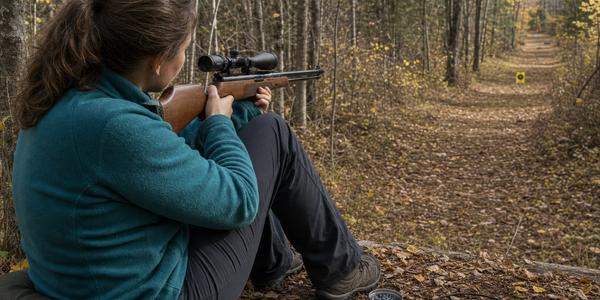
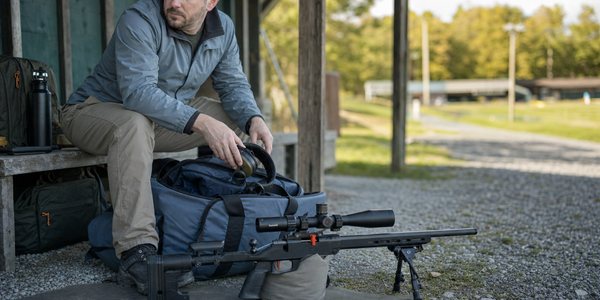
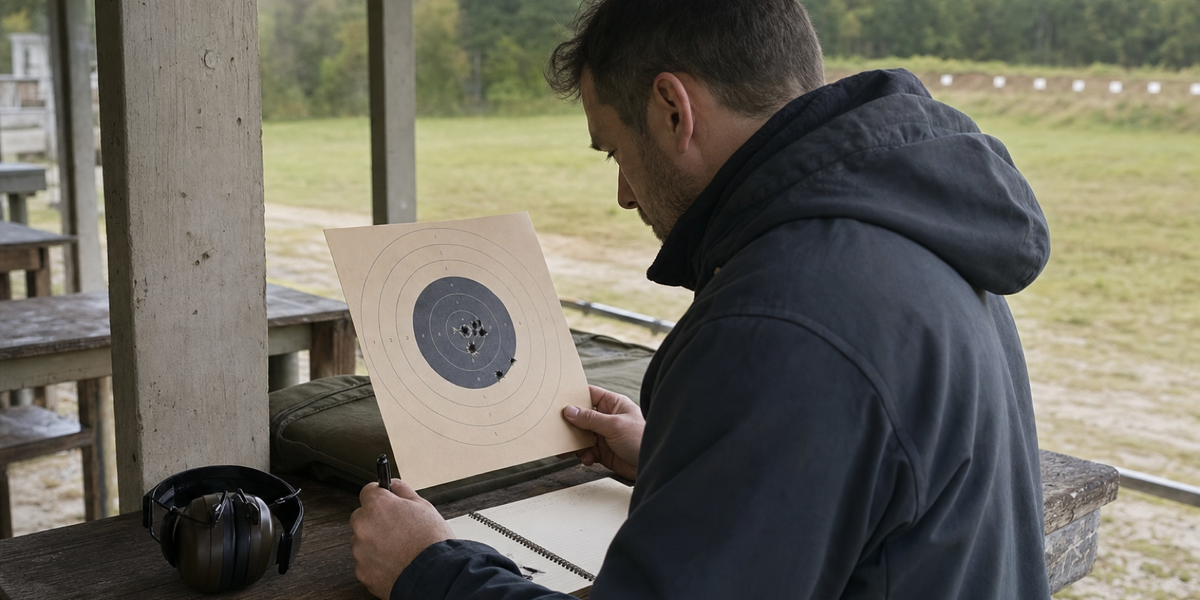
Holdover produced the feature as a fictional range-planning scene. The person, target, cartons, and range are generic and do not depict the Reddit owner, source rifle, or reported group.
The build has a declared job
Internet rifle advice tends to promote optionality. A faster twist preserves access to longer, heavier bullets. A larger scope preserves magnification. A chassis preserves adjustment. Each option sounds prudent on its own, and the combined rifle soon costs as much as the match rifle it was meant to protect.
The owner of this .223 made a narrower choice. He wants inexpensive factory ammunition, high round count, and position work. He has a separate rifle for the heavier ballistic job. The practice rifle can therefore serve repetitions without copying every external-ballistics trait of a match cartridge.
That distinction matters. A trainer can teach body position, natural point of aim, loading the support, trigger control, follow-through, target transitions, and the discipline of staying behind the rifle. Ballistic mimicry is another training goal. It asks the practice load to resemble the match load in wind, drop, recoil, and time of flight.
One rifle can support both goals. The owner only promised the first.
Twist rate narrows the bullet menu
A 1:12 twist means the rifling turns the bullet once in 12 inches of barrel. The familiar weight shorthand helps at the counter, though stability depends on more than grains. Bullet length, diameter, construction, muzzle velocity, twist, temperature, and air density all contribute.
Berger's Twist Rate Stability Calculator asks for those inputs for that reason. Its catalogue also shows how quickly the recommendation can change inside one calibre. Berger lists 1:14 or faster for its 55-grain flat-base Target bullet. Its longer 73-grain boat-tail Target bullet calls for 1:9 or faster.
Those are two specific bullets rather than a rule for every 55- or 73-grain projectile. They still explain the tradeoff in this build. A 1:12 barrel sits inside Berger's recommendation for that 55-grain example and outside the recommendation for the 73-grain example. The owner can shoot the load he chose. Future access to long, heavier match bullets becomes a separate barrel decision.
The higher ballistic coefficient of a well-chosen longer bullet can reduce wind drift and retain velocity. A shooter who wants the trainer to reproduce that wind behaviour should choose the future bullet first, then use its manufacturer's stability guidance to settle the barrel.
The 20-shot group answers one useful question
The reported 1.17 MOA result deserves more respect than a flattering three-shot cluster. Twenty shots make the chosen rifle-ammunition combination work for its place on the bench.
The group answers a bounded question: can this barrel and this 55-grain factory load produce useful angular precision under the owner's test conditions? His result says yes.
At 500 metres, 1.17 MOA subtends about 17 centimetres before the shooter adds wind, position, target movement, and the rest of the field problem. That scale can support position practice on sensible targets. The target size and hit standard should appear in the training plan beside the distance.
The group leaves the heavier-bullet question open. A clean result with one shorter 55-grain projectile says nothing about the stability of a longer 73-grain design. The bullet maker's data answers that part.
Feedback makes the trainer useful
My own useful change at 300 yards came from staying on the rifle through the shot and seeing the impact. More headline magnification had already stopped helping. The training value was readable feedback: call the shot, watch the result, make the next correction.
This 17-pound .223 follows the same logic from another direction. Mass and cheap ammunition can buy a large number of low-recoil repetitions. The owner can spend those rounds building positions and reading the target rather than protecting an expensive box.
The slower twist becomes a problem when the lesson changes. A shooter who plans to move into longer match bullets, smaller targets in wind, or a match rifle with a different ballistic envelope should plan that transition before buying the barrel. The useful questions fit on one range card:
- Which exact load will carry most of the round count?
- Is the main lesson position quality, ballistic mimicry, or both?
- Which bullet should the rifle handle next year?
- Does the bullet maker's stability guidance fit the barrel and conditions?
The current owner already answered the first two. Cheap 55-grain ammunition will carry the repetitions, and position building is the job.
He gave 1:12 an honest job. The honest range plan keeps the load, target, and distance inside that agreement.
Sources
- Reddit, r/canadaguns, Chat, does this drip, or drown?, accessed July 24, 2026.
- Berger Bullets, Twist Rate Stability Calculator, accessed July 24, 2026.
- Berger Bullets, 2023 product catalogue, accessed July 24, 2026.
- Bushnell, Match Pro ED 5-30x56 Riflescope, accessed July 24, 2026.
- Magpul, Hunter Lite Stock - Remington 700 Short Action, accessed July 24, 2026.
- RemArms, Model 700 history, accessed July 24, 2026.
Shortlist the rifle before the checkout page.
If this piece helped you narrow the rifle question, keep the tradeoffs visible before the next tab becomes a shopping cart.
Use the Holdover Rifle Cartridge Shortlist Card to compare use case, distance, recoil, ammunition availability, rifle fit, optics plan, budget, and what you will actually practice.
Safety note: the card is a planning worksheet, not buying advice, legal advice, hunting guidance, load data, or a substitute for current manufacturer, range, provincial, federal, or qualified-instructor guidance.