Under the stock, *less uncertainty*
A rear bag will not purchase a good group. It can make the soft part of a precision-rifle setup repeatable enough that the next group tells you something useful.

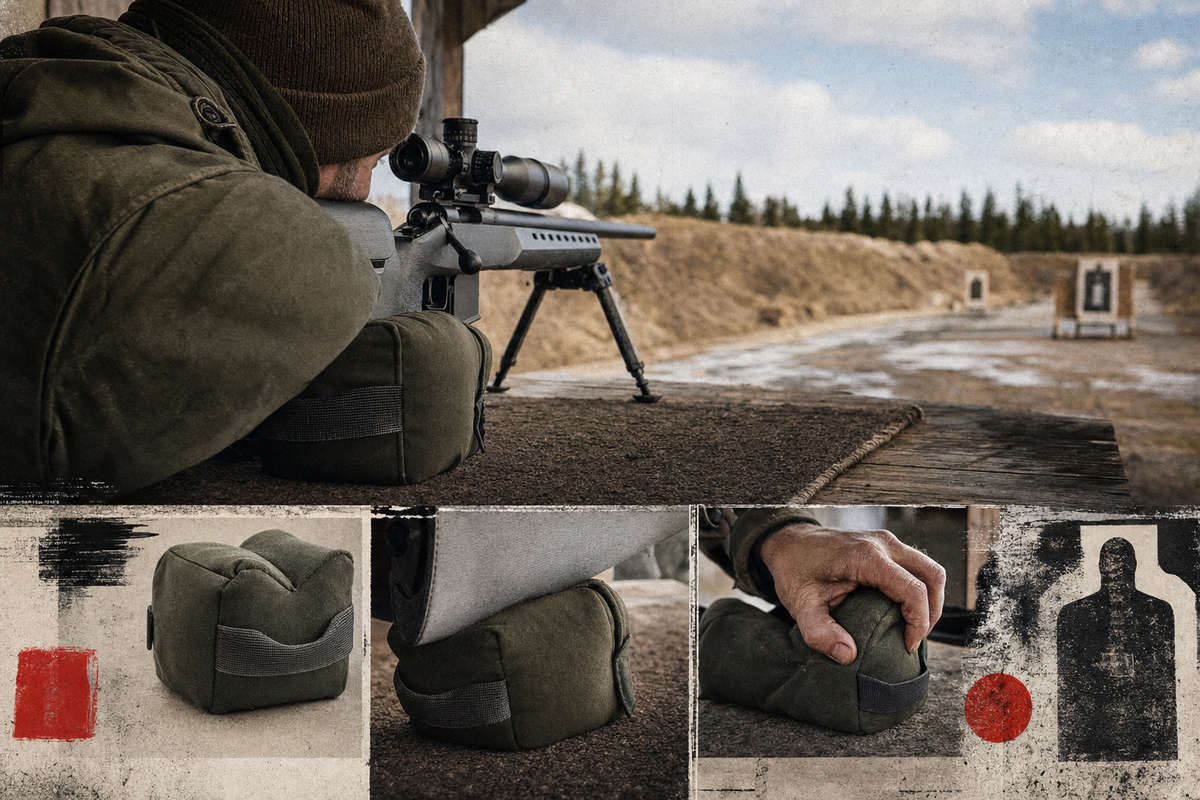
Opinion. A rear bag is easy to dismiss because it does not look like the expensive part of a precision setup. It has no turret, no reticle, no handsome anodized finish to explain at the counter. It is just a soft, heavy thing that sits under the stock and quietly ruins your ability to blame the rifle for every answer you do not like.
I have spent enough time at a bench trying to decide whether a loose group belongs to the rifle, the load, the wind, or the person behind it. If the rear of the rifle has landed on a different soft surface every time, I have added a suspect before the trigger ever enters the conversation.
That is the modest case for a first rear bag. It cannot purchase a good group. It can make one contact point repeatable enough that the next group tells you something cleaner.
The variable under the stock
A supported rifle has more than one relationship with the world. The front support carries a lot of attention because it is visible: bipod, rest, barricade, bench. The rear contact is quieter. It is where the stock settles, where a small shift becomes a different sight picture, and where an otherwise tidy setup can begin negotiating with itself.
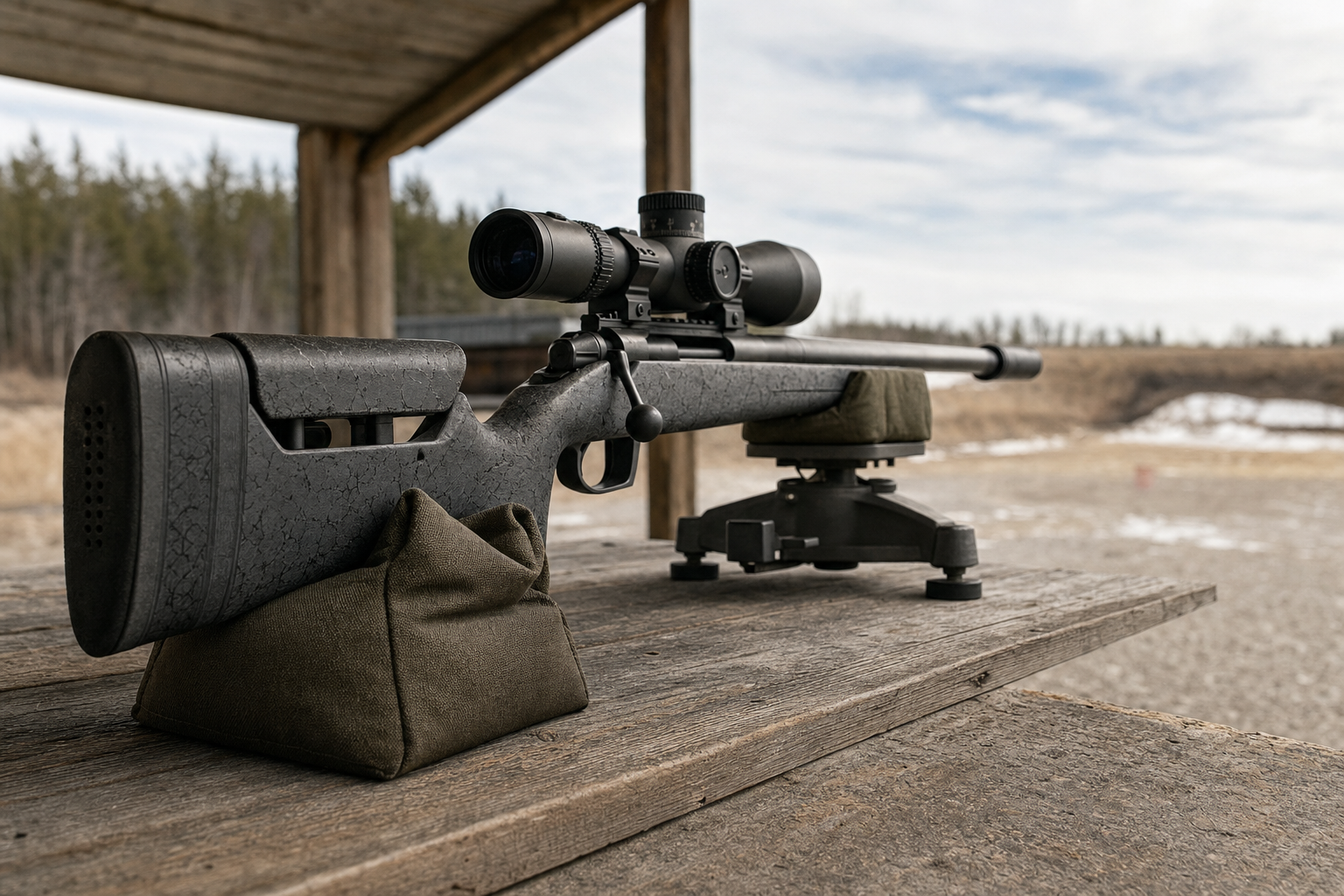
The useful rear bag gives that contact a consistent place to live. It does not make the rifle fire well, read wind, or fix a bad trigger press. It simply stops the soft part of the system from changing shape every time you settle in. That is not glamorous, but it is a useful form of honesty.
There is a tendency, especially early on, to meet every wobble with a new theory. Maybe the optic needs changing. Maybe the ammunition needs changing. Maybe the rifle needs something more expensive attached to it. Sometimes the answer is technical. Sometimes the answer is a slightly different cheek weld and a support bag that has collapsed into a very expensive beanbag chair.
The smaller question comes first. Can I put the rear of this rifle in the same place twice?
Choose the job, then the bag
The current product pages make a better argument than a universal recommendation ever could. One Canadian Shmedium listing describes an 8 by 5 by 5-inch waxed-canvas form with markedly different heavy, standard, and light fill options. WieBad lists its DRC Fortune Cookie at 8 by 5 by 7 inches and 6.2 pounds, with a taller arched form, Cordura, and a nonskid contact surface.
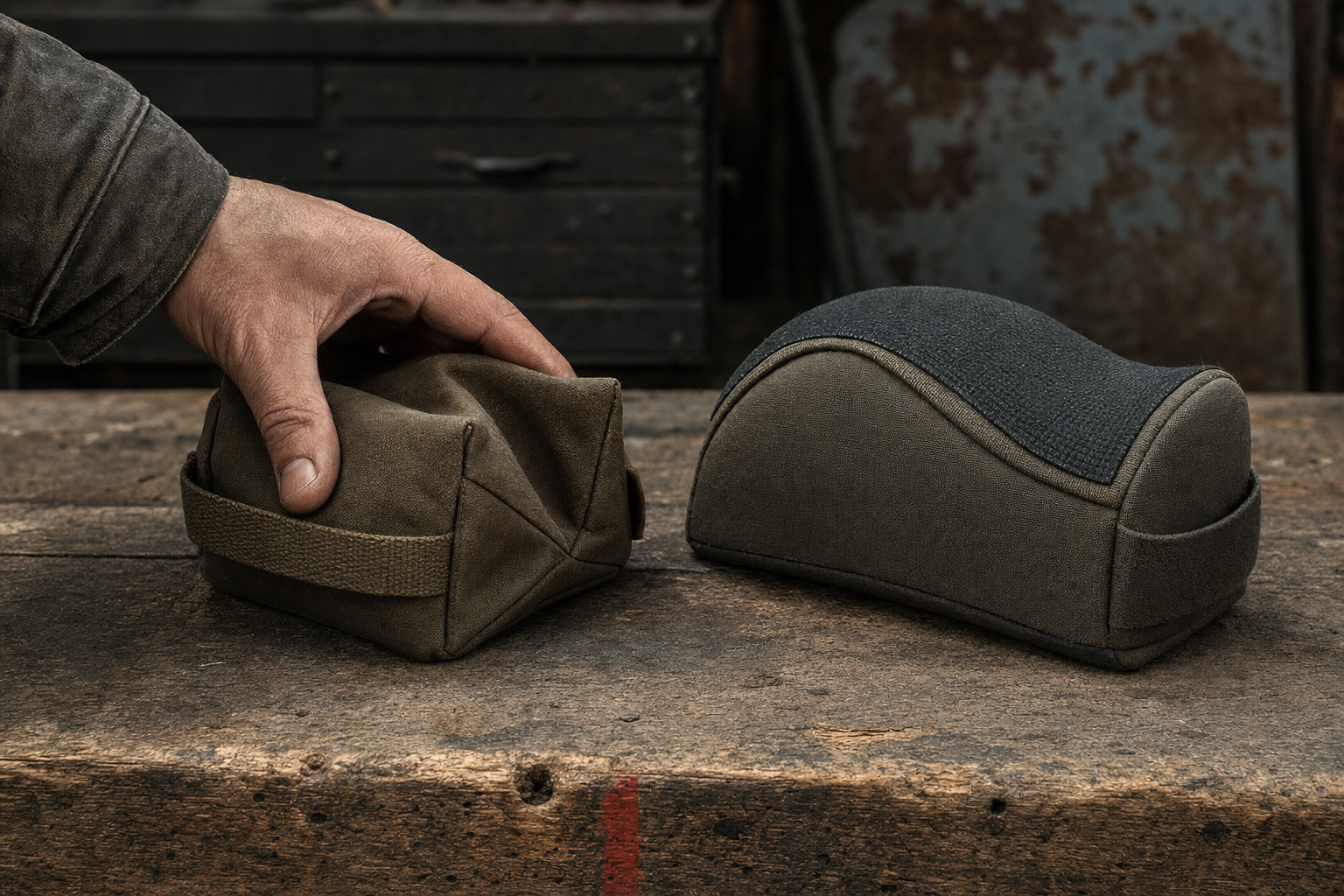
Those are not two contestants in a fight for a winner's podium. They are two useful descriptions of the decision. One asks how much mass and compact support you want under the stock. The other asks whether a multipurpose shape and a more structured contact surface suit the positions you actually shoot.
That is the question to bring to a Canadian checkout page, not whether a product title sounds like a promise. A light bag may be easier to move. A dense bag may stay where it is placed. A low squeeze shape may feel familiar at a bench. A taller, arched form may make more sense when the support surface is awkward. None of those facts tells you what your rifle needs until you can name the position you are trying to make repeatable.
If your actual range time is a quiet bench and a short list of fundamentals, buy for that. If your local matches put you on uneven props, buy for the problem you have actually seen. Do not build a four-bag collection for a season you have not shot yet. One honest bag used consistently will teach more than a decorative pile of options.
The honest counterargument
There is a good reason to be suspicious of any accessory article. Precision shooting has an efficient way of turning a small frustration into a shopping cart. A bag does not make someone a better shooter because a bag does not press the trigger, manage breathing, call wind, or keep notes.
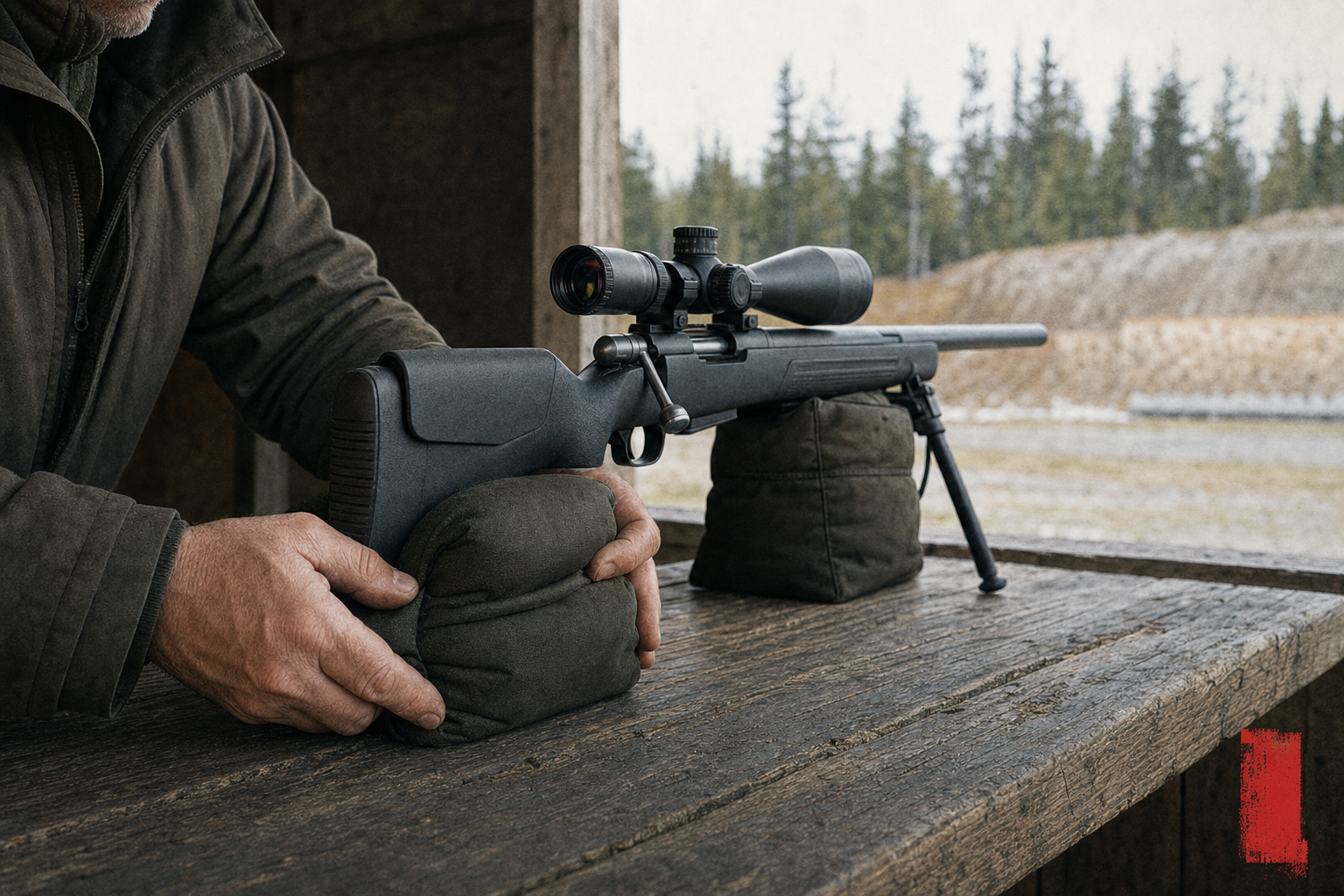
That is exactly why the rear-bag case is narrower than the marketing. The value is not a promise of accuracy. The value is removing one excuse before the work starts. If the support is consistent, a poor result has fewer places to hide. That can be uncomfortable, but it is more useful than another beautifully justified purchase.
The strongest version of the counterargument says a new shooter should spend the money on range time, instruction, and ammunition instead. Often, that is right. If the bag is being used to avoid the range, leave it on the store page. If the rifle has no dependable zero, fix that first. If the shooter cannot yet name what changes from one string to the next, a bag will not turn confusion into data.
But when the rifle already has a basic, safe support setup and the rear of the stock is still improvising its own little weather system, the inexpensive-looking thing has earned its place. Not as a shortcut. As a way to stop adding movement where you did not mean to add movement.
Let the next group answer one question
The first rear bag does not need to become a personal brand. It needs a job. Choose the shape and fill that match the position you actually use. Keep it long enough to learn what it changes. Then leave the rest of the system alone long enough for the target to answer back.
That is the part I like about a rear bag. It does not pretend to solve precision. It just stops the softest item on the bench from writing its own theory into every group.
Sources
- WieBad Gear, DRC Fortune Cookie, checked July 11, 2026.
- Canada WildCo, Shmedium SpexLite listing, checked July 11, 2026, as a point-in-time Canadian online-category reference only.
Keep the range notes worth reading later.
If this piece has you thinking about range time, keep the notes useful enough to read later.
Use the Holdover Range Bench Log Card to record rifle, optic, ammunition, distance, weather, zero, group notes, correction, and next test without turning a range trip into a memory test.
Safety note: the card is a note-taking worksheet, not shooting instruction, load data, legal advice, or a substitute for range rules, official guidance, manufacturer manuals, or qualified instruction.