A *rear stock rail* for Adler's C$499 RF-224 Gen2
Calgary lists the black RF-224 Gen2 at C$499. Its rear stock rail and AR-type grip change the configuration question, while sights and listed weight carry over. Range evidence still matters.

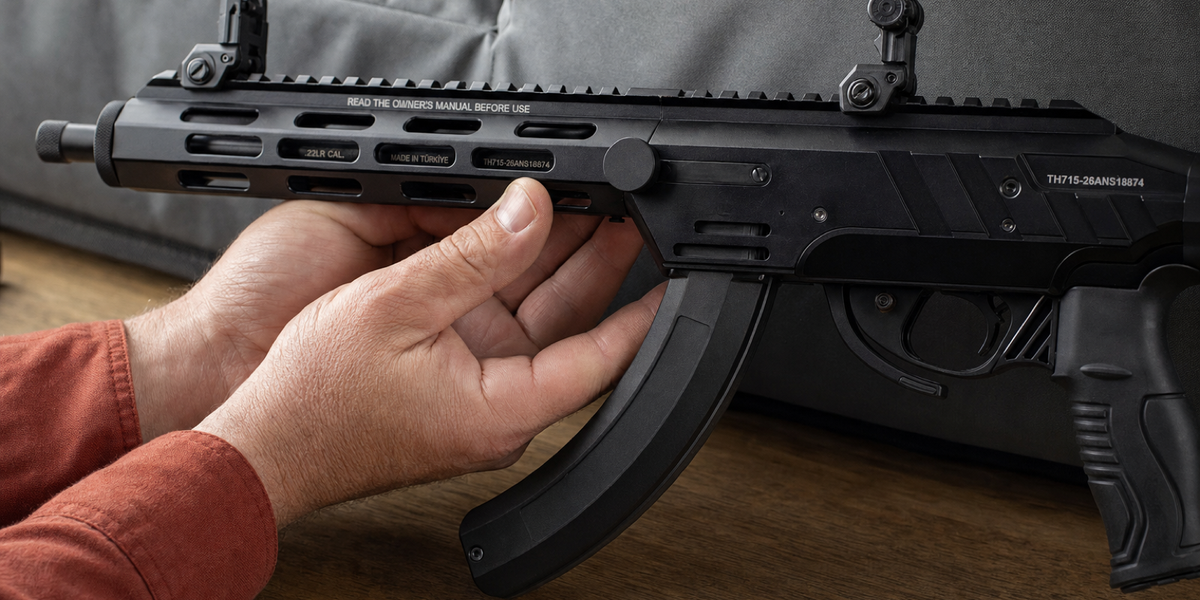
Calgary Shooting Centre lists the black Adler RF-224 TAC Gen2 at C$499. Its October 27 Canadian Gun Nutz promotion puts a fresh Canadian offer behind a useful hardware question: how much does the revised stock attachment change the appeal of this little .22?
The exact Canadian listing identifies model RF224G2TACBLK, an 11.7-inch-barrel semi-automatic rimfire with a skeletonized stock, AR-type pistol grip, and takedown system. Adler attaches the stock to a short Picatinny rail at the back of the receiver. That arrangement deserves more attention than another colour option.
My instinct with an inexpensive rimfire is to price the version I would want to take home. A different stock, a grip, and an optic can give the original bargain a rather ambitious accessory budget. The Gen2's attachment points make that a more useful calculation. They also give a buyer something specific to compare with the older RF-224.
This is product research from current retailer and manufacturer documents. I have no Gen2 range results to offer.
C$499 identifies a particular package
The black model's listed price covers a particular configuration. CSC specifies a 2.25 kg rifle with flip-up sights and the short 11.7-inch barrel. Its package list includes two magazines and a Remington 597 magazine adaptor. A purchase enquiry should identify the exact supplied magazines and any intended compatibility with the seller.
Colour and generation deserve separate entries on the shopping list. CSC's current Adler category contains several Gen2 finishes alongside Gen1 rifles, an AK-Type, and a thumbhole model. A photograph of one RF-224 variant can tell you very little about the hardware in another box.
That distinction matters here because the image in CSC's October 27 forum announcement depicts its AK-Type offering. The black Gen2 has its own product page and model code. I would use those identifiers when asking about parts or ordering a specific configuration.
The C$499 figure is the listed rifle price checked October 28. Taxes, delivery, and any extras belong in the final comparison.
The rear rail changes the stock question
Adler's Gen1 page describes an adjustable tactical stock and a mil-spec buffer tube. Its Gen2 page specifies a skeletonized stock attached through a rear Picatinny rail, together with an AR-type pistol grip.

Those are different ways to connect the shoulder stock to the rifle. With the older published layout, the stock sits on the tube extending behind the receiver. On the Gen2, the short rear rail provides the attachment point. The Canadian product photographs show the supplied stock and the connection a prospective replacement would have to match.
For someone who likes the supplied setup, that may settle the matter. For someone already planning changes, the useful next question concerns the exact replacement's fit, dimensions, and complete installed configuration. The words Picatinny and AR-type identify interfaces; the seller still needs to confirm the particular parts you intend to combine.
I find the rear connection more interesting than the rifle's tactical styling. A fixed feature in the original purchase can become the reason for a more expensive change later. Seeing the attachment clearly lets me decide whether I like the supplied arrangement and whether a different configuration is worth pricing at all.
Flip-up sights and the listed weight need less excitement. Both inspected Adler generation pages already specify flip-up sights and 2.25 kg. Those figures give continuity to the comparison. They provide no basis for advertising a new sighting system or a lighter Gen2.
Takedown has a practical job
CSC and Adler both describe the Gen2 as a takedown rifle. The seller explains that the system separates for more compact storage and transport. That is a concrete convenience for someone deciding how to carry and store the rifle.
The published description leaves performance questions for testing. A buyer who regularly separates the main assemblies would want to know how the rifle groups after reassembly and whether the chosen sight arrangement returns to the same point of impact. The inspected documents supply no measured result for either question.
Nor does takedown belong exclusively to this Gen2 within the wider RF-224 catalogue. CSC also describes a takedown system on its AK-Type page. The particular Gen2 combination is the relevant comparison: takedown, AR-type grip, and the rear stock rail, against the exact older configuration a buyer has in mind.
Adler's public manual index currently reads "Soon!" A seller-supplied manual and the instructions accompanying the exact Canadian rifle would be useful documents to obtain with the purchase enquiry. The public index alone cannot establish what comes in the box.
Range evidence still has work to do
Readers in the current CSC thread ask about range reports and whether the retailer plans in-house testing. That is a fair question for a revised rimfire. The published Gen2 features explain the external layout; they contain no quantified endurance test or description of a revised bolt or extractor.
I would want a report that identifies the generation, ammunition, supplied magazine, round count, and any stoppages. Earlier RF-224 owner experiences can suggest questions to ask. They cannot supply a measured result for this exact Gen2 package.
The Canadian offer is clear enough to assess on its stated hardware. At C$499, the black RF224G2TACBLK puts the rear stock interface and a takedown layout within a modest initial rifle budget. My interest starts with that visible connection at the back. A purchase decision would still include the complete setup price, the support arrangement, and evidence of how the rifle runs.
Sources
- Calgary Shooting Centre: October 27 Gen2 announcement.
- Calgary Shooting Centre: black RF224G2TACBLK Canadian product listing.
- Adler Arms: RF-224 Gen1 specifications and Gen2 specifications.
- Calgary Shooting Centre: RF-224 AK-Type product listing.
- Adler Arms: public manual index.
Product pages checked October 28, 2026.
Keep the range notes worth reading later.
If this piece has you thinking about range time, keep the notes useful enough to read later.
Use the Holdover Range Bench Log Card to record rifle, optic, ammunition, distance, weather, zero, group notes, correction, and next test without turning a range trip into a memory test.
Safety note: the card is a note-taking worksheet, not shooting instruction, load data, legal advice, or a substitute for range rules, official guidance, manufacturer manuals, or qualified instruction.