Twenty or *25 mils* for the Arken EPL4?
Rangeview lists the Arken EPL4 6-24x50 at C$509.99 with 20 MRAD of elevation. Arken’s current product pages say 25 MIL, while its linked manual returns to 20. Which specification accompanies Canadian stock?

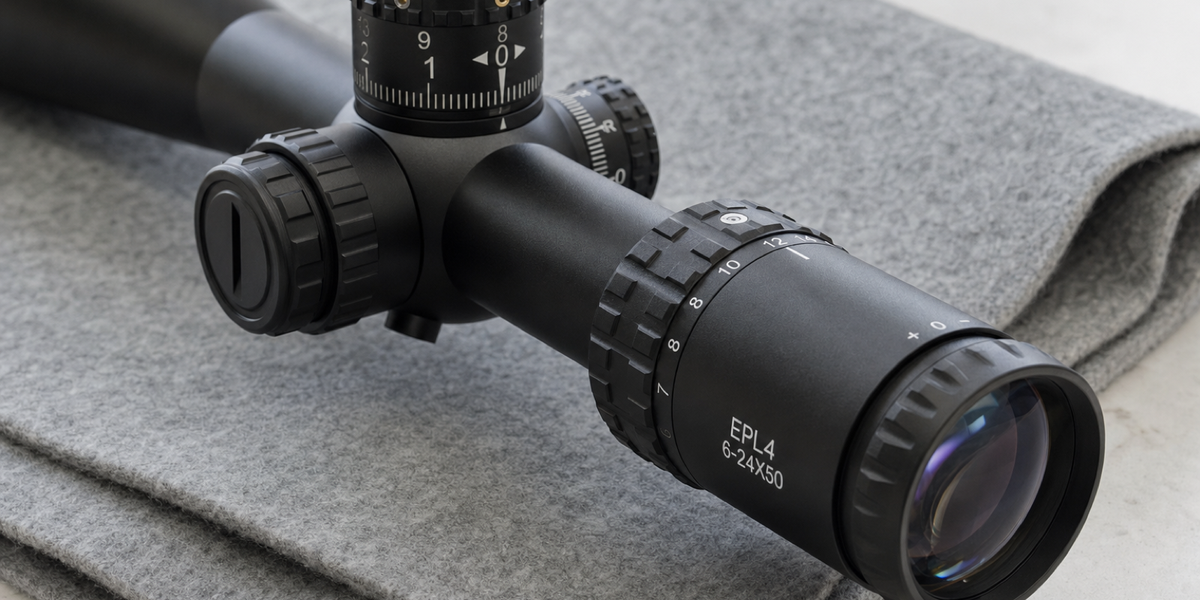
Rangeview Sports advertised an Arken EPL4 6-24x50 FFP MIL VHR restock on October 24 at C$509.99 plus tax. Its Canadian listing gives the scope 20 MRAD of elevation adjustment. Arken's current global and U.S. product pages give the 6-24x50 model 25 MIL. The owner's manual linked from the global page returns to 20 MRAD.
That leaves a fairly specific question for a Canadian buyer: which specification describes the scope the seller will supply?
The EPL4 has enough useful features to deserve the question. A 30 mm tube, first-focal-plane reticle, zero stop, and focus down to a stated 10 yards make an interesting package around C$510. The disagreement concerns numbers a shooter might use to choose it.
An attractive set of features
Arken positions the EP-L as a lighter hunting version of its Extreme Precision family. The Canadian offer names the MIL VHR configuration, item EPL4-6241VHR. Rangeview's retail SKU is 850065806174. Those identifiers are worth keeping with an order, since the manufacturer also offers MOA and VPR reticle versions under the same broad product name.
First focal plane means the reticle's angular markings keep the same value as magnification changes. For someone moving between magnifications while using holds, that is useful. The VHR is Arken's Variable Hunter Reticle; its current U.S. page describes a simpler aiming layout than the VPR's more extensive grid.
The published 10-yard minimum parallax setting also deserves attention from rimfire shooters. It gives the EPL4 a different proposition from a scope with fixed parallax at a much longer distance. Whether the image, reticle visibility, and eye position suit your shooting still takes a look through the actual scope.
I bought four Discovery ED-ELR scopes after being tempted by 40x magnification. In use, I preferred returning to the Vortex image. That was an expensive way to learn how much influence one attractive number can have on a purchase. It also leaves me interested in affordable optics without assuming the specification list settles their value.
One model, several specifications
Here is the discrepancy in the sources available on October 25. Both MIL and MRAD refer to milliradians in these tables.
| Source for the 6-24x50 | Published elevation / windage range | Stated weight |
|---|---|---|
| Rangeview Canadian listing | 20 / 12 MRAD | 23.7 oz |
| Arken global and U.S. product pages | 25 / 17 MIL | 25 oz |
| Manual linked by Arken's global page | 20 / 12 MRAD | 24.1 oz |
The manual groups the 6-24x50 and 4-16x44 in adjacent columns. Its 4-16 column carries the 25 MRAD elevation and 17 MRAD windage figures. That is another reason to read the model heading alongside the number. The available documents do not establish why these figures differ, whether any hardware changed, or which sheet accompanies Rangeview's stock.
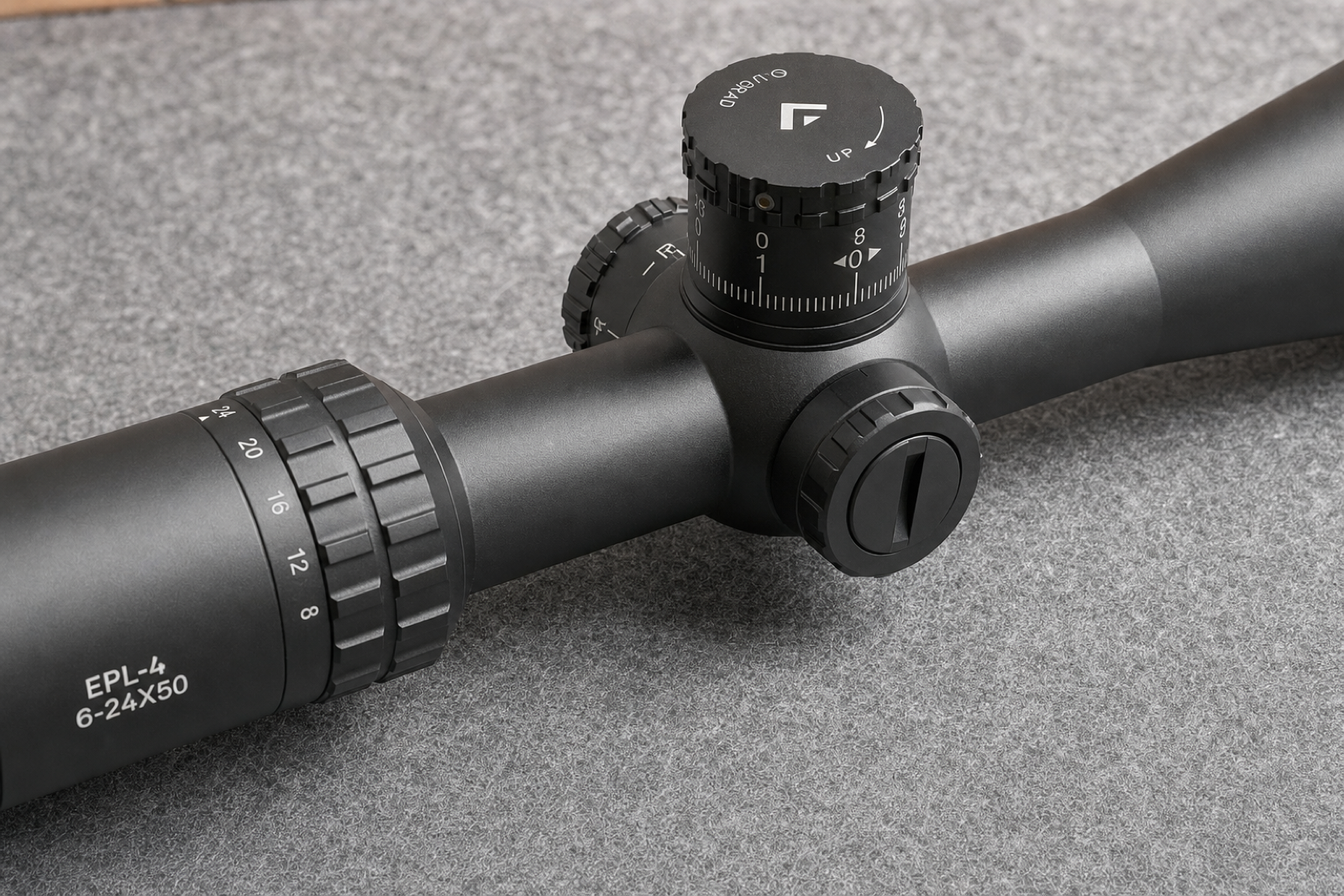
I would ask the seller for the specification supplied with the exact EPL4-6241VHR unit, including total travel and weight. A photograph of its box label and included specification page would give the conversation a useful starting point. If the seller and manufacturer need to resolve a disagreement, I would want that answer before buying for a particular adjustment requirement.
Total travel needs a zero position
There is a second distinction inside the elevation figure. Total internal adjustment range covers the scope's available mechanical range. The amount left for dialling upward after establishing a zero depends on where that zero sits within the range, including the mounting arrangement.
A listed 20 or 25 MIL therefore needs that context before it becomes a useful comparison for a particular rifle. Treating either figure as guaranteed upward travel from your zero would promise more than the specification establishes.
Arken's current pages list 0.1 MIL clicks and 8 MIL per elevation revolution for the MIL version. Those are separate quantities: the size of one adjustment, the amount in one turn, and the full internal range. Keeping them separate prevents a tidy-looking table from doing more work than it should.
The zero stop and capped windage turret are practical features of the advertised package. Their presence tells a buyer how the controls are arranged. Tracking accuracy, repeatability, and how the controls feel remain questions for actual use. I have no EPL4 test result to add.
The Canadian offer, as observed
Rangeview's page showed three units available with backorders allowed when checked on October 25. The retailer also says online inventory can lag its store. Confirm availability and backorder status with the seller.
The C$509.99 offer gives Canadian buyers a local price to consider. Converting a U.S. sale price would introduce a different purchase, with its own delivery and service questions. I would keep the Canadian model code, reticle, supplied documentation, and seller's terms together when comparing alternatives.
At this price, the EPL4's combination of first focal plane, close focus, and a 30 mm tube interests me. I would put it on a shortlist for a closer look. Before choosing it for its adjustment range, I would want one agreed set of specifications attached to the scope in the box.
Follow Canadian gear research and ownership reporting in The Dispatch.