After Range Day, read the *flag*
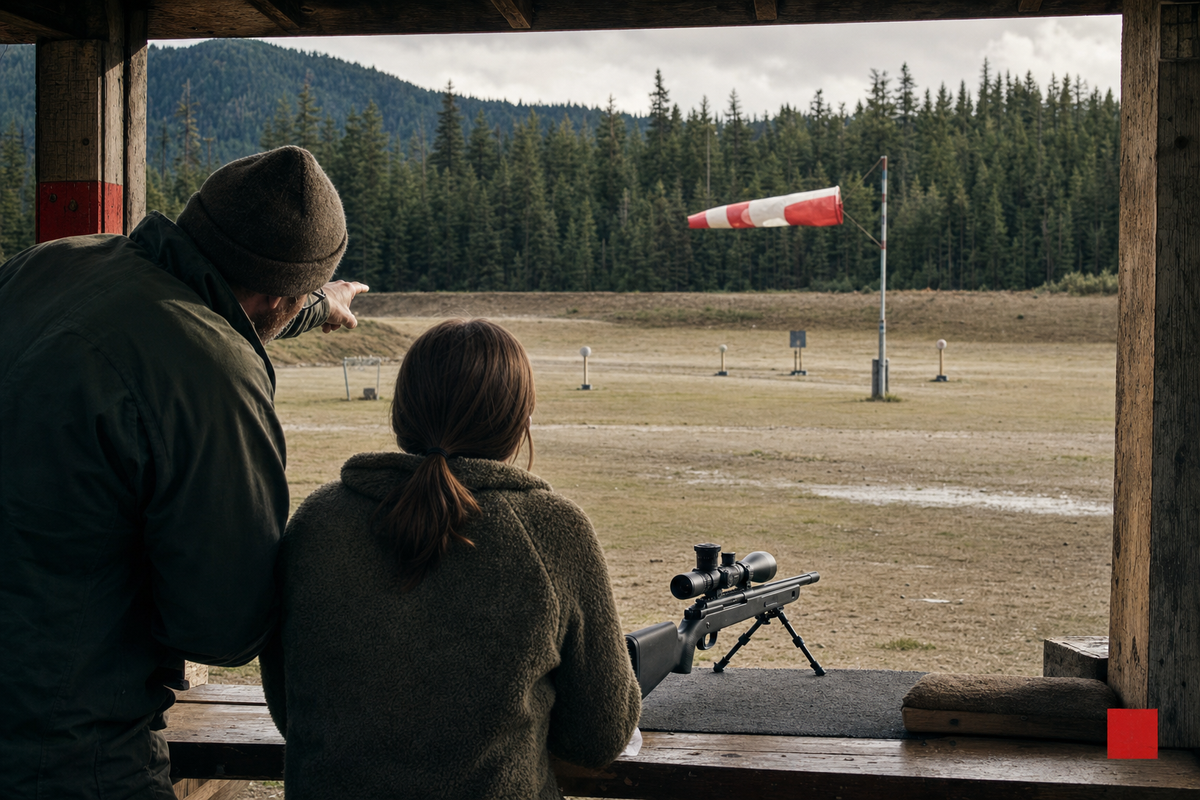
A fresh B.C. Range Day report had new shooters trying a 175-yard rimfire challenge. Good. Now comes the part every newer precision shooter should learn before buying more gear: read the flag.

Opinion. Range Day did its job if a new shooter left the club curious about the next problem.
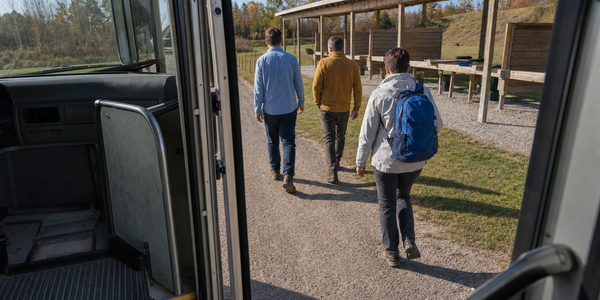
CFTK-TV published the kind of local firearms story Canada should have more often. The Bulkley Valley Rod & Gun Club hosted National Range Day visitors in Smithers, B.C. There was safety instruction. There were roughly ten students trying firearms. There was a rimfire scavenger hunt. There was also a black Jack challenge at 175 yards, with targets reportedly running from 12 inches down to 2 inches and a two-minute clock.
That is the part that caught me.
Not because 175 yards with a rimfire is some impossible feat. A lot of serious rimfire shooters will read that and immediately start thinking about wind calls, lot testing, match stages, and dope cards.
But for a newer shooter, 175 yards is far enough away for the rifle to stop being the whole story. The bullet is slow enough. The target is small enough. The air has enough time to get involved.
That is where the sport gets interesting.
A small target teaches quickly
The official National Range Day pitch is straightforward: invite people out and let clubs show the public what lawful ownership actually looks like. The BC Wildlife Federation's Range Day page put the same emphasis on family-friendly club events, qualified members, questions, competitions, and hands-on exposure. Good. That is what clubs are for.
The political side matters too, especially after years of Ottawa treating licensed owners like a convenient backdrop for whatever new restriction needs a press conference. A public range day answers that with something better than a slogan: actual people on actual ranges, under actual supervision, learning actual safety habits.
But if the event works, the new shooter should not only leave thinking, "That was fun."
They should leave thinking, "What was the wind doing?"
That is not a small shift. It is the difference between treating shooting as noise and treating it as a skill. The first version is a novelty. The second version is a sport.
The flag is part of the target
Newer shooters usually blame things in the order they can see them.
The rifle. The optic. The ammunition. The bag. The bipod. The trigger. The bench. The sun. The person in the next lane who, by breathing nearby, somehow ruined the group.
Sometimes the blame is earned. Cheap ammunition can be inconsistent. A loose ring can embarrass a rifle. A rear bag can track like a wet bar of soap. A scope can be a very expensive way to discover that marketing copy is not a tracking test.
Still, the flag deserves its turn before the credit card comes out.
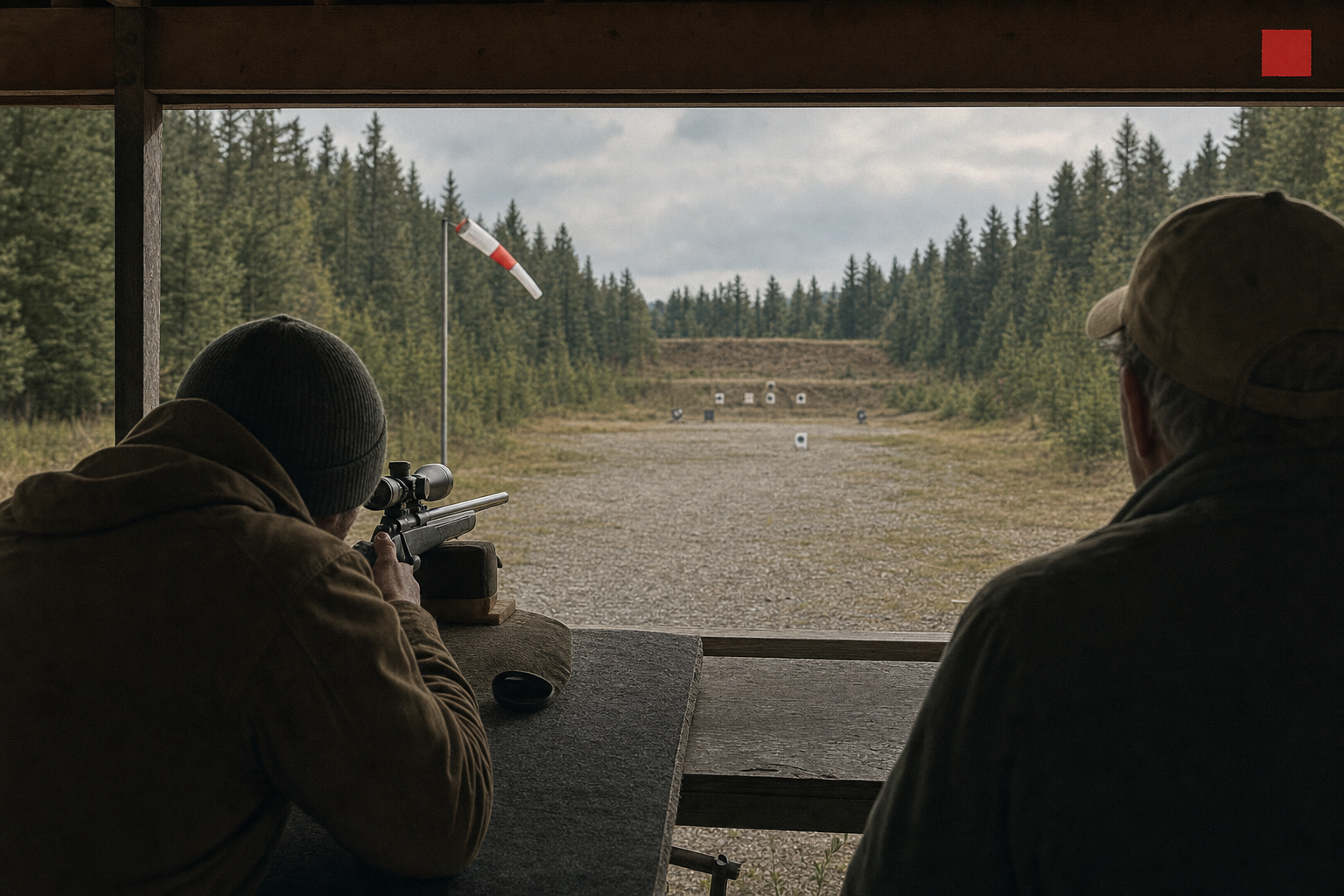
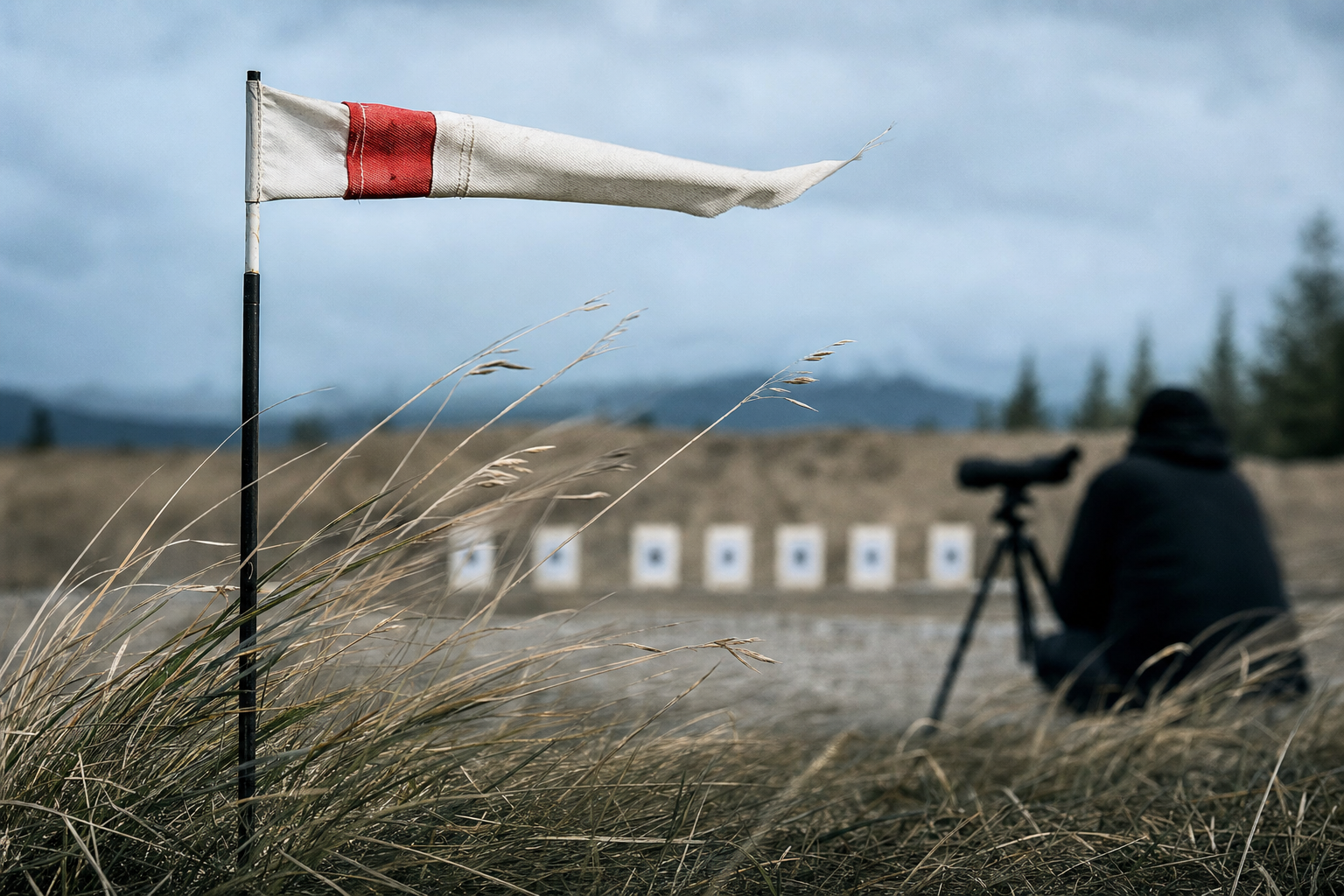
A wind flag is not decoration. Neither is grass moving halfway downrange, dust crossing the lane, rain slanting under the roof, a ribbon twitching near the berm, or mirage boiling across the line. Those are not advanced details reserved for match shooters with vocabulary problems. They are the target telling you that the shot path includes air.
That is why rimfire is so useful for newer precision shooters. It is cheaper than centre-fire, quieter, easier on the shoulder, and brutally honest about the conditions. Canadian Rimfire Precision Series describes a national rimfire discipline with beginner-friendly matches, mentorship, loaner equipment, and events across the country. The path does not have to start with a custom rifle, a mortgage-grade optic, and a cartridge that makes every miss feel like a subscription fee.
It can start with a .22, a safe range, a small target, and someone saying, "Watch the flag before you send the next one."
Do not buy the lesson twice
I like gear. That is not a confession. It is more of a condition.
But a lot of newer shooters try to buy their way around the first useful lessons. The group opens up, so the rifle gets blamed. The hit percentage drops, so the optic gets blamed. The point of impact walks, so the ammunition gets blamed. Then a cart fills up somewhere online because spending money feels more decisive than admitting the wind had a vote.
Gear can be the problem. A failed scope still ruins a day. Bad ammunition leaves its own record on the target.
But wind reading is one of the cheapest upgrades in the sport. It costs attention.
Shoot a group. Look at the flag. Wait. Shoot another. Watch what changed. Ask the person beside you what they saw. Write it down. Do not turn the first notebook into a PhD thesis. Just start connecting the condition to the result.
That habit is more valuable than another accessory bought because a product photo looked confident.
The point is not to become a wind wizard in one afternoon. The point is to stop treating the missed target like a mystery with only one suspect.
Club culture is the real advocacy
This is where Range Day and precision shooting meet.
The advocacy case for Canadian firearms ownership is not only that licensed owners are responsible, although they are. It is also that clubs produce competence in public.
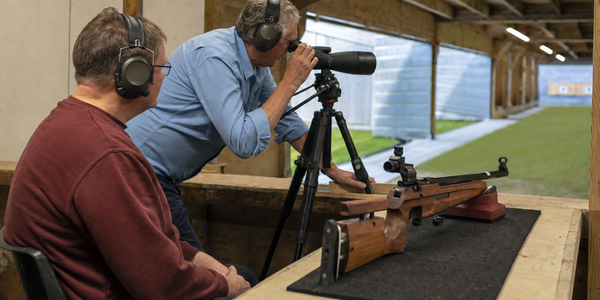
A good club lowers the barrier without lowering the standard. It explains the safety rules. It watches muzzle direction. It slows people down. It lets a nervous visitor become a careful participant. It turns the cartoon version of gun ownership into a person wearing ear protection and listening to instructions.
Then, if the visitor comes back, the club keeps teaching.
How to zero. How to call a shot. How to spot for someone else. How to keep notes. How to tell the difference between a bad trigger press, a loose setup, and a wind condition that changed while you were still admiring the last hit.
That is why small local stories matter. The Bulkley Valley report will not dominate the national news cycle. It should not need to. The point is quieter than that: one club opened the gate, new people tried something safely, and a few of them may now have a better question than the one they arrived with.
Read the flag first
If you are newer to Canadian shooting, the next step after an open house does not have to be dramatic.
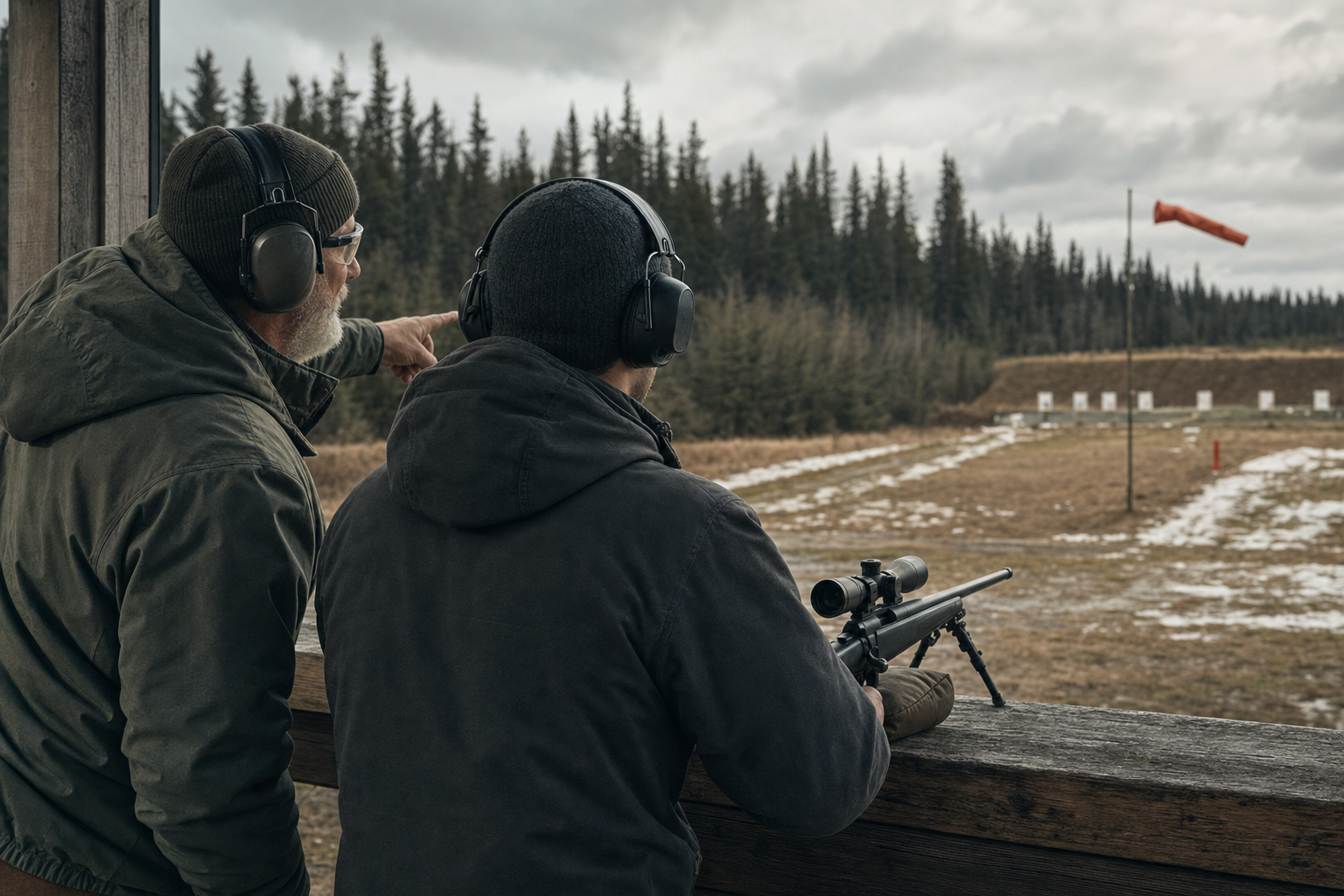
Book another range day. Bring the same rifle if you can. Use the same ammunition if you can. Keep the target simple. Then pay attention to the flag, the grass, the ribbon, the rain, the dust, and the pause between shots. Ask a better shooter what they are seeing. You do not have to copy every answer. You do have to start noticing.
That is how a public day becomes a personal skill.
Ottawa can keep pretending licensed owners are the problem it needs to solve. Canadian clubs will keep doing the quieter work: safety, mentorship, repetition, evidence, and the slow conversion of curiosity into competence.
Range Day was the invitation.
The flag is not decoration. It is part of the target.
Sources
- CFTK-TV, Bulkley Valley Rod & Gun Club hosts National Range Day to Visitors, June 8, 2026.
- National Range Day, Official National Range Day site, accessed June 9, 2026.
- BC Wildlife Federation, National Range Day, accessed June 9, 2026.
- Canadian Rimfire Precision Series, Official CRPS site, accessed June 9, 2026.
Shortlist the rifle before the checkout page.
If this piece helped you narrow the rifle question, keep the tradeoffs visible before the next tab becomes a shopping cart.
Use the Holdover Rifle Cartridge Shortlist Card to compare use case, distance, recoil, ammunition availability, rifle fit, optics plan, budget, and what you will actually practice.
Safety note: the card is a planning worksheet, not buying advice, legal advice, hunting guidance, load data, or a substitute for current manufacturer, range, provincial, federal, or qualified-instructor guidance.