Five minutes. Ten pages. Eight interveners.
The Supreme Court admitted eight private interveners to the firearms appeals and dismissed one application. Their role is broad in perspective and narrow in scope.

On July 29, the Supreme Court docket still showed nine private firearms-appeal applicants as pending. On August 13, the Court replaced that status with an order.
Eight private organizations now have leave to intervene. The Canadian Taxpayers Federation's application was dismissed. Canada's National Firearms Association was admitted in the lead Canadian Coalition for Firearm Rights appeal, docket 41859. Seven other organizations may participate across all four related appeals.
Each successful private intervener gets one factum of no more than 10 pages by September 22 and no more than five minutes of oral argument at the hearing.
That is a broader set of perspectives under very tight limits.
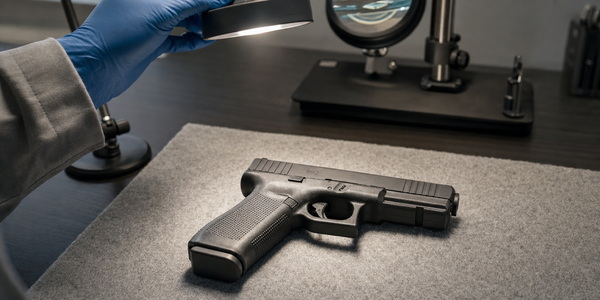
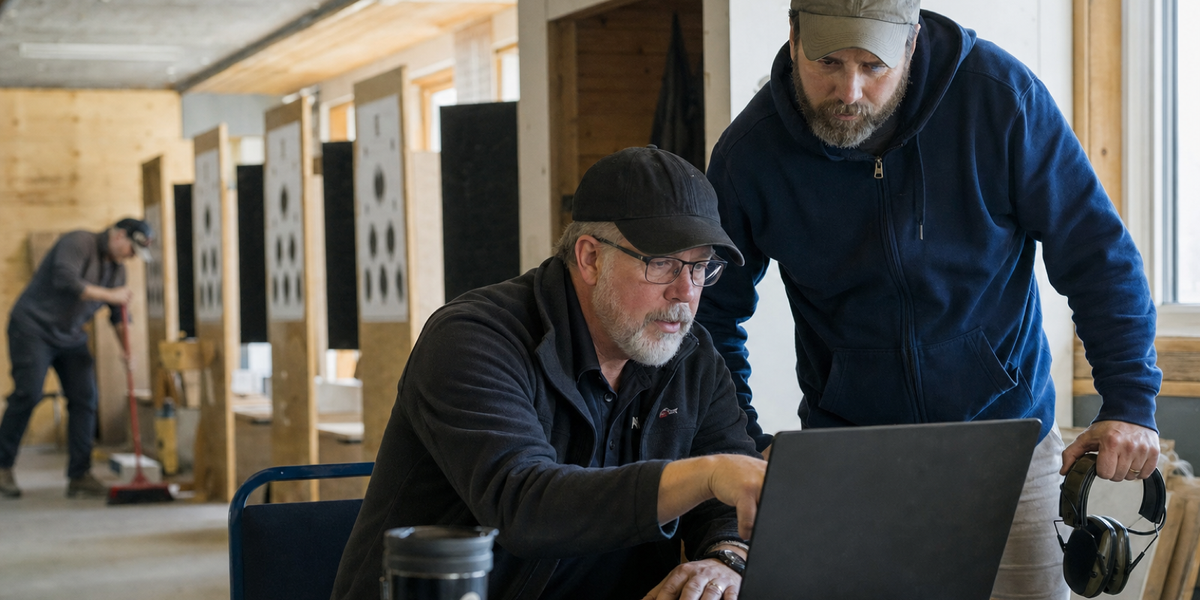
The feature is a fictional range-club source-checking scene. The people and setting do not depict an intervener, party, lawyer, judge, organization, or actual event.
The pending column has an answer
The seven organizations admitted across all four appeals are the Canadian Constitution Foundation, Canadian Shooting Sports Association, International Practical Shooting Confederation Canada, Safari Club International, Canadian Coalition for Gun Control, British Columbia Civil Liberties Association, and Ontario Rifle Association.
The list spans sport shooting, hunting, civil liberties, constitutional law, and gun-control advocacy. The order gives the Court access to that range while preserving a single legal case run by the appellants and respondent.
An intervener offers a distinct legal perspective. The original parties keep control of the appeal. The Court's standing guidance says an intervention should be useful and different from the parties' submissions. It also warns against imbalance.
The August 13 order turns those principles into instructions. Interveners cannot state the outcome they want, raise new issues, add evidence, supplement the record, or repeat submissions already made by another participant.
Those restrictions matter as much as the admitted names. Leave to intervene gives an organization a bounded chance to help the judges. It provides no endorsement of the organization, its broader policy program, or a side's position.
Five minutes rewards one sharp point
Five minutes disappears quickly at the Supreme Court. A speaker who spends the first minute introducing an organization or repeating the appellants has already used one-fifth of the allocation.
The useful private interveners will arrive with one legal contribution the Court can apply across the case: a distinct reading of delegated power, statutory limits, vagueness, institutional consequences, or the practical meaning of hunting and sporting utility within the questions the Court agreed to hear.
The firearms organizations have a real job here. They can help the Court understand regulated sporting disciplines, clubs, ranges, businesses, and the lawful uses attached to firearms before Cabinet changed their legal status. Their value will come from connecting that experience to the legal issues with precision.
The civil-liberties and constitutional organizations may frame the boundaries of state power from different traditions. The gun-control intervener can offer a perspective the pro-ownership parties would not advance themselves. A serious hearing benefits when the judges receive the strongest relevant version of each view.
Every organization now has to earn its five minutes.
One intervener has one appeal
Canada's National Firearms Association occupies a narrower lane than the other seven private interveners. Its leave applies to docket 41859, the appeal brought by the Canadian Coalition for Firearm Rights group.
The other seven will each file one factum common to all four related appeals. That distinction should survive every headline and social post about the new count. Eight private interveners were admitted. Seven have a four-appeal role. One has a one-appeal role.
The order also dismisses the Canadian Taxpayers Federation's application. The public docket records the disposition without publishing reasons. The safe conclusion ends there. The organization's name cannot supply the Court's reasoning.
This is why I keep the docket open beside Holdover's policy tracker. A small status line can change the count, the scope, or the deadline readers carry forward. The source has to win over the announcement.
The parties receive more reply room
The order changes the parties' next filing step too. A July 9 order had given each party group five pages to respond to the three intervening provincial attorneys general by September 22.
The new order adds five pages. Each appellant group and the Attorney General of Canada may now file one reply factum of no more than 10 pages addressing all interveners, including the provincial attorneys general, by October 6.
That extra room recognizes the expanded field. It also keeps the response consolidated. The Court is inviting more perspectives while controlling repetition, record growth, and timing.
The hearing remains scheduled for November 9. The intervention decision changes who may assist the Court and how. The underlying prohibition remains in force, the merits remain undecided, and the current amnesty orders still run until 90 days after the Supreme Court renders its decision.
Owners should update one procedural line today: nine applications have become eight admitted private interveners and one dismissal.
The next useful evidence arrives in their factums. Until those documents are filed and available, organization names tell us who may speak. The August 13 order tells us the limits. Neither source tells us the arguments they will choose.
Eight voices got in. Every one now has five minutes to add something the Court has not heard.
Sources
- Supreme Court of Canada, docket 41859, Canadian Coalition for Firearm Rights, et al. v. Attorney General of Canada, August 13, 2026 intervention decision, accessed August 14, 2026.
- Supreme Court of Canada, Notice to the profession: Interventions, November 2021.
- Public Safety Canada, Amnesty Orders Extensions, June 9, 2026.
The amnesty file is still moving.
If this piece sent you back to government pages, do not wait for the next portal, Gazette, or court move to find you by accident.
The Dispatch follows Public Safety, RCMP, Canada Gazette, court, compensation, collection, and amnesty updates so the next change comes with the source that moved.
Safety note: the tracker is a worksheet for source hygiene, not legal advice or a substitute for current official guidance.