An ORA match starts at the *clipboard*
A current Ontario Rifle Association precision-rifle match listing carries a useful beginner lesson: the rifle matters, but timing, paperwork, target work, and range culture get first refusal.

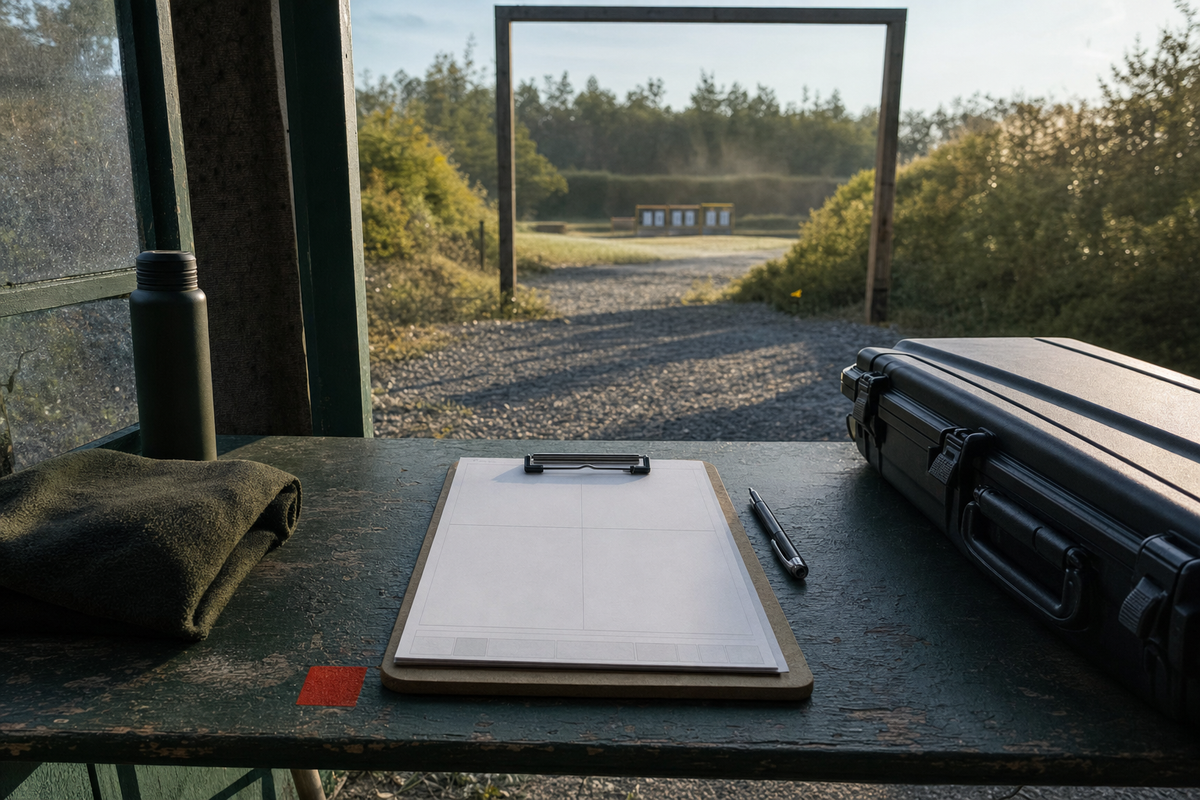
Opinion. A precision rifle match can tell you a lot about itself before anyone uncases a rifle.
The current Ontario Rifle Association calendar has ORA Precision Rifle Match 2 listed for Saturday, June 27. That sounds like a small calendar item until you read the discipline page. ORA's Precision Rifle - Service Conditions format is prone, open to high-power rifle shooters, and allows bolt-action and semi-auto rifles from .223 Remington and up. Registration runs from 07:30 to 08:00. Shooters are expected to be downrange and ready by 08:30. Required paperwork is not treated as a vibes-based suggestion.
That is not bureaucracy getting in the way of the shooting.
That is the shooting telling you where it starts.
The first lesson is not the rifle
Newer precision shooters usually want the rifle question first. I understand the temptation. The rifle is the expensive object, the optic is the beautiful object, and the shopping cart is the object with the least adult supervision.
The useful part of the ORA page lives in the operating rhythm. Be registered by eight. Have the right paperwork. Be ready at 08:30. Get assigned into A, B, C, or D. Shoot as a team. When your team is off the firing point, you are in the butts working targets.
That is a very different lesson from "what rifle should I buy?"
It says the match is a system. You do not arrive as a lone heroic rifle owner and float toward the firing point on a cloud of ballistic confidence. You arrive as one person in a relay, with documents, ammo, gear, a spotter relationship, a target-marking obligation, and a clock that does not care how far you drove.
That last part is important. ORA's page is blunt that if you forget the required paperwork, you do not shoot. That may feel harsh until you remember what kind of day this is. A match running on military-range time, shared target work, RSOs, relays, and multiple distances cannot pause because one person packed the rifle and forgot the boring part.
The boring part is part of the sport.
A local match is better than a fantasy setup
The ORA course outline is not a glossy PRS video. It is prone service-conditions work with rapid follow-up, snaps, a mover, and deliberate fire out through longer distances. The page talks about sighters, exposures, target sizes, scoring, two-minute prep time, competitor-supplied ammunition, and target marking done by competitors.
That is a lot of useful truth in one page.
It tells the newer shooter what kind of precision this is: structured, range-controlled, team-adjacent, and physical in the unglamorous way. You will not just shoot. You will mark. You will wait. You will listen. You will handle the target end of the relay. You will learn that the day has a shape before your first round confirms anything.
That is why local match listings are underrated. They remove the fog.
A product page tells you what the rifle could be. A match page tells you what the shooter needs to be. Those are not the same question, and Canada is already expensive enough without answering them backward.
The butts are part of the sport
If you are new to this language, the butts are the target end of the range, where targets are marked, scored, repaired, and kept moving. It is not glamour work. Good. Shooting culture needs unglamorous work.
The ORA page describes the event as basically a team event: shooter and spotter, with one team firing while the other is in the butts working targets. That is the part a lot of newer shooters miss when they treat competition as only a personal performance test.
A real range day is shared labour.
Somebody has to tape, mark, score, signal, reset, carry, call, wait, and listen. Somebody has to keep the relay honest. Somebody has to be ready when the command comes. The better shooters are usually the people who understand that none of this is beneath them.
That is also where you learn faster than you expect. Working targets teaches scale. Spotting teaches humility. Waiting teaches cadence. Watching another shooter manage the same exposure you just botched teaches more than another forum thread about bags.
The rifle still matters. Of course it does. But the rifle does not create range culture. The relay does.
Paperwork is a range habit
There is a Canadian absurdity in all of this. A licensed shooter can spend the week thinking about wind, zeros, prone position, rifle setup, ammunition, and the small humiliations of trigger control, then lose the whole day to a forgotten card.
Fine. That is the country we shoot in.
That is not a shrug. The system is heavy, and licensed owners carry a lot of administrative weight that does nothing for their marksmanship. The practical answer is to make the boring checklist automatic enough that the range day can belong to the shooting again.
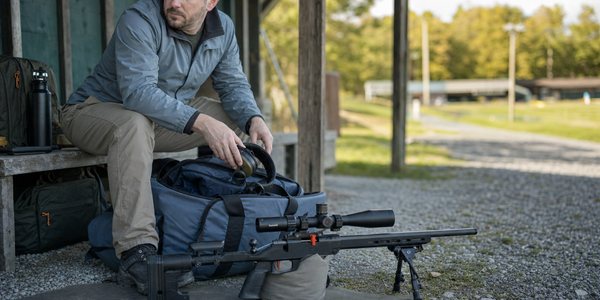
PAL. Membership card. Registration details. Any applicable authorization paperwork. Hearing protection. Eye protection. Notebook. Pen. Ammunition. Water. Mat. Closed case. The dull little pile that decides whether you are a competitor or a spectator with a nice rifle in the trunk.
On my own range mornings, the packing always feels slightly more dramatic than it should. There is the bag I know I packed, the thing I suddenly doubt I packed, and the small voice that says another piece of gear will make the morning feel more professional. The more useful voice is less romantic: check the basics twice and do not let the stupid thing be the thing.
The stupid thing is usually small.
Let the listing teach first
The right takeaway is not "drive to ORA cold and wing it." Read the page. Register properly. Contact the discipline director if you are unsure. Ask what a first-timer should bring. Accept that local match culture has manners, and those manners exist because everyone is trying to make the day work.
Then use the listing as buying advice.
If the match is prone, your first problem may not be the latest chassis. If the match uses teams, your first skill may be listening and spotting. If the match requires target marking, your first contribution may be work, not points. If registration closes at eight, your first discipline is arriving like an adult.
That is good news. It means the sport is not hidden behind mystery. It is written right there in the unglamorous details.
The clipboard is not the whole match.
It is just the first proof that you are ready to join it.
Sources
- Ontario Rifle Association,
Precision Rifle: https://ontariorifleassociation.ca/disciplines/precision-rifle/ - Ontario Rifle Association,
FAQ: https://ontariorifleassociation.ca/faq/ - TargetScore,
Ontario Rifle Associationclub calendar: https://targetscore.com/club/Ontario_Rifle_Association_orasecretary2023_gmail.com - TargetScore,
ORAcalendar app: https://ora.targetscore.com/ - Canadian Gun Nutz,
2026 Ontario Rifle Association Service Conditions Matches: https://www.canadiangunnutz.com/forum/threads/2026-ontario-rifle-association-service-conditions-matches.2580857/
Keep the range notes worth reading later.
If this piece has you thinking about range time, keep the notes useful enough to read later.
Use the Holdover Range Bench Log Card to record rifle, optic, ammunition, distance, weather, zero, group notes, correction, and next test without turning a range trip into a memory test.
Safety note: the card is a note-taking worksheet, not shooting instruction, load data, legal advice, or a substitute for range rules, official guidance, manufacturer manuals, or qualified instruction.