Buckshot counts as shot.
B.C. put its province-wide lead-shot proposal on hold, but the current file still leaves an eight-pellet buckshot question for the next version to answer.

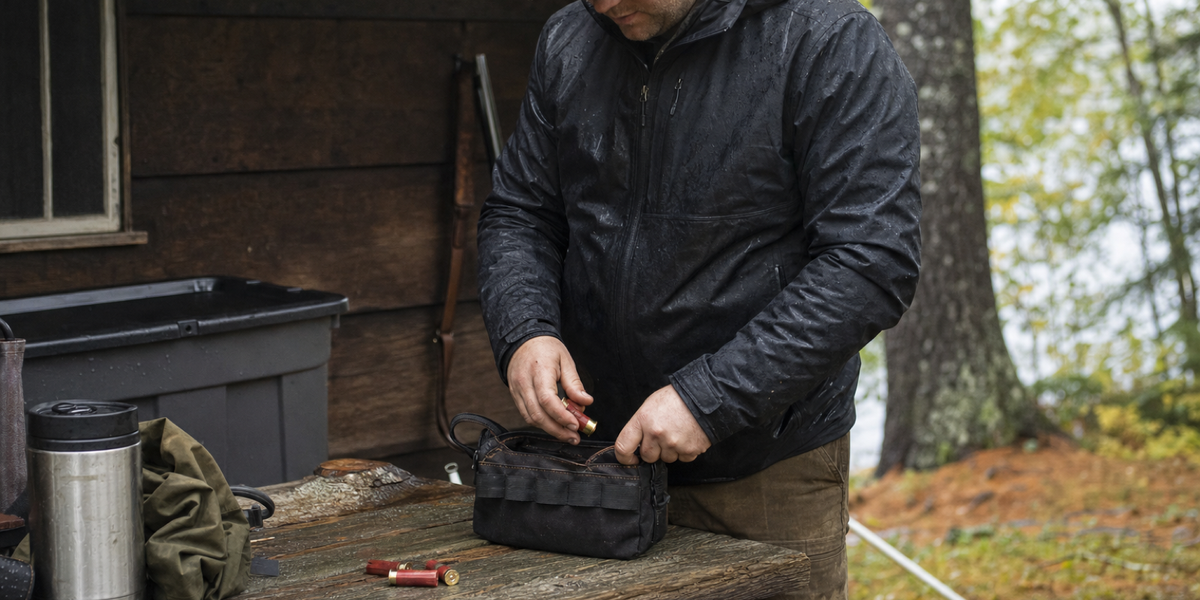
Eight pellets are enough to turn an ammunition definition into a policy question.
British Columbia's current hunting synopsis records a proposal that did not make it into the 2026-2028 rulebook. The province had proposed prohibiting lead shot for hunting every species. Its July changes summary says it decided against pursuing that ban at this time, and the synopsis says the measure was put on hold after engagement.
The file has one awkward wrinkle. The old provincial engagement page still says Proposed, even though the newer official publications set out the later decision. That page is useful for reading the proposal's scope. The July documents are the current record of its status.
B.C. also says it still intends to phase out lead shot. That makes the wording worth studying now, while there is still time to get the next version right.
Eight pellets make a legal term
The consultation proposal would have prohibited lead shot for hunting any species in B.C. Target practice and skeet shooting sat outside its stated scope. The page defines shot as a cartridge with eight or more roughly spherical projectiles.
That wording comes from B.C.'s Closed Areas Regulation. It has an ordinary job in the regulation book. In a province-wide phase-out proposal, it becomes a scope line.
The government makes a serious environmental case. Its consultation page says lead from spent ammunition can expose waterfowl, raptors, and scavengers. B.C. has prohibited lead shot for waterfowl since 1995, and the 2026 synopsis repeats the current waterfowl rules. A broader transition deserves the same seriousness about what the rule would actually cover.
That is where buckshot enters the picture. Section 17 of B.C.'s Hunting Regulation sets a minimum shotgun method for several species: a 20-gauge or larger shotgun using a shell loaded with No. 1 Buck or larger. The B.C. Wildlife Federation pointed out that some 12-gauge 00 buck cartridges have eight or more pellets, which puts those examples inside the regulatory definition of shot.
The province's proposal did not explain how it would treat that overlap. It did not provide an exception, a load-by-load test, or an account of shotgun-only hunting areas. That leaves a practical question for the next draft: how does a phase-out apply where the existing hunting rule sends a hunter toward a shotgun load?
The deferral has a reason
The July changes summary gives the province's explanation in plain language. The delay allows hunters and hunting supply stores to transition to non-toxic shot in a less disruptive way. It also says the government still intends to phase out lead shot and encourages hunters to choose non-toxic shot where possible.
That is a reasonable place to pause. The proposal's own cost analysis said non-toxic ammunition cost roughly 10 cents more per cartridge than lead shot. The BCWF said it could not confirm that differential and argued that .410 and 28-gauge options can widen the gap. Those are competing claims, and they need an evidence trail before a future proposal turns them into a province-wide assumption.
I have heard the common 12-gauge box offered as the whole cost answer more than once. Smaller bores and local hunting-method rules arrive later, after someone has already declared the transition easy. A rule that reaches every hunter needs to start where those details start.
The strongest case still stands
The environmental argument does not disappear because the first proposal stopped. Lead exposure harms wildlife. Waterfowl restrictions have been part of Canadian hunting for decades. The BCWF itself recognizes the waterfowl evidence and says hunters have complied with that ban.
The practical question is how to apply that concern beyond waterfowl. The federation asked for a defined objective, area-based restrictions where they fit, a three-to-five-year phase-in, incentives, and education. Those are policy choices. The government can accept some, reject others, or write a different answer. It still has to show the path.
A province-wide rule carries more weight than a headline or a product swap. It has to fit the hunting methods already on the books, tell retailers what transition looks like, and let a hunter understand a box of shells without conducting a private legal seminar at the counter.
The next version needs an answer
B.C. has time to finish the scope. Its own documents say the lead-shot proposal is on hold, while its intention to phase out lead remains. The next version should identify the environmental objective, the transition timetable, the cost evidence, and the treatment of eight-pellet buckshot loads in the places where shotgun rules matter.
Any serious hunting regulation should meet that standard before it tells people which ordinary load they can carry into the field.
Sources
- Government of British Columbia, 2026 Hunting and Trapping Regulation Changes Summary, created July 7, 2026. Source of the decision not to pursue the lead-shot ban at this time, the transition rationale, and the stated intent to phase out lead shot. Retrieved August 27, 2026.
- Government of British Columbia, Hunting and Trapping Regulations Synopsis 2026 to 2028, created July 7, 2026. Source of the statement that the proposal was put on hold, the current waterfowl rules, and the hunting-method note for No. 1 Buck or larger. Retrieved August 27, 2026.
- Government of British Columbia, Prohibit the use of lead shot for the purpose of hunting, last updated January 12, 2026. Source of the original proposal's province-wide scope, target-practice exclusion, defined term, stated rationale, and displayed
Proposedstatus. Retrieved August 27, 2026. - B.C. Reg. 76/84, Closed Areas Regulation, section 1. Source of the definition of
shotas a cartridge with eight or more roughly spherical projectiles. Consolidation current to July 14, 2026. Retrieved August 27, 2026. - B.C. Reg. 190/84, Hunting Regulation, section 17(1)(e). Source of the shotgun and No. 1 Buck or larger hunting-method wording. Consolidation current to August 18, 2026. Retrieved August 27, 2026.
- B.C. Wildlife Federation, Lead Shot for the Purpose of Hunting, published February 5, 2026. Source of the federation's stated buckshot examples, cost concerns, and recommendations. Retrieved August 27, 2026.
Shortlist the rifle before the checkout page.
If this piece helped you narrow the rifle question, keep the tradeoffs visible before the next tab becomes a shopping cart.
Use the Holdover Rifle Cartridge Shortlist Card to compare use case, distance, recoil, ammunition availability, rifle fit, optics plan, budget, and what you will actually practice.
Safety note: the card is a planning worksheet, not buying advice, legal advice, hunting guidance, load data, or a substitute for current manufacturer, range, provincial, federal, or qualified-instructor guidance.