For three firearm offences, Canada's count rose *103 per cent*
Statistics Canada's records reproduce a 103 per cent rise from 2015 to 2025 for three named firearm offences. Their rate rose about 74 per cent. The broader gun-violence series measures something different.

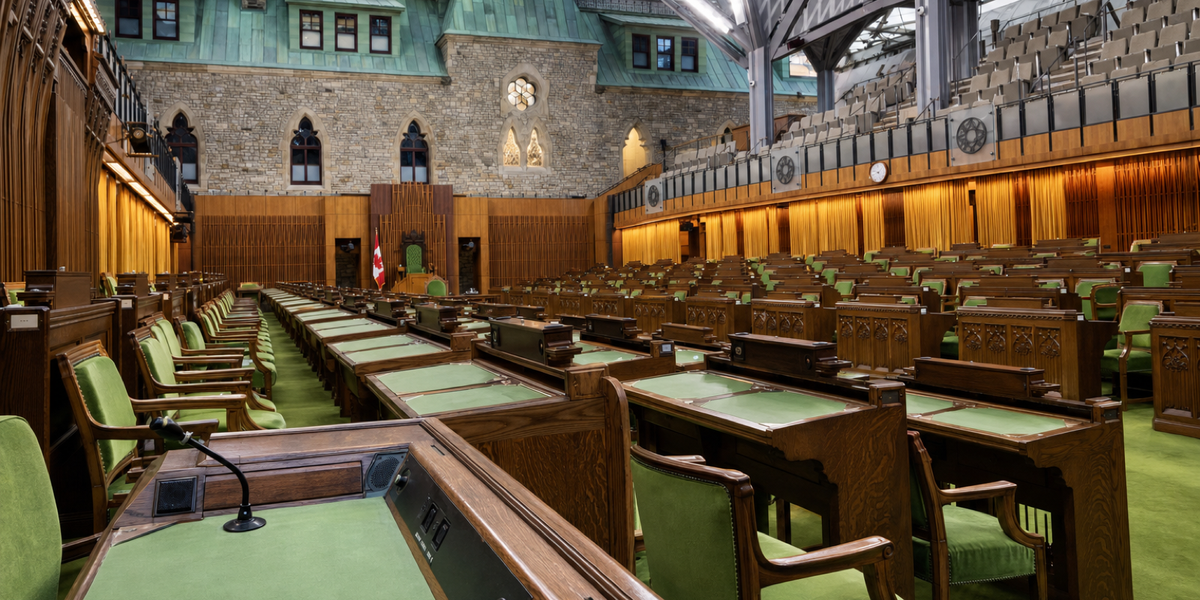
On Wednesday, Conservative MP Dominique Vien told the House of Commons that firearm-related crime had risen 103 per cent since 2015. Statistics Canada's detailed crime table can reproduce that percentage: 2,358 incidents in 2015 and 4,790 in 2025, an increase of 103.14 per cent.
The matching total covers three offences: discharging a firearm with intent, using a firearm in the commission of an offence, and pointing a firearm. Its population-adjusted rate rose about 74 per cent over the same decade. Both its count and rate fell in the latest year.
Those details belong beside the figure. Canadian owners hear ten-year gun-crime claims often enough that the category, dates, and unit of measurement deserve as much attention as the percentage.
The figure in Hansard
Vien made the statement during second-reading debate on Bill S-242, concerning national action against intimate partner violence. The official English Hansard records: "Firearm-related crime, in particular, has risen by 103% since 2015."
The passage identifies neither a table nor an endpoint year. The numerical match in Statistics Canada's current annual table establishes a way to reproduce the result. Vien's own choice of source remains unconfirmed.
That leaves a straightforward reporting task: give the matching number its full description. A listener should be able to follow the calculation without guessing which version of gun crime the speaker meant.
What the count includes
In Table 35-10-0177-01, the three named offences form a specific group. In 2025, police recorded 2,267 incidents of discharging with intent, 653 of using a firearm in the commission of an offence, and 1,870 of pointing a firearm. Together they total 4,790.
The unit matters. These are police-recorded incidents classified under the offence group. Police can record several violations within an incident; published crime totals generally follow the most serious violation. A firearm-related homicide or robbery can therefore appear under another principal offence. The group also leaves out other firearm offences, including possession categories elsewhere in the table.
The ten-year calculation is simple: subtract 2,358 from 4,790, divide the difference by 2,358, and multiply by 100. Rounded to a whole percentage, the increase is 103 per cent. The count tells us that police recorded roughly twice as many incidents in this particular group as in 2015.
Population and the latest year
A count describes the number of recorded incidents. A rate expresses them against the population, which also grew during the decade. The same table puts this group's rate at 6.60 per 100,000 people in 2015 and 11.50 in 2025. That is an increase of about 74 per cent, calculated from the published rounded rates.
Both comparisons describe an increase, with different sizes. Keeping the population adjustment visible helps a reader judge how much the frequency changed relative to the number of people living in Canada.
The latest year also deserves its own line. The group's count fell from 5,513 incidents in 2024 to 4,790 in 2025, about 13 per cent. Its rate fell from 13.36 to 11.50 per 100,000, about 14 per cent. A large increase over ten years and a decline in the final year can sit in the same record. Either one becomes incomplete when it is used to imply the other never happened.
The broader gun-violence series
Statistics Canada's separate Firearms and violent crime in Canada, 2024 covers a wider set of violent crimes involving a firearm. Its definition includes incidents where a firearm was present and police considered it relevant, including violent offences beyond the three named above.
That report's broad incident rate rose from 28.58 per 100,000 in 2015 to 36.00 in 2024, about 26 per cent. Its endpoint is a year earlier, its offence coverage is wider, and its reporting base differs. Holdover previously examined the firearm-type composition within that broader series.
Statistics Canada also warns that some offence tables use aggregate Uniform Crime Reporting data while the broad analysis uses a trend database with different police-service coverage. Those figures require separate labels. Dividing a change from one chart by a change from another would manufacture a precise-looking contribution percentage from mismatched bases.
What owners can ask of the evidence
Opinion.
I waited roughly ten months for my licence after applying in 2024. The RCMP's 2025 Commissioner of Firearms Report describes continuous eligibility screening through the licence term. Serious vetting is part of lawful ownership, and I support it. I also expect proposed restrictions on that population to come with evidence connecting the measure to the crime it is meant to reduce.
The three-offence count supplies no licence-status breakdown. In the Juristat's firearm-related homicide data, 80 per cent of accused with known licence status lacked a valid licence for the class of firearm involved. That finding has a defined population. Applying it to all 4,790 incidents in the offence table would stretch the evidence.
Licensed owners gain from precise reporting, including when a claim comes from a politician who supports them. The 103 per cent can be reproduced. Give it the three offences, the 2015–2025 window, the population-adjusted rate, and the recent decline. Then Parliament can argue about which measures would reduce the violence those records describe.
For verified developments and their consequences for Canadian owners, The Dispatch arrives weekly.
Sources
- House of Commons, Hansard No. 152, October 21, 2026
- Parliament of Canada, Bill S-242
- Statistics Canada, Table 35-10-0177-01, incident-based crime statistics by detailed violations
- Statistics Canada, Firearms and violent crime in Canada, 2024, April 21, 2026
- RCMP, 2025 Commissioner of Firearms Report
- Holdover, What the gun-crime number is made of