Buy the *regret* before the press
A current Canadian reloading thread gives new handloaders better first-bench advice than another starter kit: learn the mistakes veterans would pay not to repeat.

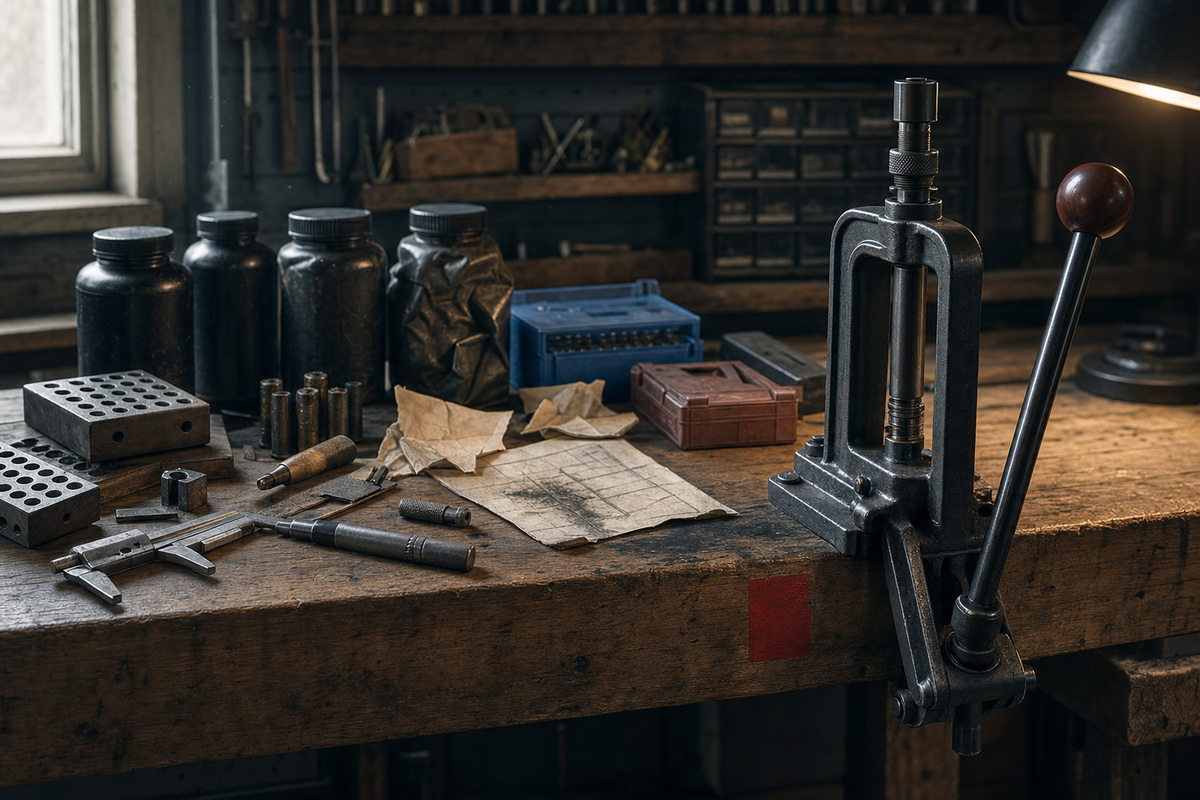
Opinion. A good reloading regret thread is worth more to a new handloader than another starter-kit shopping list.
Canadian Gun Nutz had one running in the Reloading forum when I checked on June 23. The thread was simple: longtime reloaders were asked how long they had been loading, what cartridges gave them the most satisfaction, and what they regret most after years of investing in the hobby.
The front page of the forum showed 60 replies and 1,892 views, with the latest activity marked the previous afternoon. That makes it a better Canadian handloading signal than another cart-filling argument.
The useful thing about veteran regret is that it has already paid tuition.
The regrets cluster into three piles
The thread does not produce one answer. It produces a pattern.
The first pile is components. Powder. Primers. Bullets. The old Canadian prices people remember with the tenderness normally reserved for lost dogs and discontinued trucks. Several posters went straight there: they should have bought more when powder and primers were cheap, common, and sitting on shelves.
The second pile is tools. One poster's blunt advice was that his biggest regret was money wasted on inferior dies, powder measures, and other machines. The old line is buy once, cry once. That line is overused because it is annoyingly durable.
The third pile is process. Bench shape. Case trimming. Staging. Mixing the wrong powder back into the wrong jug. Real mistakes, not theoretical ones. The kind that make a man stare at the bench and quietly reconsider every confident thought he has ever had.
That is the first lesson for a new Canadian handloader: the press is not the purchase. The bench is the purchase.
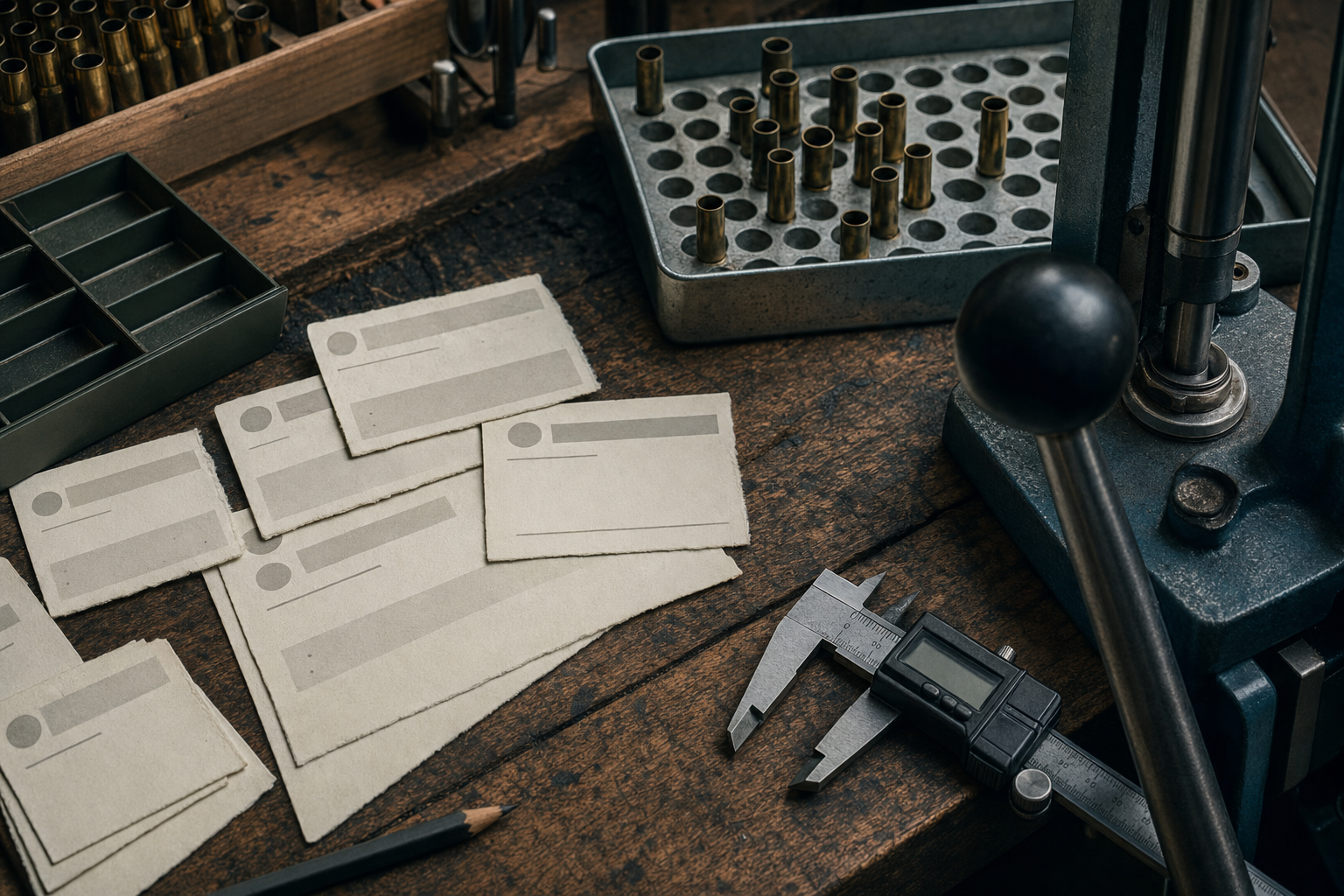
Components are continuity, not nostalgia
The easiest regret to understand is missed components. Everybody likes old prices. Nobody needs a forum account to wish they had bought more primers before the current market developed its charming little personality.
But the better lesson is not "hoard everything." That is just panic wearing a flannel shirt.
The better lesson is to narrow the problem. Know what you actually shoot. Know what cartridges you are willing to support. Know whether you are loading for .308 Win, 6.5 Creedmoor, 7mm PRC, .300 PRC, or another cartridge that will punish vague planning. Then buy enough continuity to keep a season coherent.
Natural Resources Canada treats ammunition, primers, and propellant powders as part of the explosives regulatory world. That does not make handloading exotic. It makes it Canadian. The activity sits inside rules, storage limits, transport assumptions, retail availability, shipping friction, and the ordinary reality that components are not always where you want them when your rifle is finally ready.
That is why the experienced reloader's component regret matters. It is not about beating the market like a day trader with a powder measure. It is about not letting a serious range season depend on one lucky shelf.
The tool regret is more expensive
I understand the appeal of buying the cheaper tool first. I have also spent enough time around my own bench to know the cheaper tool often sends an invoice later.
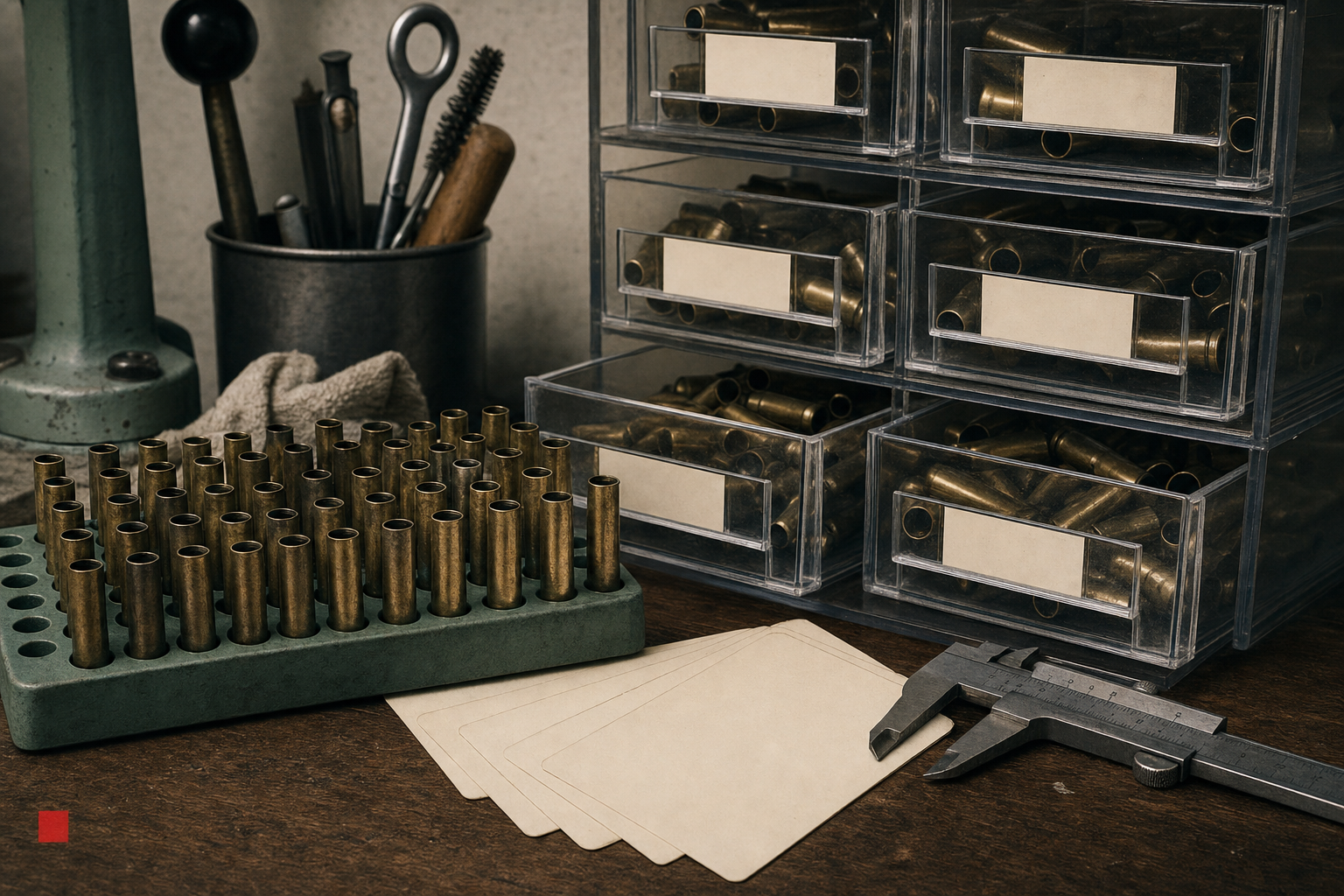
My bench is built around a single-stage press, an electronic dispenser, annealing, trimming, case prep, mandrels, calibre-specific trays, and labelled acrylic drawers. That sounds like an equipment flex until you try to keep seven rifle cartridges organized without a visible system. Then it sounds like mercy.
The point is not that a new handloader should buy my bench on day one. Please do not. That would be a financial event with brass shavings.
The point is that reloading tools are not ornaments. Dies either make repeatable work easier or they do not. A press is either mounted to something that can take sizing force or it becomes a woodworking lesson. A trimmer either saves time and consistency or turns case prep into a punishment chamber. A label either tells you what stage the brass is in or you trust your memory, which is how comedy enters the room.
One of my more educational mistakes was running lubed brass through a dry tumbler to clean it up, then realizing the media had been contaminated from an earlier dirty batch. The shortcut became the job. I ended up hand-polishing cases because the machine I asked to save time had quietly joined management.
That was not a reloading recipe problem. It was a process problem.
Labels beat confidence
The safest advice in the thread is not the most dramatic advice. It is hidden underneath the regrets: build the bench so ordinary mistakes have fewer places to hide.
If you are new, buy current manuals before you buy clever accessories. Buy measuring tools you trust. Buy dies and a press that will still make sense after the first hundred rounds. Build a bench that does not move when brass gets stubborn. Label the blocks. Separate stages. Write down what the batch is and what it is waiting for.
Do not start by trying to own every calibre, every powder, every primer type, and every gadget that a forum veteran mentions with suspicious affection. Start by making one cartridge boringly repeatable.
That is where precision begins. Not with mysticism. Not with a perfect load whispered between strangers. With brass that is staged, measured, trimmed, cleaned, labelled, and handled the same way often enough that the target has fewer excuses to offer.
This is also the part of Canadian firearms culture the public rarely sees. Licensed owners are often talked about as if the hobby is casual possession with a louder receipt. The reloading bench says something else: discipline without the press release, and a long argument against the idea that lawful shooters are careless people waiting to be managed.
The bench is fussy because the sport rewards fussy.
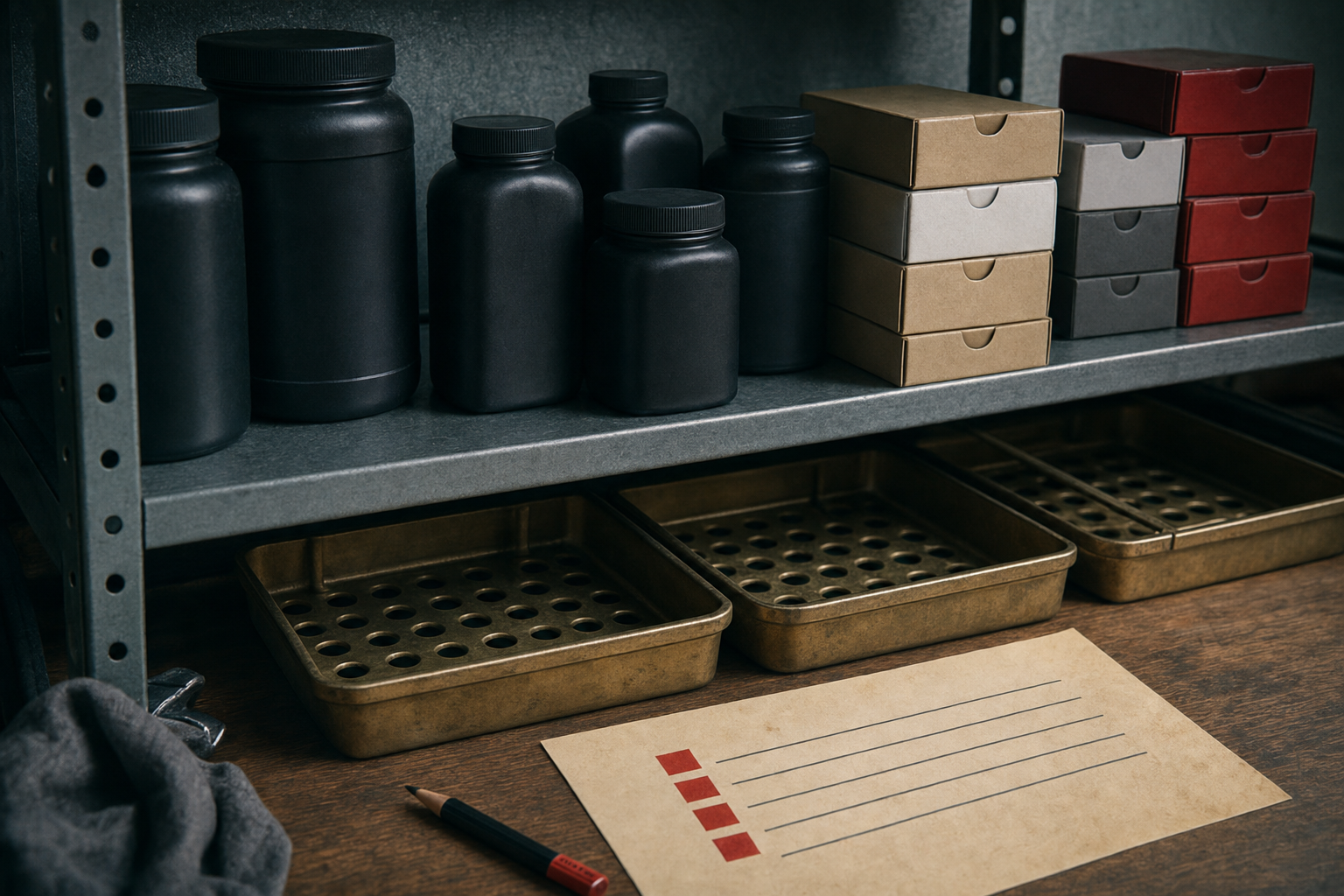
Buy the regret first
The first reloading purchase should not be a press. It should be an answer to three questions.
What do I actually shoot?
How often will I shoot it?
What mistake am I trying not to buy twice?
Once those answers are honest, the gear list gets shorter and better. The press has a job. The dies have a reason. The trimmer earns or loses its place. The component shelf becomes continuity instead of nostalgia. The labels stop looking fussy and start looking cheaper than confusion.
Veteran handloaders are not useful because they agree. They are useful because their regrets rhyme. They have already broken the bench, bought the wrong tool, missed the component window, kept the dies they should have sold, sold the dies they should have kept, and learned that "I'll remember" is a sentence the brass likes to hear.
New reloaders should take the gift.
Buy the regret first. The press will make more sense after that.
Sources
- Canadian Gun Nutz Reloading forum, current forum view checked June 23, 2026: https://www.canadiangunnutz.com/forum/forums/reloading.79/
- Canadian Gun Nutz,
Reloaders: your biggest regret?: https://www.canadiangunnutz.com/forum/threads/reloaders-your-biggest-regret.2583856/ - Canadian Gun Nutz,
Reloaders: your biggest regret?, page 4: https://www.canadiangunnutz.com/forum/threads/reloaders-your-biggest-regret.2583856/page-4 - Natural Resources Canada,
Permits, licences, certificates and regulations for ammunition and propellant powders: https://natural-resources.canada.ca/minerals-mining/explosives-fireworks-ammunition/ammunition-propellant-powders/permits-licences-certificates-regulations-ammunition-propellant-powders - Natural Resources Canada,
Buying, selling and storing ammunition and propellant powders: https://natural-resources.canada.ca/minerals-mining/explosives-fireworks-ammunition/explosives/buying-selling-storing-ammunition-propellant-powders
Set up the bench before the first mistake.
If this piece has you thinking about a first reloading bench, slow the buying part down and make the safety/process part visible.
Use the Holdover Reloading Bench Setup Checklist to track manuals, press, dies, scale, calipers, case prep, labels, storage, bench layout, safety routine, and what still needs an experienced second look.
Safety note: the checklist does not provide load data, recommend charge weights, teach reloading, or replace current published manuals, manufacturer instructions, qualified instruction, or applicable law.