The Cadex CDX-300 TAC makes *.300 PRC* make sense
The Cadex CDX-300 TAC is too heavy, too expensive, and too specific to flatter casual ownership. Good. In .300 PRC, those are not sins. They are the point.

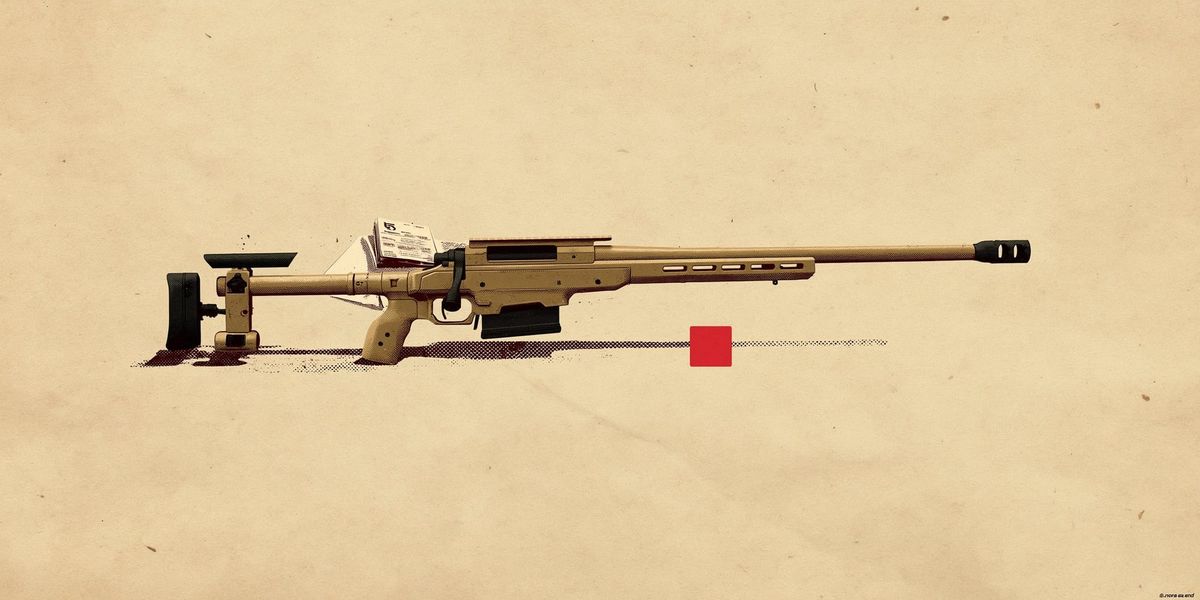
The Cadex CDX-300 TAC is not the rifle you buy because you want to "get into" .300 PRC. It is the rifle you buy when you have already admitted what .300 PRC is for, and you want the rifle to stop pretending otherwise.
That distinction matters. A lot of .300 PRC rifles are hunting rifles with a magnum chambering bolted into them. Some are fine rifles. Some are extremely pretty. Several weigh about as much as a stern letter. They make sense if the rifle has to go up a mountain before the bullet goes across a valley. They make less sense if the job is repeated long-range work from a bench, prone, or a barricade, where recoil management, trace, magazine geometry, and staying on the rifle are not luxuries. They are the work.
The CDX-300 TAC in tan is not coy about any of that. It is long, heavy, mechanically direct, and Canadian in the least cute possible way. There is no maple-leaf theatre here. It is a Saint-Jean-sur-Richelieu answer to a question asked by people who shoot from data, not from brochure copy.
This is an owner review of my rifle, with the outside record kept in its proper lane. There are not many exact-match public reviews of the CDX-300 TAC in .300 PRC and tan. What exists is better than nothing and less than gospel: current Cadex specs, .300 PRC cartridge testing, and adjacent reviews of Cadex rifles built around the same manufacturing habits. Taken together, they tell a useful story. The rifle's mass, price, chassis complexity, and small ergonomic decisions are not separate topics. They are one system.
The boring spec sheet is the argument
Cadex lists the CDX-300 TAC in .300 PRC with a 26" Bartlein 5R barrel, 1:8 twist, a 5-round magazine, 46.3" overall length before the muzzle brake, and an approximate weight of 13.1 lb. The factory page also lists Tan as a standard colour. On paper, that reads like a cluster of normal premium-rifle numbers. In the rack, it reads differently.
The 26" barrel is not a vanity tube. .300 PRC was designed around long, heavy-for-calibre .30-calibre bullets, and those bullets need useful barrel length, magazine length, and throat geometry to do the thing everybody says they bought the cartridge to do. A short, light .300 PRC can be handy. It can also turn a thoughtful cartridge into expensive blast management.
The 1:8 twist is the right signal. It tells you Cadex is not thinking about .300 PRC as a louder .300 Win Mag with modern branding. It is meant to stabilize the heavier end of the bullet shelf. My own .300 PRC bench is built around that world - heavy ELD-M class bullets, slow powder, careful records - but this is not a load-data article and I am not turning a rifle review into a recipe card.
The 3.850" CIP magazine specification in the catalog is the other important clue. One of the irritations in magnum precision rifles is buying a cartridge designed for length, then feeding it from a box that treats length like a personal failing. Cadex appears to have understood the assignment. The rifle gives .300 PRC room to be .300 PRC.
The fixed TAC stock is also the correct choice for this rifle. The LITE series gets the folding stock and the transport convenience. The TAC keeps the fixed-stock chassis, lower cost, and fewer moving parts. For a rifle this large, the fixed stock is not a compromise I lose sleep over. If I needed this package to fold, I would probably already be asking the rifle to be something it is not.

What other reviewers noticed
The most useful outside reviews are not exact duplicates of this rifle. That is worth saying plainly. They are Cadex platform reviews, and the value is in the recurring pattern: reviewers keep arriving at the same conclusion from different rifles. Cadex machines well, overbuilds generously, charges accordingly, and makes rifles that behave better under recoil than their cartridge labels suggest.
Chris Parkin's GunMart review of the Cadex CDX-SS SEVEN S.T.A.R.S. PRO is the cleanest technical read I found on Cadex's current precision-rifle thinking. Different rifle, different use case, but a lot of common DNA. Parkin calls out the fully free-floating Bartlein 5R barrel, the three-lug bolt, the two-stage DX2 Evo trigger, the integrated forend, and the chassis' deep adjustability. He also records three 5-shot groups at 100 m with the worst spanning 12 mm centre-to-centre. That is the sort of number that makes marketing departments briefly unnecessary.
Parkin's criticisms are more useful than his praise. He calls the rifle expensive, complicated, and not something he would want to strip in the field because of the number of small parts. Good. That maps neatly onto the CDX-300 TAC. This is not a farmer's truck gun with nicer Cerakote. It is a complex precision instrument. Cadex seems comfortable with that bargain. So should the buyer.
The TeamGBT review of the CDX-33 Patriot Lite in .338 Lapua Mag says much the same thing from a heavier-magnum angle. The reviewer praised the DX2 trigger's clean break, the tool-free adjustability of the chassis, and the MX1 brake's efficiency, describing recoil from the braked .338 as not far from an unbraked .308. That is the sort of claim I read twice, because the shoulder has opinions about journalism.
For .300 PRC itself, the most useful outside finding comes from American Rifleman's 2019 testing. They were not testing the Cadex, but they were testing the cartridge in serious rifles with serious glass. The article describes .300 PRC as built from the ground up for long, high-BC bullets, then reports consistent hits out to 1,000 yards with factory ammunition. That matters because the Cadex is not trying to improve .300 PRC by personality. It is trying to house the cartridge correctly.
The outside record leaves me with a simple read. Cadex rifles are not subtle about cost, machining, mass, or complexity. Reviewers notice all four. They also keep noticing precision, recoil control, and mechanical seriousness. That is a fair exchange if you actually use the rifle where those things matter. If you do not, it is an expensive way to own a tan object.
The recoil problem is really a manners problem
.300 PRC has recoil. Of course it does. Anyone who tries to describe it away is selling either a brake, a dream, or both. The better question is whether the rifle lets that recoil become useful information or just converts powder into flinch tuition.
The CDX-300 TAC is heavy enough that the cartridge stops feeling dramatic and starts feeling reportable. The rifle does not make .300 PRC small. It makes it orderly. The stock geometry, brake, long forend, and overall mass let you stay in the shot instead of discovering your own blink reflex in high definition.
This is where the weight earns its keep. Thirteen pounds bare is not light, and once you add a serious optic, mount, bipod, and any useful rear support, you are carrying a system rather than a rifle. That is the price of watching trace and calling your own misses. It is also the price of not turning every string into a conversation with your dentist.
For hunting, that same mass becomes a tax. For prone and bench work, it becomes rent. Pay it if you live there.
The tan finish is not the story
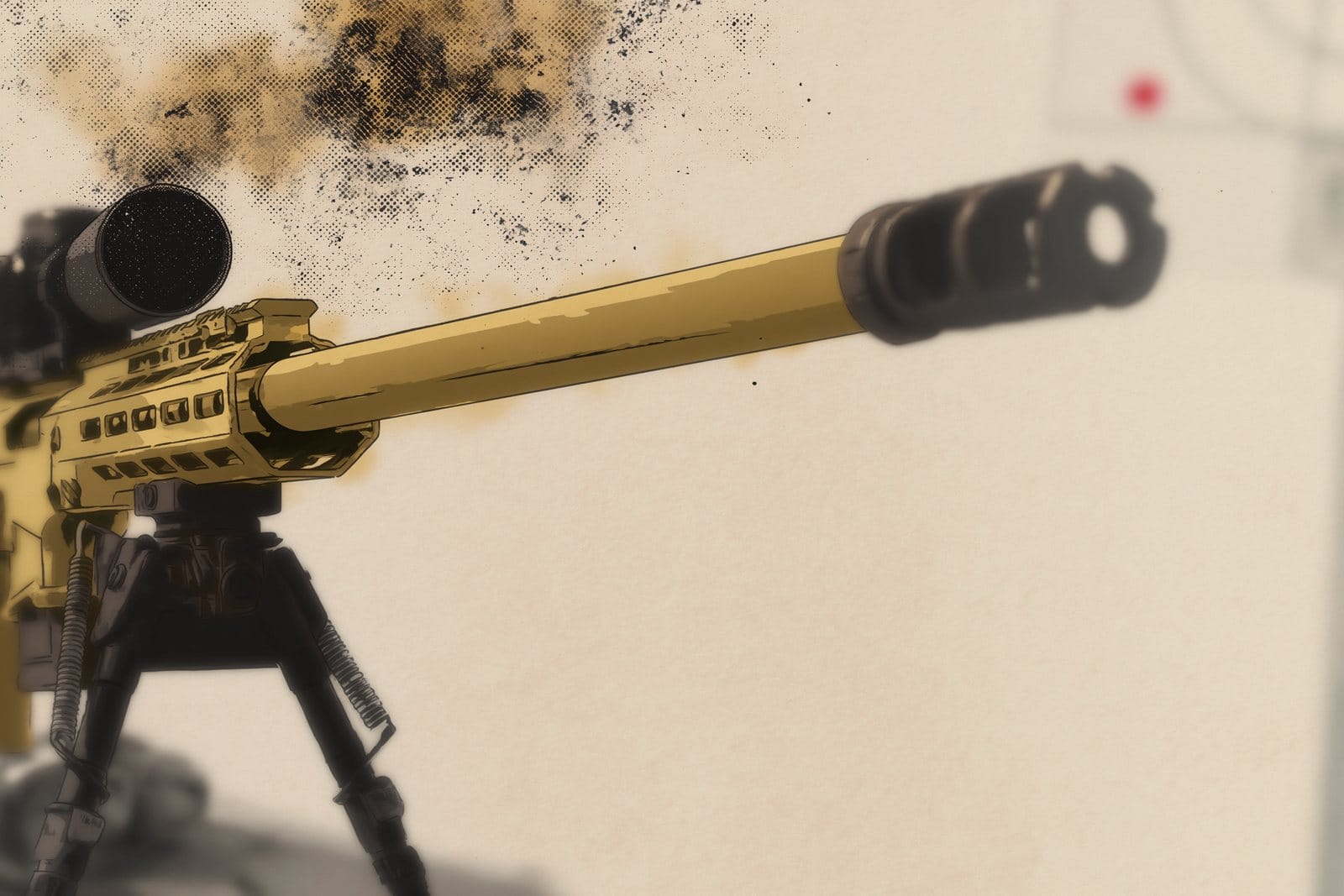
Yes, the tan looks good. It gives the rifle the right industrial honesty without sliding into the black-rifle cosplay that ruins so much precision-rifle photography. But the colour is not the serious part. The serious part is that the rifle looks like an object designed by people who expected it to be used hard and adjusted often.
The controls are large without becoming cartoonish. The grip is vertical enough for prone and bench work. The forend gives you space to run a bipod and support gear without fighting the rifle. The stock adjusts for a real optic, not for catalogue photography. The whole package feels like it was designed around repeatability, then painted tan because black was already taken by everyone with a discount code.
There is a Canadian subtext here that I like. Cadex does not need to borrow American tactical vocabulary to justify itself. The rifle's case is made by machining, bedding, barrel selection, and the small boring choices that separate a serious precision platform from a loud accessory shelf.
Where it is weaker
First, price. There is no graceful way around it. A Cadex precision rifle costs real money, and the closer you get to the top of the rifle market, the more every dollar has to defend itself. At this level, "nice" is not enough. The rifle has to be repeatable, durable, stable under recoil, and supported by a real ecosystem of accessories and service.
Second, complexity. Parkin's point about Cadex chassis disassembly is worth taking seriously. Complex rifles are not automatically fragile, but complexity changes the maintenance relationship. A field rifle should strip like a hammer. A precision chassis rifle is allowed to be more involved, but the owner should know what bargain has been made.
Third, portability. A fixed-stock 26" magnum with a brake and a serious optic is not a casual thing to carry. The rifle is non-restricted, but it is not exactly discreet. It moves like equipment, not like sporting luggage.
Fourth, cartridge cost. .300 PRC is not where you go to save money, especially in Canada. Factory ammunition, brass, heavy bullets, slow powder, and barrel life all have a vote. If you do not handload, or if you do not have reliable component supply, the rifle's capability becomes something you visit rather than something you develop.
None of those weaknesses makes the CDX-300 TAC bad. They make it specific. Specific is fine. Specific is honest. The problem starts when people buy specific tools for vague reasons.
Who should buy one
Buy the CDX-300 TAC in .300 PRC if you already know why .300 PRC exists. Buy it if you have access to distance, if you care about calling shots, if you are willing to keep records, and if you see a rifle as a system rather than a purchase.
Do not buy it because you want a flagship object. That is the wrong kind of expensive. There are cheaper ways to impress people who do not shoot, and more useful ways to spend money if your actual range time tops out at 300 yards.
For a Canadian precision shooter, the appeal is pretty direct. It is domestic, serious, mechanically conservative where it should be, modern where it matters, and unapologetically built around the work. It does not make the shooter better by ownership. No rifle does. It does, however, remove a surprising number of equipment excuses. That can be rude of it.
My read is simple: the CDX-300 TAC is a proper rifle for .300 PRC because it refuses to make the cartridge convenient. It makes it manageable, observable, and repeatable. Those are better virtues.
Related Holdover Tools
Useful calculators and references from the same corner of the Holdover bench.
- Holdover tools
- Target Analyzer
- scope click calculator
- Bullet Drop Visualizer
- Recoil Comparison Tool
- Caliber Picker
Sources
- Cadex Defence, CDX-TAC Series, current product page, accessed 2026-04-25.
- Cadex Defence, Cadex Defence Catalog, current PDF catalog and CDX-30/300/33 table, accessed 2026-04-25.
- Chris Parkin, Precision Tool, GunMart, last updated 2023-10-06.
- Adam Kool, Cadex Patriot Lite 338 Review by Adam S., TeamGBT, 2019-03-31.
- Keith Wood, Tested: Hornady's .300 PRC, American Rifleman, 2019-11-19.
Keep the range notes worth reading later.
If this piece has you thinking about range time, keep the notes useful enough to read later.
Use the Holdover Range Bench Log Card to record rifle, optic, ammunition, distance, weather, zero, group notes, correction, and next test without turning a range trip into a memory test.
Safety note: the card is a note-taking worksheet, not shooting instruction, load data, legal advice, or a substitute for range rules, official guidance, manufacturer manuals, or qualified instruction.