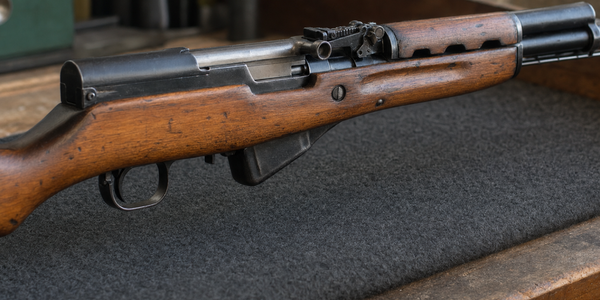
The exemption is the *warning light*
B.C.'s new FVPA sells itself as gang law. The warning for lawful shooters is the exemption: if ordinary range activity needs carving out, the law was wider than advertised.


Opinion. B.C. says its new firearm law is about gangs, extortion, and illegal guns.
Fine.
Then why does ordinary shooting need an exemption?
That is the useful question inside the latest CSSA commentary on British Columbia's Firearm Violence Prevention Act. The headline version is easy to sell. The province says the FVPA, coming into force on October 1, 2026, will give police more tools to deal with organized crime, illegal firearm transport, vehicle-related violence, youth recruitment, low-velocity firearms, imitation firearms, and firearm possession on designated properties.
Some of that is exactly where public-safety policy should aim.
The warning for lawful owners is not the stated objective. The warning is the mechanism. When government says hunters, sport shooters, firearms instructors, safety courses, airsoft users, and ordinary lawful activity will be protected through exemptions, the serious reader should slow down.
An exemption is not the comfort.
It is the warning light.
The headline is easy to support
No serious person wants gang members using rental cars as mobile lockers. No serious person wants teenagers carrying imitation firearms for intimidation or recruitment. No serious person thinks a school, hospital, court, child-care facility, or place of worship is a sensible place for random firearm drama.
B.C.'s April 27 release says the regulations bring the FVPA into force on October 1, 2026. The release describes offences around discharging firearms from vehicles, operating a vehicle that is illegally transporting a firearm, unsafe use or storage, causing a public disturbance with low-velocity or imitation firearms, possessing firearms or imitation firearms on designated property, and selling low-velocity or imitation firearms to youth under 18.
That is a real policy file.
The province also says the law grew out of the 2017 Illegal Firearms Task Force work. The task force was not assembled to ruin Saturday range days. It was looking at illegal firearms, gangs, organized crime, trafficking, vehicles, and public violence. British Columbia has had enough of that problem to justify provincial attention.
So the answer is not reflexive opposition.
The answer is precision.
If the problem is illegal firearm transport, write the law for illegal firearm transport. If the problem is drive-by violence, write the law for that. If the problem is youth being pulled into criminal ecosystems through imitation firearms and intimidation, write the law narrowly enough that it lands there.
The trouble starts when a law presented as gang enforcement spreads across ordinary activity, then asks lawful people to be grateful for carve-outs.

The fine print reaches ordinary people
The B.C. government's own FVPA page says the act prohibits firearms, low-velocity firearms, and imitation firearms in designated places, including schools, post-secondary institutions, courts, places of worship, hospitals, and licensed child-care properties. It also says regulatory exemptions are intended to mitigate impacts on lawful firearm activities that do not represent a public-safety risk, giving firearms safety courses as an example.
Read that without the press-release fog.
If a firearms safety course needs an exemption, the law reached the firearms safety course.
That does not mean B.C. is trying to ban safety courses. It means the first draft of reality is too wide for ordinary people to ignore. The government may intend to rescue the right activities. It may consult properly. It may write useful regulations. It may train police carefully. It may take an education-first approach to honest mistakes, as the release suggests.
Good.
But lawful activity should not have to depend on the goodwill of future guidance where the law could have been narrower in the first place.
This is a pattern Canadian firearms owners know too well. A public-safety headline names criminals. The political language names violence. The legal instrument then lands on licensed owners, clubs, instructors, retailers, hunters, collectors, competitors, and people with tidy paperwork who are more likely to read the rule than break it.
Criminals exploit gaps. Lawful owners absorb compliance.
That is not cynicism. It is the last six years of Canadian firearms policy in miniature.
New shooters should learn this pattern early
If you are new to Canadian shooting, do not make the beginner mistake of reading only the headline.
The headline tells you what the government wants the public to think the law is for. The definitions, exemptions, designated places, commencement dates, enforcement notes, and provincial guidance tell you what the law can actually touch.
That matters before you buy anything.
It matters before you take the course. It matters before you join a club. It matters before you decide your first year will be rimfire precision, clays, airgun practice, hunting, IPSC later, or the slow, humbling path of centre-fire groups and a notebook full of excuses that looked better at the bench than they did on paper.
The RCMP says the PAL is the only firearms licence currently available to new applicants and that, as a general rule, applicants must pass the Canadian Firearms Safety Course. First-time adult applicants need training, identification, a photo, references, and application details before the card ever arrives.
In B.C. alone, the RCMP's 2024 Commissioner of Firearms Report counted 368,433 individual firearms licence holders, including minor's licence holders.
Those people are not the hard-to-find population.
They are the reachable population. They have names, addresses, course records, licence numbers, transfer histories where applicable, range memberships, safe storage habits, and enough plastic cases to make a basement look like a moderately anxious warehouse.
When a law sweeps broadly, this is the group that has to figure it out first.

Airsoft is not the joke
The airsoft and low-velocity side of the FVPA should not be dismissed by firearm owners as someone else's hobby.
That would be lazy.
B.C.'s release says the regulations address youth access to low-velocity and imitation firearms, including BB, pellet, and airsoft guns, and require youth transporting those items to store them unloaded in a locked non-transparent case. The province's concern is that imitation firearms can be used for intimidation, public disturbance, and gang recruitment.
That concern is not imaginary.
But training culture is a continuum. People often learn muzzle discipline, range commands, sight alignment, target transitions, movement rules, and the social discipline of clubs before they ever own a centre-fire rifle. Sometimes that starts with airsoft. Sometimes it starts with an air rifle. Sometimes it starts with a .22. Sometimes it starts with a parent, a club night, a youth program, or the awkward first experience of discovering that "just hold it steady" is apparently not a complete marksmanship curriculum.
Public safety does not improve when governments blur training culture and criminal misuse into one anxious category.
The better approach is narrow: regulate misuse, intimidation, unlawful transport, and criminal possession. Leave legitimate training and lawful sport with clear statutory certainty, not a promise that an exemption should be good enough once everyone works out the details.
There is a difference between "this is lawful" and "this is prohibited unless you fit the carve-out."
New shooters should learn that difference before they learn to obsess over glass.
Police clarity proves the point
The British Columbia Association of Chiefs of Police supports the regulations and says the next stretch before October 1 matters for training, operational clarity, public education, and a coordinated rollout.
That is reasonable from a police leadership perspective.
It also proves the point.
If police need operational clarity, ordinary owners need it more. If public education is required, the law is not self-explanatory. If the province needs six months for police, stakeholder groups, and law-abiding owners to prepare, then the law is not merely landing on gang members and people already outside the system.
It is landing on the people who read notices.
That does not make the law illegitimate. It does make reassurance insufficient.
Canadian firearms owners do not need another round of "trust us, this is not about you" followed by forms, exemptions, guidance documents, policy pages, and enforcement discretion. They need laws that are narrow enough that ordinary lawful activity does not have to keep asking permission not to be treated like the problem.
Exemptions are not precision
An exemption can be useful. Sometimes it is necessary. Canadian law is full of them because real life is messy and governments write in categories.
But an exemption is not the same thing as precision.
Precision is when the law aims at the actual risk. A gang member illegally transporting a firearm in a vehicle is not the same problem as a PAL holder lawfully driving to a range. A teenager using an imitation firearm to threaten someone is not the same problem as a supervised training event. A criminal carrying a firearm into a courthouse is not the same problem as a certified instructor teaching safety with lawful equipment in a controlled setting.
Those distinctions matter.
The public-safety side often says lawful owners are not the target. Fine. Write the law so that is obvious before the exemption schedule has to prove it.
The alternative is the Canadian firearms default: broad law, narrow reassurance, lawful people doing homework, criminal people doing crime.
That is not good design.
It is not good policy either.
Aim the law at the risk
B.C. has a real gang and extortion problem. The province is entitled to respond. Police should have tools for illegal firearm transport, intimidation, vehicle-based violence, and organized crime. The public deserves better than shrugging at that file because firearms owners are tired of being blamed for things they did not do.
But the public also deserves laws that can tell the difference between risk and paperwork.
That is the whole argument.
Keep the pressure on criminal violence. Keep the pressure on trafficking, smuggling, illegal possession, intimidation, repeat violent offenders, and organized crime. Keep the pressure on people who use vehicles, imitation firearms, and weapons to threaten the public.
Do not let that pressure quietly spill onto the range, the classroom, the club, the hunting trip, the youth program, or the ordinary owner with a licence and a locked case.
New shooters should pay attention because this is the room they are entering. Firearms ownership in Canada is not only about the rifle, the optic, the case, the safe, the membership, or the first day you realize a .22 can make you look foolish at 50 yards.
It is also about reading the law behind the gear.
The most useful word in this story is not "gang." Everyone agrees gangs are a problem.
The useful word is "exemption."
If ordinary lawful activity needs an exemption, the law was wider than the headline admitted.
That is the signal.
Read it early.
Sources
- Canadian Shooting Sports Association, B.C.'s FVPA Targets Gang Violence in the Headline, Lawful Owners in the Fine Print, accessed May 6, 2026.
- Government of British Columbia, Cracking down on organized crime, gun violence, released April 27, 2026, accessed May 6, 2026.
- Government of British Columbia, Firearm Violence Prevention Act, accessed May 6, 2026.
- B.C. Laws, Firearm Violence Prevention Act, SBC 2021, c. 7, accessed May 6, 2026.
- British Columbia Association of Chiefs of Police, Firearms Violence Prevention Act Regulations Signal Continued Progress on Community Safety in BC, released April 29, 2026, accessed May 6, 2026.
- RCMP, Licensing information, date modified March 7, 2024, accessed May 6, 2026.
- RCMP, Apply for a firearms licence, date modified January 15, 2026, accessed May 6, 2026.
- RCMP, 2024 Commissioner of Firearms Report, accessed May 6, 2026.
Keep the source trail in one place.
If this piece sent you back to government pages, keep the official links, page dates, and follow-up notes together.
Use the Holdover Canadian Firearms Policy Source Tracker to record the current Public Safety, RCMP, Canada Gazette, and Justice source pages behind buyback, OIC, classification, compensation, and amnesty claims.
Safety note: the tracker is a worksheet for source hygiene, not legal advice or a substitute for current official guidance.