The portal says *wait*
Public Safety's May 7 update tells owners to wait for notification and a funding agreement before disposal. That small instruction says a lot about the buyback.


Update, June 9, 2026. Public Safety Canada has extended the relevant amnesty period. The old the former fixed deadline date referenced below is no longer the operative expiry; the amended expiry is 90 days after the Supreme Court of Canada renders its decision.
Opinion. Public Safety Canada finally found the most Canadian way to manage confiscation: a portal message telling everyone to wait.
On May 7, the federal individual declaration page for the Assault-Style Firearms Compensation Program was updated. The declaration period is over. Declarations are being assessed. New declarations are closed except for narrow cases, including people who had already opened a contact-centre case before the deadline and deployed Canadian Armed Forces or law-enforcement members who had difficulty filing from outside Canada.
The important part is the sequence.
Public Safety now says owners whose declarations are assessed will receive a message through the online portal, or by mail if they used paper, with next steps to finalize the claim and dispose of the firearm. It also says owners must wait for that notification, then accept and sign the funding agreement, before deactivating or turning in a firearm for compensation. Move out of sequence and compensation may be at risk.
That is not a small process note.
That is the buyback entering its waiting-room phase, where policy slogans give way to claims, portals, funding agreements, validation, destruction, and the quiet anxiety of making sure the government machine does not punish you for guessing wrong.
The sequence matters
The federal page says collection, deactivation, and compensation are expected to run from spring through early fall 2026 with support from the RCMP, participating local police, and secure mobile collection units. Firearms collected by police are to be validated and destroyed through a processing facility. Firearms collected by mobile units are to be validated and destroyed on site. Compensation follows validation, with the page saying payment will be issued within 45 business days after validation.
Then the calendar gets hard.
All destruction under the program is supposed to be complete before the SCC appeals + 90-day amnesty endpoint. The same page repeats the federal line: participation in the compensation program is voluntary, but compliance with the law is not. Owners must dispose of or deactivate affected firearms before the amnesty ends or risk criminal liability.
That combination is the problem.
Do not move until we tell you. Move before the deadline. Move through the correct process. Wait for the funding agreement. Use the collection or deactivation path. Trust the validation. Trust the 45-business-day payment window. Watch your portal. Watch your mail. Watch the calendar.
This is not public safety in the abstract. This is a destructive claims workflow attached to criminal liability.
For a licensed owner, the firearm is not a category. It is an object in a safe, attached to a receipt, a set of parts, a range plan, a history, a stack of magazines, and a value that existed before Cabinet put it in a different legal box.
The portal now owns the next move.
A list is not a firearm
The federal individual compensation list is where the policy becomes strangely intimate.
It is a long table of Firearms Reference Numbers, makes, models, and dollar amounts. Some entries are familiar to anyone who has spent time in the Canadian market. Some are oddities. Some are rimfire lookalikes, shotguns, carbines, AR-pattern firearms, imports, Canadian designs, and platform names that have been argued over in shops and forums for years.
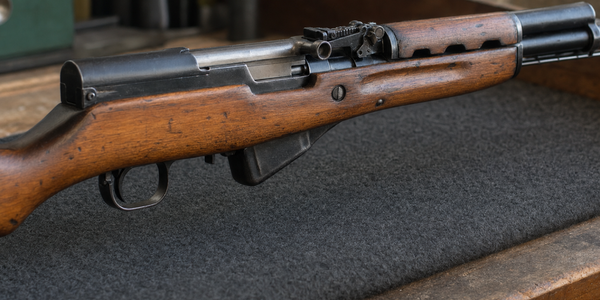
One of them is the Sterling Arms International R9 MK1. The list shows it at $1,920.
I own one.
That is not a review of the R9. This is not the moment for that piece, and in Canada, that may be the joke. The point is that a firearm I can identify as a real object, with a real purchase decision and real accessories around it, now appears as a row in a federal compensation table. The row does not know why it was bought. It does not know the magazines. It does not know the optic plan, the range use, the business that sold it, the replacement problem, or the fact that a piece of gear can be lawful one year and politically radioactive the next.
It only knows the amount.
The same federal list says compensation amounts are final. It says lower receivers have their own flat-rate treatment. It also says items turned in that are not included on the list will not be returned and will be destroyed without compensation.
That sentence should make every gear-minded owner sit up.
Canadian firearms ownership is never only the serialized object. A rifle or carbine often sits inside a small ecosystem: magazines, mounts, sights, slings, cases, spare parts, calibre-specific tools, ammunition, and the pile of small purchases that never look serious until a ban makes them stranded. The federal program is built around listed firearms and certain listed items. The owner's loss is often wider than the table.
That is why Saskatchewan's Firearms Verification and Appraisal Service has been getting attention. Its provincial page says appraisals can include firearms plus non-transferable ammunition and accessories affected by federal bans, and that Saskatchewan residents may seek certificates of exemption or storage options while pursuing compensation. That is Saskatchewan's policy response, not a national answer, and it has its own legal path to prove.
But Saskatchewan understood the property issue faster than Ottawa wanted to price it.
Ottawa sees a list.
Owners see a kit.
The waiting room is full of lawful people
Public Safety's April 1 release said more than 67,000 firearms had been declared by 37,869 owners when the individual declaration period closed. The province-by-province table gives the shape of the waiting room: 27,487 declared firearms in Ontario, 15,600 in British Columbia, 9,801 in Quebec, 7,334 in Alberta, and 1,255 in Saskatchewan, with smaller counts across the rest of the country.
Those numbers are not collections. They are declarations.
That distinction matters because declarations are not the removal of violent risk from the street. They are paperwork from people already reachable by paperwork.
The RCMP's 2024 Commissioner of Firearms Report counted 2,425,627 firearms licence holders in Canada. It also described Chief Firearms Officers as monitoring continuous eligibility, approving or refusing applications, approving ranges and clubs, conducting inspections, revoking licences and approvals, and overseeing delivery of the Canadian Firearms Safety Course and the Canadian Restricted Firearms Safety Course.
This is not an invisible population.
The licensed owner is easy to find precisely because the Canadian system was designed to find him. He has a PAL or RPAL, an address, records, renewal obligations, transfer history where applicable, storage rules, club rules, range rules, and a bureaucratic relationship with the state that would exhaust most normal hobbies by lunch.
The buyback now leans on that visibility.
The government says the program removes dangerous "assault-style" firearms from communities. That is the strongest version of the federal argument: some firearms, in Ottawa's view, are unsuitable for civilian possession, and compensation gives owners a path to comply while reducing the number in circulation.
That argument sounds tidy until it reaches a real owner.
The owner waiting for a portal message is not the person smuggling handguns. He is not defacing serial numbers. He is not trafficking guns. He is not the repeat violent offender cycling through the justice system. He is the person who can be emailed, messaged, mailed, scheduled, validated, and instructed because he already exists inside the regulated system.
Reachable keeps being mistaken for responsible.
New shooters should learn the filing habit
For newer shooters, this is the lesson that arrives before the fun part if you are paying attention.
The sport is gear plus records.
That sounds bleak. It is also true. A Canadian shooter should know the difference between a good purchase and a well-documented purchase. Keep the receipt. Keep the model information. Know the classification. Know whether the Firearms Reference Table entry is administrative or legal authority. The RCMP's own public FRT page says the FRT is not a legal instrument and that the Criminal Code, Firearms Act, and regulations are the prevailing legal authority for classification.
That is not a detail for lawyers only.
It affects ordinary gear decisions. A new shooter looking at a rifle, optic, case, parts, and ammunition is also looking at a paper trail. The first year in the sport teaches all the obvious things: a .22 is more useful than pride, optics matter but not as much as repeatable fundamentals, and a notebook will eventually catch you lying to yourself.
The next lesson is less romantic.
Write things down because memory is not a filing system. Save the document because the retailer may not exist in five years. Photograph the configuration if you need a record for yourself. Keep the manual. Keep the serial and model details where you can find them. Do not treat classification as forum folklore. Do not assume that because a firearm was normal when bought, it will remain normal when a regulation changes.
None of that is paranoia.
It is Canadian ownership in 2026.
The federal buyback has made paperwork part of the gear. Not because the paperwork improves the group size, but because it may decide what happens to the gear when Ottawa changes the category.
The government made the object administrative
One strange thing about the May 7 update is how quietly it admits the firearm is still real.
If these objects were only symbols, the process would be simpler. Turn them in. Destroy them. Move on.
But they are not only symbols. The federal program needs declarations, claim assessment, funding agreements, collection appointments, deactivation records, validation, payment, and region-by-region start dates because the state is dealing with property held by people who bought it lawfully. The page does not say that in those words. The workflow says it for them.
The process has to care about sequence because sequence now carries money and liability.
That is what makes the "wait" instruction more revealing than the public-safety language around it. The government can say the firearms do not belong in communities. It can also tell owners to keep holding them until the portal and funding agreement tell them otherwise. Those two positions can coexist legally, but they make the moral language look thinner.
If a firearm is so inherently urgent that it must be prohibited, why is the owner being told to manage it through a staggered administrative process over months?
The answer is obvious. The owner was never the urgent part.
The owner was the manageable part.
The policy should aim better
Holdover's position is not that Canada should have no firearms regulation. Training, licensing, storage, transfer verification, registration where applicable, and continuous eligibility screening are already baked into the Canadian model. Serious owners can argue the details without pretending the system does not exist.
The problem is that the last six years of federal firearms policy keep choosing the most administratively available target.
The licensed owner is visible. The retailer is visible. The club is visible. The range is visible. The person with a portal account is visible. The person with a declaration is visible. The person with a prohibited firearm in a safe, waiting for Ottawa's next message, is visible.
Criminal markets are harder.
Smuggling is harder. Trafficking is harder. Repeat violent offenders are harder. Illegal manufacturing is harder. Straw purchasing is harder. Prohibited persons with handguns are harder. That is exactly why a serious public-safety policy should spend more of its energy there.
Instead, we get the spectacle of lawful owners being told to wait for instructions on how to surrender, destroy, or deactivate property that was lawful when acquired, while the federal government insists the whole thing is a neat public-safety measure.
It is not neat.
It is a claims process wearing a moral argument.
Read the portal, then read the room
The May 7 update is worth reading because it is not theatrical.
There is no podium. No applause line. No dramatic police backdrop. Just the current state of the program: declarations closed, assessments underway, messages coming, funding agreements required, regional collection to follow, validation before payment, destruction before the amnesty deadline, and provincial wrinkles for places like Saskatchewan and Alberta.
That is how policy lands after the microphones leave.
If you are new to Canadian firearms ownership, this is part of the culture now. Learn it early. The political file is not separate from the gear room. It reaches the safe, the range bag, the receipt folder, the optic plan, the calibre decision, the reloading bench, and the used market. It turns a firearm into a row, then tells the owner to wait until the system decides what the row means.
The portal says wait.
That small instruction says more than the government probably intended.
The property is still real.
The paperwork is just catching up.
Sources
- Public Safety Canada, Submit a declaration - individuals, date modified May 7, 2026, accessed May 8, 2026.
- Public Safety Canada, Firearms Buyback Program - Assault-Style Firearms Compensation Program, date modified April 21, 2026, accessed May 8, 2026.
- Public Safety Canada, Number of assault-style firearms declared by province and territory, date modified April 1, 2026, accessed May 8, 2026.
- Public Safety Canada, List of firearms: for individuals, accessed May 8, 2026.
- Public Safety Canada, Declaration period for the Assault-Style Firearms Compensation Program closing with more than 67,000 firearms declared for compensation, April 1, 2026, accessed May 8, 2026.
- RCMP, 2024 Commissioner of Firearms Report, accessed May 8, 2026.
- RCMP, Firearms Reference Table, date modified April 23, 2026, accessed May 8, 2026.
- Public Safety Canada, Former Bill C-21: Keeping Canadians safe from gun crime, date modified August 13, 2025, accessed May 8, 2026.
- Government of Saskatchewan, Firearms Verification and Appraisal Service, accessed May 8, 2026.
The amnesty file is now court-plus-90.
If this piece sent you back to government pages, do not wait for the next portal, Gazette, or Supreme Court move to find you by accident.
The Dispatch follows Public Safety, RCMP, Canada Gazette, court, compensation, collection, and amnesty updates so the next change comes with the source that moved.
Safety note: the tracker is a worksheet for source hygiene, not legal advice or a substitute for current official guidance.