Cookstown puts *250 targets* on Canada's trap line
Canada's national trap championship brings a 250-target scorecard, a public spectator invitation, and an international team path to Cookstown.

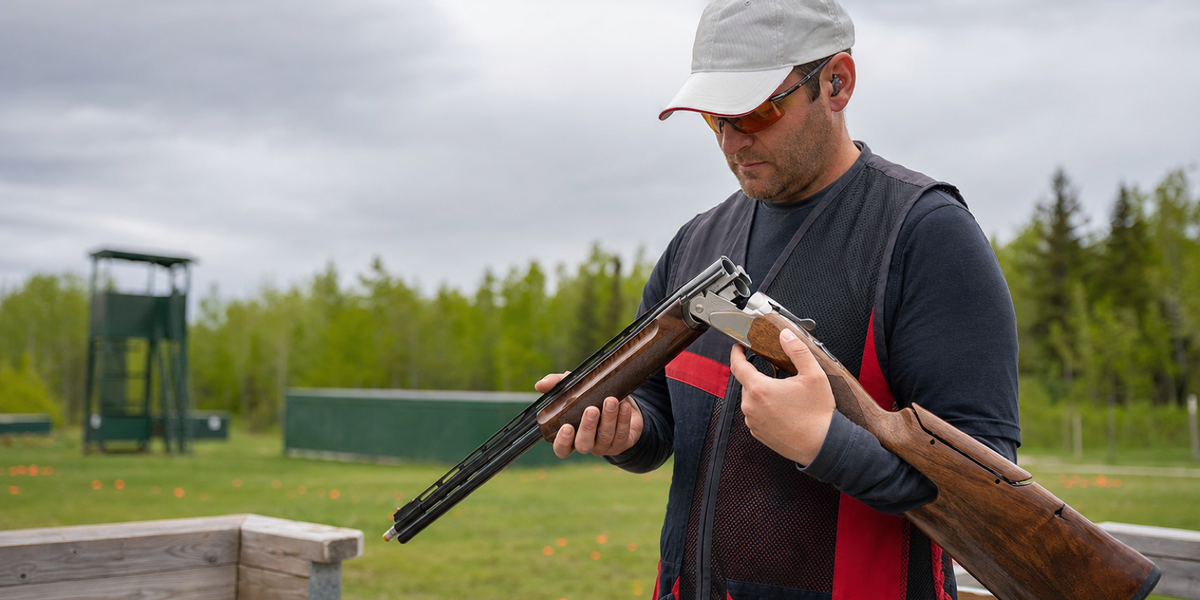
Competition. Cookstown opened its trap fields for training Saturday. By Sunday morning, national week had already begun moving.
The Coast2Coast event starts July 26. Two more open-training days follow. Pre-event training begins Wednesday, then the Canadian International Trapshooting Championships ask athletes to account for 250 orange targets across four days.
That number gives the week its shape. A national shotgun championship becomes easy to dismiss as a distant corner of the firearms world when the public sees only a title and a podium. The match program shows the work: 75 targets Thursday, 50 Friday, 75 Saturday, and 50 Sunday, followed by finals.
One good string can flatter a shooter. Two hundred and fifty targets ask for repeatability.
The scorecard runs for four days
The Toronto International Sports Shooting Centre in Cookstown is a Pan Am legacy range and an SFC national training and high-performance centre. The 2026 trap field accepts a maximum of 48 athletes. Registration closed July 15, so this is a spectator opportunity rather than a late entry invitation.
The athlete field is broader than the national team. The official program welcomes Canadian athletes who want the competition experience alongside those pursuing selection. International competitors can also enter. Everyone shoots under the same published match structure, subject to the categories, finals rules, and eligibility requirements in the program.
The qualification total arrives in four pieces: 75 + 50 + 75 + 50. That matters because shotgun scores can look simple from outside the sport. The target flies. The shot breaks it or misses it. A four-day program adds weather, recovery, equipment checks, timing, and the ability to repeat a visual routine after yesterday's score has already entered the record.
I own enough 12-gauge shotguns to know that the gun is the visible purchase and the shells are the recurring cost. At Cookstown, a full flat of 250 becomes a unit of time. The schedule turns every box into another part of the same test.
The first 125 targets build a second contest
After the first 125 targets, the organizers form two-person mixed teams from Canadian athletes. The program pairs the highest-scoring men with the lowest-scoring women to build balanced teams. Each athlete's full 250-target score counts, producing a team total out of 500.
That is a smart addition to an individual sport. The pairing rule creates a separate competitive question without asking athletes to change their basic course of fire. It also gives spectators a second way to follow the scorecard. A single result measures one shooter. The mixed-team table shows how two complete national performances combine.
The program also exposes the labour around the line. Athletes are expected to serve as sideline referees or flankers. The welcome credits the organizing committee, the Ontario Olympic Trapshooting Association, the Toronto club, SFC, and the volunteers whose time keeps the championship running.
Those details deserve more attention in Canadian firearms coverage. A lawful shooting event is people arriving early, checking equipment, following range commands, recording scores, serving the next squad, and doing the same work again after lunch. The shotgun remains central. The sport is built by the human system around it.
Two national results feed the Lima team
Cookstown also has consequences beyond the Canadian medals. SFC's March 19 selection appendix designates the national championships as the performance-on-demand trial for the 2026 Championships of the Americas in Lima.
For each event, two of the possible three full-participation quota-eligible team selections come from national-championship performance. SFC ranks eligible athletes using the average of the two qualification rounds, applies the ISSF tie-breaking rule where required, and selects the top two who satisfy the full eligibility conditions.
That last condition matters. A strong national result alone does not create an international team place. The athlete must also meet SFC high-performance membership, citizenship, conduct, readiness, and other selection requirements. The third possible full-participation selection is discretionary, based on a separate assessment of ranking, international results, event depth, readiness, and quota strategy.
The destination gives the scorecard wider meaning. SFC describes the November championships in Lima as a milestone in the Los Angeles 2028 cycle, a qualification event for the 2027 Pan American Games, and a place where continental Olympic quotas can be allocated.
An orange target in Cookstown can therefore sit inside a much longer path. The connection is published before the first national qualification target leaves the bunker. Canadian owners should value that transparency. A current rule, a visible trial, and a named selection method make high-performance sport understandable even for someone who will never wear the team jacket.
The public can see the line
BarrieToday reported July 25 that the public and media are welcome at the trap and skeet championships. The trap program also gives spectators, visitors, and coaches clear responsibilities: follow the officials and facility staff, respect every safety direction, and use eye and ear protection on the ranges while shooting is underway.
Anyone planning to attend should check the current SFC championship page before travelling. The trap championship runs July 29 to August 2. The separate Canadian skeet championship follows August 5 to 9. On-site schedules can change, and range instructions govern once a visitor arrives.
The invitation matters because public understanding rarely grows from an abstract claim about responsible ownership. It grows when people can see what responsibility looks like. Cookstown offers a controlled range, published rules, mandatory safety equipment, officials, volunteers, athletes, and a score that records each target.
Canadian shooting sport spends plenty of time explaining itself to people who have never stood behind a firing line. This week offers the direct route. The public invitation is open. The scorecard will do the explaining.
Sources
- Shooting Federation of Canada, National Championships, checked July 26, 2026.
- Shooting Federation of Canada, 2026 Canadian International Trapshooting Championships match program, checked July 26, 2026.
- Shooting Federation of Canada, 2026 CAT Championships team-selection Appendix C, March 19, 2026.
- Shooting Federation of Canada, Selection Policy, checked July 26, 2026.
- Shooting Federation of Canada, Major Games, checked July 26, 2026.
- BarrieToday, Canada's top trap, skeet shooters to compete in Cookstown, July 25, 2026.
Keep the range notes worth reading later.
If this piece has you thinking about range time, keep the notes useful enough to read later.
Use the Holdover Range Bench Log Card to record rifle, optic, ammunition, distance, weather, zero, group notes, correction, and next test without turning a range trip into a memory test.
Safety note: the card is a note-taking worksheet, not shooting instruction, load data, legal advice, or a substitute for range rules, official guidance, manufacturer manuals, or qualified instruction.