Nine levels of *progress* at an Abbotsford .22 club
Abbotsford's .22 club reports its first completion of all nine SFC target-shooting levels. Supplied rifles, weekly sessions and a clear next goal make the programme worth a look.

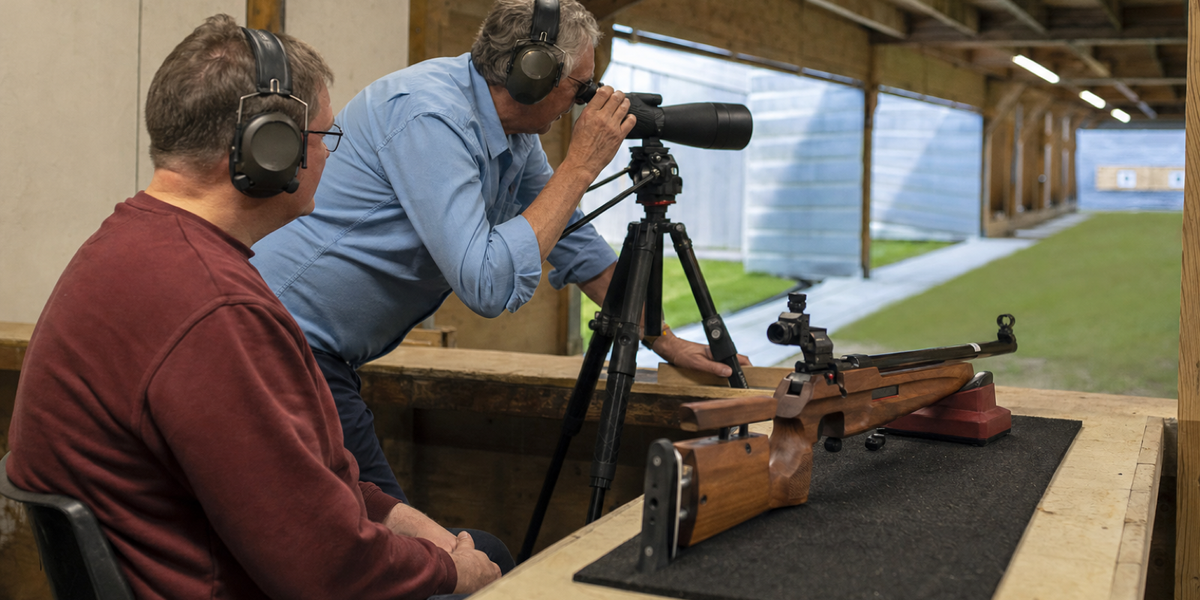
Abbotsford Fish and Game Club has reported its first participant to complete all nine patch levels in Shooting Federation of Canada's Recreational Target Shooting programme. The club's October 1 report says the final level, Advanced Gold, was completed the previous week.
That is a useful little piece of Canadian shooting news. A club has someone who followed its programme all the way through, and a visible example for the people starting behind them.
The part that interests me is the structure around that achievement: a regular evening, equipment available at the club, and results recorded over time. Together, those things give a newcomer an answer to a question that can get lost in the excitement of a first range visit: what would I come back to work toward?
A place to begin, then somewhere to go
Abbotsford's ongoing .22 programme description welcomes adults and juniors, including people who are not club members. It describes club-furnished rifles, ammunition and targets, with scores recorded each week toward badges.
There is a practical difference between trying a friend's rifle for an afternoon and joining something with a recurring place in the calendar. The second option gives the experience a bit of continuity. You can arrive knowing there is a programme to follow and somebody keeping track of how it is going.
I would have appreciated that kind of clarity when trying to decide what a useful range day should look like. In my own three-rifle rotation, cutting back from the six or seven rifles I used to bring made the day feel less rushed. I had more time to pay attention to the rifles already on the bench.
A newcomer has different equipment and experience to think about. The attraction of a defined programme is still familiar: a session has a purpose, and the next visit can build on it.
What the national programme provides
Shooting Federation of Canada describes Recreational Target Shooting, or RTS, as an introductory programme covering International Shooting Sport Federation disciplines. Its current guidance emphasizes a flexible, self-paced approach for people of different ages and abilities.
That matters to the person who wants to join in but has no immediate ambition to enter a major match. A programme can provide a smaller, understandable goal while someone finds out whether the sport belongs in their week.
There is a club-side commitment as well. SFC's current instructions call for an affiliated club and one volunteer Programme Lead to track progress, order supplies and award badge levels. Clubs are directed to request the current programme guide from SFC.
The public page leaves the detailed scoring requirements to that guide. A club considering RTS should obtain the current version before advertising levels or promising how quickly somebody could complete them.
Abbotsford's announcement gives us one club's first finisher. It leaves the participant's detailed scores and time in the programme unstated. The useful lesson is that the local club has carried the progression through to the final badge.
The local details make the invitation usable
For someone near Abbotsford, the October report gives the next step some shape. Sessions run on Mondays, with a mandatory briefing at 7 p.m.; holiday Mondays are excluded. The advertised cash cost is $5 for members and $10 for non-members. Card payments are $5.25 and $10.50 respectively.
The club says equipment and eye and ear protection are supplied, and that participants can attend without a Possession and Acquisition Licence under its supervision. RCMP guidance permits unlicensed use under the direct and immediate supervision of the firearm's lawful owner. Anyone planning to attend should confirm the arrangements with the .22 club before travelling.
Those details are worth putting together. A prospective participant can see when to arrive, what the session costs and whether they need to own equipment first. Each answered question makes planning an initial visit a little easier.
For a reader elsewhere in Canada, the equivalent next step is a conversation with a nearby club. SFC's club directory includes filters for beginner programmes, coaching and firearms available for new shooters to borrow. Use those to build a short list, then ask which programmes the club currently runs and what it can provide.
An RTS question is more useful than a vague request for somewhere to start. Does the club offer it? Who coordinates it? If it uses another programme, how does a participant follow their progress from one visit to the next?
Give the second visit some thought
Clubs put considerable work into welcoming someone through the door. Equipment, supervision and a patient introduction all take people and time. A continuing programme gives that effort somewhere to lead.
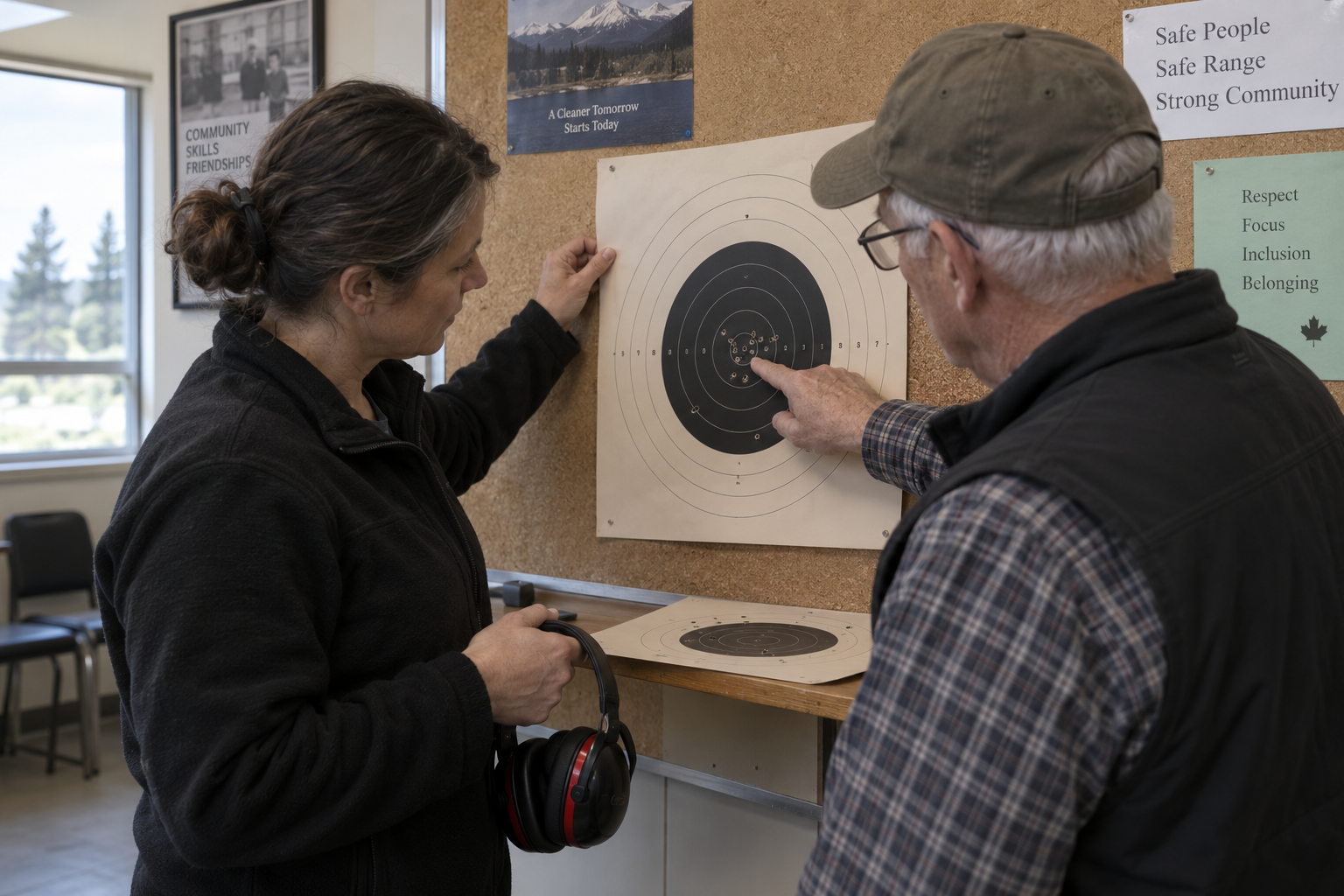
I like the modest scale of Abbotsford's announcement. One participant reached the end of nine levels. The club noticed, recorded it and gave everyone else a concrete example of progress within reach of its own programme.
For the rest of us, it is a good reason to ask what happens after the first visit. A regular session and a clear next goal can be a very appealing invitation to come back.
Keep the range notes worth reading later.
If this piece has you thinking about range time, keep the notes useful enough to read later.
Use the Holdover Range Bench Log Card to record rifle, optic, ammunition, distance, weather, zero, group notes, correction, and next test without turning a range trip into a memory test.
Safety note: the card is a note-taking worksheet, not shooting instruction, load data, legal advice, or a substitute for range rules, official guidance, manufacturer manuals, or qualified instruction.