An April note, an unopened firearms review
Public Safety's records show planning and technical-group member selection for the firearms review. Owners still have no published route into the promised engagement.

Classification reference Open the classification timeline
A Public Safety Canada entry dated April 30 is the clearest public sign that the firearms-classification review has moved beyond a December promise.
The entry carries a long, dry title: “Firearms Classification Review - Selection of Members for the Firearms Classification Technical Advisory Group.” It appears in the federal briefing-note index with reference number PS-051607. The listing names the department, the date, and the ministerial decision function. It supplies no roster, mandate, terms of reference, consultation calendar, or route for an individual licence holder to submit a view.
That distinction matters. The public record now shows work inside the department. The public still needs to see how the promised engagement reaches the people who live with the classification system.
December's promise has acquired a paper trail
On December 4, 2025, the Minister of Public Safety said Ottawa would “shortly” launch a comprehensive review of the firearms classification regime. The statement promised an expanded advisory group, broad engagement, and dedicated First Nations, Inuit, and Métis consultations that would include the SKS.
Six weeks later, when the government opened the individual compensation program, it repeated the review commitment. The January release again named an expanded advisory group, broad public engagement, and consultation on the SKS.
The later briefing records add two useful dates. The federal index lists a January 2 note titled Firearms Classification Review: Proposed Way Forward. It then lists the April member-selection note. Those records establish preparation. They do not tell the public what a technical group will recommend or who will sit on it.
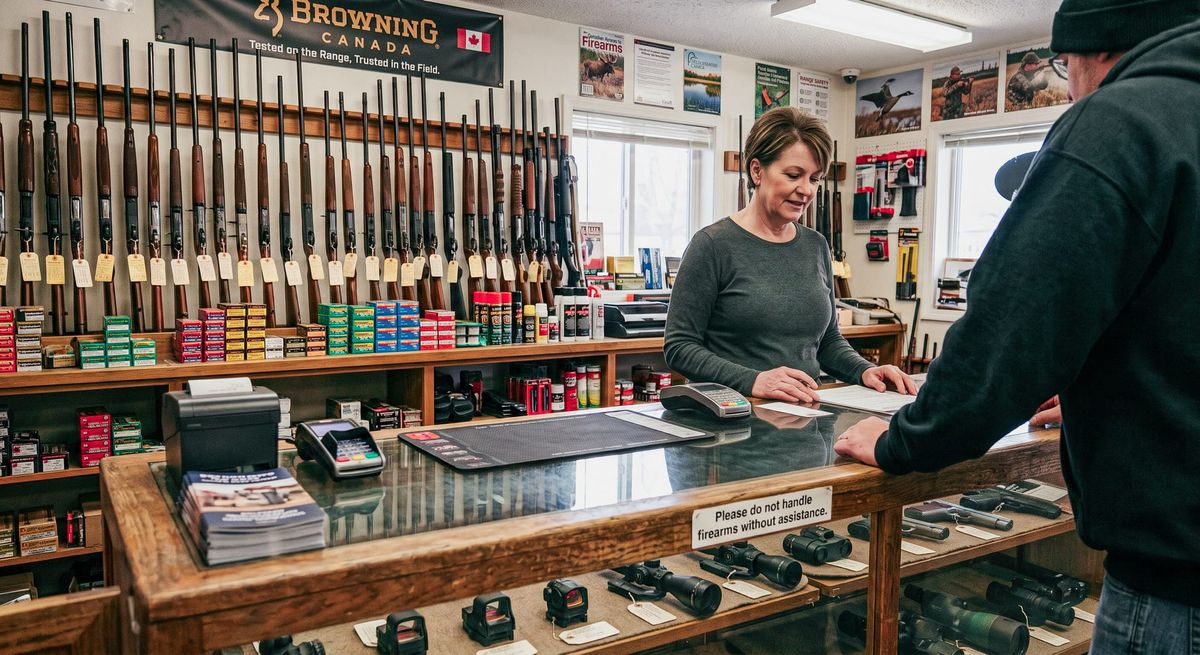
Anyone who has spent time at a Canadian gun counter understands why that is more than administrative trivia. A classification question can alter a purchase, a retailer's inventory, a range plan, or a project that was ordinary when someone began it. The responsible habit is to read the source, check the date, and ask which authority carries the answer. A review that may touch those questions deserves the same level of clarity.
The public route remains hard to find
I searched the current Public Safety news and consultation material while rebuilding this article. The sources above preserve the original promise and the internal paper trail. I found no public terms of reference, named technical-group roster, consultation timetable, or individual submission channel for the classification review.
That finding has a limit. A search result cannot establish that department staff, Indigenous partners, industry representatives, firearms organizations, or other participants have done no work. The April record points the other way. It shows that a member-selection decision reached the minister.
The useful question is narrower: where can an ordinary licence holder read the process that was promised to include them?
Ottawa has shown that it can publish a process calendar when a file requires one. The compensation program has public deadlines, program pages, collection notices, and a changing amnesty structure. The Canada Gazette order that extended the amnesties names the four Supreme Court appeals and defines the 90-day post-decision endpoint. Those records may frustrate owners, yet a reader can see the file, trace its current stage, and ask a precise question.
The classification review needs that same public map. A basic notice could identify the review's terms, its technical group's role, the Indigenous-engagement stages, the point at which wider engagement opens, and the route for individual submissions. Publishing those steps would not dictate a result for the SKS or any other firearm. It would let the people affected by a classification decision understand how the department plans to hear them.
Taking time can be responsible
The strongest argument for a slower review is serious. Canada's classification regime reaches the Criminal Code, regulations, technical assessment, import decisions, retailers, hunting, sport shooting, and Indigenous practices. A rushed rule can create a fresh set of ambiguities for owners, police, border staff, and courts. Meaningful Indigenous consultation also requires more than a short form with a deadline attached.
The current Supreme Court appeals make the timing harder still. The government is defending the 2020 prohibition while the Court considers the limits of Cabinet's authority. A department may reasonably want to understand that decision before it turns a broad classification review into a public fight over criteria that could change again.
Those are reasons to publish a process, not reasons to leave the process invisible. A public timetable can say that a stage awaits a court decision. A terms document can say which questions sit with the technical group and which questions require wider engagement. A roster can show whose expertise the government has chosen to hear. None of those steps forces a classification outcome.
They do create accountability. A person who supports tighter classifications can see whether their concern has a place. A person who owns a non-restricted semi-automatic can see when to make a factual case for its lawful role. Indigenous communities can see whether their promised dedicated consultation has defined status rather than a sentence in an old release.
Ask for the route, not the result
This is a good moment for a short, specific question to an MP or Public Safety Canada. Ask when the review's terms of reference will be published. Ask when the technical advisory group will be named. Ask how First Nations, Inuit, and Métis consultations relate to the wider public process. Ask where an individual licence holder can submit evidence or a view.
That approach asks for a better process before it asks the process to choose a side. It gives an elected representative something concrete to seek from the department. It also keeps owners from filling an information gap with retailer hearsay, screenshots, or a thread that has mistaken a briefing-note title for a final decision.
The government made a promise in December. Its own records show that the review has moved. The next document should make the public route visible.
Sources
- Public Safety Canada, Statement by Minister Anandasangaree on strengthening firearms regime, December 4, 2025. Retrieved August 22, 2026.
- Public Safety Canada, Government of Canada opens the Assault-Style Firearms Compensation Program to all individual firearms owners, January 17, 2026. Retrieved August 22, 2026.
- Government of Canada, Briefing Note: Firearms Classification Review: Proposed Way Forward, PS-050282, received January 2, 2026. Retrieved August 22, 2026.
- Government of Canada, Briefing Note Titles and Numbers, Public Safety Canada entry PS-051607, “Firearms Classification Review - Selection of Members for the Firearms Classification Technical Advisory Group,” April 30, 2026. Retrieved August 22, 2026.
- Public Safety Canada, Firearms compensation program for businesses closes, amnesty period extended due to the Supreme Court of Canada process, June 9, 2026. Retrieved August 22, 2026.
- Canada Gazette, Order Amending Certain Orders Declaring an Amnesty Period, SOR/2026-114, June 5, 2026. Retrieved August 22, 2026.
The amnesty file is still moving.
If this piece sent you back to government pages, do not wait for the next portal, Gazette, or court move to find you by accident.
The Dispatch follows Public Safety, RCMP, Canada Gazette, court, compensation, collection, and amnesty updates so the next change comes with the source that moved.
Safety note: the tracker is a worksheet for source hygiene, not legal advice or a substitute for current official guidance.