A *faulty target* came out of Canada's Field Target Nationals
Canada’s Field Target Nationals report records an intermittently failing target removed on Sunday. The scoring rules explain why that detail deserves a place beside the results.

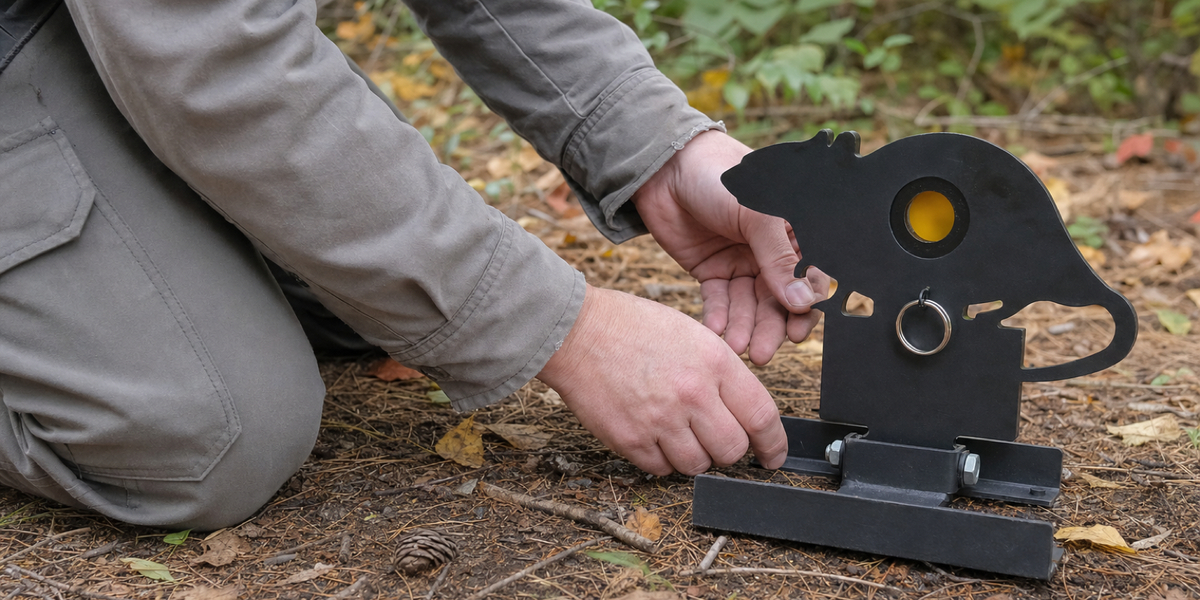
One target on the Red course came out of Canada's Field Target Nationals after it began failing intermittently. Match director Rob Wright recorded the decision in his September 19 report, alongside the results and thanks to the volunteers. It is the detail I would want left in.
The competition took place at Port Colborne on September 12 and 13, according to the Canadian Airgun Field Target Association calendar. Wright's account says the organisers removed the second target on lane seven of the Red course on Sunday. He also credits the scoring team with catching arithmetic errors.
As a handloader and precision shooter, I spend enough time thinking about the things that can spoil a result. My instinct is to work backwards through the rifle, the ammunition, and my own contribution. Field Target adds another piece of equipment to that conversation: the mechanism at the far end. A result deserves scrutiny there too.
Opinion / Precision shooting
A moving part in the score
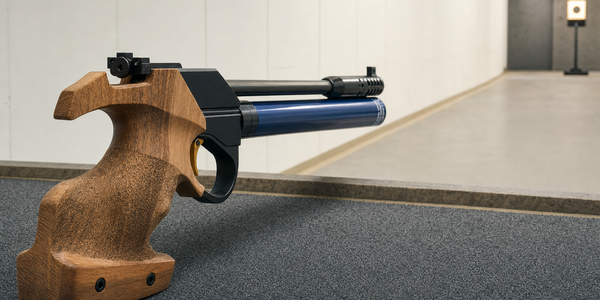
Field Target uses air rifles and small knockdown targets at unknown distances. CAFTA's introduction to the sport describes distances from nine to 50 metres and target openings from 10 to 40 millimetres. That puts a great deal of consequence into a small patch of metal.
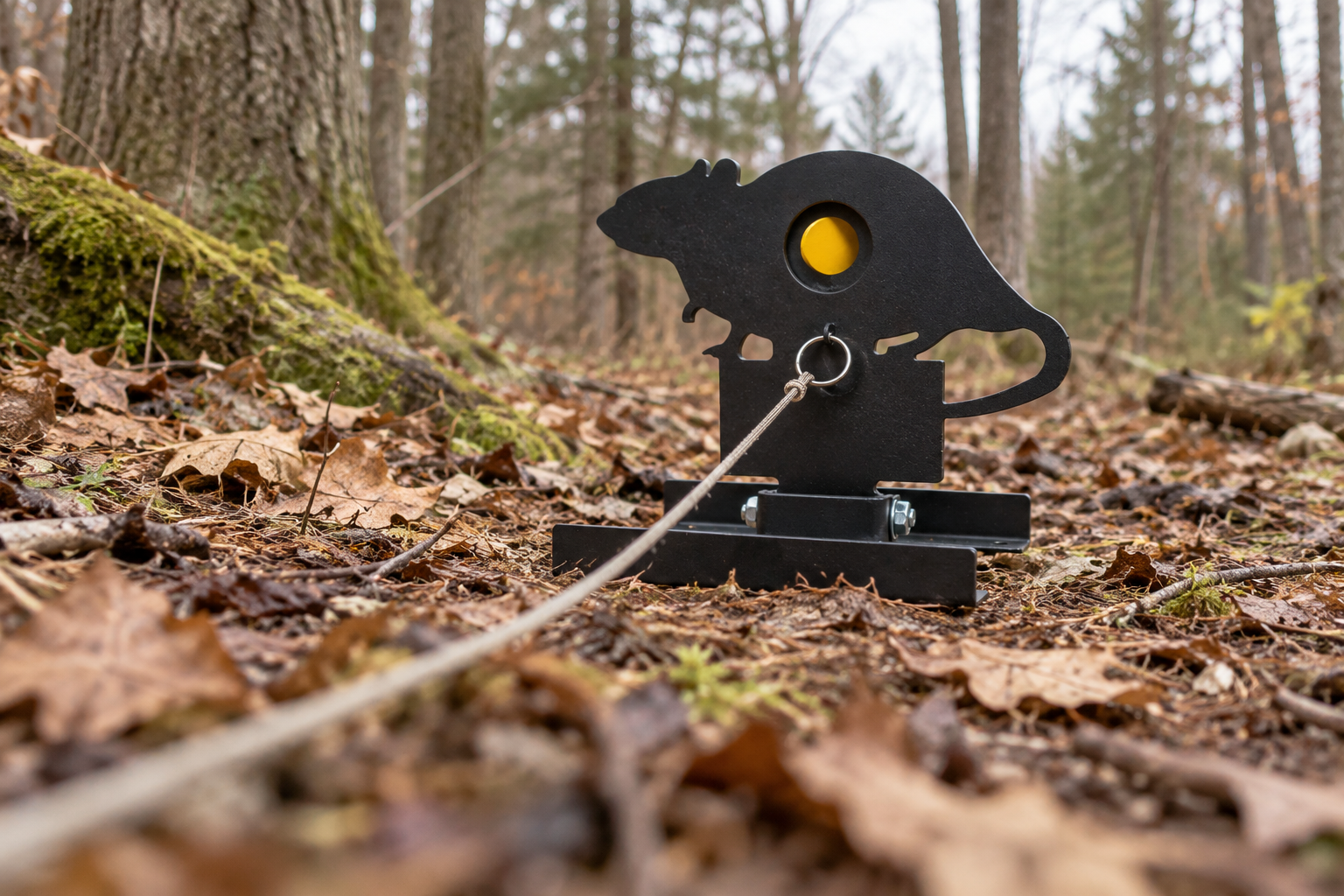
Under the association's published rules, a pellet passes through a circular opening in the silhouette face and strikes a paddle behind it. The mechanism allows the face to fall. A cord or other arrangement lets the shooter reset it from the firing point.
For ordinary scoring, a falling target earns one point; a miss earns zero. Movement of the paddle without the face falling counts as a miss. Hunter has its own scale: two points for a knockdown, one for a face hit, and zero for a complete miss.
Those distinctions explain why the target itself matters. The official is observing a physical response. If that response becomes unreliable, the shooter and scorer have a problem to resolve before they can trust what the target appears to say. A hole in paper stays put while people discuss it. A resettable target has moving parts between the pellet's arrival and the recorded result.
There is a temptation, particularly when expensive equipment is involved, to give every disappointing result a technical explanation. Shooters supply plenty of legitimate errors of their own. The useful question is whether there is evidence for the explanation being offered. A target that stays upright once tells an observer less than a recorded pattern of intermittent failure.
Lane seven, target two
Wright reports 33 competitors across two courses. Naming lane seven and Sunday lets a competitor identify the incident in the published match record.
His prose does not explain how officials treated earlier scores for that target, identify the mechanical cause, or attribute a changed placing to its removal. Those details remain outside what I can establish from the report. I would want the relevant scoring record before calculating an effect on any competitor.
That is also why I read the disclosure as useful match reporting. It gives readers something specific to understand without asking them to accept a theory about somebody's result. A failed component can be acknowledged without assigning blame to its maker, the person who set it out, or the last shooter who used it.
A challenge has a place to go
CAFTA's rules say a challenge to a target must be recorded on the score sheet before the shooter leaves that lane. They also give the match director the final decision on matters the rules do not cover. The page carries an August 2022 update date and remains the association's published rules page.
That recording requirement interests me because it keeps the concern close to the event. A competitor identifies the target while the squad is there. The concern becomes part of the match record, with a defined person responsible for deciding what follows.
I would expect a useful explanation of any adjustment to let a competitor connect the original observation, the official decision, and the resulting score. That is my standard for an understandable record. The published account supplies part of that chain; it leaves the detailed treatment of scores unstated. Readers should resist filling in the missing arithmetic themselves.
Credit for the unglamorous work
For the volunteers, checking scores and dealing with a target problem adds work to an already busy weekend. For the competitor, that work determines whether the result is worth taking home and learning from. The final table depends on people doing more than adding numbers.
Canadian shooting sports deserve coverage that takes this work seriously. I want the winners recognised, and I want a match report to have room for the equipment problem and the decision that followed. Wright included that detail. It gives the next reader a better basis for understanding the competition, and a sensible place to ask a further question if the score needs explaining.
Sources
- Rob Wright, match director: 2026 Canadian Nationals match report, September 19, 2026
- Canadian Airgun Field Target Association: 2026 match calendar
- Canadian Airgun Field Target Association: field target rules and classes
- Canadian Airgun Field Target Association: about Field Target
Sources checked September 20, 2026. Match events are attributed to the director's report; Holdover did not attend or inspect the target.
Keep the range notes worth reading later.
If this piece has you thinking about range time, keep the notes useful enough to read later.
Use the Holdover Range Bench Log Card to record rifle, optic, ammunition, distance, weather, zero, group notes, correction, and next test without turning a range trip into a memory test.
Safety note: the card is a note-taking worksheet, not shooting instruction, load data, legal advice, or a substitute for range rules, official guidance, manufacturer manuals, or qualified instruction.