Legal ownership rose. The study found *little crime link*
A new Canadian preprint links direct RCMP ownership measures with deaths and crime. Its restrained finding deserves a careful read.


Policy. A new Canadian preprint begins with a number that should slow the licensed-owner debate down: restricted firearm licences rose 72.88% from 2013 through 2019.
Registered handguns rose 52.19% over the same period. Canada's adult population grew 8.3%. Derek Mikola and Matthew Webb linked those RCMP administrative counts with Statistics Canada data on deaths, homicides, suicides, and firearm offences.
Their central finding is restrained. They found little evidence of a strong overall relationship between legal firearm ownership and deaths or crime.
That result deserves attention. Its limits deserve equal space.
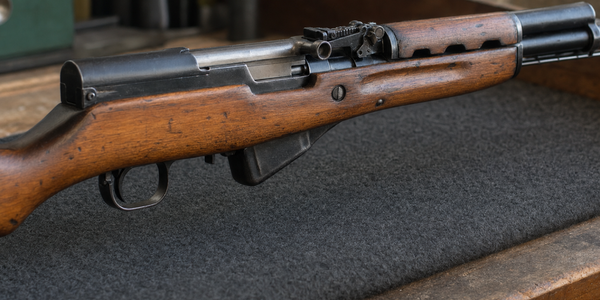
Holdover produced the feature as a fictional Canadian firearms-safety-course break. The person, instructor, room, and course materials are representative. They do not depict the researchers, a named licence holder, or a real course.
The paper measured the legal stock
Canadian firearm research often reaches for proxies. Surveys, magazine subscriptions, background checks, and firearm suicides have all stood in for the thing a study wanted to measure. This paper starts closer to the subject.
The authors obtained annual RCMP counts of PALs, RPALs, registered handguns, restricted rifles, and other registered or restricted firearms. A PAL is the basic possession and acquisition licence. An RPAL adds restricted privileges. They matched those measures with annual outcomes from 2013 through 2019.
The licence side matters because it captures the people legally eligible to possess or acquire firearms. The restricted-firearm side provides a direct count of registered handguns and restricted long guns. Non-restricted rifles and shotguns sit outside that firearm count, though their owners still appear in the licence data.
My route into ownership ran through the same system: safety courses, practical and written tests, references, an application, and a wait. The licence renews. Eligibility screening continues. Paperwork has never tightened one of my groups, though it makes the legal channel unusually visible.
The main result has edges
The paper uses fixed effects, a method that compares changes within places over time while accounting for stable differences among them and common changes by year. Its main geographic units are Census Metropolitan Areas and Census Agglomerations.
Those are largely urban parts of Canada. Rural ownership, use, and harm remain underrepresented. The study window also ends in 2019, before the 2020 prohibitions, the handgun freeze, and the current compensation program.
Inside that frame, the authors fail to find systematic increases in firearm deaths or crime during a period of rapid legal-stock growth. PALs, RPALs, handguns, and restricted rifles are generally unrelated to total firearm deaths, assaults, self-harm deaths, or total homicides in the paper's main models.
The tables contain mixed results. Legal handguns are positively associated with handgun deaths in one specification. Rifles are associated with more firearm-use, discharge, and storage violations. Some licence and firearm categories move different homicide types in opposite directions.
That heterogeneity earns a closer read. It keeps the conclusion narrow: the legal stock shows little strong overall relationship with the measured harms. The estimates cannot establish that licensing reduces crime. The authors call for stronger causal designs.
The strongest gun-control reading belongs here
The authors offer an explanation that firearm owners should take seriously. Canada's muted relationship may reflect the licensing system itself. Hands-on training, background checks, continuous eligibility screening, and safe-storage rules shape who enters the legal market and how firearms are kept.
That is a stronger argument than claiming regulation has no role. The paper's finding comes from a regulated ownership system. It cannot tell us what the same legal-stock growth would produce under a different set of rules.
The owner case can hold both ideas at once. Canada's core licensing, training, screening, and storage rules may help keep the measured relationship weak. Policies that extend beyond that core still need evidence tied to the channel they target.
The later numbers prevent a victory lap
The RCMP counted 2,412,122 valid PALs at the end of 2024, including 775,266 licences with restricted privileges. The legal population remains large, current, and administratively visible.
Statistics Canada's latest national release counted 14,488 firearm-related violent crimes in 2024. They represented 2.6% of police-reported violent crime. The national rate fell 4.2% from 2023, yet it remained 44% higher than in 2014. Toronto moved in the wrong direction while Vancouver moved in the other one.
Firearm violence is real, uneven, and serious. A national legal-stock result cannot explain every local increase, suicide, intimate-partner incident, gang shooting, or illicit firearm. It also cannot estimate the effect of a policy introduced after 2019.
The later data sharpen the task. Researchers need better firearm tracing, source information, rural coverage, and policy changes that permit credible causal tests. Policymakers need to identify which channel a restriction is supposed to change.
Aim the policy at the measured channel
The new paper improves the Canadian debate because it measures the licensed side directly. It finds a weak overall relationship where a simple theory would expect a large rise in deaths or crime.
That finding supports a practical five-question test:
- Is the policy aimed at licensed owners, illicit supply, repeated violent offending, or several channels at once?
- Does the evidence measure the channel named by the policy?
- Is the result an association or a causal estimate?
- Which years and parts of Canada are represented?
- What changed after the study window closed?
Mikola and Webb have posted a preprint, which means the paper has entered public review before peer review. Its data contribution is valuable. Its conclusion remains bounded by its design.
The next policy aimed at licensed owners should meet the same standard we ask of this paper: show the legal-stock channel, measure the harm, and demonstrate what the policy changes.
Sources
- Derek Mikola and Matthew D. Webb, Good Guys With Guns? The Relationship Between Legal Firearm Ownership and Firearm Deaths and Crime in Canada, arXiv preprint, July 22, 2026.
- Royal Canadian Mounted Police, 2024 Commissioner of Firearms Report, accessed July 25, 2026.
- Statistics Canada, Firearms and violent crime in Canada, 2024, released April 21, 2026.
- Public Safety Canada, Gun Crime and Firearms News Releases, accessed July 25, 2026.
Keep the range notes worth reading later.
If this piece has you thinking about range time, keep the notes useful enough to read later.
Use the Holdover Range Bench Log Card to record rifle, optic, ammunition, distance, weather, zero, group notes, correction, and next test without turning a range trip into a memory test.
Safety note: the card is a note-taking worksheet, not shooting instruction, load data, legal advice, or a substitute for range rules, official guidance, manufacturer manuals, or qualified instruction.