Lower Nicola puts precision on the *clock*
BC's MDT Midsummer Madness PRS qualifier starts June 13. Newer shooters do not need to enter cold. They should read the match page before the cart gets louder.

Opinion. A good match page is a budget intervention.
The 2026 MDT Midsummer Madness PRS qualifier starts June 13 in Lower Nicola, British Columbia. It is a two-day Pro Series qualifier run by the BC Precision Rifle League, with stages stretching from 300 to 1200+ yards, a rough 200-round count, 18 stages across Saturday and Sunday, and stage pressure around 105 seconds.
That is not a beginner match.
That is exactly why a newer precision-curious shooter should read the page.
Not to register cold. Not to build a fantasy rifle by Friday night. Read it because the listing explains what the sport asks when the rifle is no longer sitting on a friendly bench.
The clock starts. The wind moves. The position is awkward. The pack is heavier than it was in the garage. The first miss has to be useful instead of emotional. A match page like this can teach more restraint than a dozen confident product pages.
The match page says enough
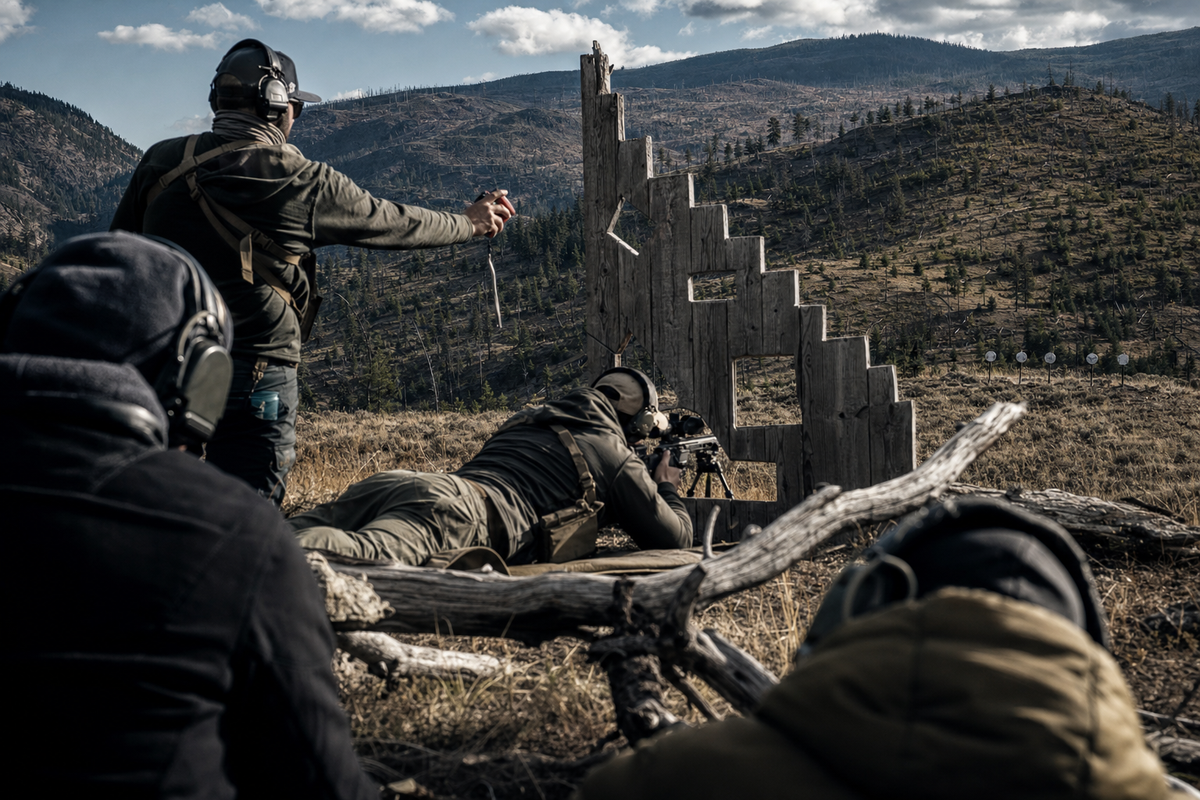
The Lower Nicola listing describes a wild venue in the mountains around the Nicola Valley and Merritt, with natural terrain, man-made props, varying angles, and arcs of fire. Saturday is listed for nine stages. Sunday carries the remaining nine. The page tells competitors to expect hiking through deadfall and challenging terrain, roughly 2-4 km per day, with dry ground, heat, water stations, and even cactus as part of the local reality.
That is a different world from the way most of us start.
Most of my current range learning lives in the 100-300 yard Stittsville universe: bench, bags, optics, targets, wind that looks harmless until it embarrasses me, and the ordinary private suspicion that another piece of gear might make the whole thing cleaner. It is a useful place to learn. It is also controlled enough to hide some sins.
Lower Nicola does not sound interested in hiding them.
The page says stages will test mental and physical ability to engage multiple targets from multiple positions in about 105 seconds. That sentence is the whole lesson. If you can only shoot well when the rifle is perfectly settled, the wind is polite, and nobody has started a timer, you have a range skill. A PRS stage asks whether that skill survives movement.
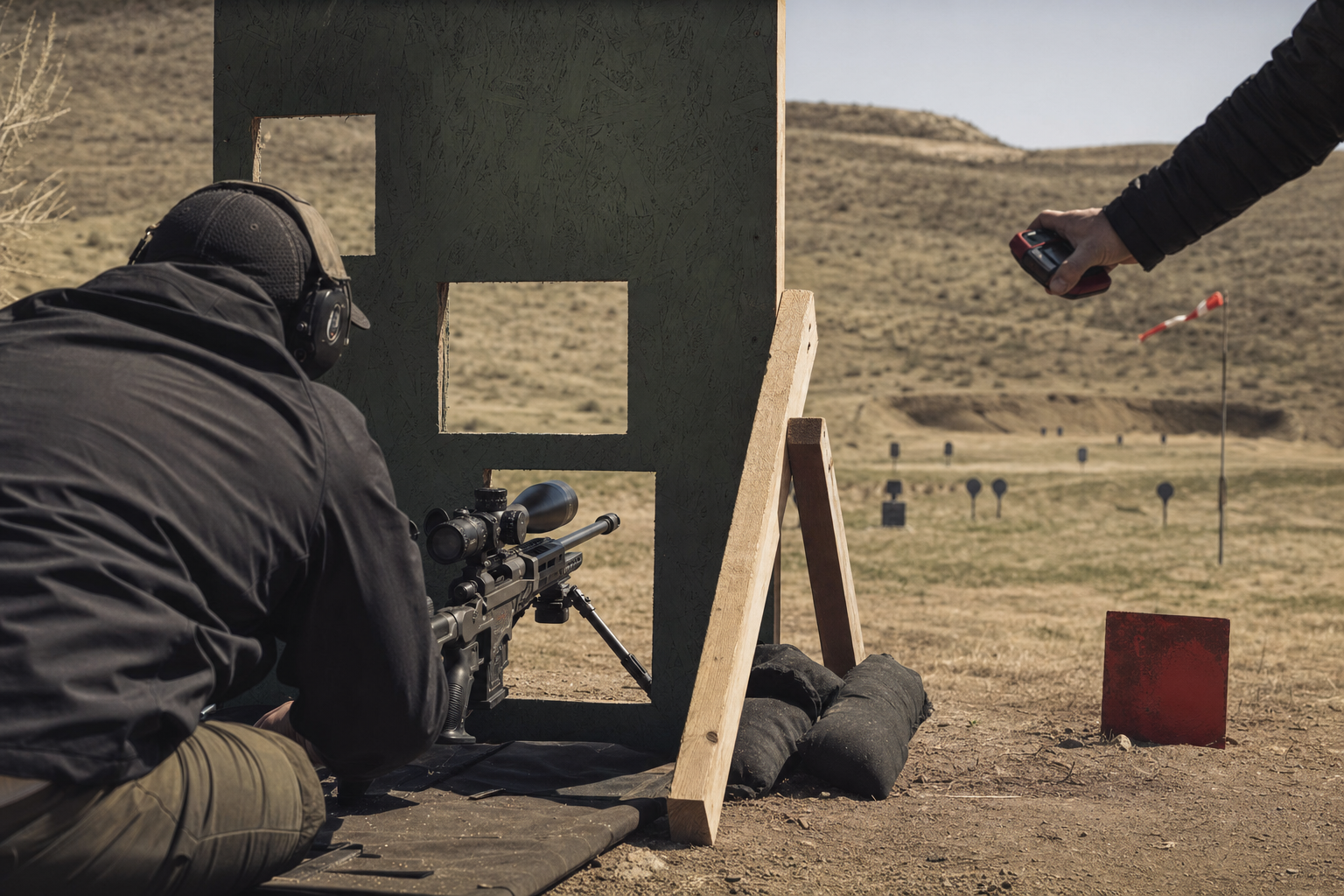
Gear has to move with you
I like gear. Holdover has not been subtle about this.
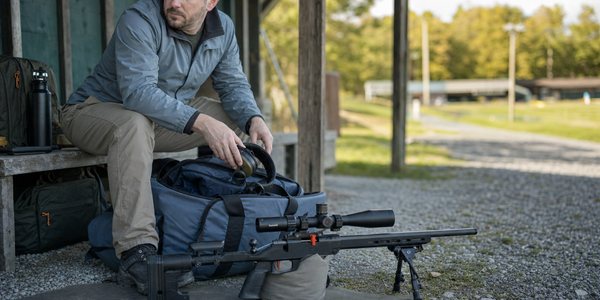
But a match like this is a useful corrective because everything has to justify its place on the body. A rifle, optic, bipod, rear bag, rangefinder, data, ammunition, water, snacks, weather layer, and whatever small tool you swore you would never need all become weight.
That is where a newer shooter should slow down before buying the next thing.
The question is not only "Is this good?" A lot of gear is good. The better question is "Does this solve a problem I have met?"
A heavy rifle can be brilliant on a prop and miserable between stages. A giant optic can make targets easier to see and the whole package worse to carry. A bag can be stable and still too awkward for the way a stage moves. A chassis can look like competence in a product photo and still leave the shooter with the same unpractised fundamentals.
The match page is not anti-gear. PRS is gear-intensive, and pretending otherwise is silly. But the discipline punishes imaginary use cases quickly. If a piece of kit only makes sense while standing in a store or staring at a checkout page, a two-day match will find out.
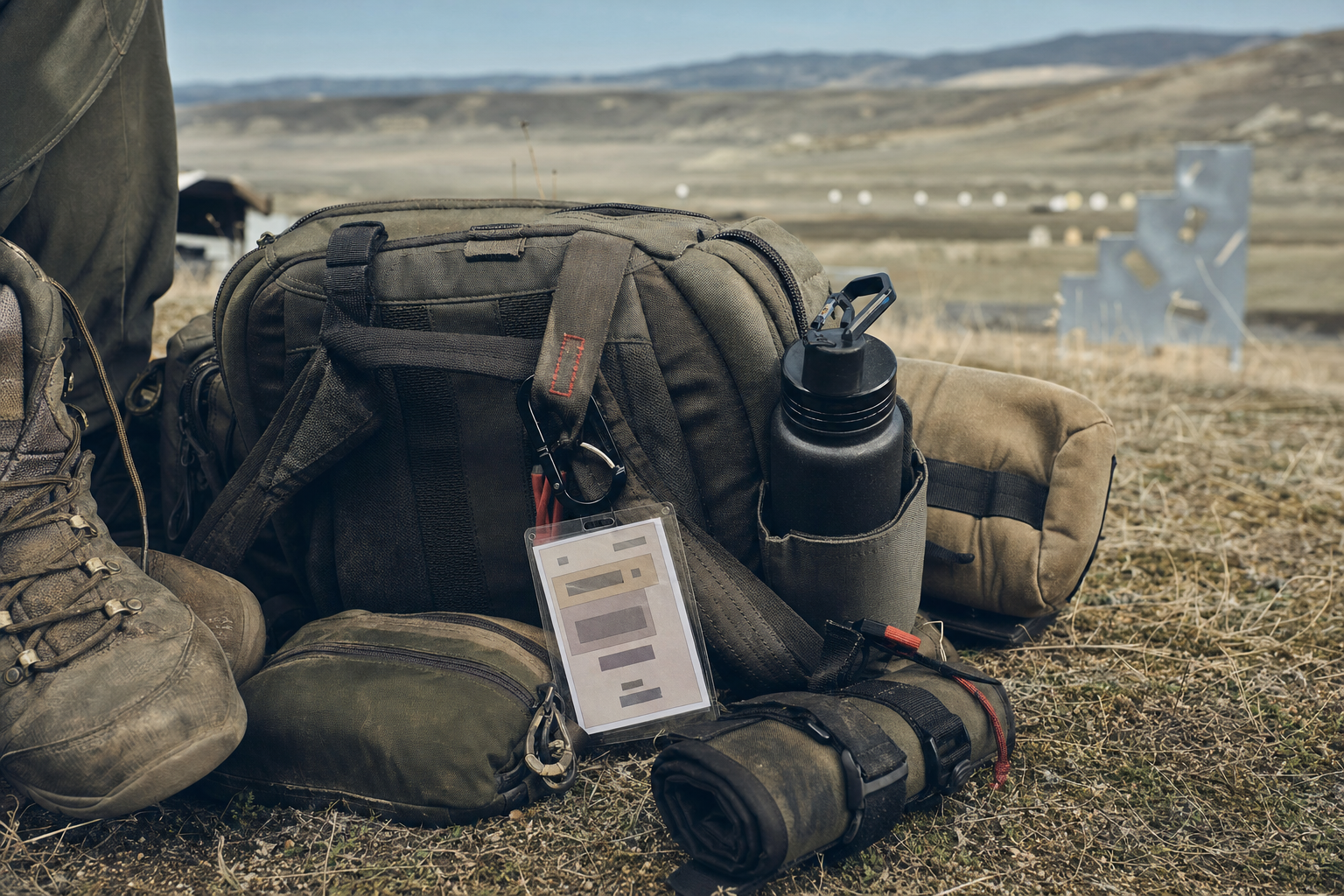
Club culture is the on-ramp
The BC Precision Rifle League's own site says it has been running precision rifle matches since 2018 and aims to grow the sport north of the border. Its PRS club page lists 445 members and a deep calendar of rimfire and centrefire activity. That matters more than the single big match because it shows the path into the sport.
A Pro Series qualifier is the visible peak. The on-ramp is the club match.
That is where a newer shooter should begin: watching a squad, listening to stage briefings, seeing what better shooters carry, noticing how little drama surrounds good fundamentals, and discovering that nobody serious is impressed by an expensive rifle if the owner cannot build a stable position before the timer eats the stage.
It is also where the culture becomes visible. A good squad teaches without ceremony. Someone points out a target you misidentified. Someone explains why your rear bag is fighting you. Someone shows you how they hold wind instead of dialing for every minor condition.
That is the part of Canadian firearms culture Ottawa keeps failing to understand. Licensed ownership is not only objects in safes or rows in a regulation table. It is clubs, volunteers, match directors, range officers, scorekeepers, loaned tools, shared wind calls, and people getting better in public under rules.
The clock beats the cart
For a newer shooter, Lower Nicola's useful message is not "go shoot a Pro Series qualifier." It is "work backward from what the match requires."
Can you build a position fast? Can you find the targets? Can you read wind well enough to make the second shot smarter than the first? Can you keep your data straight? Can you carry your kit without arriving at the stage already annoyed? Can you miss without turning the next 30 seconds into amateur theatre?
Those questions are cheaper than gear, and they are better buying advice. A shooter who has watched a match will buy differently than a shooter who has only watched product videos. They will know why a rear bag shape matters, why a sling can be more useful than another accessory rail, and why a notebook or app is only valuable if the person using it is honest.
The target is not impressed by retail optimism.
Start smaller, then climb
The sane path into Canadian precision shooting is still local and incremental.
Start with the range you can actually reach. Shoot the rifle you can afford to feed. Learn what your optic does when you dial and return. Keep notes. Watch wind before blaming equipment. Shoot a rimfire or a small club match before treating a major centrefire qualifier as a personal destiny event.
Then, when a match like MDT Midsummer Madness appears on the calendar, read it as a map.
Not just where it is. What it demands.
Eighteen stages. 300-1200+ yards. Roughly 200 rounds. A timer. A pack. Dry terrain. Real wind. Other shooters watching quietly while the clock tells the truth.
That is not a shopping list.
It is the sport, stated plainly.
Read the match page first. The cart can wait.
Sources
- Precision Rifle Series, 2026 MDT Midsummer Madness, accessed June 10, 2026.
- BC Precision Rifle League, Home, accessed June 10, 2026.
- Precision Rifle Series, BC Precision Rifle League club page, accessed June 10, 2026.
- Precision Rifle Series, 2026 Bolt Gun Series Matches, accessed June 10, 2026.
- Public Safety Canada, Firearms compensation program for businesses closes - Amnesty period extended due to the Supreme Court of Canada process, June 9, 2026.
- Canadian Coalition for Firearm Rights, Amnesty Extended as CCFR goes to Supreme Court, June 9, 2026.
Keep the range notes worth reading later.
If this piece has you thinking about range time, keep the notes useful enough to read later.
Use the Holdover Range Bench Log Card to record rifle, optic, ammunition, distance, weather, zero, group notes, correction, and next test without turning a range trip into a memory test.
Safety note: the card is a note-taking worksheet, not shooting instruction, load data, legal advice, or a substitute for range rules, official guidance, manufacturer manuals, or qualified instruction.