Reading the NWT's *gun counts* alongside Canada's sales records
NWT firearm violations rose from 117 in 2021 to 239 in 2025. The tracing debate also needs a clear account of the licence checks and business sales records Canada already requires.

Opinion
Police recorded 117 firearm-related violations in the Northwest Territories in 2021 and 239 in 2025. Those figures, in RCMP data published by Cabin Radio, describe a worrying increase. They also leave Canadian owners with a more specific question: which records help police follow a recovered gun back through its sales?
Canada already requires a licence-check reference for an ordinary non-restricted transfer and a firearm-identifying record when a business makes that transfer. Those two records do different jobs. Any proposal to expand ownership reporting deserves an explanation of where the existing trail stops.
What 239 covers
The published table divides violations into eight categories. In 2025, police recorded 48 for unauthorized possession, 33 for unsafe storage, 15 for careless use and 37 under the Firearms Act. Pointing a firearm accounted for 30, reckless discharge for nine and robbery with a firearm for five. Another 62 sat under Other.
From 2021 to 2025, the total rose by 122. Other supplied the largest absolute increase, rising from 11 to 62. Careless-use violations fell from 22 to 15 over the same interval. The rows therefore moved differently, which matters when choosing a response.
Cabin Radio says the data includes imitation firearms. Readers also need to keep the unit straight: a violation count supplies neither the number of unique guns nor the number of people involved. The chart offers no breakdown by firearms-licence status or completed conviction. It cannot establish how much of the increase came from changing behaviour, enforcement or reporting.
The table runs from 2017 into a partial 2026, whose cut-off date is unstated. Comparing the completed 2021 and 2025 columns avoids treating that unfinished year as a full one. Those limits leave plenty of cause for concern while keeping the argument tied to what police actually counted.
The northern tracing account
In Cabin Radio's October 13 interviews, Sgt Marshall McPhail described guns used or suspected in 2023-2025 offences as largely domestically sourced. His unit's investigations primarily recover handguns. He also described weaker tracing for non-restricted firearms because their ownership need not be recorded. Chief Superintendent Dyson Smith discussed community information and highway-monitoring tools as part of the response to drugs and violence.
Those are attributed police accounts with different scopes. They provide no percentage split by origin and no trace-success rate for each firearm class. A domestically sourced firearm could have travelled through several hands. The account leaves the route into criminal possession unresolved.
An ownership registry can help investigators identify a recorded owner. That is a serious argument for its supporters. The next question is how much useful information investigators can already recover from the records Parliament requires, and where a new duty would add something measurable.
Two records at the counter
Section 23 of the Firearms Act sets the ordinary non-restricted transfer conditions, including the buyer's licence and a valid reference number from the Registrar. A reference can cover one or more firearms. The RCMP's transfer guidance asks for the buyer's licence number, date of birth and email, together with confirmation of an identity check.
The business has another obligation. Section 58.1 requires a transfer record containing the reference number, its issue date, the buyer's licence number, and the firearm's make, model, type and serial number, if any. The business keeps it for 20 years from the transfer, or longer if a prescribed period requires it. Public Safety dates these rules to May 18, 2022.
That distinction matters to a private seller too. Obtaining a reference checks the licence; it does not create the same firearm-identifying business entry. The RCMP says police need judicial authorization to access business records. A usable shop record can provide an investigative lead to the recorded buyer. Later private transfers, missing records and older sales can leave further work. Successful tracing depends on the actual history and available evidence.
Restricted and prohibited firearms have a registration-certificate requirement alongside licensing under Criminal Code section 91, subject to its exceptions. Recovery of a handgun alone establishes neither its lawful registration nor the point where it entered an illegal supply chain. A useful public tracing report would distinguish missing records from a documented transfer followed by an unknown diversion.
An owner's part of the trail
My bulk ammunition sits in locked boxes. Storage is part of ordinary ownership, and the chart's 33 unsafe-storage violations in 2025 deserve attention. Criminal Code section 86 covers careless conduct and contraventions of storage regulations; the chart does not identify which cases involved licence holders.
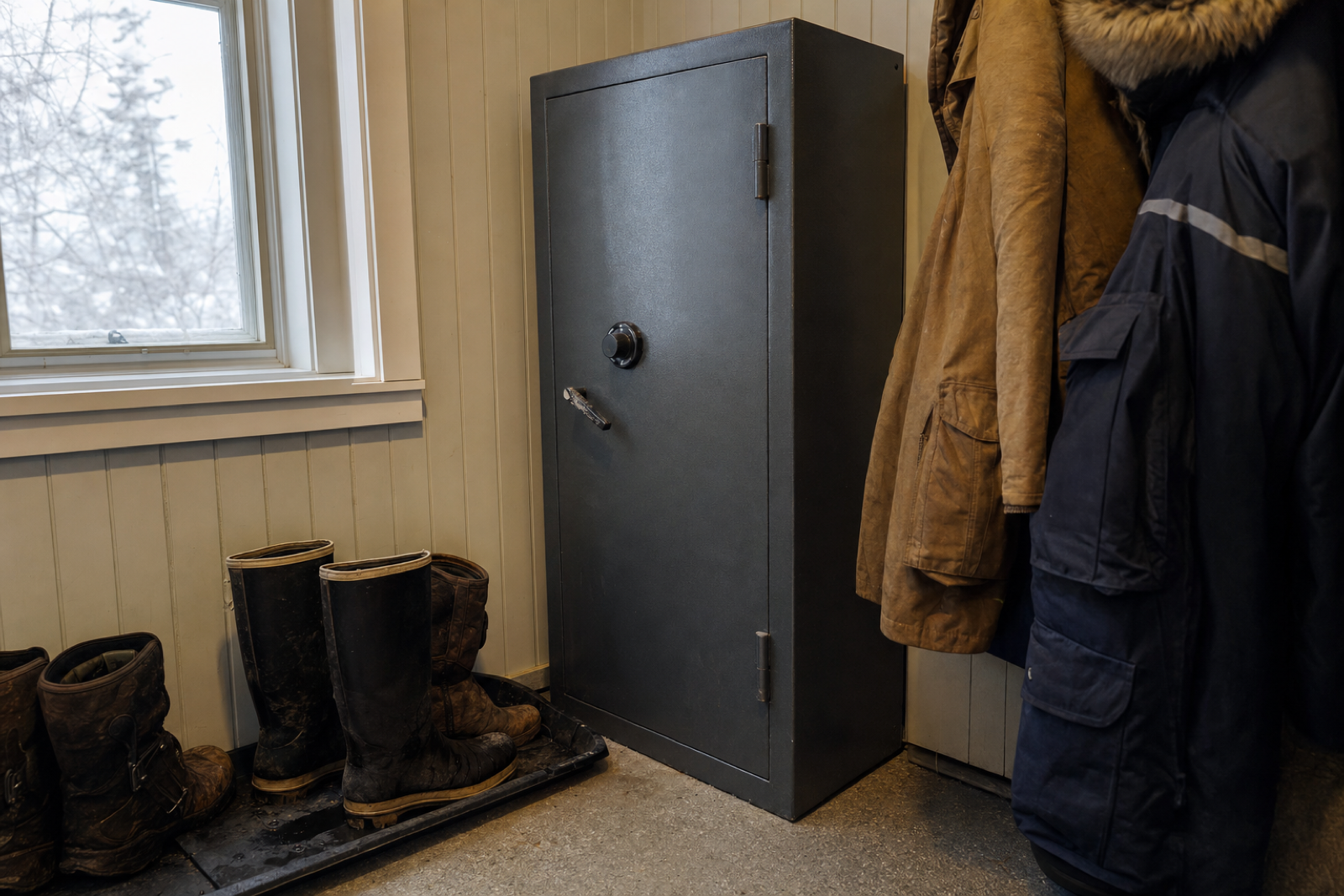
Owners have practical reasons to keep identifying records separately from their firearms and to report a theft promptly. Police need the best available starting point. Retailers already have a long record-keeping obligation, and officials should be able to explain how it helps an investigation before asking the same counter for more paperwork.
Holdover's position is to put investigative effort into the actual route to criminal possession. Publish the recovered-gun and tracing results, explain where each trail stopped, and show the added value of a proposed new duty. Licensed owners deserve that evidence alongside the larger total.
For continued Canadian ownership and policy reporting, The Dispatch is free.
Sources
- Cabin Radio, Ten years of Northwest Territories gun crime data, October 13, 2026
- RCMP-supplied NWT violation table published by Cabin Radio, Flourish30543686
- Firearms Act, section23
- Firearms Act, section58.1
- RCMP, Buying and selling (transferring) firearms
- RCMP, Former Bill C-71: What you need to know
- Public Safety Canada, new non-restricted firearm rules, May2022
- Criminal Code, section91
- Criminal Code, section86