Ontario's mini-rifle calendar has a *handgun gate*
Ontario has current IPSC mini-rifle matches. Its public newcomer route still begins with a handgun-specific Black Badge course.

Competition. Two Ontario shooters asked almost the same question within a day: where does practical rifle actually begin?
One wanted a rifle-only route into dynamic competition. The other had found the Ontario Rifle Association and still wanted a club setting in which to practise. Both understood the obstacle before they posted. A newcomer can no longer assume that buying a handgun, learning it at a home club, and carrying that equipment into a practical-pistol course is a normal Canadian starting point.
The useful answer is hiding in several different places. IPSC has a current Mini Rifle discipline. Eastern Ontario has put mini-rifle matches on its 2026 club calendar. IPSC Canada requires sanctioned competitors to hold a current Black Badge. Then IPSC Ontario's public candidate page tells that same newcomer to arrive with a handgun, holster, magazines, and prior pistol experience.
The sport is alive. Its public entrance is still written for another firearm.
Mini-rifle is a current .22 LR discipline
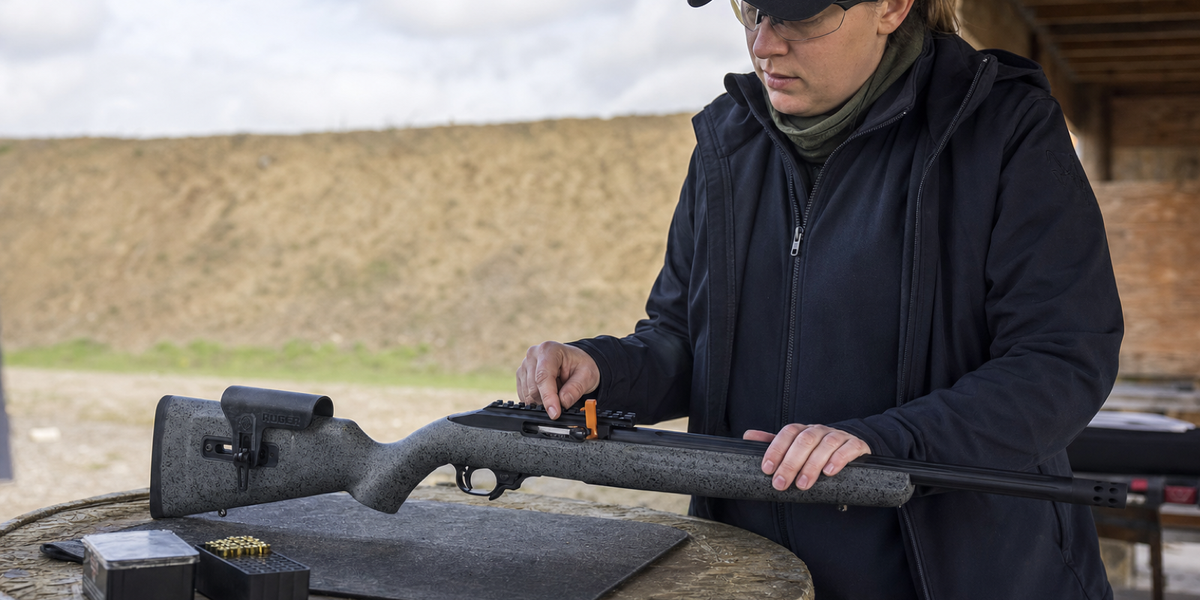
IPSC's current Mini Rifle Open division is specific about the basic tool: commercially manufactured .22 LR. Detachable magazines and optical sights are permitted. The international division table allows a maximum load of 31 rounds, with 30 in the magazine at the start signal.
That last number belongs to competition rules. Canadian magazine law, firearm classification, club policy, and the written stage briefing remain separate questions. A shooter should use the match director's current written requirements rather than turn an international table into legal advice.
The current activity is also more than a line in a rulebook. Eastern Ontario Shooting Club lists an IPSC mini-rifle Level 1 match for August 8 and 9 on Ranges 7 and 8. Its public event history shows mini-rifle dates on May 2 and June 7 as well.
That is a real answer to the first part of the question. Ontario has at least one club scheduling the discipline in 2026. The August event page leaves the next questions unanswered: registration, eligibility, fees, equipment, and whether a prospective newcomer can observe, volunteer, practise, or enter.
Black Badge is the participation gate
IPSC Canada describes Black Badge as its national training program. The course combines classroom work, competition rules, movement, reloading, positions, and supervised range exercises. Safety is the point.
Its April 2025 Participation and Certification Policy is equally clear about sanctioned matches. A Canadian competitor must be a member in good standing with a current Black Badge and must satisfy the requirements of the section where they live.
That standard makes sense. Moving with a loaded firearm inside a course of fire asks for skills and supervision that a fixed bench does not. My ordinary range world at Stittsville starts with a known 100- or 300-yard line, a booking, and a fixed direction. Practical shooting changes the geometry. The training gate should be serious.
The problem arrives when a new Ontario shooter follows the public route to that gate.
Ontario's public course still starts with a handgun
IPSC Ontario's current Black Badge course page says candidates need a handgun of 9 mm or larger, a suitable holster, at least four magazines or speedloaders, and a proper gun belt. It prefers that a newer handgun shooter has already fired roughly 1,000 rounds through the equipment intended for the course.
The page then gives unusually direct equipment advice: candidates should avoid borrowing the required gear and wait until they own the complete setup.
The longer program description calls the course Practical Pistol safety and proficiency training. It estimates 600 to 700 rounds for a typical course and requires a successful first sanctioned match before the provisional badge becomes final.
Each requirement can be defended inside a handgun course. Together, they create a public dead end for the shooter who arrived because a handgun is no longer an ordinary first purchase. The public route breaks between the live .22 LR discipline and the handgun-only candidate list.
There may be an instructor arrangement, club loaner, discipline-specific course, or provisional path that the public site does not show. The two current owner questions demonstrate the cost of leaving that information private. Shooters are trying to assemble eligibility from Reddit replies while a current match sits on the calendar.
Keep the safety standard and publish the right route
The strongest counterargument is about handling, not paperwork. A long gun moves differently through a stage. Muzzle direction is easier to see and still capable of becoming unsafe. The match staff should decide which skills must be demonstrated before a new competitor enters a course of fire.
That argues for a visible mini-rifle pathway. It does not justify sending every newcomer to a pistol checklist and hoping a club contact fills in the rest.
IPSC Ontario could answer the current questions with one public page:
- Which Black Badge certification applies to Mini Rifle in Ontario?
- Can a new competitor qualify using a .22 LR mini-rifle?
- Where are the current courses, supervised practices, and beginner-observation opportunities?
- Can a club or instructor provide equipment under a written training arrangement?
- Which match, club, classification, and magazine requirements must be confirmed before registration?
Until those answers are published, a new shooter should ask the Ontario Black Badge coordinator and the specific match director before buying competition equipment or travelling. The August listing proves that the discipline exists. It does not promise a place on the squad.
That distinction matters to the sport as much as it matters to the individual. A calendar counts matches. A clear entrance turns interest into trained competitors, volunteers, range officers, and eventually the people who build the next calendar.
Ontario already has the August date. Its next newcomer should be able to find the route there.
Sources
- International Practical Shooting Confederation, Mini Rifle Open Division, checked July 23, 2026.
- International Practical Shooting Confederation, IPSC Rule Books, updated December 31, 2025 and checked July 23, 2026.
- IPSC Canada, Participation and Certification Policy, April 2025.
- IPSC Canada, Black Badge training, checked July 23, 2026.
- IPSC Ontario, Black Badge Course, checked July 23, 2026.
- IPSC Ontario, Black Badge Training Program, checked July 23, 2026.
- Eastern Ontario Shooting Club, IPSC mini-rifle Level 1 match, August 8-9, 2026.
- Eastern Ontario Shooting Club, 2026 event list, checked July 23, 2026.
- r/canadaguns, How to get into Practical/action rifle, July 23, 2026.
- r/canadaguns, IPSC - Rifle Discipline, July 22, 2026.
Keep the range notes worth reading later.
If this piece has you thinking about range time, keep the notes useful enough to read later.
Use the Holdover Range Bench Log Card to record rifle, optic, ammunition, distance, weather, zero, group notes, correction, and next test without turning a range trip into a memory test.
Safety note: the card is a note-taking worksheet, not shooting instruction, load data, legal advice, or a substitute for range rules, official guidance, manufacturer manuals, or qualified instruction.