Pick the match before the *rifle*
A current Canadian precision thread gives new shooters the right first question: not which rifle to buy, but which match they can actually attend.

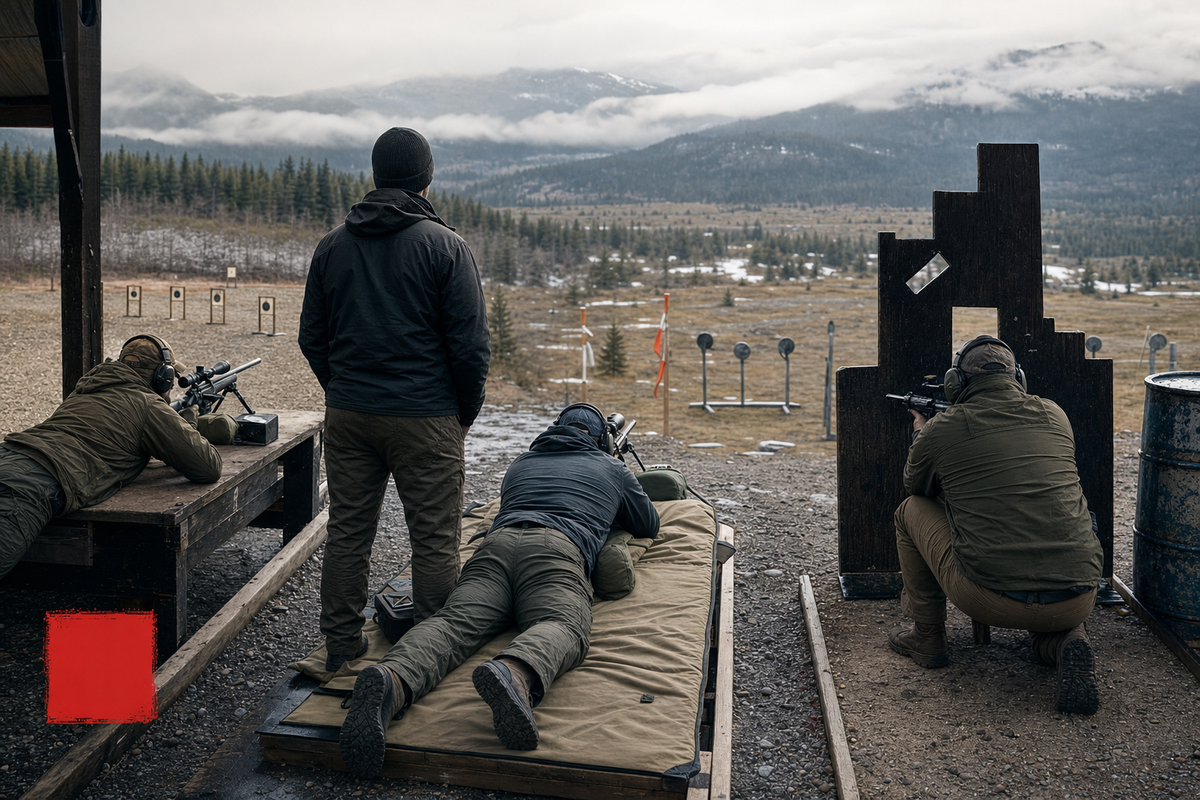
Opinion. A new shooter asking about rimfire F-Class is more useful than another argument about the perfect first precision rifle.
That question showed up today in a long-running Canadian Gun Nutz thread summarizing common long-range shooting disciplines. It was simple, almost modest: a new member had fallen into the rabbit hole and wanted to know what rimfire F-Class is like.
Good. That is the right door.
Canadian precision shooting becomes expensive when the shopping cart gets to answer before the calendar does. "Long-range precision" sounds like one sport until you meet the people who actually shoot it. Then it becomes F-Class, prone, bench, rimfire, PRS, club outlaw matches, steel, paper, sighters, no sighters, wind flags, no wind flags, time pressure, no time pressure, and enough incompatible advice to make a new shooter buy the wrong bag with confidence.
I have bought enough rifle gear to respect the danger. A cartridge chart, a chassis photo, and a sale price can move faster than common sense. The rifle feels like the beginning because it is the expensive object. It is not. The match is the beginning.
Precision is not one lane
The current Canadian calendar proves the point better than any buyer's guide.
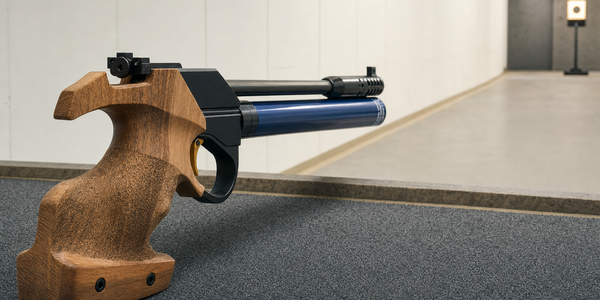
The Shooting Federation of Canada's Quebec June 2026 Provincial Shooting Championship runs June 19-21 in Trois-Rivieres. Its event list includes 10-metre air rifle and air pistol, 25-metre pistol disciplines, rifle 3P, .22 open-sight bench, and 50-metre prone rifle. That is all shooting. It is not all the same sport.
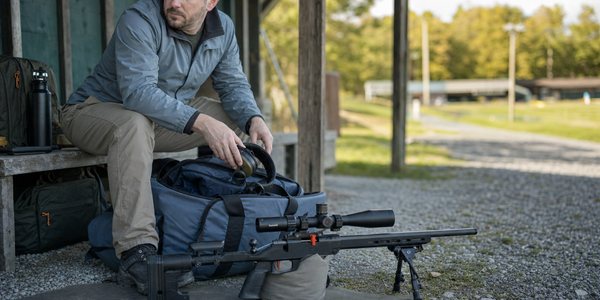
The Precision Rifle Series calendar points in another direction entirely. A Canadian shooter looking at 2026 can find the Apex Rocky Mountain Challenge in Alberta and the Pancake Lake Open in Manitoba, both sitting inside the larger PRS bolt-gun world. That version of precision is much more likely to involve odd distances, props, steel, time, bags, barricades, and a stage plan that survives exactly until the timer starts.
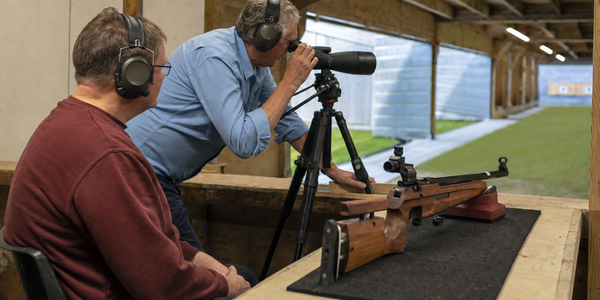
The CGN thread that came back to life today makes the same distinction in forum language. F-Class is prone, deliberate, paper-target, wind-flag work. PRS-style shooting is more field-improvised, positional, timed, and steel-driven. Rimfire versions shrink the cost and distance, but not the need to understand what game is being played.
The word "precision" is doing too much work if it lets all of that sound interchangeable.
The match chooses the first purchase
A rifle that is perfect for one discipline can be a nuisance in another.
For F-Class, weight, rests, bipods, cartridge rules, target systems, sighters, and position matter. For PRS, magazine feeding, positional stability, optic usability, bag technique, recoil management, and stage movement matter. For rimfire, ammunition lot behaviour, wind reading, parallax discipline, and cheap repetition matter more than the romance of centre-fire horsepower.
That is why the new shooter's first research should not be a cartridge thread. It should be a club thread.
What is actually available within driving distance? Is the local opportunity 50-metre prone, 100-yard rimfire, F-Class, a monthly steel match, or a PRS-style club day? Are first-timers welcome? What rifle class is common? Are brakes allowed? Is it single-load? Are there sighters? Do people shoot from a mat, a bench, a barricade, or a field position? How many rounds does the day actually consume?
These questions sound dull because they save money. The industry would rather sell the answer before the shooter understands the question. The Canadian market adds its own special comedy, because scarcity, classification anxiety, retailer hype, and Liberal-era prohibition culture can make any available rifle feel like a train leaving the station.
Sometimes the train is just a shopping cart with wheels that need alignment.
A cheap local line beats a fantasy build
Rimfire deserves more respect in this conversation.
A newer shooter who can shoot .22 LR prone, bench, or NRL22-style matches every month will learn more about wind, position, trigger control, follow-through, data, and humility than the shooter who buys a serious centre-fire rifle for the match he hopes to attend twice next year.
That is not because rimfire is cute. It is because rimfire is available, affordable, and unforgiving at the right scale. At 50 or 100 metres, a .22 will punish bad inputs without asking the shooter to burn a pile of powder and barrel life to discover that wind is not a motivational concept.
I still love centre-fire precision. There is nothing quite like a proper rifle settling into a bag, the scope coming level, and the shot landing where the correction said it should. But the rifle that teaches is the rifle that gets used. The match that teaches is the match you can attend.
If your local club has a rimfire prone lane, start there. If the nearest active group is F-Class, learn that language before buying a PRS chassis because the internet made barricades look more cinematic. If the closest friendly crew shoots club steel with normal rifles and borrowed bags, that may be the best first classroom in the country.
The imperfect local line beats the perfect imaginary one.
Buy for the calendar
The best first precision rifle advice is not a model name.
It is a sequence.
Find the nearest match. Read the rules. Ask the match director what new shooters actually bring. Watch a relay. Borrow nothing without asking twice and returning it better than you received it. Buy the rifle that fits the game you now understand, not the one that looked most persuasive at midnight.
That sequence is not glamorous. It also keeps the sport human. New shooters meet the people who will keep them from wasting money. Experienced shooters get a chance to correct bad assumptions before they become expensive habits. Clubs get newcomers who understand the line they are joining instead of arriving with a rifle built for somebody else's YouTube season.
Canada already asks licensed shooters to operate inside a heavy system. Courses, licensing, storage, transport, classification, range rules, transfer rules, and the recurring political weather all sit in the background. That is enough friction. We do not need to add self-inflicted gear confusion to the pile.
Precision shooting is not a vague identity. It is a set of disciplines, each with its own manners, rules, gear, and quiet little humiliations.
Pick one close enough to shoot.
Then buy the rifle that belongs on that line.
Sources
- Canadian Gun Nutz,
Summary of the most common long range shooting disciplines: https://www.canadiangunnutz.com/forum/threads/summary-of-the-most-common-long-range-shooting-disciplines.1270309/ - Shooting Federation of Canada,
Championnat provincial de tir du Quebec, juin 2026 | Quebec June 2026 Provincial Shooting Championship: https://www.sfc-ftc.ca/event/championnat-provincial-de-tir-du-quebec-juin-2026-quebec-june-2026-provincial-shooting-championship/ - Precision Rifle Series,
2026 Pancake Lake Open presented by Dominion Outdoors: https://www.precisionrifleseries.com/m/8179/2026-pancake-lake-open-presented-by/ - Precision Rifle Series,
2026 Bolt Gun Series Matches: https://www.precisionrifleseries.com/matches/bolt-gun/
Keep the range notes worth reading later.
If this piece has you thinking about range time, keep the notes useful enough to read later.
Use the Holdover Range Bench Log Card to record rifle, optic, ammunition, distance, weather, zero, group notes, correction, and next test without turning a range trip into a memory test.
Safety note: the card is a note-taking worksheet, not shooting instruction, load data, legal advice, or a substitute for range rules, official guidance, manufacturer manuals, or qualified instruction.