Results from Prince George: 308 names, seven divisions
The 2026 IPSC Canada Handgun Nationals results contain 308 rows across seven divisions. Here are the published leaders and what the table records.

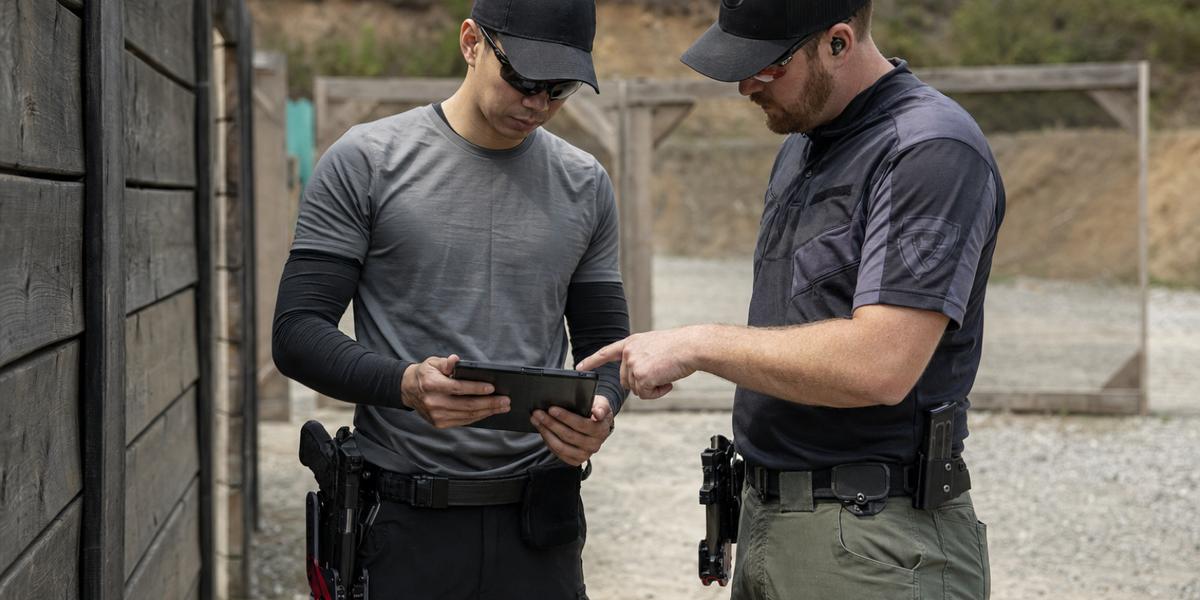
Shooting Sports / Canadian Context. The final 2026 IPSC Canada Handgun Nationals results contain 308 rows across seven divisions.
That number counts published result rows, regardless of registrations or total range attendance. It is what the final table lets us verify.
The official event site now says the match is complete and links directly to those results. Prince George delivered 19 stages plus chronograph, with a published minimum of 348 rounds, from July 27 through August 2.
Now the names are attached to the work.
Holdover produced the feature as a fictional Canadian post-stage score check using current official competition-pistol and holster references. The people, range, pistol, and session do not depict Prince George, a named competitor, the 2026 Nationals, or a documented result.
Seven divisions, seven published leaders
PractiScore's division filters produce this final field:
| Division | Published rows | Leader shown in the final table |
|---|---|---|
| Classic | 42 | Nicolas Farion |
| Open | 57 | Timothy Lam |
| Optics | 32 | Jay Hedden |
| Production | 57 | Ryan Dobbs |
| Production Optics | 73 | Daniel Olver |
| Revolver | 1 | Kyle Gilmar |
| Standard | 46 | John Dzurka |
Those division counts sum to 308. Production Optics supplied the largest field at 73. Revolver supplied one published row. The spread is part of the result, showing which equipment rules drew the deepest Canadian fields at this match.
The names above are the first-listed competitors in their division tables. That is the precise claim the published result supports. It would be careless to promote the combined-table order into a universal ranking or compare raw points across divisions. Each division defines a different equipment problem, and its scoring belongs inside that division.
The table is the sport's receipt
A match announcement describes ambition. A final table records execution.
Each PractiScore row carries the competitor, division, match points, percentage, and stage trail behind the total. The result can be revisited by the shooter, the match staff, and everyone who wants to understand what happened after the timer stopped. That audit trail matters more than a tidy podium graphic.
It also leaves room for correction. A score entered on a tablet at a stage is checked by the competitor, carried into the match record, and finally published. The system gives every result a visible path. A mistake can be challenged before it hardens into history.
I have not shot IPSC. At my own range bench, though, repeatable performance matters more to me than a trophy. The notes have to record what happened rather than the version that felt best. The match table applies the same discipline to a national field.
A national field under the freeze
The result also lands inside Canada's current handgun reality.
Public Safety Canada dates the national freeze to October 21, 2022. The federal framework generally blocks individuals from buying, selling, transferring, or importing handguns, subject to narrow exceptions. Current RCMP guidance confirms that registered owners may continue to possess and use their registered handguns.
That distinction belongs beside the results without swallowing them. The table does not prove how a competitor acquired a handgun, whether an exemption applied, or how long someone has been in the sport. It shows that 308 result rows reached the final national record in 2026.
Existing owners still train. Clubs still build stages. Range officers still reset, time, score, and reconcile. Competitors still solve the equipment and movement problem inside the IPSC divisions they chose.
The freeze is material context. Prince George still carries a separate sporting story.
Let the result keep its own weight
Canadian handgun coverage often jumps from any match into the policy argument. Policy deserves exact reporting, especially when participation and future access are at stake. The people who finished this match also deserve to have the sporting result reported as a result.
Nicolas Farion led Classic. Timothy Lam led Open. Jay Hedden led Optics. Ryan Dobbs led Production. Daniel Olver led Production Optics. Kyle Gilmar supplied Revolver's published result. John Dzurka led Standard.
Behind those seven names sit another 301 rows, each one carrying stages, penalties, clean runs, recoveries, and the decisions a final percentage compresses.
Prince George advertised 19 stages and 348 rounds. The final table answers the question the match announcement could not: who showed up in the record, where each division settled, and whose name stands first when the scoring is done.
For a national match, those 308 names define the event.
Sources
- 2026 IPSC Canada Handgun Nationals official site
- Final PractiScore results
- IPSC divisions
- IPSC Handgun Competition Rules
- Public Safety Canada: national handgun freeze
- RCMP: current handgun classification and freeze guidance
Keep the range notes worth reading later.
If this piece has you thinking about range time, keep the notes useful enough to read later.
Use the Holdover Range Bench Log Card to record rifle, optic, ammunition, distance, weather, zero, group notes, correction, and next test without turning a range trip into a memory test.
Safety note: the card is a note-taking worksheet, not shooting instruction, load data, legal advice, or a substitute for range rules, official guidance, manufacturer manuals, or qualified instruction.