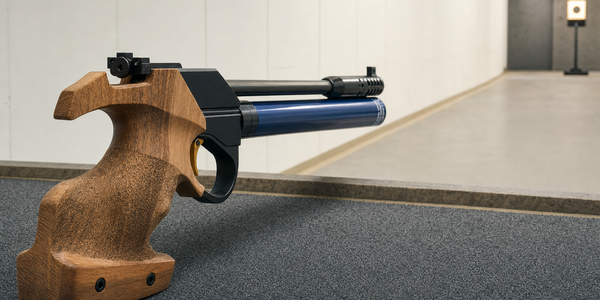
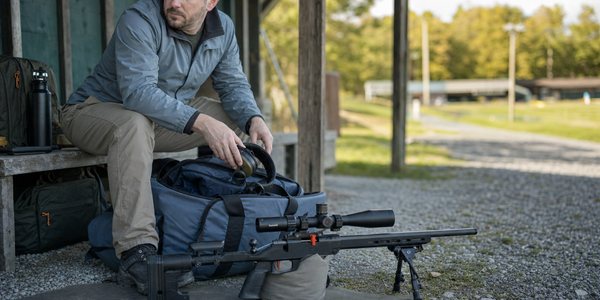
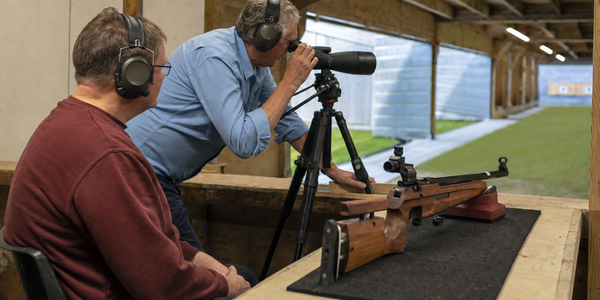
Rifle and pistol nationals, live from Saskatoon
Saskatoon's August 8-15 national program runs from 10 m to 50 m. Here is how to follow the current schedule, start lists, and live scoring.

Shooting Sports / Precision. Saskatoon's national firing line will run from 10 metres to 50, and the public can watch much of the score build one shot at a time.
The 2026 Canadian Pistol and Rifle National Championships match program covers August 8 through 15. It links two Saskatoon Wildlife Federation facilities, a week of rifle and pistol courses, and a public live-scoring route through Megalink.
Registration closed August 1. This is a viewer's invitation now.
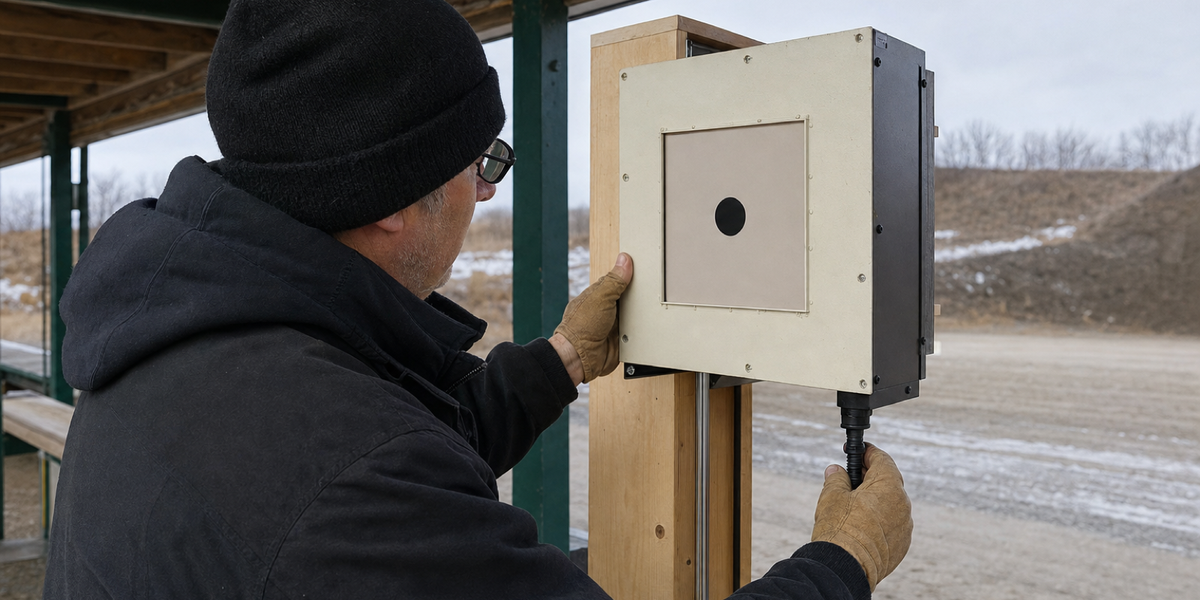
Holdover produced the feature as a fictional pre-opening electronic-target check using current official equipment references. The volunteer, range, target installation, and session do not depict Saskatoon, the 2026 Nationals, or an exact Megalink installation.
Start with the August 6 list
The current SFC National Championships page says preliminary squadding will appear after noon Eastern on Thursday, August 6. That list is the first useful viewer document. It will connect athletes to events and firing points before the first match day.
The separate schedule updated August 1 supplies the clock. Saturday opens with 25 m pistol pre-event training, standard pistol relays, military rapid fire, and centre fire. Air rifle enters Sunday. The following days bring 25 m pistol, rapid fire, air rifle and air pistol, mixed teams, 50 m three-position and prone rifle, sporting and hunting rifle, and 50 m pistol.
It is too much program for a single highlight reel. The practical way to follow it is smaller: choose an event, find its relay, and watch that score develop.
Most of the line reports electronically
The program names electronic targets or electronic scoring across the listed 25 m pistol events, 10 m air rifle and pistol, 50 m pistol, sporting rifle, 3-position rifle, and prone rifle. Hunting rifle is the paper-target exception identified in the course descriptions.
Electronic scoring changes the public experience. A paper target can hold a good story until someone retrieves, reads, confirms, and posts it. An electronic system sends each scored shot into the match record while the relay is still underway. The viewer sees a course of fire as work in progress rather than a total that appeared after the fact.
SFC links viewers directly to Megalink Live and says one range will appear as AHA and the other as SASK TSA. The live page is empty before an event feeds it, so the August 6 start list and current schedule matter. They tell a reader when and where to look.
The technology also has a range-side life. Current Megalink 10 m and 50 m equipment uses protected target units, replaceable aiming cards, displays, and a connection system. Its 25/50 m family supports pistol and rifle target faces. The exact Saskatoon installation may differ. The useful point is the system behind the public number: target, detection, connection, display, and match staff all have to agree before a score looks effortless online.
Two facilities hold one championship
The live-fire rifle and pistol courses will run at Saskatoon Wildlife Federation Outdoor Range #8. The 10 m air events use a separate Saskatoon Wildlife Federation facility. The program describes both as wheelchair accessible, with concrete or gravel firing lines and flat routes from parking areas.
That split explains why the live board uses two range labels. It also shows how wide the national program is. Centre-fire pistol at 25 metres, air rifle at 10, and prone rifle at 50 share a championship week without sharing one firing line, one target face, or one rhythm.
The current rules add another layer. SFC says the 2026 ISSF rules apply, with specific exemptions for rifle clothing and pistol grips. A June 13 technology update confirms that finals will use the 2026 timing. Equipment checks are available, random spot checks remain possible, and the published start time is the first scoring shot. Preparation and sighting begin earlier.
Those details help a viewer read the schedule correctly. A 09:00 match has already asked athletes and officials to do work before 09:00.
The score still belongs to the shooter
I recently narrowed my own range days from six or seven rifles to three. A range officer had pointed out that precision shooters often concentrate on one rifle, and the smaller rotation stopped me from rushing. I could pay closer attention to breathing, level, barrel heat, and shot pacing.
I have not shot an SFC national championship or used this electronic scoring system. The familiar part is the discipline behind a trustworthy number. A screen can display the result quickly. It cannot create the hold, timing, equipment control, range command, or repeatable shot that put the number there.
The program preserves that human chain. Athletes check in before entering the range. Officials manage equipment control and firing points. Juries resolve scoring challenges. Volunteers make an event of this size possible. Results are posted at the range after each match, then added to the SFC website when the full record is ready.
Live scoring gives the public an earlier window into that work. It should make the sport easier to understand without making the sport look easy.
Follow one relay well
The national program begins Saturday, August 8. Before then, check the SFC page after noon Eastern on August 6 for preliminary squadding. Use the August 1 schedule for the current relay times. Open the Megalink live page when the chosen event begins, and return to SFC for posted results after the match.
Schedules can move. Start lists can change. The range's current instructions govern the event.
That leaves a simple way into a complicated championship: choose a distance, choose a relay, and let the score show the work.
Sources
- Shooting Federation of Canada: National Championships
- Shooting Federation of Canada: 2026 Canadian Pistol and Rifle National Championships Match Program
- Shooting Federation of Canada: August 1 schedule
- Megalink Live
- Megalink: 3D-Score target family
- Megalink: 3D-Score 25/50 target family
Keep the range notes worth reading later.
If this piece has you thinking about range time, keep the notes useful enough to read later.
Use the Holdover Range Bench Log Card to record rifle, optic, ammunition, distance, weather, zero, group notes, correction, and next test without turning a range trip into a memory test.
Safety note: the card is a note-taking worksheet, not shooting instruction, load data, legal advice, or a substitute for range rules, official guidance, manufacturer manuals, or qualified instruction.