Saskatoon put six seconds on the scorecard
Saskatoon's first pistol results show how a two-point lead moved across 150-, 20-, and 10-second stages before Military Rapid reached six seconds.

Shooting Sports / Precision. Dragana Kornic's lead moved twice before the total settled at two points.
The first official results file from the 2026 Rifle and Pistol National Championships shows Kornic first on the published 25 m Standard Pistol list at 542-4x. Jesse Olsen follows at 540-7x.
The two-point margin is the last line of the story. The smaller Sec column shows how it happened: 150 seconds, 20 seconds, then 10.
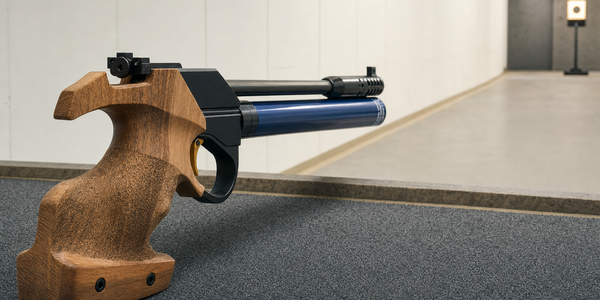
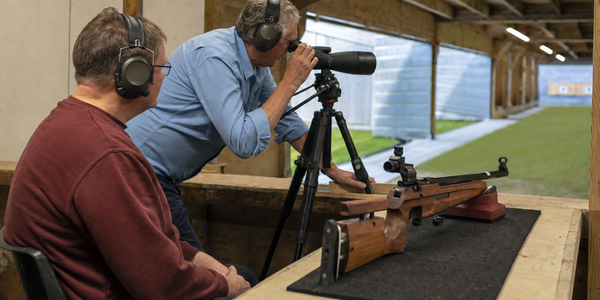
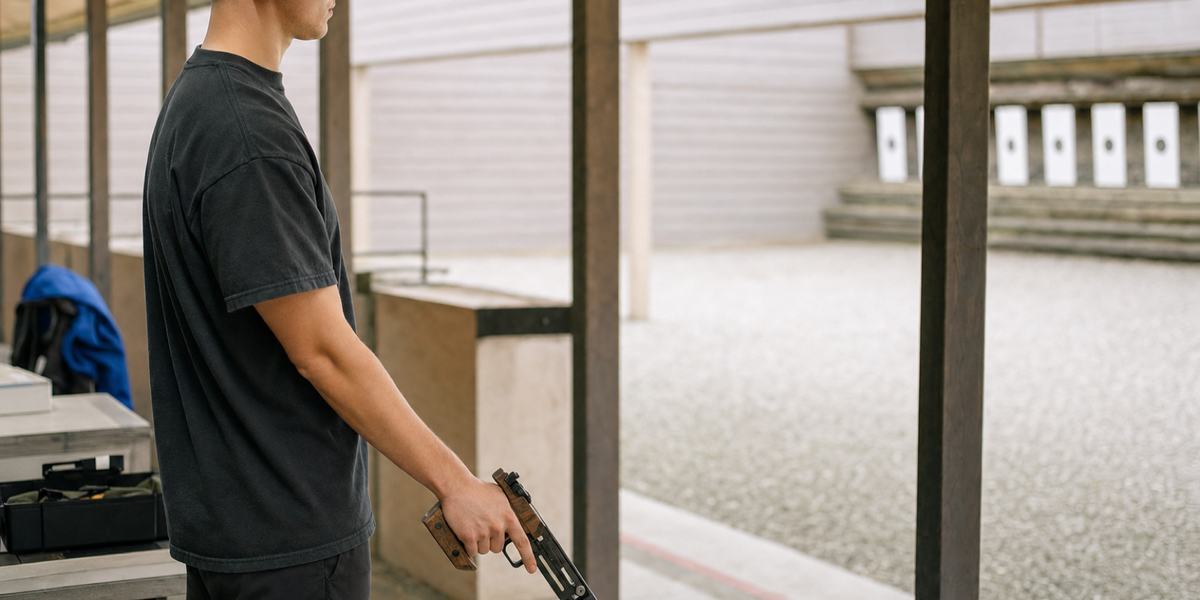
Holdover produced the feature as a fictional pre-relay 25 m sport-pistol scene using current official manufacturer geometry references. The person, range, pistol, and session do not depict a named athlete, exact product, Saskatoon, or the 2026 Nationals.
The lead crossed three time bands
The official match program describes Standard Pistol as a 60-shot competition on the 25 m range using electronic targets. The results divide that work into three timed stages.
Kornic opened with 186 points in the 150-second stage. Olsen had 179. That gave Kornic a seven-point advantage.
At 20 seconds, Olsen scored 184 and Kornic scored 176. Olsen gained eight points, turning a seven-point deficit into a one-point lead.
The 10-second stage moved it again. Kornic scored 180. Olsen scored 177. Those three points put Kornic two ahead at 542 to 540.
A ranking table can make that look settled. The stage line shows a contest that changed direction twice. Kornic built the strongest opening block. Olsen owned the middle. Kornic recovered enough in the shortest Standard Pistol block to finish first on the published list.
That is useful to a reader who has never watched the course. The total answers who finished ahead. The time labels show where the lead travelled.
Military Rapid reached six seconds
The next section of the same results file compresses the clock further. The Military Rapid table uses 10-, eight-, and six-second bands.
Olsen finished first on that published list with 555-12x. His stage subtotals were 192, 184, and 179. Sandra Uptagrafft followed at 550-10x with 187, 181, and 182.
The six-second line did more than lower the available time. It rearranged the comparison. Olsen carried a five-point advantage out of the 10-second block and added three at eight seconds. Uptagrafft scored 182 at six seconds, three more than Olsen's 179. She took points back in the shortest band while Olsen kept the five-point total margin he had built earlier.
Lori Kranenburg's third-place line offers another shape: 184, 183, and 180 for 547-8x. Her three stage scores stayed within four points of each other.
The clock creates the demand. Each athlete supplies a different answer.
Centre Fire tells the story with two stages
Centre Fire uses a different set of labels. The program divides its 60 shots into 30 precision and 30 rapid-fire shots, with every competitor completing the precision stage before rapid fire begins.
Anshul Malik and Olsen both recorded 279 in precision. Their separation arrived in rapid fire: Malik scored 284 and Olsen scored 283. The final totals were 563-19x and 562-14x.
One point decided the order on the published list after a precision tie. That result belongs to its own course and its own stage names. It also carries the same reading lesson: keep the subtotal beside the final number.
A clock exposes the process
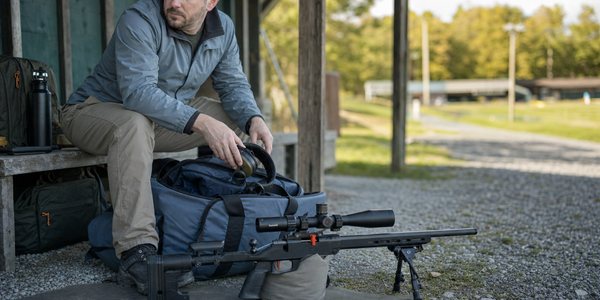
I recently narrowed my own precision-range days from six or seven rifles to three. A range officer had explained why precision shooters often concentrate on one rifle. The smaller rotation reduced my self-imposed rushing and gave me more attention for breathing, level, barrel heat, and shot pacing.
My range day and an SFC pistol course ask different things. The familiar part is process. A shooter needs a routine that remains available when the pace changes. A result sheet gives that routine a trace: where a score held, where it moved, and where the athlete recovered.
That trace also makes the sport easier to respect. A six-second label can look like spectacle from outside the range. On the scorecard, it sits beside the work that came before it: preparation, equipment control, sighting, repeated series, range commands, and sixty competition shots.
The athlete still has to make the time useful.
Read one result well
The SFC National Championships page is adding results while the August 8-15 program continues. Each posted file is versioned, so the date and relay label belong with the numbers.
Start with one event. Read the stage or seconds column. Compare where the lead grew, narrowed, or changed hands. Then return to the total.
For Standard Pistol on August 8, that path runs from Kornic by seven, to Olsen by one, to Kornic by two. For Military Rapid, it reaches six seconds. For Centre Fire, it turns on a single rapid-fire point after a precision tie.
The total says who finished ahead. The clock shows how the lead travelled.
Sources
- Shooting Federation of Canada: National Championships
- Shooting Federation of Canada: August 8 Rifle and Pistol Nationals results
- Shooting Federation of Canada: 2026 Rifle and Pistol Nationals match program
Keep the range notes worth reading later.
If this piece has you thinking about range time, keep the notes useful enough to read later.
Use the Holdover Range Bench Log Card to record rifle, optic, ammunition, distance, weather, zero, group notes, correction, and next test without turning a range trip into a memory test.
Safety note: the card is a note-taking worksheet, not shooting instruction, load data, legal advice, or a substitute for range rules, official guidance, manufacturer manuals, or qualified instruction.