I own an R9, and I want an *answer*.
Sterling Arms describes a revised RCMP assessment and a conditional replacement offer. As an R9 owner, I want the written reasons and a workable resolution.

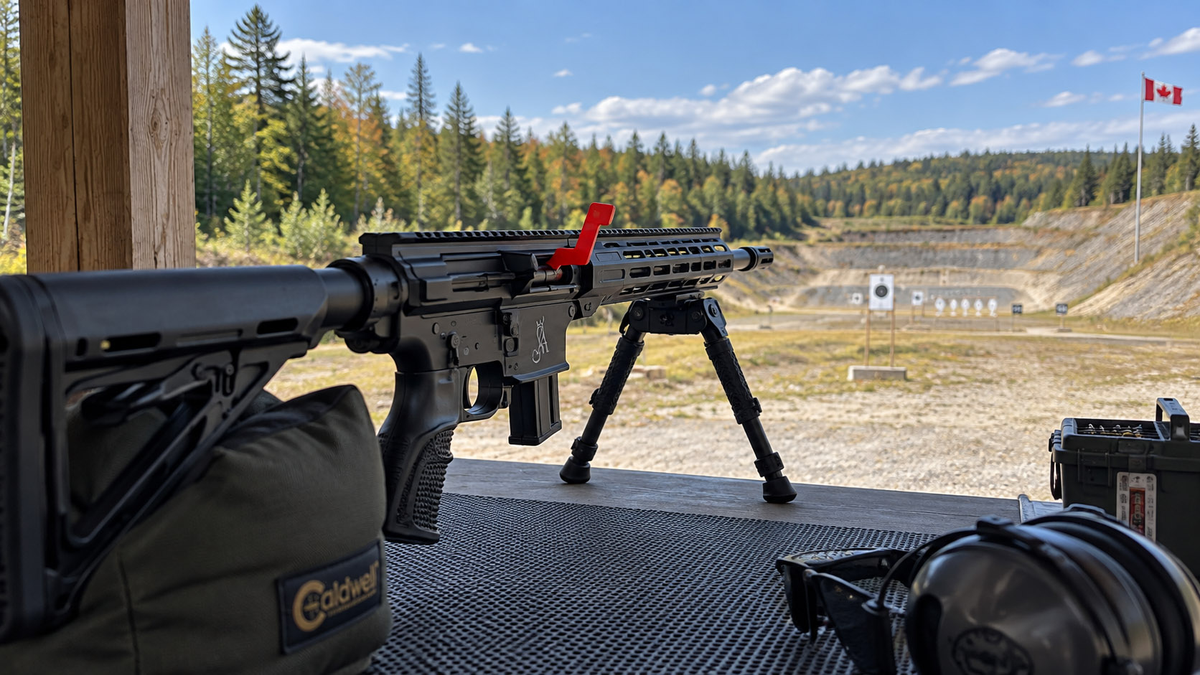
I own a Sterling Arms R9 MK1. That gives me a fairly direct interest in what the RCMP thinks it is.
Sterling marketed the 9mm carbine as non-restricted. Its specification sheet says so. In a TACCOM interview published by the National Firearms Association on September 16, Sterling president Mike Scott describes what followed: a prohibited classification, a challenge from the company, and a reported change in the RCMP's reasoning that still leaves owners waiting for a resolution.
There is something encouraging here. Sterling is proposing to absorb the cost of replacement receivers if its revised RC9 receives a non-restricted classification. There is also plenty that needs explaining. As an owner, I want to know how the original decision was reached, what has changed, and how any remedy would actually reach us.
Sterling RC9: the replacement proposal
Update checked October 13, 2026. In the TACCOM interview, Mike Scott described the RC9 as a proposed route for R9 owners, conditional on non-restricted classification. He said Sterling would cover replacement receivers and owners would pay shipping. Those were proposed terms at the interview.
Holdover's October 13 check of Sterling's newsroom and FAQ found no written RC9 approval announcement or launched exchange programme. We have not obtained a current secure FRT record for the RC9. Confirmed classification, owner eligibility, timing and lawful shipping arrangements remain questions for current written guidance from the manufacturer and the relevant authorities.
What Sterling says happened
In the NFA interview, Scott says the RCMP initially treated the R9 MK1 as an AR-180 variant. Sterling stopped production and disputed the assessment. He says the company supplied firearms for comparison and continued pressing its case.
Scott then describes an email in which the RCMP acknowledged a mistake and accepted that the R9 should not have been prohibited on that basis.
That is a significant claim. Holdover has reviewed a supplied transcript of the interview, but has not obtained the email or independently confirmed the revised assessment. For now, the account belongs to Sterling.
The RCMP’s public Firearms Reference Table dated October 5, 2026, record 198846, still classifies the R9 MK1 as prohibited. Its brief notes describe a relationship to Sterling’s R18 MK2 and the AR-180B design. That is the relationship Scott disputes. The RCMP cautions that its secure online table is more current than the public PDF, so this snapshot cannot establish whether a later change has been entered.
The complication, according to Scott, arose from receivers sold into the United States and marketed there as pistols. He says the RCMP subsequently treated the R9 as a handgun. Sterling's proposed response is a distinct model, the RC9, with receivers incompatible with the original R9.
At the time of the interview, Scott said the RC9 assessment was pending. His account describes a possible route forward. It leaves the original R9's current official status and the proposed replacement's approval to be established through the relevant records.
The reasons matter to owners
Scott makes another claim that warrants scrutiny. He says Sterling understands that the original assessment relied on photographs without a physical example of the rifle.
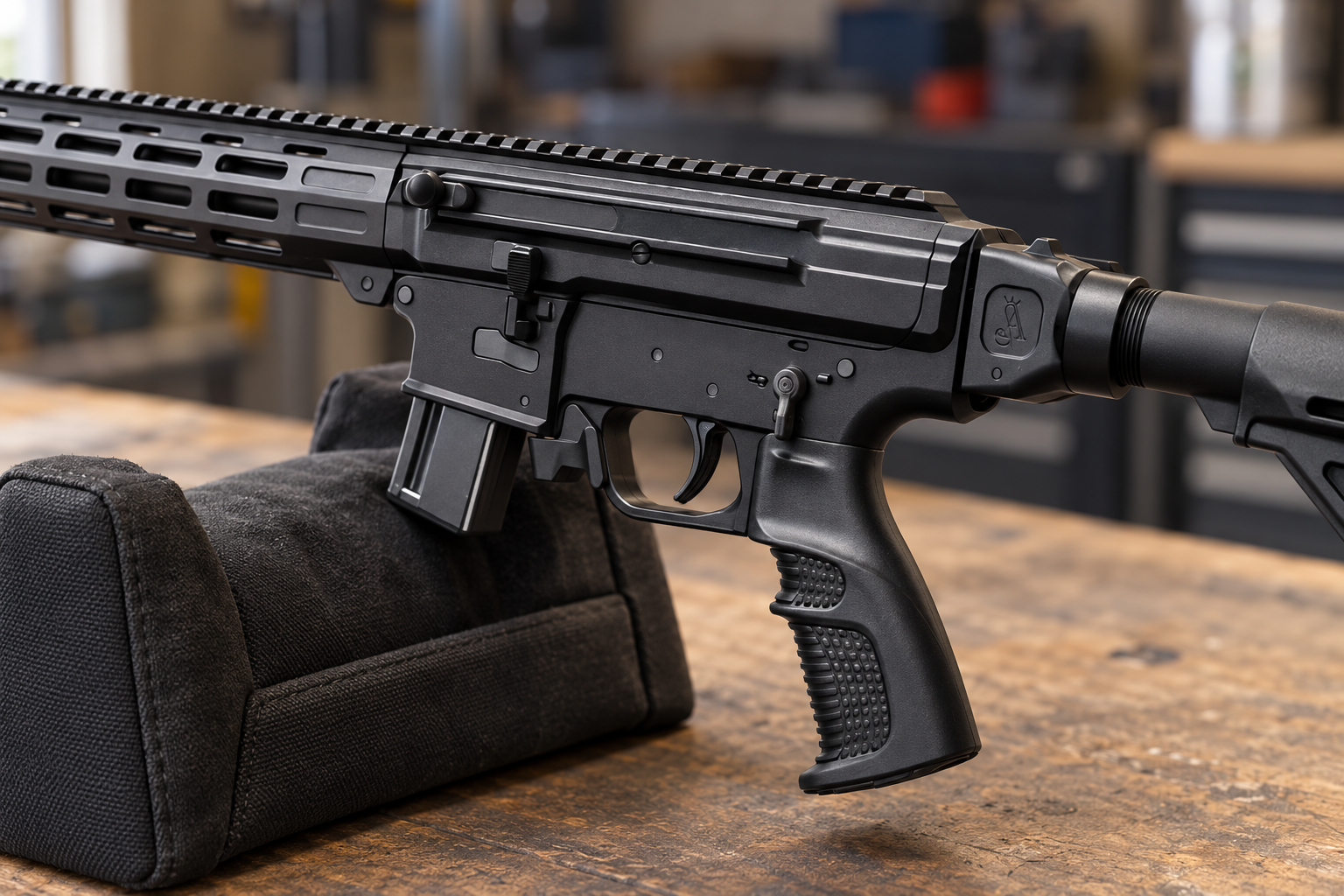
That qualification matters. We have his account of what the company understands, and the published model notes leave the supporting comparison unexplained. If photographs carried the decision, owners deserve to know how the assessors established the disputed relationship between the firearms. If the lab relied on additional material, that belongs in the explanation too.
There is a legitimate regulatory task here. Assessors have to consider a firearm's design and the applicable law. A manufacturer's description of a product as a rifle cannot settle the question by itself. The Criminal Code's handgun definition, for example, expressly considers original one-handed design even where a firearm is subsequently adapted for two hands. Nor does pointing to the R9's calibre or blowback operation, by itself, settle every question about its lineage.
That makes a clear technical explanation more valuable. A buyer should be able to understand which features or design history mattered, which legal provision applied, and why a later assessment reached a different conclusion, if that is what happened.
The RCMP describes the Firearms Reference Table as an administrative document used to assist identification and classification. The legislation and regulations provide the legal authority. That distinction matters when discussing a reported reassessment: an email about one model would not, by itself, repeal the underlying rules.
For an owner trying to understand the consequences, a clear, dated explanation should accompany any change. Expecting people to piece together their position from a trade-show interview is a poor substitute.
Another classification, another obstacle
The reported handgun issue also needs precision. Canada's handgun freeze has exemptions, as the RCMP's guidance explains. The interview's broad statements about sales and transfers compress a more complicated legal position.
For ordinary buyers, however, the freeze creates a substantial barrier. Sterling's account shows why correcting one part of an assessment could still leave a company and its customers without a usable resolution.
This is where the discussion becomes personal for me. I own the model under discussion. I want a clear account of what the authorities have decided and what it means for owners. A promising interview gives me reason to follow the file. The written decision and a workable process would give us something firmer.
Scott also says the RCMP personnel now dealing with Sterling understand the situation and have tried to help. That deserves space in the story. It supports a more useful argument than assuming everyone involved wants the worst outcome: the people handling the file should have the means to resolve it clearly and promptly.
Sterling's offer deserves follow-through
Scott's proposed arrangement is straightforward in outline. If the RC9 receives non-restricted classification, Sterling would supply replacement upper and lower receivers, retain the originals, and return the revised firearm. He says Sterling would cover the receiver cost and owners would pay shipping.
That is a meaningful commitment to customers who trusted the product. Sterling deserves credit for making it. The company is proposing to take on a material part of the remedy itself.
Owners will still need the details: eligibility, timing, shipping arrangements, documentation and the treatment of the original receivers. At the interview, approval remained outstanding. The offer was conditional, and Holdover has not verified a launched exchange programme.
I would welcome Sterling delivering on that offer. I also want the RCMP's written explanation of the R9 assessment and clear instructions for affected owners. Those are reasonable expectations for people who bought a product marketed for the Canadian civilian market.
For the rifle I own, that is the outcome I care about: an explanation I can read and a resolution owners can actually use.
The amnesty file is still moving.
If this piece sent you back to government pages, do not wait for the next portal, Gazette, or court move to find you by accident.
The Dispatch follows Public Safety, RCMP, Canada Gazette, court, compensation, collection, and amnesty updates so the next change comes with the source that moved.
Safety note: the tracker is a worksheet for source hygiene, not legal advice or a substitute for current official guidance.