What CBSA's postal audit found about *missed targets*
A new suppressor case makes CBSA's earlier postal audit worth revisiting. Its missed-target finding needs a careful reading and a public follow-up.


Opinion
CBSA's October 15 announcement about a Yarmouth, Nova Scotia, investigation starts with a successful interception: a prohibited firearm suppressor caught at the International Mail Processing Centre in Mississauga. The agency says a February 25 search recovered 19 firearms, a homemade suppressor, and other items. Officers laid 16 charges on July 23. The accused is scheduled to appear in court on October 26, according to the release.
A separate October 8 announcement describes two suppressors intercepted in a U.S. parcel at CBSA's commercial operations facility in Mississauga. A subsequent Brampton search recovered another suppressor attached to a firearm. The releases describe charges, which remain allegations.
The officers deserve credit for those interceptions. The Yarmouth release also gives readers a reason to reopen an earlier document: CBSA's June 2025 postal audit. It explains a gap in the agency's records that deserves a clear public follow-up.
What a missed target means
The Audit of postal operations covered April 2023 through March 2024 at the international mail centres serving the Greater Toronto Area, Vancouver, and Montréal. Its findings describe that audited period. The public report, last modified in December 2025, does not establish how every control works today.
In the mail targeting system, called POST, an active target identifies attributes of mail that officers should intercept. A parcel matching those attributes should receive the prescribed attention. The auditors found the targeting controls effectively designed across all three centres.
Their concern came with follow-through. Staff described targets missed for several reasons, including mail released without the required examination and mail never presented to CBSA. The list also included parcels examined thoroughly whose target status remained open in POST. That last category can create a record problem even after officers have done the physical inspection.
The audit states that POST lacked the ability to generate missed-target data. Staff who became aware of a miss had to track the mail manually. Readers therefore need both pieces: a system reporting gap and a manual process for known cases. The report supplies no estimate of all contraband that entered undetected.
Small packets, different checks
At two of the three centres, the auditors found officers examining small e-packets visually without detection tools. Some officers worried about smaller firearm parts moving through that stream. The report also found no formal process for managing emerging postal risks and identified gaps in oversight.
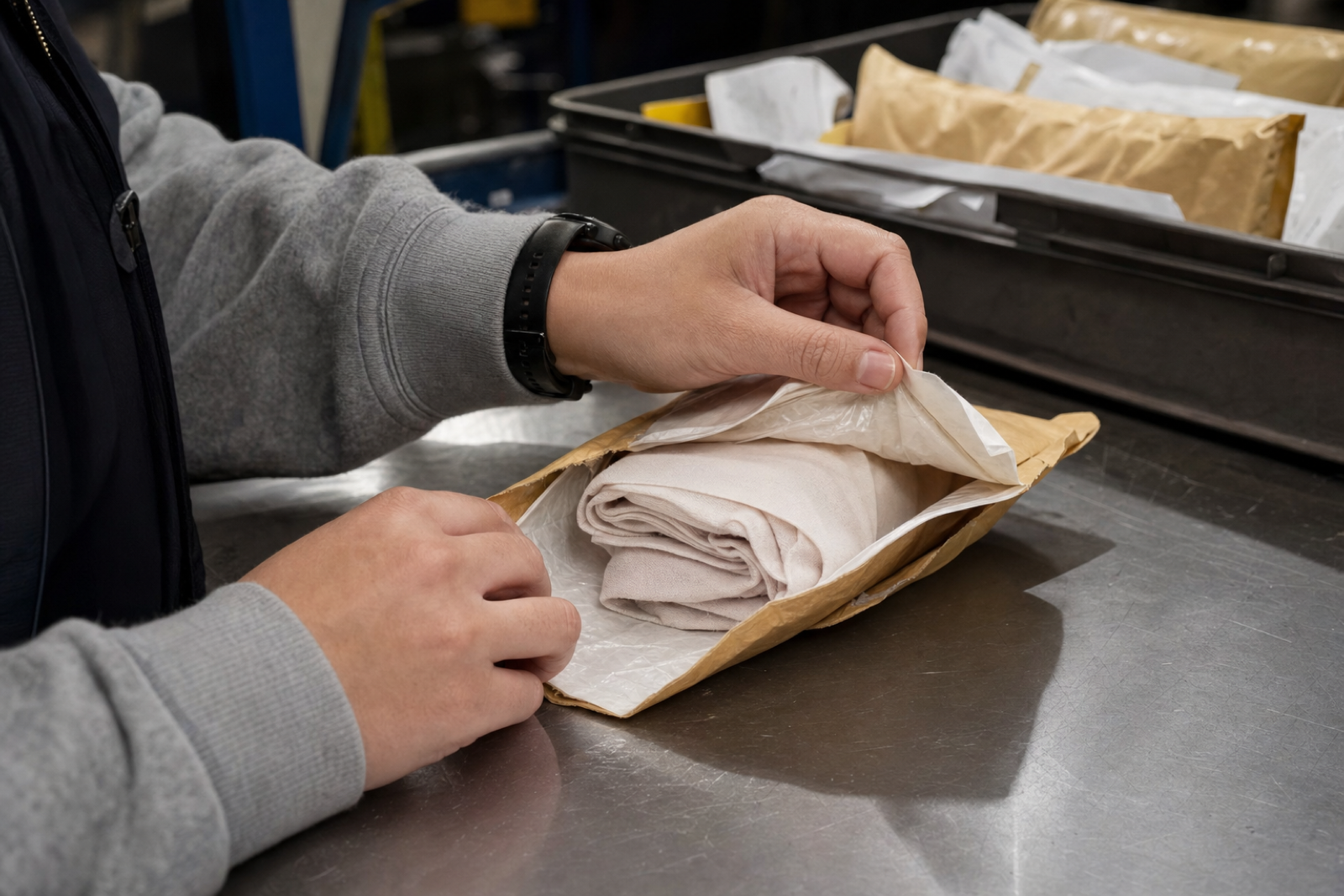
One example involved firearms concealed inside a karaoke machine. An x-ray found them during a special project on U.S. mail. Regional staff told the auditors the parcel would otherwise likely have reached a check without x-ray equipment and been released. A karaoke machine is an unusually memorable way to explain why the route through an inspection system matters.
Those are dated findings, and CBSA accepted the recommendations. Management committed to clearer responsibilities, escalation, and oversight by March 2026, followed by a formal postal control framework and monitoring by December 2026. The December commitment covers a broader management framework; it makes no express promise to deliver a particular POST software feature.
In the public audit and follow-up material I could locate for this article, I found no confirmation that the March commitment had been completed. That leaves its status unverified. CBSA could clarify the work already done while protecting information that would help smugglers.
Credit for the work, evidence for the controls
The audit contains substantial favourable evidence. Most of the 18 key controls were effectively designed at each centre. Officers had and used detection tools, and the report credited the agency with continuing to intercept large quantities of prohibited, restricted, and controlled goods.
CBSA's 2025 year in review reports 833 firearms seized in 659 seizures across its operations. Those are agency-wide enforcement results. The Yarmouth postal case and the Brampton commercial-facility case add specific examples of interceptions leading to investigations.
The government's strongest argument is straightforward: border enforcement and the Assault-Style Firearms Compensation Program address different risks, and Ottawa funds both. The Brampton release cites the $1.3 billion border plan. Successful casework gives that argument substance. The postal audit gives the government a specific follow-up question to answer alongside it.
The follow-through owners should see
I own a Henry Homesteader with a barrel a gunsmith threaded and a muzzle brake fitted to it. The attachment's purpose matters. Section 84 of the Criminal Code includes a device designed or intended to muffle or stop a firearm's sound or report in its definition of a prohibited device. That is the line relevant to these alleged suppressor imports. My carbine is an ownership example, with no connection to either investigation.
Licensed owners and businesses already encounter detailed government counting. Public Safety's compensation-program report lists 74,073 firearms claimed by businesses and $96.1 million paid to businesses as of June 8, 2026. The payments cover fully processed firearms, parts, and components. Those figures describe that population and date; they cannot establish what border controls achieved.
They do show that Ottawa can publish a clear operational account. I would like the postal follow-through to receive the same care: whether management completed each commitment, how it monitors missed targets, which reported misses involved an actual failure to intercept, and what it changed in response. A public summary could explain the result while withholding targeting methods.
When the December commitment comes due, that is the record owners and other Canadians should be able to read alongside the next successful seizure announcement.
Related reporting: Canada's suppressor rules alongside the U.S. change and the distinction between buyback claims and police work.
The free weekly Dispatch follows verified developments in Canadian firearms policy and the documents behind them.
Sources
- Canada Border Services Agency, Yarmouth smuggling and firearm-related charges, October 15, 2026.
- Canada Border Services Agency, Brampton firearm investigation, October 8, 2026.
- Canada Border Services Agency, Audit of postal operations, June 2025; audited period April 2023-March 2024; page modified December 17, 2025.
- Canada Border Services Agency, 2025 year in review, annual agency-wide seizure figures.
- Public Safety Canada, Compensation-program progress report, business results as of June 8, 2026.
- Justice Laws, Criminal Code, section 84, prohibited-device definition.