That $60 loader is a *lesson*
A fresh Canadian reloading thread got the joke right: the tiny .308 loader is charming, useful, and still not a precision bench.

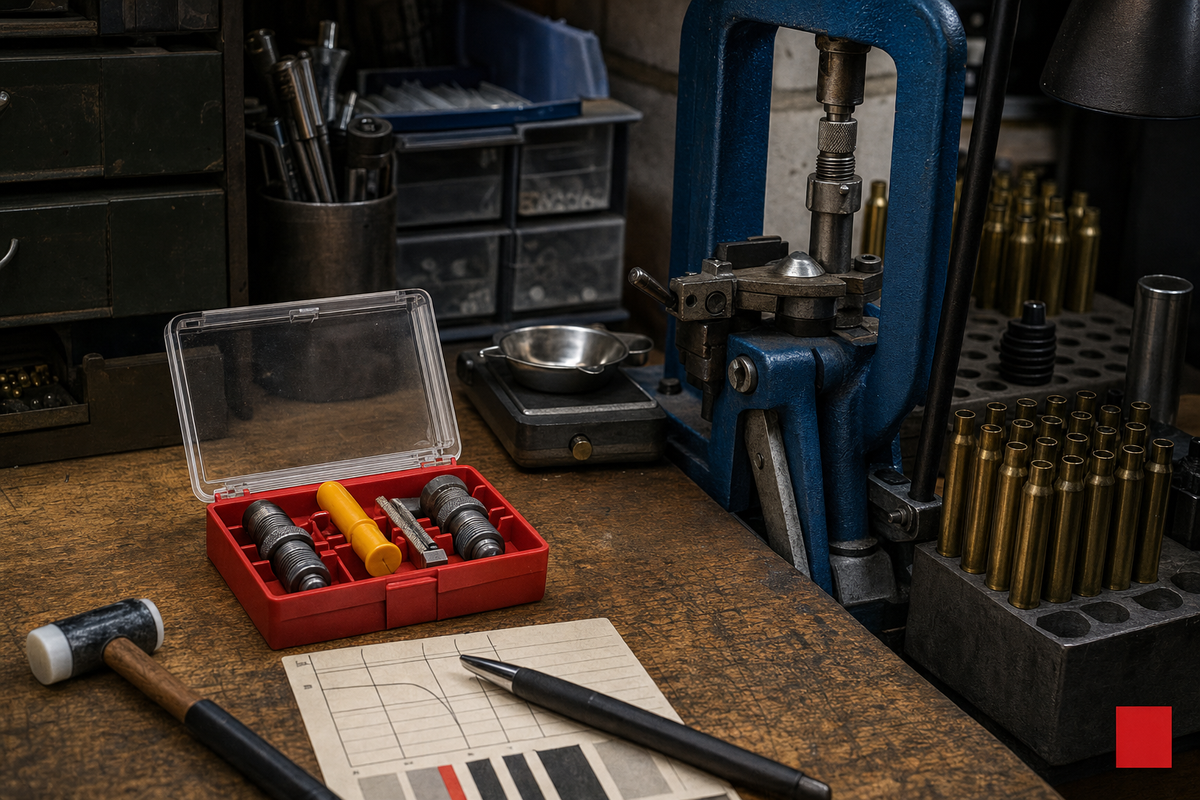
Opinion. The best Canadian handloading joke I saw this morning was a tiny .308 loader being introduced as a precision setup.
It worked because everyone who has spent time near a reloading bench recognizes the object. A little Lee-style classic loader. A few pieces of steel. A mallet. Some empty brass. Enough confidence to make a cartridge one careful swing at a time.
That is a funny picture. It is also not a fake tool.
That is the useful part for newer shooters. The tiny loader deserves more respect than its size suggests. It can teach the right lesson. It can also teach the wrong one if a new precision shooter mistakes "technically possible" for "good starting plan."
The joke works because the tool is real
The Canadian Gun Nutz Reloading thread that kicked this off was framed as a wink: a .308 precision setup, supposedly the best money could buy, for a suspiciously heroic price. The replies did what good reloading threads often do. They kept the joke, then added the caveats.
One person pointed out that a used single-stage press and ordinary dies would be more versatile. Another noted that those small kits can make ammunition as good as a standard die setup, just painfully slowly. Another brought up the old field-use charm of the thing. Someone else made the practical point newer reloaders need to hear: neck-sizing-only convenience eventually runs into the need for full-length sizing.
That is the whole debate in miniature.
A current Canadian retailer listing still describes the .308 Lee Loader as a complete reloading system. Tenda had a .308 Classic Lee Loader around the $60 mark when I checked. So the object is not just nostalgia. It is still sitting in the market, waiting to tempt someone who wants the shortest path between curiosity and handloading.
The temptation is understandable. It is cheap enough to feel harmless, small enough to feel clever, and physical enough to make the whole hobby look refreshingly honest.
Precision is not the smallest possible parts list
The tiny loader can make ammunition. Precision reloading asks a different question: can you repeat the work with fewer excuses?
Precision is repetition with fewer excuses.
It is brass that has been treated consistently. It is sizing that matches the job. It is measurements, records, case prep, seating feel, and the patience to change one thing at a time instead of buying a new tool every time the group looks rude.
This is where the small kit starts to show its ceiling. It makes the hand work visible, but it does not give a new shooter the workflow most precision .308 reloaders eventually need. If you are trying to build dependable rifle ammunition for repeated practice, data, and adjustment, the bench starts asking for a mounted press, proper dies, measurement tools, a scale or dispenser, blocks, labels, and a place solid enough not to turn sizing force into furniture damage.
I learned that last part the expensive way. My first reloading bench was modest. It looked strong enough until magnum brass explained leverage in a dialect the wood did not survive. RCBS tells Rebel press owners to mount the press to a sturdy workbench with proper bolts. That line reads boring until the bench loses.
A real single-stage press is not glamorous. It is just honest. It gives you leverage, alignment, a repeatable station, and enough bench discipline to stop pretending a precision habit can live entirely in a little box.
The beginner mistake is buying romance
There are two bad beginner purchases in reloading, and they look opposite.
One is the giant leap: buying the biggest, fastest, most complicated setup before you know whether you even like the process. That turns a new handloader into a machine operator before he has learned what the machine is hiding.
The other is the romantic shortcut: buying the smallest possible kit because it feels pure, old-school, and almost comically self-reliant.
Both can miss the same point.
The point is to make safe, consistent ammunition under current manuals and manufacturer guidance while building habits you can repeat. That is less dramatic than a tiny kit on a picnic table or a progressive press with more moving parts than your first car, but it is where most people should start.
For a newer shooter thinking about .308 precision, my practical answer is boring on purpose. Buy current manuals. Learn from qualified sources. Start with a solid single-stage setup. Keep records. Keep your brass organized. Do not publish or trade load data like gossip. Treat every shiny shortcut as a question, not an answer.
The small loader can still belong in that story. Just do not make it the main character.
What the tiny loader gets right
I actually like what the small kit teaches.
It slows everything down. It makes each case feel like an individual object, not a unit passing through an assembly line. It punishes hurry. It also insults the idea that equipment does the thinking for you. A tiny loader, a mallet, and a case are a useful reminder that reloading is controlled force applied to small tolerances, not a shopping category with brass in it.
That lesson matters because the larger bench can create its own illusion. Once you have a proper press, a powder dispenser, calipers, case blocks, trays, and labels, it is easy to start thinking the system will protect you from your own attention span.
It will not.
I still label blocks because brass can look identical while being at different stages of the process. I still slow down because a neat bench is not the same thing as a controlled one. I still care about records because memory is cheap until it costs you a range day.
The tiny loader gets one thing exactly right: there is no magic in the handle. The work is in the decisions.
Buy the lesson, build the bench
Canadian shooters do not need to turn every tool purchase into a status signal.
Owning the small loader is fine. Enjoying it is fine. Using one carefully inside its limits is fine. The mistake is pretending that a minimal kit is automatically a precision reloading plan because it makes a better story than a sturdy bench and a notebook.
If the $60 loader gets a new shooter to respect the craft before spending real money, it has earned its place. If it teaches him that each round is built by a sequence of small, boring decisions, even better.
Just do not stop there if your goal is precision .308.
Buy the lesson. Build the bench. Let the little loader remind you that the bench is only as good as the habits you bring to it.
Sources
- Canadian Gun Nutz,
Rate 308 Precision Reloading Setup: https://www.canadiangunnutz.com/forum/threads/rate-308-precision-reloading-setup.2584720/ - Canadian Gun Nutz Reloading forum: https://www.canadiangunnutz.com/forum/forums/reloading.79/
- Western Metal,
Lee Precision Lee Loader 308 Win: https://westernmetal.ca/product/lee-precision-lee-loader-308-win-lp-90245/ - Tenda,
LEE - Classic Lee Loader 308 Win: https://www.gotenda.com/product/lee-classic-lee-loader-308-win/ - RCBS,
Rebel Reloading Pressmanual: https://rcbs.com/wp-content/uploads/2024/09/9353_RebelReloadingPress_1LIM_web.pdf - RCBS,
ChargeMaster Link Electronic Powder Dispenser: https://shop.rcbs.com/chargemaster-link-electronic-powder-dispenser/
Set up the bench before the first mistake.
If this piece has you thinking about a first reloading bench, slow the buying part down and make the safety/process part visible.
Use the Holdover Reloading Bench Setup Checklist to track manuals, press, dies, scale, calipers, case prep, labels, storage, bench layout, safety routine, and what still needs an experienced second look.
Safety note: the checklist does not provide load data, recommend charge weights, teach reloading, or replace current published manuals, manufacturer instructions, qualified instruction, or applicable law.