The .22 moment: rimfire is the path into Canadian precision
Rimfire precision gives new Canadian shooters a practical way into the sport while centrefire costs and policy pressure keep rising.

Update, June 9, 2026. Public Safety Canada has extended the relevant amnesty period. The old the former fixed deadline date referenced below is no longer the operative expiry; the amended expiry is 90 days after the Supreme Court of Canada renders its decision.
Pillar: Precision · Secondary tag: Gear · Word count target: ~1,650 · Read time: ~7 minutes · Voice: accessible, calm, evidence-led, with a quiet pro-ownership stance carried through.
Published draft, for paste-through per Ghost Implementation/post-the-22-moment-article-guide.md.
---
This week's gun-policy headlines belonged to the Assault-Style Firearms Compensation Program, which closed its declaration window with roughly 67,000 firearms tallied against a 136,000 planning estimate. The buyback story is the file. It deserves the front page.
The story it crowds out is quieter, but for a newer Canadian shooter it might matter more. While Ottawa was counting unreturned rifles, the fastest-growing precision shooting discipline in this country was filling its squads from coast to coast, on cream-coloured 100-yard bays, with rifles chambered in .22 Long Rifle.
Rimfire precision is having a moment in Canada. The conditions that built that moment are not pleasant ones, and the moment is no accident. But if you are new to the hobby and wondering where you fit in a sport whose centerpieces keep getting prohibited or priced out of reach, the honest answer is: you fit here.
What rimfire is doing while centrefire stalls
Centrefire reloading components have moved hard the wrong way. The Vernon Fish & Game Club, summarising the state of supply for its members, has put the price increase on consumables at over 250 per cent in recent years. Anyone buying primers, smokeless powder, or quality bullets through a Canadian retailer over the last 24 months has felt the same thing without needing it spelled out. Hodgdon Reloading Powder Canada, the country's main dedicated powder portal, limits orders to five SKUs per customer per calendar month, with a 48-pound weight cap, and ships from a single distribution footprint in Alberta. Supply will probably keep recovering, but slowly, and not in lockstep with shooter demand.
At the same time, the rifle side of centrefire precision has thinned out under the May 2020 Order in Council and the cascading prohibition lists that followed. Bolt-action and self-loading platforms that used to be obvious entry points to long-range shooting are now either prohibited, restricted, or simply harder to source through Canadian retail. The platforms that are still available are still available - and there are more of them than the loudest voices online would have you believe - but for a new shooter pricing the full path from rifle to scope to ammunition to reloading bench, the bill is not what it was five years ago.
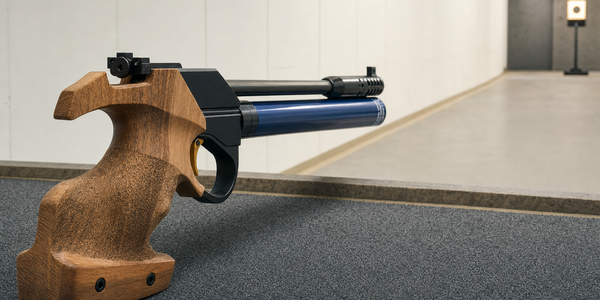
Rimfire walked into that gap and stayed. .22 Long Rifle ammunition is still made by the case-load, sold by reasonable Canadian retailers, at prices that still let a club member shoot a hundred rounds in an evening without doing math. Rimfire rifles are not on the prohibited list, and the entry-level platforms that drive the discipline are sitting on shelves for prices that look quaint next to a 6.5 Creedmoor build. This was the cheap, available, accurate end of the sport before the regulatory environment changed. Now it is also the responsible end. Increasingly, it is the popular end.
NRL22 Canada, the gateway league
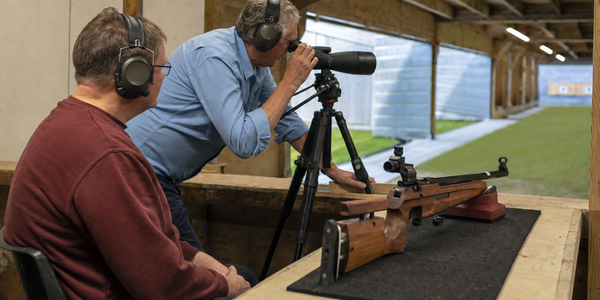
The simplest way into rimfire precision is NRL22 Canada. The format is a deliberately accessible monthly match: five stages, fired from positional barricades, against small steel targets at random distances out to about 200 yards. A new course of fire is published each month and shot by NRL22 clubs across Canada and the United States on the same calendar window, which means a shooter at a club in Ontario and a shooter at a club in BC are running the same stages and posting comparable scores.
The format does most of the work of teaching you precision shooting. Positional rifle work, wind reading at honest distances, time pressure, target identification, communication with a range officer, fundamentals like trigger control and follow-through. Every match is a clinic. The rifles are .22s. The scores live online. The barrier to walking in the door is roughly: a PAL, a non-restricted rimfire, a scope that tracks, a bipod, a rear bag, and an honest willingness to embarrass yourself for the first three or four matches before you stop missing easy targets.
NRL22 Canada lists its affiliated clubs and match directors by province on its website. Most provinces have at least one. Several have a robust monthly circuit. The match fee at most clubs is under $30. There is no national qualification system to clear before you show up. You join, you pay, you shoot, you ask the squads next to you for advice, and you go home better than you arrived.
The Canadian Rimfire Precision Series
For shooters who want longer distances and a more competitive register, the Canadian Rimfire Precision Series (CRPS) is the next tier up. CRPS is a federally registered non-profit running a small number of premier matches each year, with a national championship and regional events. Targets push from 75 yards out past 300, on stages that test wind hold and tripod work in a way NRL22 Base Class does not. The 2026 calendar includes the Vortex Canada CRPS National Championships at Clarence-Rockland, Ontario, the Spring Fling at Stittsville, the Atlantic Canada May Match at Oldham, Nova Scotia, and the Western Championship at Sherwood Park Fish & Game's Big Bore Range outside Edmonton.
CRPS has aligned its ruleset with the U.S.-based Precision Rifle Series, so points earned in qualifying CRPS events count toward PRS rimfire standings. For a Canadian shooter who would otherwise have no realistic path into a U.S. or international competitive system, this is the way in. It is not theoretical. Canadians are competing under it now.
What the cheap path actually costs
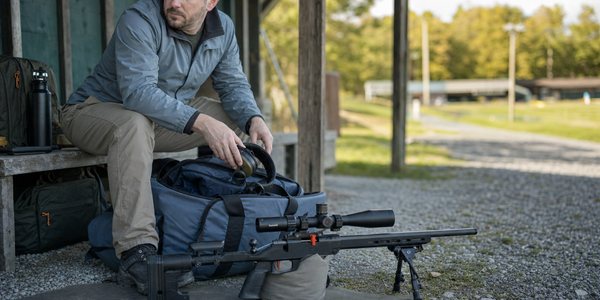
A defensible, match-ready rimfire setup in Canada lands somewhere between $1,500 and $2,500, all-in, depending on what you cheap out on and what you don't. The rifle ecosystem is mature: the CZ 457 series, the Tikka T1x, the Bergara B-14R, and the Ruger Precision Rimfire are the platforms that win matches and turn up most often in NRL22 Base Class. A 4-16x or 5-25x scope with reliable elevation tracking, a bipod that doesn't shift, a rear bag, and a basic rifle case round out the kit.
Ammunition selection matters more in rimfire than most newer shooters expect. A careful test session through your specific rifle to find a lot of CCI, Lapua, SK, or Eley that the barrel actually likes will do more for your scores than a $400 chassis upgrade. Match-grade .22 ammunition is lot-sensitive in a way that surprises people coming over from the centrefire side; what shot well last month may not shoot as well in your rifle next month, even from the same product line.
This is well within range for a Canadian PAL holder whose first thought, looking at the centrefire side of the sport, was that there is no affordable way in for a new shooter in 2026. There is. It runs on .22 Long Rifle. It produces, in the aggregate, the most welcoming squads at any precision match in the country.
The quieter point
A fair reading of the last six years of Canadian firearms policy says that the licensed shooting community has been treated as a problem to be managed, not as a constituency to be served. The 67,000 number from this week's buyback file is one expression of how that has gone for Ottawa. The rimfire bay on a Saturday morning in Stittsville or Sherwood Park or Vancouver Island is a different kind of expression of the same thing. The community did not stop shooting. It moved.
That deserves to be said plainly. A sport that grows when its regulatory environment narrows is not a sport in retreat. It is a sport whose participants have decided to keep showing up, on cheaper hardware, at better-organised matches, with more new shooters every season. The licensed PAL-holding population in this country is not going to argue itself out of existence on a forum. It is going to keep walking onto ranges. The roster of people walking onto rimfire ranges is the cleanest signal we have right now of where the next generation of Canadian precision shooters is coming from.
If you are new to this
Three concrete next steps, in order.
First, find a club. NRL22 Canada and CRPS both list affiliates by province on their public websites. Pick one within reasonable driving distance of where you actually live. Rangefinders, scopes, and rifles are easier to figure out after you have watched a single Saturday match.
Second, watch a match before you buy anything. Most clubs will let a PAL holder show up and observe. Ask the match director if they have loaner rifles for first-time shooters; many do. Whatever you decide to spend on a rifle, you will spend it better after one Saturday on the bay watching how the rifles, scopes, and stages actually behave.
Third, buy the rifle once. The platforms named above are not equally good, but all four win matches in the right hands. The chassis upgrade can wait. The $1,800 scope can wait. A solid rifle, an honest 4-16x scope, a competent bipod, and 5,000 rounds of decent ammunition will outperform any combination of premium gear that is shot half as often. Used examples turn up regularly on GunPost.ca for less than retail; this is one of the few categories where buying right the second time is genuinely cheaper than buying right the first time.
Where this leaves us
The buyback file will keep generating headlines. The Supreme Court will hear the OIC challenges. SCC + 90-day amnesty will arrive. None of those things will stop the rimfire community from filling the next NRL22 squad. If you have been watching the news this week and wondering whether there is a place in Canadian precision shooting for someone who came to the sport in 2024 or 2025 or this year, the answer is yes, and the place is .22 Long Rifle. The path in is the cheapest it has been in a decade. The community waiting at the end of it is the most welcoming it has ever been.
---
Related Holdover Tools
Useful calculators and references from the same corner of the Holdover bench.
Sources · editorial note
- NRL22 Canada, club and match-director listings, format documentation, monthly course of fire archive (
nrl22canada.ca) - Canadian Rimfire Precision Series, 2026 schedule and ruleset documentation (
rimfireprecision.ca) - Sherwood Park Fish & Game Association, CRPS Western Championship event listing
- Vernon Fish & Game Club, members' brief on the state of centrefire reloading component supply and pricing
- Hodgdon Reloading Powder Canada, retail policies and ordering limits (
hodgdonreloadingpowder.ca) - Public Safety Canada, Assault-Style Firearms Compensation Program, declaration tally and program design documents
- CBC News, "Liberals planned to buy back 136,000 banned guns. Fewer than half that many were declared," April 2026
- Order in Council P.C. 2020-298, May 1, 2020, and the cascading regulations governing prohibited firearms in Canada (Canada Gazette, Part II)
- This piece is labelled Precision · Commentary. It is one publication's evidence-led read of where the discipline is going. Responses, corrections, and matches we should be at, welcome at The Dispatch.
Keep the range notes worth reading later.
If this piece has you thinking about range time, keep the notes useful enough to read later.
Use the Holdover Range Bench Log Card to record rifle, optic, ammunition, distance, weather, zero, group notes, correction, and next test without turning a range trip into a memory test.
Safety note: the card is a note-taking worksheet, not shooting instruction, load data, legal advice, or a substitute for range rules, official guidance, manufacturer manuals, or qualified instruction.