The *data* book.
Components are up, rimfire matches are filling, and the thing separating winners from also-rans at Canadian precision matches is often a notebook, not another rifle part.

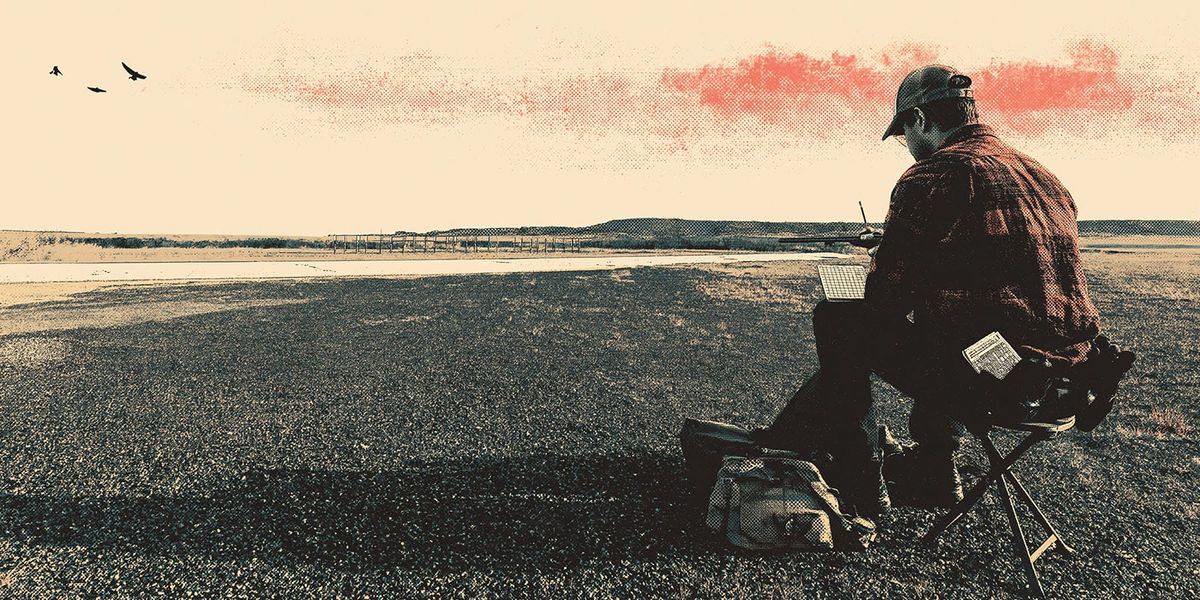
The fastest way to spot a newer shooter at a Canadian precision match is not the rifle they brought. It is the absence of a notebook. They show up, they shoot the stage, they walk back to the squad, and the next thing they remember about the round they just fired is the score on the board. Five minutes later, they could not tell you what wind they held for, what their last cold-bore shot did, or what their elevation was at the next distance over. They will tell you the rifle felt fine. They will tell you the trigger was good. They will not be able to tell you a single number that would make their next stage better.
That gap is the actual thing keeping most newer Canadian shooters off the leaderboard. It is not gear. The CZ 457s and Tikka T1xs and Bergara B-14Rs that turn up at NRL22 Base Class are inside half a minute of angle before they leave the box. A serviceable scope, a steady bipod, a rear bag, and a competent zero will put any one of them on the steel at every stage in a typical month's course of fire. The discipline that converts hits at one match into hits at the next match is not in the rifle. It is in the book the rifle is supposed to come with, and almost never does.
Buy the book. Carry it to the next match. Use it like the rifle depends on it. The Canadian who does this consistently for a season will outshoot the Canadian who spent the same season buying chassis components, and the cost difference between those two seasons is roughly two thousand dollars.
What a data book actually is
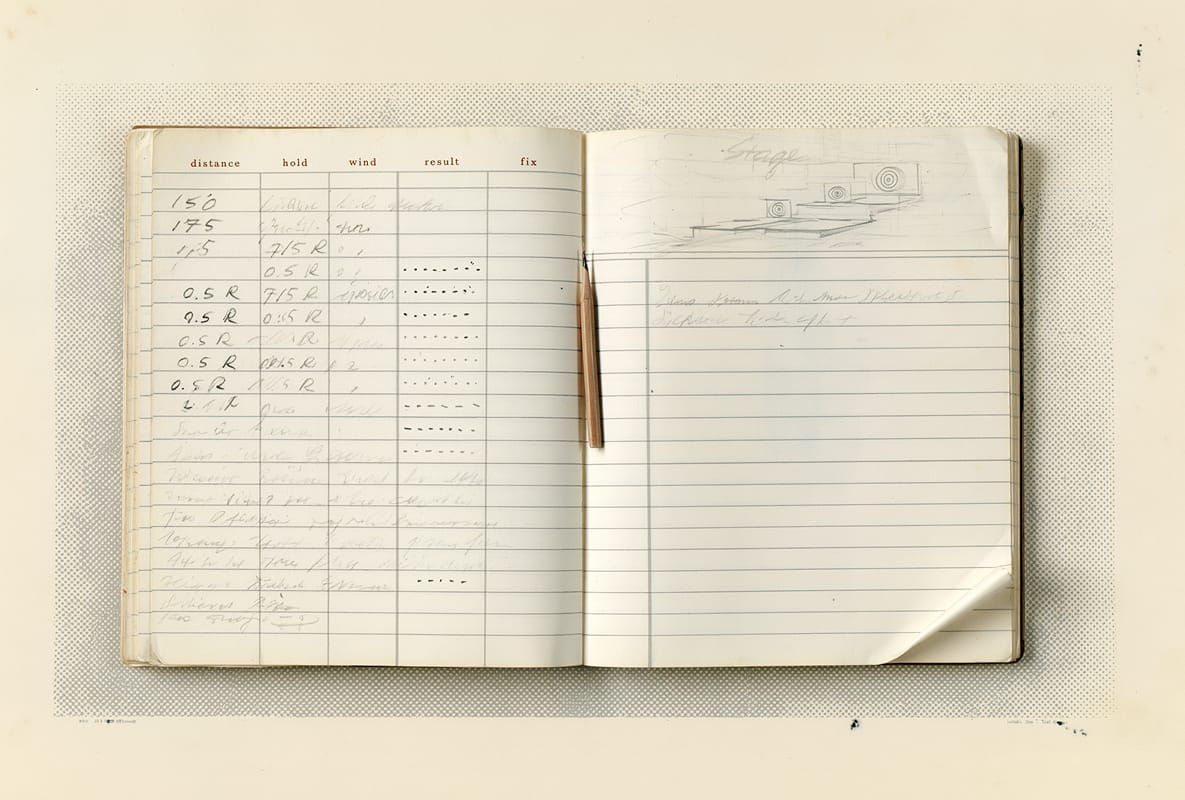
Strip it of its trade-show name and a data book is a small ruled notebook that you write in every time you press a trigger. Some are printed for the purpose, with pre-made stage diagrams, weather columns, and shot-call grids. Impact Data Books in the U.S. publishes one for NRL22 specifically, with a page laid out for each month's standardized course of fire. Others are off-the-shelf field notebooks - Rite in the Rain, a Field Notes Pitch Black ruled, a basic engineering pad - that the shooter divides into their own columns over the first few range trips and then never re-formats again because the format quietly becomes the habit.
The book itself is roughly twenty dollars. The pen is one dollar. The format is whatever survives ten range sessions with you and still reads cleanly when you flip back to it on a Wednesday in February. The shooter who treats the book seriously will, by the third month, have a system that is unrecognisable from any printed template. The shooter who buys the most expensive printed book and never opens it will be the same shooter at the next match.
The book's job is not to look impressive. It is to be the thing your future self consults when the rifle, the rifle's owner, and the conditions all conspire to make you forget what you already learned. The single most useful pages in any Canadian shooter's data book are the ones written one match ago, by a slightly less experienced version of the same person, in handwriting that is barely legible.
What goes on the page
Most newer shooters who do try to keep notes write down the wrong things. They write down the score. They write down the rifle and the ammunition. They write down the date. None of those things will help them on the next stage. The numbers that compound are smaller and less satisfying.
A working data-book entry, per stage or per range session, captures roughly the following. Distance to target, elevation dialed or held, wind call in mils or MOA, shot result against point of aim (left/right and high/low, in approximate body-of-target widths), position used (prone, kneeling, barricade, tank trap, tripod), and the one thing you would tell yourself to do differently before the next round. That last column is the one that compounds across a season. The wind call you missed by a quarter-mil at 150 yards in March is the same call you make correctly in May because the page from March said "underestimated full-value at 150, hold one more click next time."
For ammunition, the relevant note is not the brand. It is the lot. Match-grade .22 Long Rifle is lot-sensitive in a way that surprises shooters coming over from the centrefire side. A box of CCI Standard Velocity that grouped under three-quarters of an inch at fifty yards last spring may not group the same way out of the same rifle this spring, even from a freshly bought brick of the same product line. The page that says "CCI SV, lot SK4-4382, tested April 8, 1.1 MOA at 50, climbed to 1.7 at 100" tells you, six months later, whether to trust the ammo for a match or run another lot test before you commit. The page that just says "CCI SV" is filler.
For centrefire, the note is the load: charge weight, powder lot, bullet, primer, COAL, neck tension, and three-shot or five-shot velocity averages off the chronograph. This is the page you will pull out, two years from now, when Hodgdon Reloading Powder Canada has H4350 back in stock and you are trying to remember whether your 6.5 Creedmoor preferred the upper end of the node or the lower.
The compounding effect
A working data book makes the next match better in three small ways and one large one. The small ways: it tells you what your rifle's actual zero is on a cold-bore shot, what your wind calls at honest match distances tend to under-correct or over-correct, and which positions you cost yourself the most points on. None of those are revelations on a single page. Across thirty pages, they are the revelation.
The large way is harder to describe and easier to feel. After a season of writing down a single line per stage, a shooter's read of the next stage starts arriving in a different shape. Instead of "I think this is about a half-mil left," the read becomes "this is the same situation as the third stage at the November match, and I held three-quarters there, hit centre, so I am holding three-quarters here." The shooter who has been writing things down stops guessing. They are not faster than the shooter who has not been writing things down. They are calmer. The points are in the calm.
The economics of this matter more in 2026 than they did five years ago. A Canadian centrefire reloading bench is feeding itself out of a global supply chain that has put the price increase on consumables at over 250 per cent in recent years, by the Vernon Fish & Game Club's tally. Hodgdon Reloading Powder Canada limits a personal account to five SKUs and forty-eight pounds per calendar month. Match-grade rimfire is not as constrained, but the days of casual stockpiling are largely over. Every round you fire on a Saturday is more expensive, in real terms, than the same round was in 2020. The shooter who fires twenty rounds on a Saturday and writes down every one of them is getting roughly ten times the practice value of the shooter who fires the same twenty rounds and remembers none of them.
Why this matters more for newer shooters
The component squeeze and the prohibition cycle have together made the cost of every careless trigger-press visible in a way it was not before. A newer Canadian shooter walking into precision rifle in 2026 cannot afford to learn the same lesson three times. The data book is how the lesson gets learned once and stays learned. The licensed Canadian shooting community is, by most measurable signals, growing through this period rather than retreating from it: NRL22 squads fill up, CRPS clubs add match dates, ranges run waiting lists for new memberships. The question that defines the experience for the new shooter is not whether the sport is here. It is whether the new shooter is going to do the work the sport rewards.
The sport rewards bookkeeping. Always has. Every world-class shooter you can name keeps a book. Every world-class match coach you can name will tell you, within the first hour of any clinic, that your gear is not the issue. Anyone who has been running NRL22 squads in this country for more than a season can pick the bookkeepers out of the squad list within two matches.
This is not, in any sense, a piece of expensive advice. It is roughly the cheapest piece of advice available in precision shooting, and it remains the most ignored. A shooter who keeps a serious data book through one full match season will be a measurably different shooter at the end of it, on the same rifle they started it on. That is the actual upgrade.
If you are starting tomorrow
Three concrete next steps, in order.
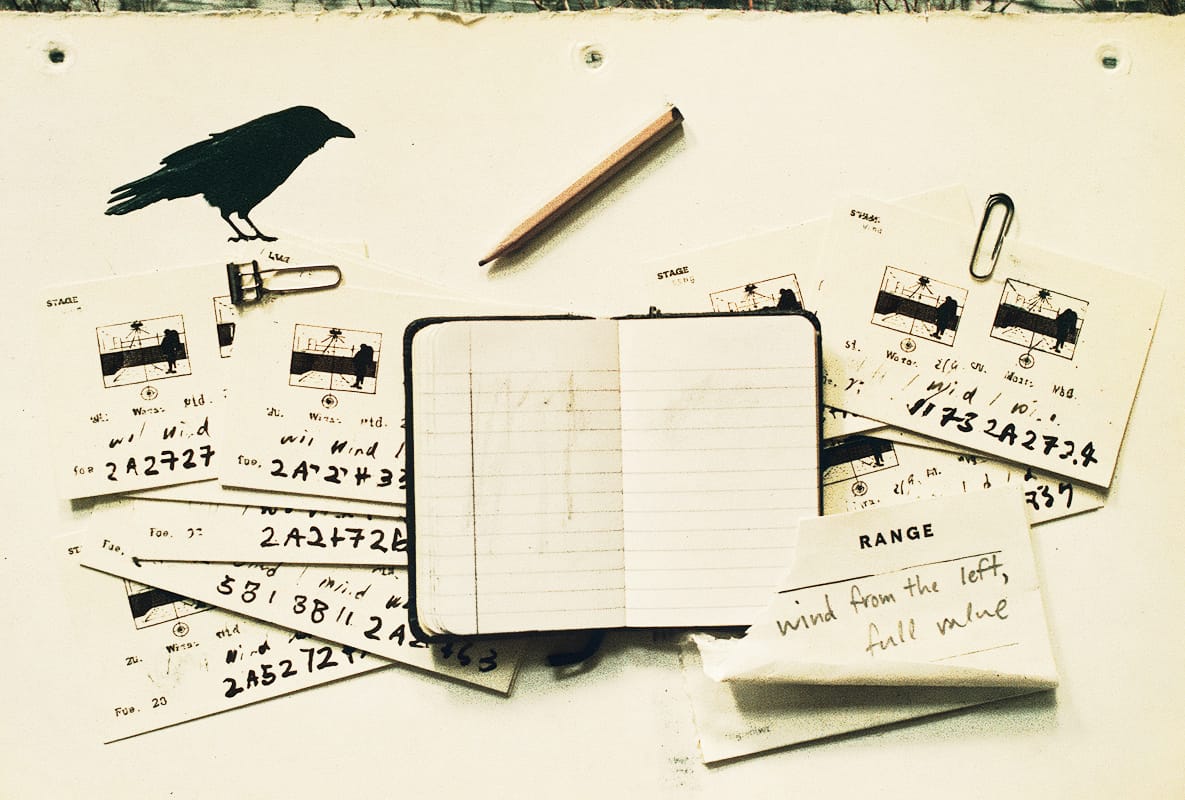
First, buy the book. Any small ruled notebook will do for the first month. Rite in the Rain or Field Notes are robust if you shoot in weather. The printed NRL22 books are useful if you are about to shoot the league. The book you actually carry is better than the book you almost bought.
Second, set up the columns once. Five columns are enough to start: distance, hold, wind call, result, and what to fix. Add columns later if a pattern in your shooting tells you to. Writing twelve fields per shot is exactly the system you will abandon by the second range trip; writing five is the one you will still be using next year.
Third, write the page before you walk away from the line. The shot you will most want to remember in three weeks is the shot you most want to skip recording right now. Write it down anyway. The first ten pages of any data book are a chore. The next three hundred are a quietly accumulating advantage that nothing in your gear bag can match.
The rifle will not let you down. The book is on you.
Sources · editorial note
- Impact Data Books, NRL22 Book and modular data-book product pages (
impactdatabooks.com) - NRL22 Canada, monthly course-of-fire archive and match-format documentation (
nrl22canada.ca) - Canadian Rimfire Precision Series, ruleset and 2026 match calendar (
rimfireprecision.ca) - Vernon Fish & Game Club, members' summary on the state of centrefire reloading component supply and pricing
- Hodgdon Reloading Powder Canada, retail policies and per-account ordering limits (
hodgdonreloadingpowder.ca) - Public Safety Canada, Assault-Style Firearms Compensation Program, declaration tally and program design documents
- This piece is labelled Precision · Commentary. It is one publication's read of where the practical edge for newer Canadian shooters actually sits in 2026. Match notes, page layouts, and "what works for me" letters welcome at The Dispatch.
Source trail refreshed
This article was refreshed for accessibility and source discovery on 2026-05-20. The opinion has not been rewritten; this block keeps the source trail easier to inspect.
Primary source trail
- NRL22 Canada rules and resources
- Canadian Rimfire Precision Series
- Range Notebook Target Analyzer
- MOA/MIL Scope Adjustment Calculator
Related Holdover references
Keep the range notes worth reading later.
If this piece has you thinking about range time, keep the notes useful enough to read later.
Use the Holdover Range Bench Log Card to record rifle, optic, ammunition, distance, weather, zero, group notes, correction, and next test without turning a range trip into a memory test.
Safety note: the card is a note-taking worksheet, not shooting instruction, load data, legal advice, or a substitute for range rules, official guidance, manufacturer manuals, or qualified instruction.