Black Magic and the *10,000-joule* fine print
An NFA giveaway invites a closer reading of Canada's 10,000-joule provision, the measurement details it leaves unspecified, and the limits of a rifle specification.

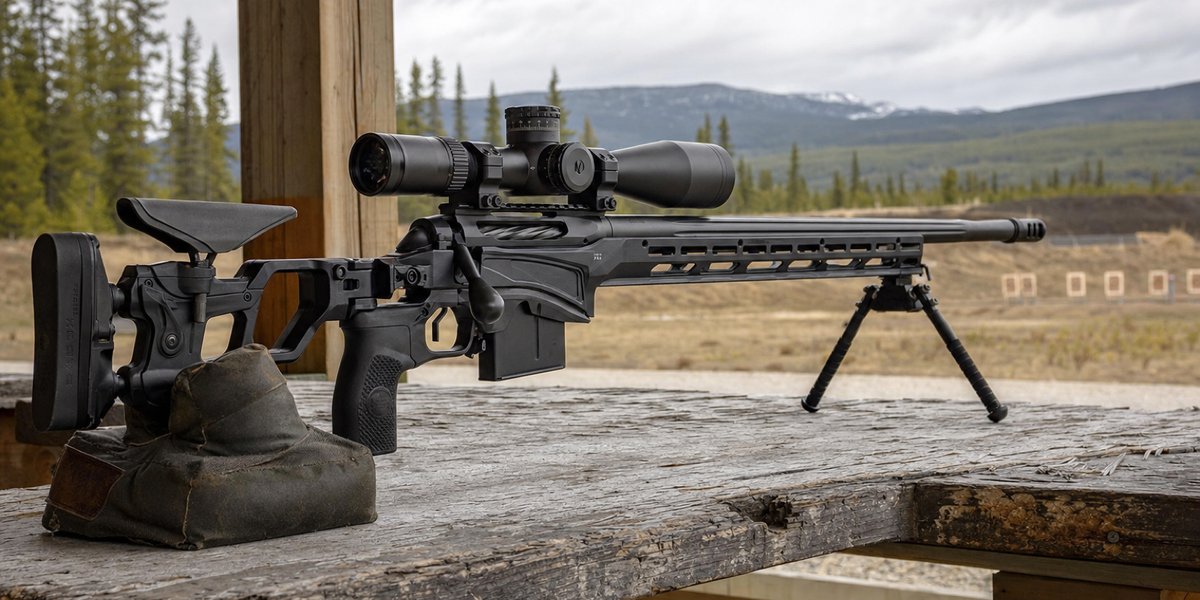
The National Firearms Association calls its 2026-27 giveaway rifle Black Magic. Its August 28 announcement describes a Cadex CDX-33 Lite in .300 Norma Magnum with a 30-inch barrel, a Leupold Mark 4HD optic, and a Falcon bipod. The separate contest rules opened the promotion on July 15 and set its closing date a year later.
The name does a good job of selling the fantasy. Reading the specifications sent me back to something considerably less glamorous: item 96 of Canada's firearm classification regulations.
That provision covers firearms capable of discharging a projectile with muzzle energy greater than 10,000 joules, with specified exclusions. It also includes named firearms. A prize announcement gives us specifications; the regulation asks a question about capability. Between those two documents sits a measurement question worth spelling out.
What item 96 actually says
Muzzle energy describes the energy a projectile carries as it leaves the barrel. In May 2020, Cabinet added the 10,000-joule category to the prohibited-firearm schedule alongside the separate 20 mm bore category. The accompanying Canada Gazette statement presented the two categories as exceeding safe civilian use.
The government framed the change around public safety and suitability for civilian use. Its table recorded the muzzle-energy category's previous classification as non-restricted. Licensed owners therefore had an interest in exactly how the new boundary would apply to firearms already in civilian hands.
A capability criterion has an understandable appeal: it can describe a class of firearms in physical terms. That is my reading of the policy design. The burden on an owner remains substantial when the published provision gives a number without specifying the procedure used to establish it.
The wording is precise about the boundary: greater than 10,000 joules. Item 96 does not specify a test barrel, reference ammunition, or measurement protocol. That is an observation about the text of this provision. Establishing whether a separate public technical method exists would require evidence beyond the documents reviewed here.
A specification leaves questions open
Sierra's published .300 Norma Magnum data offers a useful illustration of the evidence problem. Its 200-grain page lists a velocity of 3,050 feet per second using a 24-inch universal receiver. An independent calculation from that mass and velocity gives roughly 5,600 joules. The calculation is Holdover's; the energy row printed on Sierra's page does not agree with those inputs.
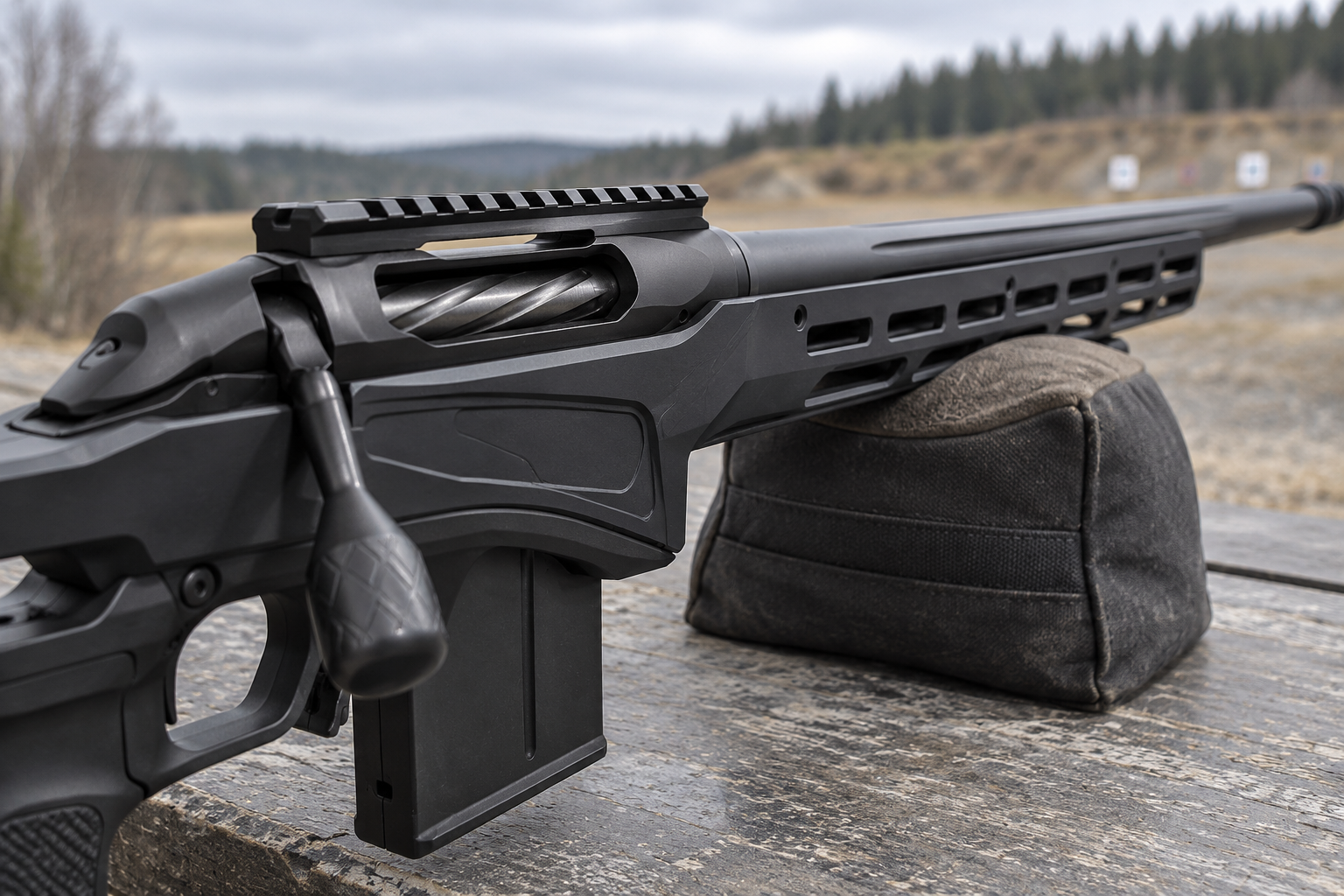
That example describes one published set of test conditions. The NFA announcement describes a 30-inch barrel. Neither document provides a classification assessment or measured energy for the particular giveaway rifle. A conventional published velocity also leaves the regulation's wider capability question unresolved.
The sensible boundary for this article is therefore narrow. We can read the NFA's description, read Sierra's test conditions, and identify what the regulation specifies. We cannot turn that comparison into a legal finding about the prize. The rest of the classification schedule matters too: named-firearm provisions and other applicable criteria remain part of the law.
I enjoy reading a rifle specification as much as the next owner. A chassis, an optic, and a finish can keep that exercise entertaining well beyond any sensible budget. Compliance is where I want the entertaining part to end. For the rifles I own, I want the record, the applicable provision, and an explanation I can follow.
The RCMP's current public record
The RCMP's Firearms Reference Table page, modified September 10, offers a 231 MB public PDF marked updated September 7. The size alone suggests an evening has acquired an administrative component.
The page explains the table's role. RCMP firearms experts assess firearms against the law and compile identification and classification information to assist officials. The RCMP describes the FRT as an administrative document and identifies the Act and regulations as the prevailing legal authority.
There is also a freshness distinction. Authorized police, public agents, and firearm verifiers are directed to the online FRT for the most current information. Public readers receive a dated download. Keeping that date with any record matters, particularly when an old copy is doing the rounds in a discussion.
For a reader researching a specific rifle, the public table and the RCMP's published contact channel offer a route to a more precise question. Make, model, and chambering help identify the relevant record. A promotion's product description supplies only part of that information and no explanation of an official assessment.
The explanation owners deserve
The current Justice Laws consolidation reports item 96 within regulations current to July 21, 2026, last amended March 7, 2025. The threshold has been in the system for years. This NFA promotion gives readers a concrete reason to inspect its wording again.
My objection is the distance between a rule owners must follow and the explanation available in the provision itself. A public account of how officials apply the capability criterion would help owners understand an assessment and ask useful questions about it. It would also let readers distinguish the legal test from the numbers in a manufacturer's table.
The NFA can keep Black Magic for the giveaway. Owners reading a classification record deserve enough detail to understand how the decision was reached.
Sources
- National Firearms Association, Black Magic announcement, August 28, 2026, and contest rules. Prize description and promotion dates; accessed September 13, 2026.
- Department of Justice, SOR/98-462, Schedule, Part 1, item 96. Consolidation current to July 21, 2026; last amended March 7, 2025; accessed September 13, 2026.
- Canada Gazette, SOR/2020-96 Regulatory Impact Analysis Statement, May 1, 2020. Government rationale and prior classification; accessed September 13, 2026.
- Royal Canadian Mounted Police, Firearms Reference Table. Page modified September 10; public PDF marked updated September 7, 2026; accessed September 13, 2026.
- Sierra Bullets, Sixth Edition: .300 Norma Magnum, 200-grain page. Mass, velocity, and test-barrel reference only; the article's energy figure is an independent calculation. Accessed September 13, 2026.
Keep the range notes worth reading later.
If this piece has you thinking about range time, keep the notes useful enough to read later.
Use the Holdover Range Bench Log Card to record rifle, optic, ammunition, distance, weather, zero, group notes, correction, and next test without turning a range trip into a memory test.
Safety note: the card is a note-taking worksheet, not shooting instruction, load data, legal advice, or a substitute for range rules, official guidance, manufacturer manuals, or qualified instruction.