The *suitcase* is the policy failure
A CityNews report on an alleged 89-firearm smuggling attempt into Canada shows the policy gap Ottawa keeps stepping around: the regulated owner is visible, while the real handgun pipeline is elsewhere.

Update, June 9, 2026. Public Safety Canada has extended the relevant amnesty period. The old the former fixed deadline date referenced below is no longer the operative expiry; the amended expiry is 90 days after the Supreme Court of Canada renders its decision.
Opinion. The most honest Canadian firearms story this weekend was a heavy suitcase on a New York highway.
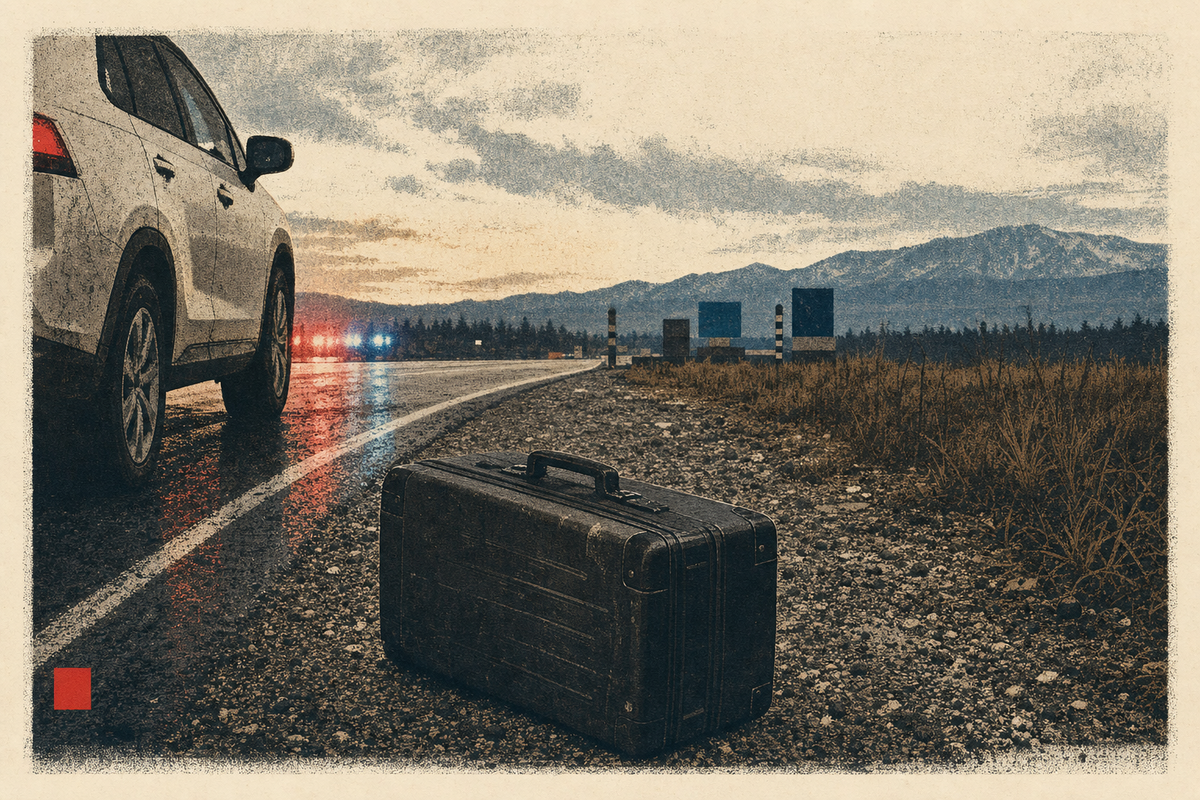
CityNews Toronto reported on May 9 that three Hamilton men have been charged in the United States after allegedly attempting to smuggle almost 90 firearms into Canada. The U.S. Department of Justice says the accused were transporting 89 firearms, including at least 17 reported stolen, and that the firearms were allegedly headed for Canada. The men were detained after a traffic stop on State Route 90 in New York, where troopers found an unusually heavy suitcase and additional firearms in the vehicle.
Those are charges, not convictions. The case has to move through court.
The policy point does not need a conviction to be visible. If the allegation is proven, this is the kind of firearms problem Canadians are told federal gun control is supposed to solve: smuggling, stolen firearms, short-barrelled rifles, unlicensed dealing, and a cross-border supply route aimed at the Canadian market.
That is not the person taking a safety course.
That is not the PAL holder waiting for a transfer reference number. It is not the rimfire shooter buying a case, a brick of .22 LR, and a notebook before driving to a match. It is not the retailer trying to interpret the latest compensation table without accidentally becoming a criminal administrator for somebody else's slogan.
It is a suitcase.
Ottawa keeps writing policy for the people it can already find. The suitcase is the harder problem.
The story is not subtle
The CityNews piece is worth taking seriously because it is not abstract. It is not another round of category language about "assault-style" anything. It is a current Canadian-angle report about an alleged attempt to move a large number of firearms into this country.
The DOJ release gives the core facts as allegations. Three men were charged with smuggling from the United States, unlicensed dealing in firearms, transporting stolen firearms, and unlawful possession of firearms. U.S. officials say the cache included 89 firearms and at least 17 reported stolen firearms. CityNews reported that two of the accused are Canadian citizens, and that Hamilton police identified one as a man previously convicted in a fatal 2021 motorcycle crash who failed to appear for sentencing.
Again: charges are not convictions. That line matters, and Holdover is not here to adjudicate the case from a chair in Ottawa.
But public policy is allowed to notice the shape of an allegation.
The shape here is familiar. Not because 89 firearms in a suitcase is normal. It is familiar because law enforcement keeps pointing at the same family of problems: illicit supply, stolen firearms, border movement, trafficking, altered or unlawful firearms, prohibited persons, and repeat contact with the justice system.
That is where the public-safety argument has weight.
Canadians do not want stolen guns moving north in a suitcase. Nobody serious does. The useful disagreement is not whether that should be stopped. It is why federal policy keeps spending so much visible energy on the side of the market that already fills out forms.
The easy person is already documented
The licensed firearms owner is not hard to find.
The RCMP's 2024 Commissioner of Firearms Report counted 2,425,627 firearms licence holders in Canada. It also describes the Canadian Firearms Program as the national system for licensing, registration where required, safety education, transfer support, business oversight, law-enforcement support, and continuous eligibility screening. In 2024, the program refused 1,469 licence applications and revoked 4,318 licences.
That is not a hidden population.
Licensed owners take the course, apply, provide personal information, renew, store firearms under federal rules, transfer under federal rules, and remain subject to eligibility review. Restricted and prohibited firearms are registered. Businesses are licensed. Ranges are approved. Chief Firearms Officers have broad administrative reach.
This is why licensed owners are such tempting policy targets.
Not because they are the main source of violent handgun crime. Because they are legible. They have addresses, licence numbers, purchase histories, club memberships, registration certificates, inboxes, and safes. The state can send them a portal message. It can freeze a transfer. It can demand a declaration. It can tell a business to submit a claim. It can put a date on the calendar and make non-compliance a criminal problem.
Criminal supply is different.
Smuggling is not a form field. Trafficking does not wait for a clean portal workflow. A stolen firearm does not care that the owner of a now-prohibited rifle is watching the SCC appeals + 90-day amnesty endpoint. The alleged suitcase on State Route 90 was not going to be stopped by another round of pressure on the person who already gave Ottawa his name.
That is the policy failure.
The easy person is not automatically the right person.
The data keeps pointing at the hard file
Statistics Canada's April 2026 Juristat release does not read like a gun-owner press release. It is a national crime data product. That is why it is useful.
The headline picture is mixed. Firearm-related violent crime accounted for 2.6 per cent of police-reported violent crime in 2024. The national rate fell from 2023 to 2024, marking the sharpest decrease in more than 10 years. Toronto went the other way: its firearm-related violent crime rate rose 12 per cent and reached its highest level in 15 years.
That is a real problem, especially for people who live in the communities where it concentrates.
The same StatCan release also tells us something Ottawa should have tattooed on the inside of the briefing binder. In firearm-related homicides where an accused person was identified, 80 per cent of accused persons did not hold a valid licence for the class of firearm involved. Among those accused of firearm-related violent crime in 2024, 58 per cent had been identified by police as an accused person in at least one prior violent crime from 2018 to 2024.
That does not make every licence holder virtuous. It does not make every regulation bad. Serious policy does not need fairy tales in either direction.
It does mean the centre of gravity is not the ordinary licensed owner.
If the current fear is criminal handgun violence, then the work is border enforcement, trafficking investigations, tracing, stolen-firearm recovery, stronger consequences for violent repeat offenders, better coordination across agencies, and faster action when someone already prohibited from possessing firearms is found with one anyway.
The hard file is the file.
The culture is not the suitcase
There was another firearms story in Canada this weekend, and it is the one most people outside the community never see.
On May 10, the CRPS Atlantic Canada May Match was scheduled at Atlantic Marksmen Association in Oldham, Nova Scotia. It is a Canadian Rimfire Precision Series-style event, restricted to .22 LR rimfire and .22 calibre air rifles, with 10 stages, targets from 45 to 200 metres, and a maximum round count of 120.
That is a more useful picture of Canadian firearms culture than most political speeches manage.
It is not dramatic. It is shooters checking in, listening to a safety brief, carrying gear, reading wind badly and then slightly less badly, trying to make a .22 behave at distances where cheap ammunition starts telling the truth, and discovering that a stable position matters more than the thing they almost bought because a forum said it was essential.
New shooters should pay attention to that part.
The best first year in this sport is not panic and politics, even though politics is now hard to avoid. It is competence. A decent .22. A sensible non-restricted rifle if the budget and range access support it. Eye and ear protection. A proper case. A notebook. Same-lot ammunition when you are trying to learn what the rifle is doing. A target stapled square. An optic that tracks well enough. A willingness to let the target hurt your feelings a little.
The people doing that are not the problem.
They are the culture Ottawa keeps treating as collateral administration.
The federal answer keeps drifting
The federal government has a coherent public version of its case. It says the handgun freeze stops growth in the domestic handgun market. It says former Bill C-21 keeps Canadians safe from gun crime through a package of measures, including the handgun freeze, trafficking and smuggling provisions, red-flag and licence-revocation measures, and restrictions on certain firearms.
That argument deserves its cleanest form: reduce supply, restrict access, and give law enforcement more tools.
The problem is where the pressure lands.
The national handgun freeze came into force on October 21, 2022. Public Safety Canada says individuals can no longer acquire handguns except in narrow cases, including certain Authorizations to Carry and people training, competing, or coaching in Olympic or Paralympic handgun disciplines. Existing licensed owners can continue to possess and use registered handguns within the law.
For newer ordinary RPAL holders, the practical path into handgun ownership is closed.
Then there is the broader prohibition and compensation file. Public Safety Canada says more than 2,500 makes and models of so-called assault-style firearms have been banned since May 2020. The current buyback page says collection and compensation for individuals are expected to run from spring to early fall 2026, and that owners must dispose of or permanently deactivate affected firearms before the SCC appeals + 90-day amnesty endpoint or risk criminal liability.
Set that beside the suitcase.
The state can put enormous effort into freezing the lawful handgun market, valuing prohibited property, validating claims, messaging owners through portals, and turning previously lawful firearms into compensation rows. Some of that administration may be tidy. Some of it may even be competently executed. None of that proves it is well aimed at the violence people actually fear.
The fact that lawful owners are easier to reach is not evidence that they are the source of the risk.
It is evidence that they complied with the system.
New shooters should learn the distinction early
New Canadian shooters should learn two things at the same time.
First, take the law seriously. Take the course seriously. Learn the storage rules, transport rules, transfer rules, range rules, and the strange Canadian habit of making ordinary hobbies feel like controlled paperwork experiments. Keep receipts. Know the model. Know the classification. Do not let forum confidence substitute for actual documents.
Second, do not let politics convince you that the sport is only loss management.
The lawful culture is still worth entering. There are rimfire matches, club nights, hunting seasons, precision days, black-powder oddities, shotgun leagues, informal zeroing sessions, and the quiet satisfaction of watching a rifle, ammunition, and shooter all improve by one small honest increment. That culture is not loud, which is one reason politicians keep missing it.
A new shooter does not need a manifesto before buying ear protection.
He does need enough political literacy to understand why the shelves, classifications, transfers, imports, used market, handgun freeze, OICs, and buyback all seem to reach into the same range bag. The politics is not separate from the gear room. It decides what can be bought, transferred, registered, repaired, sold, inherited, deactivated, or destroyed.
That is frustrating.
It is not a reason to quit before learning to shoot well.
Competence is still the answer. It is also harder to caricature.
Aim at the pipeline
The alleged 89-firearm smuggling attempt should embarrass the current policy habit.
Not because it proves every federal measure is useless. It does not. Not because licensed owners should be immune from law. They should not. Not because Canada should abandon training, licensing, storage rules, transfer verification, business licensing, or continuous eligibility screening. Those are already part of the Canadian model, and serious owners know it.
It should embarrass the habit because it exposes the difference between public safety and administrative convenience.
If the worry is guns moving illegally into Canada, aim there. If the worry is stolen firearms, aim there. If the worry is repeat violent offenders, aim there. If the worry is people already prohibited from possessing firearms, aim there. If the worry is unlawful dealing and trafficking, aim there.
Do not keep pretending that the course student, the rimfire shooter, the handloader, the retailer, the collector, and the licensed owner with a prohibited-by-OIC rifle in a safe are the shortcut to solving a smuggling problem.
They are not.
They are simply standing in the light.
The suitcase is hard. That is why serious policy should start there.
Sources
- CityNews Toronto, 3 Hamilton men charged with attempted smuggling of 89 firearms into Canada, posted May 9, 2026, updated May 9, 2026, accessed May 10, 2026.
- U.S. Department of Justice, Southern District of New York, Three Men Charged With Attempted Smuggling Of 89 Firearms, May 8, 2026, accessed May 10, 2026.
- Precision Rifle Series, CRPS Atlantic Canada May Match, Nova Scotia, May 10, 2026 event page, accessed May 10, 2026.
- Statistics Canada, Firearms and violent crime in Canada, 2024, released April 21, 2026, accessed May 10, 2026.
- RCMP, 2024 Commissioner of Firearms Report, accessed May 10, 2026.
- Public Safety Canada, Former Bill C-21: Keeping Canadians safe from gun crime, accessed May 10, 2026.
- Public Safety Canada, Assault-Style Firearms Compensation Program, date modified April 21, 2026, accessed May 10, 2026.
The amnesty file is still moving.
If this piece sent you back to government pages, do not wait for the next portal, Gazette, or court move to find you by accident.
The Dispatch follows Public Safety, RCMP, Canada Gazette, court, compensation, collection, and amnesty updates so the next change comes with the source that moved.
Safety note: the tracker is a worksheet for source hygiene, not legal advice or a substitute for current official guidance.