I'd want *an export quote* with that U.S. scope price
U.S. scope orders normally need an export licence for Canada. We check the rule, the Canadian certificate, and the written quote a buyer should ask for.

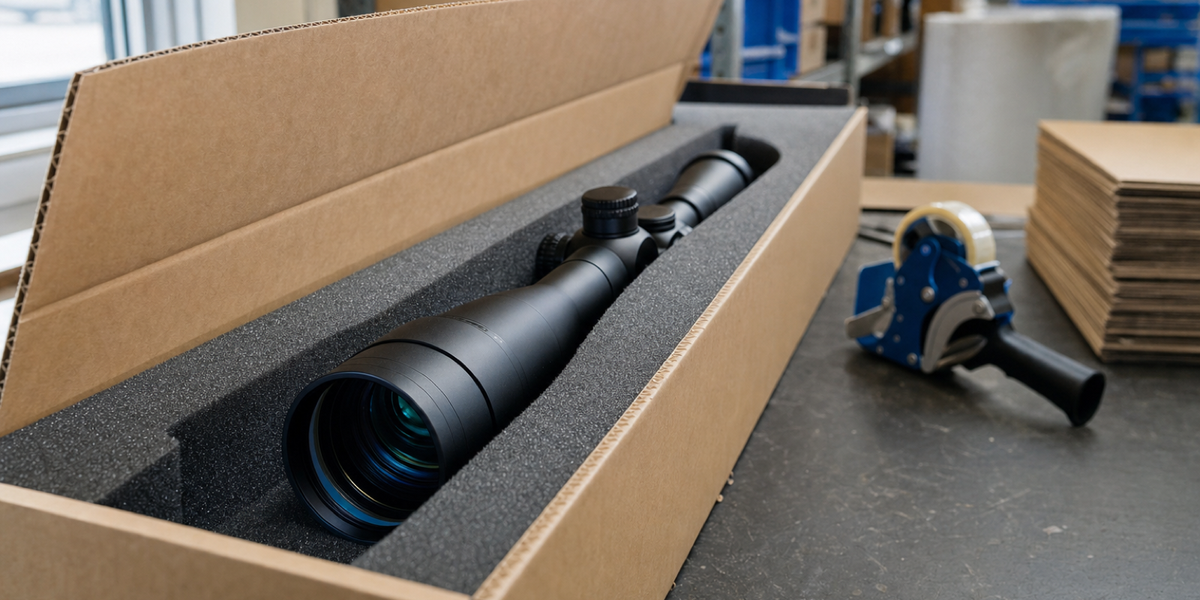
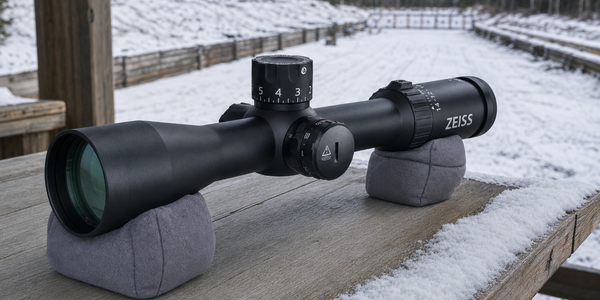
A U.S. scope sale can reach a Canadian screen long before the seller is ready to ship it here. AccurateShooter's November 23 deal list includes optics, with Black Friday coming on November 27. The discount is easy to compare. The export transaction needs a separate answer.
For an ordinary riflescope sold from the United States to Canada, the American seller normally needs an export licence. The buyer may have Canadian paperwork to supply as well. A price in U.S. dollars leaves the fees, delivery time, and seller's willingness to handle that order unsettled.
That is where I would start, before choosing between reticles. I want the quote for the scope I can receive at my Canadian address, with the paperwork and costs explained. A discount on the product alone gives me too little to make the decision.
Canada's mark beside the scope
The U.S. Commerce Control List puts telescopic sights under export classification 0A504.a. Holographic sights and reflex or red-dot sights have their own paragraphs in the same entry. These are classifications for the exporter to establish for the actual product; an ordinary daytime riflescope is the useful example here. Commerce Control List, 0A504
Under that entry, telescopic sights carry the firearms-convention reason for control, FC Column 1. Canada's row on the Commerce Country Chart has the corresponding mark. Section 742.17 connects those marks to an export-licence requirement. The chart and the product classification have to be read together. BIS Country Chart · 15 CFR 742.17
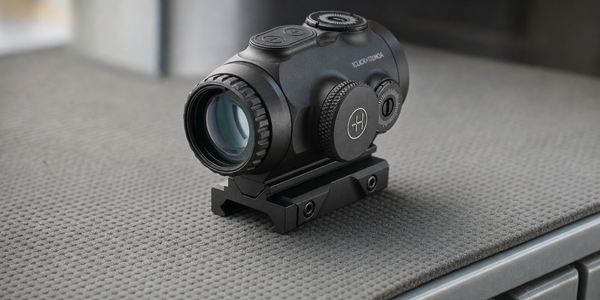
That is why a shop's ability to sell a scope within the United States tells a Canadian buyer little about shipping it here. Ask whether the seller will handle a Canadian export for the exact model. If it proposes an exception, it should identify the applicable route rather than leave you to interpret a checkout screen.
The rollback left this question standing
In September 2025, Commerce rescinded its April 2024 firearms export rule. Its explanation acknowledged that authorizations for most exports of the affected firearms-related items, including exports to Canada, predated that rule. Today's scope entry, Canadian chart mark, and firearms-convention provision still need to be read on their own terms. September 2025 rule
The framework has a stated public-safety purpose. Section 742.17 describes controls developed to combat illicit manufacture and trafficking. It also says applications backed by the importing government's certificate or equivalent document will generally be approved, subject to its specified illicit-activity concerns. A Canadian sporting purchase still has to work through the commercial process.
Holdover's earlier PSA 570 import story followed a complete shotgun from an American launch to a Canadian buying decision. Here, a scope buyer needs an exporter and a quote even though the purchase starts with a piece of glass.
The Canadian certificate has its own job
U.S. licence applications for these firearms-convention goods ordinarily require an import certificate or an equivalent official document from the destination country, with exceptions specified in the rules. The exporter asks the Canadian purchaser to obtain the supporting document. 15 CFR 748.12
Global Affairs Canada calls its International Import Certificate an end-use assurance. It records Canada's awareness of, and lack of immediate objection to, the proposed import for the stated user and purpose. The foreign supplier uses it in the export-permit process. Canadian import requirements continue to apply separately. Global Affairs Canada
The certificate must reach the exporting country's authorities within six months of Canadian issuance to be valid for use. Global Affairs offers online and paper applications. For firearms-related applications, it says applicants may be asked for a PAL copy or a firearms business licence to confirm eligibility. That wording leaves the actual supporting-document request to the application; a PAL copy should never become an assumed requirement for every scope order.
Get the seller's document list first. The certificate needs an accurate description of the transaction, including the goods, quantities, value, end user, and end use. Guessing at those details while the seller decides whether it exports only makes the file harder to complete.
The retailer's estimate needs a careful read
Brownells lists optical sights among the items that generally require export licensing. Its international-orders page warns that obtaining a licence can take 30 to 60 days and asks Canadian customers for an import certificate covering firearm components. That gives a buyer a reason to ask early; it supplies no promised arrival date for a particular scope. Brownells international orders
Read the fee wording just as closely. Brownells' published licensing-fee paragraph specifically concerns a Department of State application under ITAR. An ordinary scope classified under Commerce's 0A504 entry belongs to a different regulatory file. Ask the retailer for the charge on your actual order instead of attaching a fee from another paragraph to it.
The written answer should cover the optic, any export or handling charge, shipping, the currency, and how applicable taxes or import charges will be handled. It should also explain when the shop takes payment, what happens if the licence is refused, and whether you can cancel while waiting. Those commercial terms can change whether the sale is worth pursuing.
A Canadian quote belongs beside it
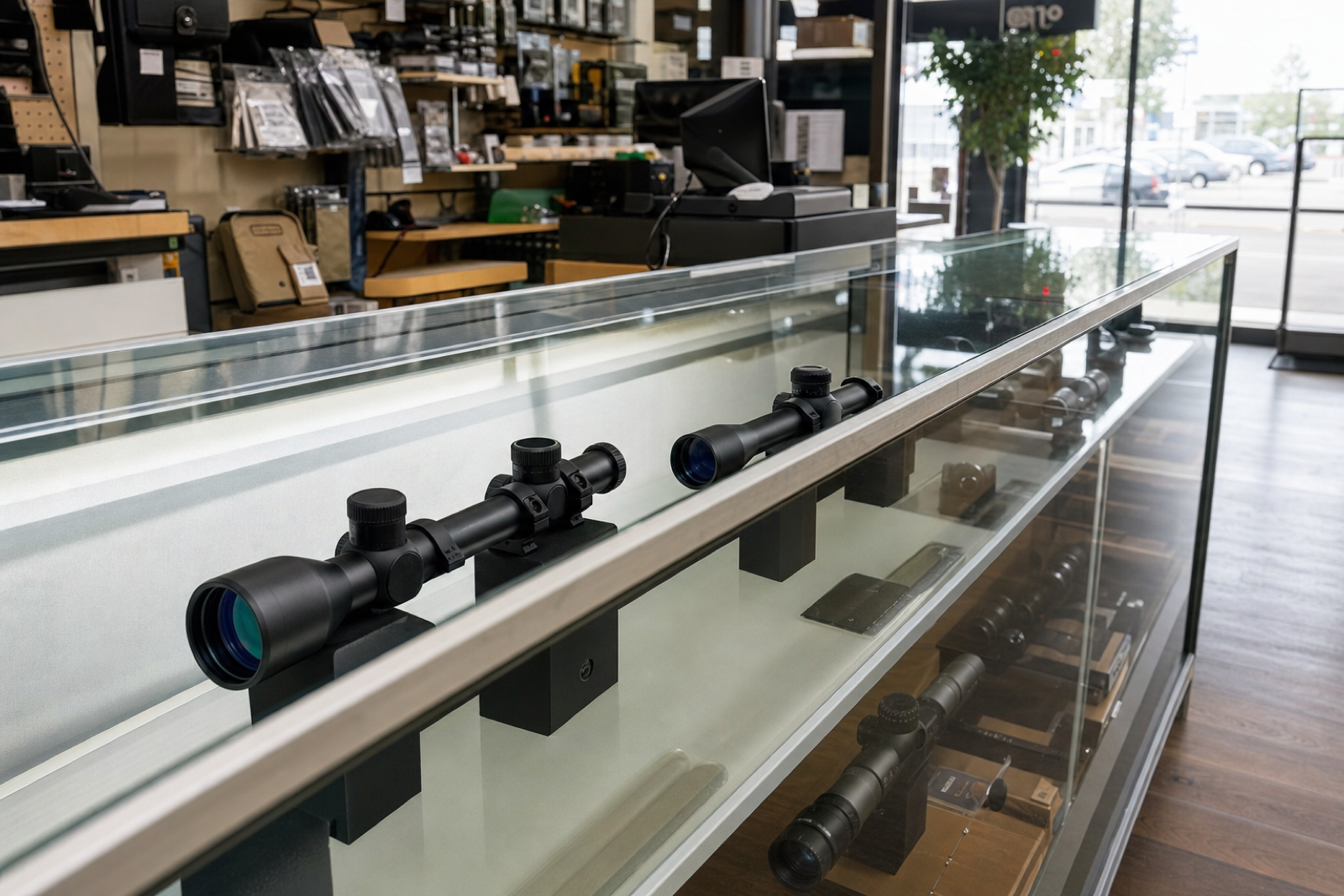
I would put that complete American quote beside a Canadian offer for the exact model and configuration. Confirm stock and delivery on both sides. A local listing needs its own check, and a seller's quoted wait deserves the same attention as the exchange rate.
There will be purchases where the American order still makes sense. There will be others where a Canadian dealer earns the difference by having the scope available and handling the import upstream. The useful Black Friday number is the price of the scope you can actually receive, on terms you have agreed to.
Follow practical Canadian gear reporting in The Dispatch, Holdover's free weekly newsletter.
Sources
- AccurateShooter, BargainFinder 583, November 23, 2026.
- U.S. Commerce Control List, ECCN 0A504.
- BIS Commerce Country Chart.
- 15 CFR 742.17, OAS firearms export controls.
- 15 CFR 748.12, import-certificate support for U.S. applications.
- Commerce, September 30, 2025 firearms export rule.
- Global Affairs Canada, International Import Certificates.
- Brownells, International Orders.