PSA 570 launches Friday. *Canada* gets a different clock
The PSA 570 launches in the United States on Friday. Canadian buyers still need an exact classification, exporter, importer, carrier, and written quote.

Gear. A Canadian shooter asked the right PSA 570 question before Friday's launch: how does one actually get north?
Palmetto State Armory says its new modular 12-gauge pump will go on sale in the United States at 4:30 p.m. ET on July 24. The current r/canadaguns thread skipped past the American countdown and went straight to the Canadian file. One reply reduced the whole problem to four words: "Does it have an FRT?"
That is a useful first question. A Canadian purchase needs several more answers.
I own enough 12-gauge shotguns to pay attention when somebody changes the architecture of an ordinary pump gun. I also buy enough firearms online to know how quickly a clean American product page can make availability feel closer than it is. The PSA clock tells Americans when the checkout opens. A Canadian clock starts with the exact model, an exporter, an importer, and a written quote.
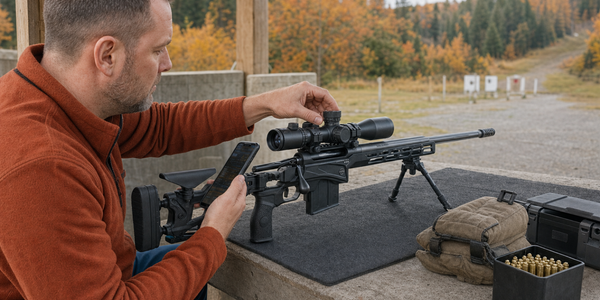
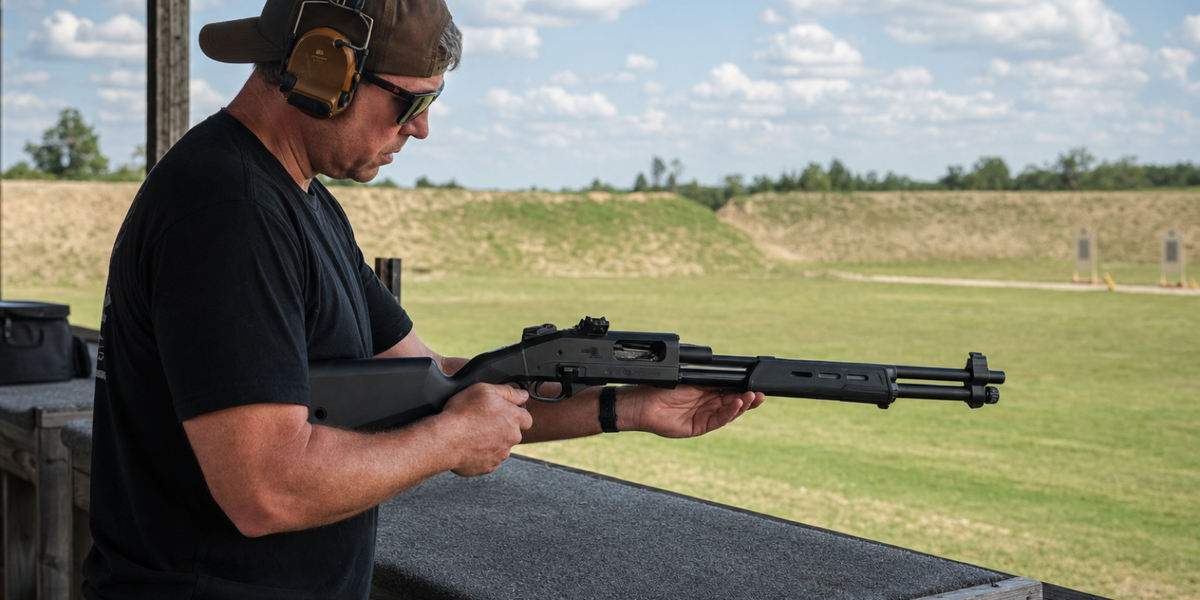
Holdover has no PSA 570 range time. Manufacturer specifications support the product discussion. The feature image is a fictional U.S. test-range check grounded to PSA's current launch photographs and depicts no Canadian listing or import.
Friday belongs to the U.S. product page
The 570 earns the interest. PSA built the pump action around a free-float hanger that separates the usual relationship between the barrel and magazine tube. The rear of the feed tube locks into the receiver, while the hanger supports the front assembly. PSA says that architecture will support different barrels, magazine tubes, receivers, and configurations over time.
The four launch guns share an 18.5-inch barrel, 7+1 capacity, 2 3/4- and 3-inch chambering, an RMR footprint, a backup rear sight in the cover plate, and a front sight on the hanger. Buyers can choose PSA or Magpul furniture in black or Flat Dark Earth. The receiver accepts Remington 870-pattern stocks and forends.
That is a more interesting pump shotgun than another colour change and a new box. It is also a U.S. product launch. An exact Canadian search on July 22 found the current owner question and an older Canadian Gun Nutz discussion, but no current Canadian retailer or importer listing.
Classification comes before shipping
The r/canadaguns reply about the FRT points toward a real market concern. Importers, retailers, police, border officials, and owners use the RCMP's Firearms Reference Table as a working classification reference. The RCMP also describes it plainly as an administrative document. Legal authority sits in the Criminal Code, the Firearms Act, and the regulations.
A missing public entry produces uncertainty for the businesses expected to move, receive, classify, and sell the exact firearm. A credible importer may want sufficient product information or an RCMP classification path before accepting the order.
Exact configuration becomes more important on a modular platform. Friday's complete 18.5-inch pump gun is one product. PSA's planned standalone receivers, alternate barrels, and additional magazine tubes are separate items with their own descriptions, export treatment, and Canadian border questions. Modularity gives the owner choices after purchase. It also gives the paperwork more nouns to get right.
The export side owns half the file
Canada's official pages describe a manageable route for a lawful sporting import. The RCMP says a Canadian resident importing a non-restricted firearm needs a valid firearms licence, must declare the firearm at the border, and must use a carrier licensed to transport firearms when shipping it into Canada. CBSA's current table separates those requirements by class.
Global Affairs adds the part buyers can miss while reading Canadian rules: the United States controls the export. Its firearm FAQ says the U.S. exporter needs a U.S. export licence. A Canadian buyer may also apply for an International Import Certificate, which can give the U.S. exporter the Canadian assurance needed for its file.
Global Affairs says most non-restricted and restricted firearms imported for sporting or recreational use under paragraph 70(1) do not require a Canadian import permit. The U.S. export licence, exact class, carrier, border declaration, and any exporter-requested certificate remain part of the file.
This is why "Will PSA ship it?" is too small a buying question. The useful party is a specialist who can lawfully export from the United States, import into Canada, and put the exact arrangement in writing.
An importer quote is the first useful Canadian price
A Canadian owner interested in the 570 should ask an importer or retailer five things before treating Friday as a buying event:
- Which exact launch SKU and configuration will you import?
- What Canadian classification or admissibility evidence supports that SKU?
- Who holds the U.S. export responsibility?
- Which Canadian certificate, carrier, declaration, and licence details do you require from the buyer?
- What is the written landed price, warranty route, refund policy, and delivery estimate?
A U.S. sticker price says very little about brokerage, export service, exchange, tax, freight, warranty shipping, or the cost of a problem after the box crosses the border.
The warranty question deserves special attention. PSA advertises a full lifetime warranty on the U.S. product page. A Canadian buyer needs to know who can send the shotgun back across the border, who pays, and whether the Canadian seller handles that work. A warranty that requires a second export project has a different practical value.
I like the idea behind the 570. A modular receiver, common furniture, an optic cut, and owner-changeable major components could earn a place beside established 870 and 500/590 patterns. Canadian availability and owner data still have to earn the recommendation.
Canada needs its own launch date
Licensed Canadian owners are capable of handling a cross-border purchase. They should also be given a process clear enough to handle competently.
The manufacturer explains the shotgun. The RCMP supplies classification and import guidance. CBSA handles the border. Global Affairs explains certificates and permits. The U.S. exporter handles its licence. A Canadian importer or retailer has to turn all of that into one offer.
That offer is the Canadian milestone. It should name the exact firearm, state the classification basis, include the real landed cost, explain the warranty path, and say what happens if the shipment or classification decision changes.
Friday starts the launch. The first honest Canadian date belongs on an importer's written quote.
Sources
- r/canadaguns, Recurring Canadaguns Politics and Debate Thread, current PSA 570 import question posted July 20, 2026, accessed July 22, 2026.
- Palmetto State Armory, PSA 570 Launch Confirmed: Full Specs & Overview, July 20, 2026, accessed July 22, 2026.
- Palmetto State Armory, PSA 570 12 Gauge Pump-Action 18.5-Inch Barrel Shotgun, accessed July 22, 2026.
- Palmetto State Armory official Reddit account, 3 more days until the 570 arrives, July 22, 2026.
- Royal Canadian Mounted Police, Importing and exporting firearms, accessed July 22, 2026.
- Canada Border Services Agency, Importing and exporting firearms, weapons and devices, accessed July 22, 2026.
- Global Affairs Canada, Firearms and ammunition - Frequently asked questions, accessed July 22, 2026.
- Global Affairs Canada, Types of import permits, accessed July 22, 2026.
- Royal Canadian Mounted Police, Firearms Reference Table, public file last updated June 29, 2026, accessed July 22, 2026.
The amnesty file is still moving.
If this piece sent you back to government pages, do not wait for the next portal, Gazette, or court move to find you by accident.
The Dispatch follows Public Safety, RCMP, Canada Gazette, court, compensation, collection, and amnesty updates so the next change comes with the source that moved.
Safety note: the tracker is a worksheet for source hygiene, not legal advice or a substitute for current official guidance.